Sometimes building a successful career means being willing to start again, take a step backward, and learn an entirely new skill set. Jonathan McQuade's career has taken him from practice management consulting and supporting wealth management firm owners to working his way up from a client service associate role, launching his own RIA, and eventually becoming a partner in an established firm. In this episode, he shares the unexpected challenges, career decisions, and lessons that shaped his journey, including why he realized consulting wasn't the right long-term fit and what it took to transition into working directly with clients.
Listen in as Jonathan opens up about the realities of starting and running an independent RIA, what became one of the best decisions of his career, and the challenges of learning business development skills as a new planner. You'll hear how genuine, educational conversations help build trust with prospective clients and why professional relationships and mentors can create opportunities years down the track. For aspiring financial planners and career-changers, this conversation offers an honest look at navigating career transitions, building confidence, and finding the right environment to grow.
What You'll Learn In Today's Episode:
- How Jonathan started his career in practice management consulting. (2:00)
- How the Global Financial Crisis changed his career path and led him back into practice management. (6:20)
- Why he decided to leave consulting and move into a client service associate role. (9:00)
- How working in the back office helped him understand the operations of a wealth management firm. (12:30)
- What he learned from working alongside advisors with different approaches to client relationships. (15:55)
- Why starting his own RIA was more challenging than he initially expected. (18:00)
- How partnering with another advisor helped him focus on clients and business growth. (19:50)
- How genuine, educational conversations help build trust with prospective clients. (23:30)
- Why maintaining professional relationships and connecting with mentors can create unexpected career opportunities. (26:10)
Ideas Worth Sharing:
“I think the thing that works as a financial planner is just being very genuine with your clients about everything.” - Jonathan McQuade Share on X “I'm really here as a resource and to provide a service to help people, not necessarily to act like I'm the smartest guy in the room.” - Jonathan McQuade Share on X “The reality of knowing what you should do and finding the time and the capacity to do it can be really challenging to navigate.” - Jonathan McQuade Share on XResources In Today's Episode:
- Jonathan McQuade: LinkedIn
- XYPN
- Philip Palaveev
- Finding your Path: The Roadmap from Student to Successful Financial Planner by Caleb Brown
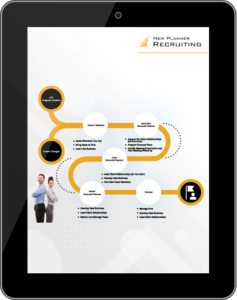 Download your free copy of the New Planner Career Roadmap!(opens in new tab) In this roadmap, you'll be guided through the details of various stages of your financial planner career, including position descriptions, licensing, skill and experience level requirements, and compensation ranges.
Get the Full Episode Transcript:

Read the Transcript Below:
Welcome to the New Planner Podcast, where it's all about helping you successfully enter the financial planning profession and accelerate your financial planning career. This podcast will help you understand the profession, become familiar with the various career paths available to you, and avoid the mistakes that limit your success. Join your host, Caleb Brown, to explore the human side of creating a successful planning career through interviews, personal experience, and insights from the trenches. Let's get started.
Caleb Brown: Welcome to the New Planner Podcast. This is Caleb Brown, your host. I'm joined today by Jonathan McQuade, partner and senior wealth advisor at Boyce & Associates Wealth Consulting in Austin, Texas. Jonathan walks us through starting his career in practice management consulting to becoming a CFP, some of his successes and failures along the way, and how he recently became a partner plus some tips for new planners. I hope you enjoy my conversation with Jonathan McQuade. Hi, Jonathan. Welcome to the New Planner Podcast.
Jonathan McQuade: Hey, Caleb. Thanks for having me.
Caleb Brown: Hey, this is gonna be so fun because as we were just talking about before we came on air, we go way back, and we haven't connected in a while, and I wanted to have you on just because you have an interesting background and story on how you transitioned into becoming an advisor and now a partner in your firm, and I want you to walk us through all that. But before you do that, if you would, just tell us about what you're currently doing right now and the recent sort of the partnership and the RIA piece.
Jonathan McQuade: Sure. Yeah, absolutely. So just recently I merged into an independent RIA firm here in Austin, Texas, and I knew the founder of this firm actually from the first internship I did in this industry. So, I did an internship 20-plus years ago with a gentleman named Eric Boyce, and he ran the interns in this large wealth management firm here in Austin. And so I got to know him during that time, and then, a lot of things happened in between the time that I left that internship and we met again for coffee, and I've just had a lot of respect for him and who he is as a professional for a long time. And so we started having these conversations about what it would look like to work together and to start building a firm together. And so as of August this year, we signed the paperwork, and we're now partners. So there are nine employees at the firm. So Eric has been running this thing as the only shareholder for the last seven years or so. I'm kind of slowly dabbling into the management area of running the practice, but, for the last several years, my primary focus has been working with clients and continuing to grow my client base. And so it's kind of fun to jump back into some of the management side of the business because that's where I started my career. So I have a real interest in that piece of wealth management too. Obviously, I love the client work and I love being a planner, but running a wealth management practice is also a lot of fun. So that's, in a nutshell, kind of what I'm doing right now.
Caleb Brown: Congratulations. That's really cool. Yeah, congrats on your success. And it was practice management consulting, right? That's how we got connected a long time ago. But so you, if I remember right, went to school in Austin, and then you got a... Walk us through that. You got a gig in practice management consulting, and maybe just pick it up from there.
Jonathan McQuade: Sure, yeah. So my first gig in the industry out of college was with an independent broker called National Financial Partners. And I worked on the practice management team at NFP, and our role was basically to provide support services to all of the independent wealth management owners that were part of the NFP network. And so we would help guide them on how to run a more efficient wealth management firm. And so really all areas of running a practice were areas that we would provide guidance on, whether it was hiring or the human capital element of running a firm, or whether it was how to manage the balance sheet and P&L of the firm, or whether it was setting strategic vision for how to build a bigger, better firm in the future. And so I really got my eyes opened to the industry through that role because I was able to visit with firm owners across the country and see so many different ways that you can operate a business in this field. So yes, it was a fantastic way. I just lucked out. I just flat lucked out by falling into that role and getting introduced to the industry in that way.
Caleb Brown: What a great seat to be in, though. I mean, you're sitting here, like, again, helping these firms be more efficient and more profitable, whatever it is, but you can also see who's doing really well and see how they're doing things. I mean, that's... and maybe just keep building upon that, 'cause you did that for—how long were you in the practice management?
Jonathan McQuade: Yeah. So I was in practice management—it's kind of a disjointed story because I started in '07, and then the great financial crisis hit, and NFP's stock dropped below a dollar, so we were a penny stock, and my whole team got eliminated during that time period. So I was out of a job in 2009, and well, I had no work for a while, right? Nobody in our business was hiring during that time. Yeah. I mean, everybody was watching their pennies during that time period from '08 to '09. And I actually took a short side job with Charles Schwab Retirement Plan Department. And that's a great company, by the way, to work for. I learned a lot in that role, and also learned that I didn't wanna do that as a career. So when Philip Palaveev called me from Fusion Advisor Network and said, "Hey, do you wanna come back and do more practice management work?" I jumped on that opportunity and picked up and moved from Austin, Texas to Seattle. And I worked with Philip from the time that Fusion sold to NFP/Kestra, and then he started his own practice management group called The Ensemble Practice. And so I worked with Philip for a short time period at The Ensemble Practice. And so I left practice management in, I think it was 2013, and ended up going to work with one of the clients that we were consulting with in Seattle called Lakeview Financial Group. And I kind of jumped from that to the very bottom of the wealth management chain, right? Like, I was working with founders and owners of firms, and then I went to the client service associate role in a firm. And so it was a little bit humbling, but also a really wonderful place to land because there were four different owners at that firm, and I learned a lot from the different roles that I had there with them.
Caleb Brown: And I wanna emphasize this, and maybe let's explore it a little bit more. I mean, here you are probably in a very highly paid, sort of a lot of responsibility role, giving advice to all these million, billion-dollar firms out there, and then you go and take a CSA role. Yeah. I mean, there was a financial component there, maybe a little bit of an ego component there. But how did you navigate... 'Cause this is by far the biggest hurdle for the career changers, like, "No, I'm just not gonna do it. I'm not gonna take a step back." How did you navigate that?
Jonathan McQuade: Yeah, that's a great question. Well, let's just say that I had a moment in realizing that my future wasn't in practice management. Philip Palaveev—yes, he is one of the best when it comes to practice management consulting, and getting to work with and learn from Philip was an incredible experience, and he's a natural at it. I mean, he can step in front of a crowd, and he can speak on any topic related to practice management, and he doesn't have to prepare for it. He just goes. I'm the opposite. I have to spend a lot of time preparing, and I realized that I have a lot of anxiety speaking to large groups of people, which we were doing frequently. And so I got up in front of a group with Philip. We ran this practice management institute, and the room was full of these massive RIAs with their full teams, and these people that I'd read about in practice management books, and I was so intimidated to get up there that my speaking moment came, and I froze in front of the entire audience. Like, I just had one of those stage fright moments. Yeah. And it was after that I realized, like, I don't think this is where I'm most comfortable and set to be successful, at least in the way that I want to be long-term. And also, I've been consulting on this thing that I've actually never done personally. I'd never been an advisor. I'd never worked within a wealth management firm. I had been consulting based on what I had learned through books and through Philip, essentially. So it was a humbling moment to do that, but I was willing to accept starting at the bottom because I so wanted to learn the industry from within, or in other words, from being within a firm instead of on the outside looking in like I had been. So I had a big motivator. I really wanted to be an advisor, and so I was kind of just willing to start wherever. But was it difficult? Yeah, it was a really tough transition for me. I had just bought a house in Seattle, and our first child had been born a few months earlier. So yeah, my transition was not the easiest, but I really wanted to make it work, so we did.
Caleb Brown: Thank you so much for the transparency on that. It makes sense. I mean, I get it. And maybe the next question, like when you got in that CSA role, learning a whole kind of new career, new skill set, what were the first couple things you did to try to increase your skills and get comfortable with now advising individuals versus the firm owners?
Jonathan McQuade: Yeah. I mean, I guess the very first thing I did was just learn how the back office worked, and I had to learn how the paperwork was put together and how accounts were opened and that whole process of dealing with the backend of wealth management. And that was really eye-opening and gave me a great foundation for and appreciation for every role and responsibility within a firm, because without being organized on that end, there's just no way you can run a good wealth management firm. And also relationships suffer if you're not good on the backend. So, my first thing to do was to get licensed. I wasn't licensed yet, so I had to go take my licensing exams, and I literally just spent time learning all of the processes for the back office before I finally moved into a role where I was joining client meetings in more of an associate advisor role, and participating with the senior advisors at the firm to be part of client meetings and play a role in those. I could expand on that, but that was kind of the path up through that firm—just from the back office to an associate advisor role. And then, that firm went through a lot of change while I was there because they went from being part of the Cetera network to being an independent RIA, and then they got bought shortly after I left that firm and moved back to Austin. So they went through a lot of transition in a short time period. But there were, as I said earlier, four advisors there, and each was very different in their approach to working with clients. So I really got to see how clients respond to different advisors and different ways of building relationships with people. So it was a great experience. I certainly appreciate that time period in my career a lot.
Caleb Brown: Sounds like you got a lot of reps there and got some confidence and became comfortable. Then it looked like you moved back to Austin and joined another firm, but maybe at a higher level position. It was at a higher level, but it wasn't an associate level, it was something above that.
Jonathan McQuade: Right. Yeah, so when I came back to Austin, I kind of circled back to my network of practice management folks, and one of those individuals from NFP, from my old team, had a wealth management group called Austin Wealth Management. And so I met with Kevin Smith for coffee, and he kindly agreed to let me onboard with Austin Wealth Management as I was moving back to Austin. And we decided that for a few reasons. One, we wanted to raise our family in Austin. And so, we loved Seattle and I loved the firm that I was at, but I was really looking to move closer to home and where a lot of our family is based. So Kevin gave me a spot at Austin Wealth Management, and yes, I was kind of thrust into the lead advisor role there. And I had a couple of clients that did transition with me—mostly some family and a couple other clients that came with me from my prior firm. But I really had no book to speak of. I was supporting the Austin Wealth Management team and did bring on a few new clients while I was there. But I kind of realized that wasn't working great, and there were a few reasons for that. One is, at the time, Austin Wealth Management was really part of a larger CPA firm. And so, I think Kevin was still trying to figure out how Austin Wealth Management became its own firm aside from the CPA practice. And so I ended up peeling off from Austin Wealth Management, and that's when I started my own RIA. And I used XY Planning Network to help do that, and I thought I was ready for the challenge. I really did. Like, I was excited for it, and boy, what an eye-opening experience starting your own RIA is. I will say XY Planning Network was a fantastic resource. They really are as advertised. They help you through every step in the process of getting your firm open and established, but from there, once it's open and once you're in business, it's really on you to turn it into something. And there are some wonderful elements to that and some very, very difficult elements to that. And I think for me, at the time period, running my own firm was fantastic in the sense that I knew what it should look like from the practice management experience that I had, and I knew kind of the steps to build it and what I should be doing. But the reality of knowing what you should do and finding the time and the capacity to do it when you have young kids at home, for me, was really challenging to navigate. And so I mean, Caleb, I can remember times that I would be on the phone with a prospect, and I had locked the door, and my kids would be banging on the door trying to get my attention for something, needing a snack or whatever it was. And I just remember thinking, "I don't know if this is gonna work because I don't know if I can keep people on the phone long enough without being interrupted to build this thing." And so, I think the come-to-Jesus moment for me was when I got my first visit from the state regulators, and they were sitting at my kitchen table 'cause I didn't have a separate office space for my business. I was all virtual. And when the state regulators came and sat at my kitchen table, I just thought, "I don't know if I'm doing every part of this as well as I need to be to really build this out and stick with it." So that's when I decided that I needed to partner with somebody and delegate some of the things that I wasn't doing great at. And that's when I sat down with Eric for coffee, and I kind of moved my little practice underneath his umbrella. And that was the best move I've made my entire career. I was able to focus on clients and focus on growth and delegate a lot of the things that took up a significant amount of time that I wasn't good at, and it worked out very well during that time period before we finally decided to merge practices and become partners in building this larger thing together. So that's it in a nutshell.
Caleb Brown: So cool. Yeah, thanks for walking us through that. And I think you kind of already answered this, but to circle back, if you're looking at all the skill sets to be a good planner and a business owner, you got your technical, you got your management/leadership, and then your business development, right? Which one was most difficult for you to learn and get comfortable with and master out of those three?
Jonathan McQuade: Yeah, for me, the business development piece is something that I hadn't been asked to do before. My prior firms that I was at didn't require it in the advisory role. Certainly in practice management I didn't really have a lot of business development exposure. So for me, that was the toughest thing because I think especially as a solopreneur, I didn't have a lot of confidence in going out and promoting myself, and I also didn't have the budget at the time to really delegate marketing to professionals. A real simple example of that was when I tried to build my own website, I sent it to a couple of people, and let's just say the feedback wasn't the most glowing. And I knew it, too, right?
Caleb Brown: I can do it for you, right? Yeah.
Jonathan McQuade: Yeah, exactly. It might be a different story now, but at the time, the feedback I got was, "Good luck finding the type of clients you wanna work with with this kind of website." And that was fair feedback. That was good feedback. So those were the types of things that, for me, were difficult. Once I'm in front of people, I'm very comfortable sitting in front of somebody, whether they have $100 or $50 million. That doesn't intimidate me at all. But the task of getting out there and marketing myself was something that I had to learn and get more comfortable with.
Caleb Brown: And is that part of your gig now? I mean, that's a big part of your role, right, with partnership and this other RIA to bring in more clients and revenue.
Jonathan McQuade: It is, yeah. Yes, I definitely have a larger role in business development now. And I've tried a few different things for business development, and I would say I'm much more comfortable and adept at it now than I used to be. Also, my kids are older. That helps.
Caleb Brown: Not hanging on the door asking for snacks, right?
Jonathan McQuade: That's right, yeah. I don't have anybody asking for snacks in the middle of my prospect calls, so that helps a lot.
Caleb Brown: And maybe if you would, what has worked for you on attracting these people and getting some of these clients?
Jonathan McQuade: I think the thing that works is just being very genuine with them about everything. I mean, they're coming to you with such a vulnerable request, which is, "Can you help me manage my personal finances in a way that I can place my trust in you with everything that I've saved over my entire career?" And so, I really take that responsibility seriously, and I think that comes through in my meetings with prospects. I don't make assumptions. I think the thing that you hear a lot in the industry is like, "Oh, we're smart, and we use lingo that's over clients' heads."
Caleb Brown: Great investment process, right? Here's our investment process...
Jonathan McQuade: "Here's our investment process—do you see our circle chart here? Yeah, this is how we do planning, and you understand that naturally, don't you?" Yeah, it's like I assume that people know nothing, even if they're financially savvy coming in. And some of the clients are very financially savvy, but I talk to everyone in an educational way, as if they haven't studied this for as long as I have. And so I think that helps a lot because it disarms people, and it lets them know that I'm really here as a resource and to provide a service to help people and not necessarily to act like I'm the smartest guy in the room.
Caleb Brown: But let me ask you this. You get invited to go speak to a big group of potential prospects. Do you do it? Do you do it now, or do you pass on it?
Jonathan McQuade: I would do it now. I would, yeah. I will still overprepare for it, and I'll probably take my beta blocker before I go in, but I'm going.
Caleb Brown: Nice. Well, Jonathan, this has been such a fun journey to catch up on, and I really appreciate you. Just a couple of themes: One, no job is beneath me, starting over. And then just your network. You had an internship with this guy, and then you came back, and now you're a partner at the firm. Those are just overarching themes on the New Planner Podcast, and it was really cool to hear you talk about that. Any final tips or words of wisdom that you'd like to leave the audience with?
Jonathan McQuade: Sure, yeah. I would say try to keep up with people you meet along the way in your career. I think that as my path was so disjointed, it really has come full circle in a lot of ways with people that I met very early on in my career. And so I really value the people that I've gotten to know and the relationships and the mentors that I've had, and those people really are invaluable to finding your way through this industry. And so I would highly recommend that you go out and meet people, go to conferences, follow up with people, build relationships, and try to keep those up because it's such an incredible group of people that do this kind of work. You make some good friends along the way, but also in terms of business opportunities in the future, you just never know when it's gonna circle back around. So that would be my advice.
Caleb Brown: Jonathan, thanks so much for coming on the show.
Jonathan McQuade: Thanks for having me, Caleb. Appreciate it.
Thanks for joining us for this episode of the New Planner Podcast. If you are ready to discover the top career paths for financial planners and see which track is best for you, we created a free guide to help you. Grab your copy of the Financial Planner Career Roadmap at newplannerrecruiting.com/roadmap. There, you'll also find more tools and resources all created to help you build a successful financial planning career. Tune back in next week for another episode, and until then, we are here to help you succeed.
Share the Love:
If you like the New Planner Podcast...
Never miss an episode by subscribing via Apple Podcasts, Spotify, Amazon Music, YouTube Music, or by RSS!



Leave a Reply