What does it really take to pass the CFP exam, and why can even experienced financial professionals struggle with it? In this episode, Tiffany Guy and Jerry Mee of Boston Institute of Finance discuss their journeys into financial planning, their passion for teaching, and what they’ve learned from helping students prepare for one of the profession’s most challenging qualifications.
Listen in as Tiffany and Jerry share practical advice on building a consistent study schedule, applying financial planning concepts rather than relying on memorization, and knowing when to postpone an exam attempt. They also explain why CPAs, CFAs, and other experienced professionals can have knowledge gaps, how to approach repeated exam failures, and which study tools can help improve readiness. Whether you’re entering financial planning, changing careers, or preparing to sit the CFP exam again, this conversation offers valuable insights into studying strategically and building confidence in your knowledge.
What You'll Learn In Today's Episode:
- How Tiffany and Jerry found their way into financial planning. (1:45)
- Why teaching and coaching became their professional passions. (6:30)
- How Boston Institute of Finance structures its CFP education and exam review programs. (9:20)
- Why the CFP designation appeals to career changers and financial planning professionals. (13:20)
- How the CFP exam tests reading comprehension and the application of multiple concepts. (18:00)
- How much time candidates may need to prepare for the CFP exam. (21:20)
- Why experienced professionals with other designations can still have gaps in their financial planning knowledge. (25:00)
- How to change your approach after failing the CFP exam. (29:00)
Ideas Worth Sharing:
“This is just as much a reading comprehension exam as it is a finance exam.” - Jerry Mee Share on X “People love to talk about themselves, so getting your clients to really open up and talk about themselves is truly the key to sales.” - Tiffany Guy Share on X “You are good enough, I promise you.” - Jerry Mee Share on XResources In Today's Episode:
- Jerry Mee: LinkedIn
- Tiffany Guy: LinkedIn
- BIF Bites Podcast
- Boston Institute of Finance
- Finding your Path: The Roadmap from Student to Successful Financial Planner by Caleb Brown
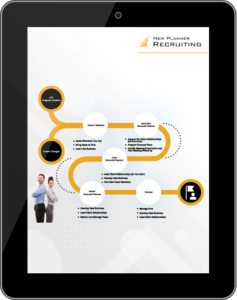 Download your free copy of the New Planner Career Roadmap!(opens in new tab) In this roadmap, you'll be guided through the details of various stages of your financial planner career, including position descriptions, licensing, skill and experience level requirements, and compensation ranges.
Get the Full Episode Transcript:

Read the Transcript Below:
Welcome to the New Planner Podcast, where it's all about helping you successfully enter the financial planning profession and accelerate your financial planning career. This podcast will help you understand the profession, become familiar with the various career paths available to you, and avoid the mistakes that limit your success. Join your host, Caleb Brown, to explore the human side of creating a successful planning career through interviews, personal experience, and insights from the trenches. Let's get started.
Caleb Brown: Welcome to the New Planner Podcast. This is Caleb Brown, your host. I'm joined today by Tiffany Guy and Jerry Mee with Boston Institute of Finance to discuss how they started in the profession, why they pursued the CFP certification, and how they found their passion for teaching and coaching professionals on how to pass the CFP exam. This episode is jam-packed with tips on how to study and pass the CFP exam. I hope you enjoy my conversation with Tiffany and Jerry.
Hi, Tiffany. Hi, Jerry. Welcome to the New Planner Podcast.
Jerry Mee: Hey, how's it going, Caleb? Hi, Caleb. Thanks for having us.
Caleb Brown: Yeah, glad to have both of you here. This is going to be a lot of fun. I would love for you just to start, maybe Tiffany, if you don't mind leading us off, just how you got started in the financial planning profession, and then we'll work into sort of what you guys are doing now.
Tiffany Guy: Yeah. Thanks, Caleb. We're going to start right off with me showing my age. I appreciate that. No. My name is Tiffany Guy. I am currently the senior curriculum manager here at Boston Institute of Finance, and I started my career in financial services over 20 years ago. It's coming up on 25 years ago. Thank you for that, Caleb. I live in Charlotte, North Carolina, and so if anybody's familiar with it, Charlotte is really kind of known as the banking capital of the US, and we have some pretty well-known banks out there that are on our skyline. And when I graduated, so I went to UNC Chapel Hill, and at the time Chapel Hill was like, it still is, a very prestigious public school, but you... we were supposed to walk out and there was just supposed to be job offers lined up. Well, 9/11 happened, and everybody flooded graduate school. Employers said, "Well, you got to have experience." I'm like, "I've been in college. I don't know how you want me to have 9:00 to 5:00 experience." So I fell into the banking side of financial services because that's where the most doors were open, and just kind of worked my way through the different various parts of the bank and then moved into securities and really in retirement, and then spent the better half of my career, mostly 20 years, working client-facing wealth management. Was an advisor and got my CFP along the way, and then found my true passion with coaching and helping advisors and now helping students pass their certified financial planner designation. So that was 25 years in I think 60 seconds.
Caleb Brown: I love it, Tiffany. Very well said. And again, a lot to unpack, and we're going to explore some of that. Let's go to Jerry, and then we'll come back.
Jerry Mee: Yeah, definitely. So, I graduated college as a double major in international relations and jazz guitar. And when I graduated, I found that there was a lack of world-traveling jazz guitarist positions open. But luckily, my aunt worked at Fidelity. She still works at Fidelity actually, and she's like, "Well, Fidelity's hiring. Why don't you come work for Fidelity?" I'm like, "I don't know anything about the finance world. What, why, like..." And she's like, "No, don't worry. They'll teach you." And so I'll always be thankful to Fidelity for that. They taught me—I didn't know the difference between an IRA and a 401(k) when I started. Fidelity I think just has a really good training program for getting people started in the industry. And I worked at Fidelity for a few years, did all sorts of stuff. I used a little bit of my international relations degree. I did the international trade desk for a while, so I can at least say my degree had some use. There you go. Fidelity was great, but you know, I was still pretty young out of college, and you want kind of like that guts and glory financial advising, right? Fidelity is kind of a very well-known, big company. I wanted a more personal thing, so I ended up going to several boutique firms, and I realized that working at these boutique firms, they were very "you eat what you kill," very commission-driven, sales-driven. And I realized that I just didn't really like the sales side of the business that much. What I really had a passion for was kind of teaching my clients. My favorite part of the job was having meetings with clients and educating them and teaching them about their investments and their accounts and what all the different stuff meant. And I realized that teaching was my real passion. So I transitioned from doing full-time financial advising to coming to work for Boston Institute of Finance, where I get to teach full-time now, and I couldn't be happier.
Caleb Brown: That's awesome. Yeah, appreciate you sharing that. And it's interesting to me how both of you guys went to this path and how you ended up at your current firm versus going to a CFP program at Texas Tech or Virginia Tech and teaching there. And maybe it was just a private sector sort of, "Hey, I don't want to go back and get a PhD." I mean, was that part of it? Like, why you maybe didn't go that route?
Jerry Mee: Well, for me, it worked out because I actually, completely by accident, lived down the street from BIF at the time. Oh, wow. Okay. Literally, probably 300 feet away, and so I was just—I wasn't really happy with the firm I was with. To give you some insight, they were still charging $300 commissions on trades, and I was just like—ouch—they were founded in the 1800s, and they still acted that way. So, yeah. I was kind of looking around, and I saw this ad that BIF was hiring, and I'm like, "Oh, they're right down the street. I'll just kind of pop in"—short commute—"and see what..." Yeah. It was a great commute. So that was a big draw for me, and the rest is history.
Caleb Brown: Tiffany, what about you? I mean, going into this and the teaching stuff and the curriculum and private sector versus going and teaching undergrad, master's in financial planning?
Tiffany Guy: Yeah, that's a great question. I hadn't really thought about going to the college world to teach there. A doctorate is still on my list of things that I will accomplish, but I had a job change, and BIF actually recruited me. They reached out directly to me through LinkedIn. Yes, it does happen. The universe exists. Okay. And they reached out to me, and I remember looking at it going, "Well, that sounds interesting. That sounds exactly like what I really like to do," 'cause I was coaching and training financial advisors on how to be successful with your job, how do you talk to your clients, like how do you stop talking essentially and let your clients talk. That was a huge part of what I did. A fun fact for those of you who are financial advisors: stop talking.
Jerry Mee: Best...
Tiffany Guy: ...advice for a podcast. It'd be amazing how your sales go if you just shut up. So yeah, said the nicest way possible. But yeah, people love to talk about themselves, so getting your clients to really open up and talk about themselves is truly the key to sales. But yeah, BIF reached out to me and was like, "Do you want to bring those skills over here and help lead the training program for our CFPs?" And I was like, "Yes, this is great." And we're 100% remote, which is even better. I definitely struggled the first month with, "I'm kind of lonely," but now... 'cause you were in...
Caleb Brown: ...person before. You were in person.
Tiffany Guy: Is that right? Yes, yeah. Yeah. Before COVID it was five days a week, eight hours a day. COVID, obviously, we were remote, and then most of the big firms now are going back hybrid. Bank of America's all over the news right now because they're like, "You can't go remote Friday and Monday," right? I was like, "I am so much more productive remote than I ever was in person." And you just don't have the distractions; you don't have the commute.
Jerry Mee: Same with BIF. So I was with BIF before COVID, and we were all in person. And then, obviously, COVID happened, we went remote, and everyone's like, "Huh, this is actually kind of nice." So we stayed remote afterwards, and even though I was right down the street, that kind of gave me the freedom to... I've moved since up to New Hampshire. I much prefer the woods to the city. So having that... live...
Caleb Brown: ...free or die, right?
Jerry Mee: Yeah, exactly. Exactly. I love New Hampshire. Couldn't take me away if you tried. So yeah, it's definitely been nice having that freedom.
Caleb Brown: Thank you both for sharing that. We may have some listeners that aren't familiar with BIF, so can one of you just sort of talk about the operation and sort of the mission, the goal, and what you guys offer and what you do?
Tiffany Guy: Yeah, I'm happy to talk about really what our mission is. And our mission is to not only help our students through a CFP education program—we're 100% remote, it's all online. We have both your self-study track, but we also have your instructor-led track. Jerry and I are two of the instructors. I lead Intro to Financial Planning. Jerry leads Insurance Planning. We have other instructors that lead our retirement courses, our estate planning courses. And one of the things that we pride ourselves on is that all of our instructors either are currently doing the business, doing the work—like our tax advisor is an actual tax planner, our estate planning attorney, she's also a CFP and an actual estate planning attorney.
Jerry Mee: Yes.
Tiffany Guy: And so it's roughly a 10 to 12-month program, depending on your speed of how you want to move through it. That being said, then we move our students into what's called our BIF review, and our review course is really designed to say, "Okay, you've had a year's worth of education, very in-depth, very detail-oriented. What do you actually need to know to pass the exam?" Because not everything is going to be on the exam. The exam's only 170 questions. You can't take 12 months of curriculum and try to cram that into 170 questions without there being, "Ah, those are highly testable topics." So the review is an eight-week program where we, for our premium students, offer classes three days a week. They're for an hour, they're not long, to really just help them: okay, how do we deep dive into this? There's lots of videos in our program where we're explaining concepts. We've got a huge Q-bank. We even give them a mock exam to say, "Okay, let's test your readiness for this exam." 'Cause our whole goal is to walk alongside you to help you pass, but also understanding you're all working people. Our number one base is working professionals. When I did my CFP education, not only was I working full-time, but my son was five. And so—and I didn't do this program through BIF—but the more I've learned about it, I'm like, wow, this actually is a really well-structured, well-designed program for career changers, for working parents, for working singles. Even if you're not working, it's still a really good program overall.
Jerry Mee: Yep. I'll just add to that. I think kind of what sets us apart from some of the other CFP providers out there is BIF is 100% CFP. It's our main focus. Other organizations will do the CFP along with several other designations, and we just feel CFP's the most well-known designation in the financial services industry. The CFP Board does a very good job of getting the name out there. I can't think of any other designation that's had a Super Bowl commercial, but the CFP has. And I think that really goes to show why the CFP's so popular, especially with career changers. We have a lot of career changers as our students, tons of people that are already in the industry as well, of course, but I think the CFP gives you kind of that jack-of-all-trades understanding of the industry as a whole, which is really attractive to career changers or people who are fresh out of college and looking to start a new career.
Caleb Brown: Yeah, I was looking at those stats from the last testing cycle. It was like 3,600, some record, like 3,600 test takers for July. If I got that, July. I remember years ago—I mean, not that long ago—it was like 5,000 or 6,000 for the whole year. The three testing cycles was only about 2,000 for every testing window.
Tiffany Guy: Clearly CFP Board's marketing is paying off.
Caleb Brown: That's what I was going to ask. I mean, other than that, because they raise all of our fees, right, to put the commercials on. Yeah, which it seems like it is helping. But is there anything else that's helping this?
Jerry Mee: Oh, I mean, the name recognition definitely helps, 'cause I've had clients come and it's like, "Hey, are you a CFP? I don't know what a CFP is, but I know I need one." And that, I think, speaks volumes that they don't even know what it is, but they've been conditioned to seek it out. But yeah, I just think it's a very general designation, so we're able to help with a lot of different areas. Most other designations tend to be more focused on one, two, maybe three topic areas, whereas the CFP Board, or the CFP, is literally just cradle to grave, everything that you could do financial planning-wise.
Tiffany Guy: And I'll add to that from having been a wealth management advisor: when I was a wealth management advisor, when we hit COVID and everything went remote, clients who were used to coming face-to-face were now dealing with the reality of going virtual and Zoom and getting used to that. One of the other things was they were also asking for a fiduciary. They were also asking for a CFP professional. And at the time, on the East Coast for the firm that I worked for, which was a fairly large firm, I was the only female CFP on the East Coast. I had a three-week waiting list for clients.
Caleb Brown: Whoa.
Tiffany Guy: Because while they wanted a CFP, they also wanted a female or they wanted a minority. And so you've got a lot of—I think the CFP Board is starting to notice—their demographic is shifting. They want their demographic to shift to just be more all-encompassing of who their clients are and what that's represented by, of just matching, "Hey, I want somebody who understands my culture, who understands my background, who understands my experience."
Jerry Mee: Yeah, and I've been with BIF for eight years, and the number of both female students and minority students has just been increasing year after year, both for us and also just the CFP in general.
Tiffany Guy: Yeah.
Jerry Mee: So lots of diversity in the designation as well.
Caleb Brown: I see that in my University of Georgia class too, which I've talked about. So let me put both of you on the hot seat maybe for a moment. So since you're both CFPs, is the exam easier now than it was when we had to take it when it was 285 questions in 10 hours and a pain in the butt?
Jerry Mee: That's tough, because I think the CFP Board is getting easier in the regard that there isn't as much math and calculation-heavy sections of the exam. They're moving a little bit away from it. There is definitely still a fair amount of calculations, but they're not really getting into the weeds as much with it. But the trade-off of that is the wording of the exam is very tricky. I tell my students that this is just as much a reading comprehension exam as it is a finance exam. And if you treat this like the Series 7 or the 66 or any of the other FINRA exams, you're going to have a bad time. You really need to be careful with what the questions say, how they're worded, because one word can completely change the meaning of the question.
Tiffany Guy: Well, and it's having you apply multiple concepts in order to answer the question. So it's not just like a Series 7 is going to ask you, "Okay, all of these are true except for the Securities Act of 1933." The CFP exam might ask you that question, but then you've also got to remember other rules that might affect this question. So you're usually pulling in two to three concepts for each question just to be able to answer the question right. I think the biggest takeaway that I had when I took the exam is, wow, this wasn't, "Do you know all the tricks to answer the questions, eliminate this?" It was, "No, do you really, truly understand this material? Can you apply this material?" And if the answer is yes, then you're going to do fine on the exam. If the answer is, "Well, I kind of know it," no, you're not going to pass it.
Jerry Mee: And I think that's good from just a real-world client perspective, because clients aren't going to hit you with these neat little wrapped-in-a-box questions that are easy to answer. No, if they want, they could Google that or they could ChatGPT that. They're going to hit you with the shotgun approach where they're going to send you a long email with 20 different topics, and you're going to get to the end of that email and you're like, "What did I just read?" And that's a skill set that you have to have as an advisor, and I think the CFP does a really good job of testing that.
Caleb Brown: You've talked about this a little bit, but I want to stay on this. I mean, you guys have seen a lot of people come through, and in your experience, what separates the people that pass the exam versus fail?
Jerry Mee: So I would say number one is dedication. Every cycle I have a couple of students who come at this and they think it's just going to be another test, it's going to be another random designation that they're adding to their business card, and then they actually sit for it. They don't take it seriously. They don't crack the books until like two weeks before the exam. They sit for it, and they just get absolutely rocked. And then they come back the next cycle humbled and actually put the effort in. I would say that's a big one—people just, first of all, not taking it seriously. And then the second one is kind of like what I said before: treating it like it's a FINRA exam, which are really very heavily memorization-based. Yes, you're going to have to memorize some things for the CFP, but nowhere near to the extent like you would with other exams or designations. Like Tiffany said, it really comes down to: you need to understand this stuff. You need to know how to apply it, because we're going to give you lots of examples in class. And I remember when I took my Series 7, I did a bunch of practice tests, and I locked myself in a room with a stack of practice tests this high, and I took the Series 7, and I pretty much saw the exact questions on the Series 7 as I was seeing on the practice test. There's only so many ways you can ask, "What is the premium of this call option?" So that just doesn't happen with the CFP. We're going to give you a bunch of examples. We're going to work through it, and then they're going to throw a monkey wrench at you that just completely changes the situation. They're going to ask you about it in a completely different way you've never seen before, and you're going to have to have the flexibility and the wherewithal to know how to adjust and how to take what you know and apply it to the situation you've never seen before. And again, like I said, that's very important for dealing with clients in the real world, 'cause that's what clients are going to come at you with. They're going to come at you with these situations that you've never come across before, and you're going to have to figure it out for them.
Tiffany Guy: Yeah. What I'll echo with that and add to that is it's really about time management and truly carving out dedicated study time consistently and repetitively. It's not, "Oh, okay. You said I need 20 hours. Well, I'm going to do that the last week." No, it's got to be—you've got to do two hours every week for 10 weeks because that's that repetitiveness. That's what's going to help you learn it and digest it. So many students that did not pass it and came back, a lot of the common denominator is they didn't spend the time repetitively, but they also had some kind of major life event going on. They had a job change. They had a move. They had a baby. And that's life. That happens. But you may want to reconsider, is this the exam cycle I should sit for, or should I wait until the next one to give myself some more time and grace, knowing life happened? That's probably the piece that I would say is just use your AI tools and map out a study plan and stick to it. Don't let anything else get in the way.
Jerry Mee: And when—I don't want to scare anyone off—but when Tiffany says two hours per week, that's for one topic. We're typically seeing with our students in the weeks leading up to the exam anywhere from 20 to 25 hours a week in the last month or so—kind of the cram session before the exam date itself. So it is a large time commitment, but no pain, no gain, as they say.
Caleb Brown: And I know there are rules of thumb out there that I use, like 250 to 300 hours. Is that kind of what you guys think total for studying for the exam? Is that where most of your people come in, you think?
Jerry Mee: Yeah. Well, it's a 10 to 14-month process, right? So in the first 10 months or so when you're going through the education coursework, that looks a lot different than when you get to the review, which is the actual, "Okay, here's where the rubber meets the road." So in basically the two months before the exam, yeah, you're looking at ramping up from 10 hours a week up to 20, 25 hours a week in the two months before.
Tiffany Guy: It's a ramp. We don't want to scare anybody.
Jerry Mee: Yeah, I don't want to scare anyone off.
Tiffany Guy: It's not like it's 25 hours a week, eight weeks out of the year. We ramp you up to it, but it's to start establishing those habits early on. One of the extras that we added into this review cycle was mapping out an actual study guide that said how many hours each week should you be doing and what exactly should you be spending those hours on. 'Cause that was something that our students asked for, even though we're like, "But you're all professionals and adults." Nope. They want it all mapped out. So we said, "We're going to map it out for you and make this easy so you don't have to think about it, and you can just focus your attention on the material."
Jerry Mee: Yeah. Exactly.
Caleb Brown: And is that—and I think it was Tiffany that said this earlier—is that typically what y'all see is about, would you say 10 to 12 months going through the education component, and then another two or three months studying for the exam? Is that—so what is that, like 15 months? Is that where most people are?
Jerry Mee: That, yeah, and that would be for a pure career changer/fresh out of college. If you have other designations, you're able to test out of certain courses. So if you are a CPA or you're an estate attorney, you know, passed the bar exam, you actually get to skip that entire 10-month process because you already have a designation that the CFP Board recognizes as being commensurate with the education. So they can actually jump right into the capstone, which is the final project, and then do the review. So their timeframe looks a lot closer to two or three months. Or there's a whole litany of other designations where it allows them to test out of one, two, three, or four different courses. So their process might look like three months of education and then three months of review. But yeah, that 12 to 14-month timeframe is for someone with zero industry experience or designations.
Tiffany Guy: I think if we were阵 truly to map it, if they did the instructor-led class, it's a 10-month education, and then you add the BIF review on it, which is eight weeks, so that puts us at 12 months.
Jerry Mee: Yeah. And we also have the self-paced option, so we also have very dedicated students where they have zero industry experience, but they're in between jobs right now, or they're fresh out of college. They haven't had a job right now, and they do the self-paced. And I've had students get through the entire program in two months, and then do the review because they were doing 10 hours a day every day, Monday through Friday, getting through that education.
Caleb Brown: Doubling up. Yeah.
Jerry Mee: Exactly. So we empower our students to kind of go at whatever speed they're most comfortable with. Yeah.
Caleb Brown: A lot of flexibility there. I'm wondering if you guys had any internal data that you could share on these other professionals, your JDs and your PhDs, and all the CPAs—the people that opt out of going through the educational program. Is their pass rate lower than someone who's like, "I'm a CPA, but hey, I'm going to go through Tiffany and Jerry's program even though I don't have to"?
Tiffany Guy: I'm so glad you asked that, Caleb, 'cause that actually is something that I worked on here recently, which was our accelerated path students. Yeah, the CFP Board says you get to, what is it, pass go, go straight to the exam. That's right. And what we found was the pass rates aren't great. They're really not. Because you're an expert in your field, but your field does not include all of the things the CFP Board is going to test you on. So let's use a CFA, for example—Certified Financial Analyst. They are brilliant on everything investments. They really are. And do they need to take an investments course? No. They could teach the investments course. But what they don't have is they may not have a ton of estate planning knowledge or insurance planning knowledge, or what about all the things from the CFP Board around ethics and the financial planning process that may not be a strength of theirs. So we actually went through and looked at all of the designations for the accelerated path where the CFP Board says you get to go straight to the capstone and sit for the exam. And we said, "Well, what would be the recommended package?" And so we put together, "Hey, these are what we would recommend that you go through from an education course perspective before you go to the review and take the exam so that you really do pass the exam." So we're hoping to see those pass rates go from about 50% to 80%, is what we're hoping for.
Jerry Mee: And those are national pass rates. The CFP Board releases the results every cycle, and it usually hovers around a 60% to 65% pass rate for the national exam.
Tiffany Guy: For all students.
Jerry Mee: For, yeah... but for the accelerated ones, we're hoping to see that number go up quite a bit.
Tiffany Guy: Yeah.
Jerry Mee: So yeah, the accelerated are around 50% and then general students is around 60% to 65%. So it is a pretty statistically significant difference between them.
Caleb Brown: I mean, it makes sense. I mean, I'm with you. And from a recruiting perspective, I mean, I really like it when the candidate comes to me who's a CPA or CFA and says, "Look, I know I can just skip all this stuff, but I'm not going to, 'cause I want to learn this. I know I'm an expert in this area." But a lot of them, I mean, to Tiffany's point, a lot of them don't do that. "I'm ready to go. I'm a little overconfident. I'm ready to go."
Jerry Mee: When I was saying before how every cycle I have some students who are like, "Ah, I know this stuff. I don't need to study, I'm just another checkbox," they tend to fall into that category of they were able to skip the education because they have another designation.
Tiffany Guy: And they're very smart people, don't get us wrong. I mean, most of our students are very smart people, but the designations almost give you this false sense that you can just go sit for another exam and pass it. And it's like, well, okay, one out of two can, but you got to have a lot of experience in some of these other areas, whether that's personal experience or you deal with it from a client base. 'Cause I don't know a lot of CPAs out there that are going through insurance planning and knowing what coverage you should have on your rental property. Maybe they are, I don't know. But there's gaps.
Jerry Mee: That's why I love working with our career changer students, 'cause they're hungry and they know that they don't know things. I'll have one student who's been in the industry for 20 years, and they think they know everything already and there's nothing left for them to learn, and I'll have someone brand-new to the industry and they're like, "I have no idea what any of this means, but I'm excited to learn about it."
Caleb Brown: What about this one? Someone—and I get this a lot, just the nature of my daily job—someone who's failed the exam multiple times, and I'm talking two, three, maybe even four times. What do you tell that person?
Jerry Mee: So I do a lot of tutoring with the program as well. I'm the main tutor for one-on-one sessions, so I actually work with a lot of students who fall into that. They've tried other programs, and they're trying something different with us. But I tell them they need to do something different. The definition of insanity is doing the same thing over and over again and expecting different results. So something needs to change, and the first part is identifying what that thing is. Sometimes it's just, "Hey, you've done a year of education and review. You've done three exams. The exam's only given three times a year, so that's another year. You've been doing nothing but studying for the CFP for two years straight now. Let's take a break. Let's take a cycle off." And I've had lots of students where that was the trick. They just needed to recharge their batteries, and that was the difference between them going in fresh versus going in exhausted, and they got the pass when they were fresh. For others it's, "Hey, let's change your study process. What does your study process look like? Why are you getting questions wrong? Because you don't know the answer, or are you getting questions wrong because you're just not a very good test taker and we need to work on test-taking skills instead of just raw knowledge skills?" So really, it's kind of a snowflake answer where everyone's kind of unique. You got to figure out what it is for that person, and I do a lot of one-on-one coaching to help people figure that out. What is it for them that's going to make the difference?
Tiffany Guy: Yeah. We've started doing a personalized retaker blueprint. And it's really based on their responses where we have all of our students take an intake survey, but with our retake students, we have a separate intake for them of just asking them to think through and self-identify: what do you think went wrong? What was in your way? Was that personal life? Was that professional life? Was that not great study habits? You be honest with yourself. And then also being honest about what are you going to do differently this time? What are resources that you think would help you more? Is tutoring one of them? And then we customize a report for them that says, "Hey, this is customized to you and tailored to you." It also includes what were their CFP exam results, what were your strengths, what were your weaknesses. But I think another pitfall that a lot of students fall into, even students who are taking it the first time, is that they look at their pre-exam, their mock exam, and they look at, "Okay, these are the areas that I did really well in," and they completely ignore them, and they only focus on the areas they didn't do well in. And so then what happens is they get to the exam, and then they fail the areas that they did well in the first time because they've diluted those skills. They didn't keep them up. They didn't keep their strengths high, sort of like a bodybuilder where you're like, "I have no leg muscles, I'm all top-heavy." Now all you start working out is just your legs, and eventually you become bottom-heavy because you didn't work out the top. So it's making sure that there's a balance. I don't know where that bodybuilder example came from.
Jerry Mee: That was good.
Caleb Brown: That was really good.
Jerry Mee: It popped into...
Tiffany Guy: ...my head.
Caleb Brown: Did you have something else, Jerry?
Jerry Mee: Yeah. I was also going to say that sometimes it also just boils down to time. We're not always ready to take the CFP at certain points in our life. If you just got a brand-new job, you just had a new baby, you just opened a new firm, now might not be the best cycle. I can't tell you the number of times I have tax advisors taking the March exam. I'm like, "What are you doing to yourself?" Oh dear, don't do that.
Tiffany Guy: Not the right time.
Jerry Mee: Yeah. It's like, I know you're excited. I know you want to get the designation. You want to put it on your business card. You want to tell your friends and post on LinkedIn, and I know—I feel that desire. But you also need to figure out when is the right time to take it, because this is something that you're going to have to put some decent dedicated time into, and if you don't have that time to dedicate, it's just not going to work out no matter how hard you try.
Caleb Brown: We're going to link to your website obviously in our show notes, but will you just talk a little bit more about the resources? I mean, you've talked about the programs that you have, but I know you guys have a great podcast. Maybe talk about that and any other resources that you have for people that you want to mention.
Tiffany Guy: Yeah. So BIF Bytes Podcast is our podcast that we do every other week. We migrated about four months ago to a video platform so where you can actually see Jerry and me and Kaylee. Jerry and I like to play games with each other, and Kaylee hosts them, 'cause Jerry and I are very competitive.
Jerry Mee: Yes. Very competitive.
Tiffany Guy: Very competitive, but it's a CFP topic, so it's not just for our students who are sitting there studying. It's also our past students or professionals who just like listening to our podcast and staying up-to-date on what's going on in the world of topics that revolve around CFP. We're getting ready to film our podcast next week on Friday on retirement plans and all of the complications that come with, well, what's the right plan, especially if you're a small business owner? How do I know which one to pick, or as a medium-sized business owner? So that's our podcast. And then features that we offer for students really boil down to: are you a premium student and did you buy the full package, or were you the core student, maybe a little bit more on a budget, or maybe things that you didn't feel like you necessarily needed? I'm going to have Jerry in a minute talk about his financial calculator course. But some of the things that we make sure that we provide our students, particularly with the review, is we've got an over 6,000-question Q-Bank to just practice questions. These are questions that we wrote; these are questions that we do update. We make sure that... I know some of our competitors update their textbooks once a year. We update our textbooks every single review cycle. So if we find a mistake, or we realize that was not worded correctly, or we keep getting questions on it, we go back and redo it every cycle. So three times a year we're making these edits. And then flashcards—I mean, there's all kinds of stuff. Jerry, why don't you talk about the financial calculator piece, 'cause I think that's a huge added bonus to our program.
Jerry Mee: Yeah. I'd say a big thing with our program is we try and make it a living program. It's constantly growing. We do exit interviews with all of our students and talk to them about what they liked, what they didn't like. And if students ask for something, we make that a priority to add it to the program. And one of the big ones a couple of years ago was students were saying, "Hey, I really could use more help with how to use the financial calculator," 'cause it is a big, important part of the exam, comes up in a lot of different areas, and it can be a bit of a black box. So I built a whole program designed to teach students the nuts and bolts, everything you could ever want to know about how to use the calculator for the exam, with tutorial videos and Q-banks and example worksheets. And that course has dramatically improved our students' success with the calculator. It went from being kind of a lower-performing area to one of the top-performing areas.
Tiffany Guy: And they get mad when they don't have a lot of calculation questions on the exam.
Jerry Mee: Yeah. They're like, "I'm so ready for this."
Tiffany Guy: "I'm a master of the calculator."
Jerry Mee: "And then I got the theory version of the exam. I was so upset." I'm like, "Ah, that's—you drew the short straw." They control that. This cycle, we just launched our brand-new thing for this cycle. We kind of add something new every single exam cycle. This one is our Monday case study courses, where every Monday we go through a full case study with the class, and we talk about how to break down the case study, how to interpret the information, how to manage your time, 'cause case studies tend to be a very big time sink on the exam. So that's our newest addition. But yeah, basically every cycle we kind of add something new and grow the program a little bit more and give our students a little bit more resources to kind of help them with the process.
Caleb Brown: Guys, thanks so much for sharing all this. I mean, as we're wrapping up, a lot of good takeaways already. But is there anything, and maybe Jerry, we'll start with you and then we'll go to Tiffany—any final comments or anything that maybe we haven't touched on that you want to leave the audience with?
Jerry Mee: Yeah, I would say that if you're thinking, "Is this right for me?" First of all, I think the CFP is probably the best designation you can get in the industry, hands down. I think it's the biggest name recognition with clients. But just from a personal accomplishment standpoint, the CFP exam is very difficult, but it's also very rewarding when you pass it. And you will pass it as long as you put the time and dedication into it. And it is a great feeling knowing that you have the crème de la crème of designations in your field, and it really quiets any—if you're one of those people that have imposter syndrome, having those CFP marks on your business card goes a long way with silencing those little voices. You are good enough, I promise you.
Tiffany Guy: Yeah, I can't agree more with that sentiment. The CFP designation is the best designation. It's that number one most respected designation that you have, so much so that I worked for many firms that would pay for designations and I was like, "No, this is the only one I want." And it's the only one I have outside of degrees, because I'm like, "This is the best," so there's no reason to add any other numbers or letters behind my name. That's just my personal opinion. But it's also the most respected by our clients because they know what it is. To piggyback on the imposter syndrome, it doesn't necessarily even have to be imposter syndrome. It can just be years of experience. If you're a career changer or you're just starting off in the field, your clients are going to be like, "Well, you're 26 years old. What do you know?" But when you're 26 years old and you have a CFP behind your name, you know a lot, and your clients know what that is, and they respect that, and they admire you for it. You could even be in your 40s and 50s and you've decided—I mean, we've had plenty who were in healthcare for 20 years and decided, "I don't want to do this anymore," and they switched and wanted to go to financial services. You put a CFP behind your name, that's instant credibility right there. And so it's extremely valuable no matter where you're at in your career, and it's what our clients know, and it's what they—they don't expect it, but they appreciate it. Some clients expect it, but...
Jerry Mee: I'll also add to that, just from a personal knowledge standpoint, it's good stuff. The curriculum is really important, and I put it to use in my personal life. I went and purchased a car a little while ago, and I brought my little HP 12C financial calculator into the finance guy's office, and I just saw his face sink when I started calculating APRs, and he's like, "No, I don't think that's a great idea. I'm not going to do it." And if I didn't have my CFP, I would have no idea how to do that. He has his software program given to him by the dealership—it's probably a million-dollar piece of software that he plugs the numbers in. It's a black box. He has no idea what it's doing or what anything means, and I'm over here with my little 1970s pocket calculator doing the same thing and knowing exactly what all the variables mean and how they impact it. And that allowed me to make a really educated decision that impacted me personally. And being able to do that for your clients—that's a great feeling.
Tiffany Guy: Yeah, I dropped a tax software because it was wrong. It was just flat-out wrong. I was like, "There's not a penalty for doing this particular transaction," so I had to change software, and the software that I changed to knew exactly what I was trying to do.
Jerry Mee: Yeah. And I think that's going to get more and more prevalent as AI advising rears its head. Being able to say, "Not only is that wrong, but here's why it's wrong" in the face of a robo-advisor—that really proves your salt to your clients. Absolutely.
Caleb Brown: Guys, this was a lot of fun. Thanks so much for coming on the show.
Jerry Mee: Yeah. Thanks, Caleb. This was great. Thank you.
Tiffany Guy: Thanks for having us, Caleb.
Thanks for joining us for this episode of the New Planner Podcast. If you are ready to discover the top career paths for financial planners and see which track is best for you, we created a free guide to help you. Grab your copy of the Financial Planner Career Roadmap at newplannerrecruiting.com/roadmap. There, you'll also find more tools and resources all created to help you build a successful financial planning career. Tune back in next week for another episode, and until then, we are here to help you succeed.
Share the Love:
If you like the New Planner Podcast...
Never miss an episode by subscribing via Apple Podcasts, Spotify, Amazon Music, YouTube Music, or by RSS!



Leave a Reply