Today's guest has taken an unconventional path to building her financial planning career, from overcoming imposter syndrome to buying out her father’s firm and introducing retirement coaching. Liz Hand joins the show to share how understanding clients’ relationships with money can help them make more intentional financial decisions, why even diligent savers can struggle to feel financially free in retirement, and how planners can look beyond the numbers to help clients align their wealth with what matters most.
Listen in as Liz discusses navigating family business succession with her brother, as well as the thinking behind her book, Money Is A Mirror. You'll hear what new planners can learn from moments of uncertainty and advice for those entering the profession. Liz offers a valuable perspective on combining financial planning with deeper conversations about purpose, beliefs, and the lives that clients want their money to support.
What You'll Learn In Today's Episode:
- How Liz discovered her passion for financial planning. (1:34)
- Why starting in client service helped her understand the business before becoming an advisor. (5:20)
- What helped Liz find her strengths as a relationship builder. (6:45)
- How imposter syndrome and cultural expectations affected her confidence. (7:25)
- What made the two-and-a-half-year client succession process successful. (11:50)
- How Liz and her brother navigated buying out their father and working together as family business owners. (13:45)
- What ontological coaching is and how our beliefs and states of being influence financial decisions. (15:30)
- How Liz developed Money Is a Mirror and found her own approach to writing a book. (23:15)
- Why career-changers and new planners should follow their curiosity. (26:30)
Ideas Worth Sharing:
“If it doesn't progress the client's life, it doesn't really matter.” - Liz Hand Share on X “You are not who you were, and you are not yet who you are becoming. And it's okay to be in that really vulnerable space.” - Liz Hand Share on X “Follow your curiosity, and then notice when you stop.” - Liz Hand Share on XResources In Today's Episode:
- Liz Hand: LinkedIn
- Money Is A Mirror by Elizabeth Hand
- Finding your Path: The Roadmap from Student to Successful Financial Planner by Caleb Brown
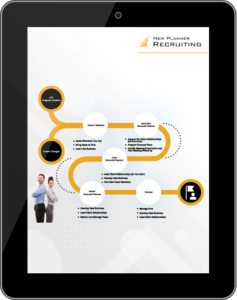 Download your free copy of the New Planner Career Roadmap!(opens in new tab) In this roadmap, you'll be guided through the details of various stages of your financial planner career, including position descriptions, licensing, skill and experience level requirements, and compensation ranges.
Get the Full Episode Transcript:

Read the Transcript Below:
Welcome to the New Planner Podcast, where it's all about helping you successfully enter the financial planning profession and accelerate your financial planning career. This podcast will help you understand the profession, become familiar with the various career paths available to you, and avoid the mistakes that limit your success. Join your host, Caleb Brown, to explore the human side of creating a successful planning career through interviews, personal experience, and insights from the trenches. Let's get started.
Caleb Brown: Welcome to the New Planner Podcast. This is Caleb Brown, your host. I'm joined today by Liz Hand, co-owner of Pleasant Wealth in Canton, Ohio. Liz joins the show today to discuss how she entered the profession, initially struggled in a business development role, dealt with imposter syndrome, found traction and grew her skills and confidence, ultimately buying out her father, the firm's founder, and partnering with her brother.
Plus, how she added a specialized coaching process into her work with clients, and some final tips for new planners. I hope you enjoy this episode with Liz Hand.
Hi, Liz. Welcome to the New Planner Podcast.
Liz Hand: Thanks for having me, Caleb. It's great to be here.
Caleb Brown: Thank you again for taking time out of your day to come share your career journey, and we were just talking a little bit off air. I mean, it's kind of a cool story, right? Intern to now co-owner. So maybe just go back and let's work up to how you got to present day. How did you get started in all this?
Liz Hand: Yeah. Well, Pleasant Wealth was started by my dad in 1998. He was a career changer and started into the field at age 43. His practice was very different than what it is now, a lot more insurance and mutual fund based. But from a very young age, eighth grade, there were conversations around, "This would be a great field for you. You have the temperament, the personality, people enjoy working with you. There's not as many women in the industry."
So I really just believed it. That eighth grade summer, I got to work in my dad's office for just a little bit, you know, like minor tasks, but he did invite me into a meeting with a client, and it happened to be a family friend, so I knew them really well. And it was fascinating to me the way that conversations around money tie to every aspect of life. And so from that point, I realized this is so much more than the numbers and was hooked by the relationship people have with money.
Caleb Brown: Absolutely. A couple of things there. I mean, so your dad is a career changer, started... What field was he in prior to financial planning?
Liz Hand: I mean, it's a whole other story. Happy to give, like, the really high-level view, but think grew up in the Amish Mennonite community. Didn't graduate high school. Yes, and then eventually artist, decided to go back to college, got his GED. Studied law, but then wanted to apply it in financial services.
Caleb Brown: Oh, that's so cool. All right. Yeah. I mean, again, just a success story. I mean, that's a big risk. 43 years old, starting something brand new in the wild.
Liz Hand: And frankly, just the whole concept of someone choosing to stretch themselves past everything they've known for 20 years of their adult experience to try something new, and the legacy that's created for my family, my brother's family, it's huge. And so I totally respect people who take that leap.
Caleb Brown: Okay. So you, and also, what a cool dad. I mean, very encouraging and like, "Hey, you should do this. You'd be really..." I mean, that's awesome. We need more of that.
Liz Hand: Yeah. My dad is definitely a person of possibility.
Caleb Brown: So you did the internship, but then did you go right into the firm after you got out of school, or when did that start? When did you—
Liz Hand: Yeah. After that eighth grade experience, I had kind of mentally made the decision I'm going into this field. So I studied all of the business classes and the marketing classes and anything that had to do with money, accounting mostly, just in my extra classes that I could choose in high school. But went to college for financial management, and during college there was one summer that I did an internship with my dad as well. And then right after school, the plan was for me to find a position in another firm for a couple of years, learn the ropes elsewhere, and then come back to this firm. But just by the nature of life, it made more sense for me to join the firm right away. So I ended up starting in the firm just as the client services manager and learning all of the paperwork side of it, and then eventually transitioned into an advisor role.
Caleb Brown: Okay. Got it. So were there other employees there when you joined, or were you the first one?
Liz Hand: I was not the first employee. There had been others before me.
Caleb Brown: Okay. And so you started at the, I mean, I think a key point there is you started at the bottom. You didn't come in at the top just because you had the same last name or it was your dad's firm.
Liz Hand: Yeah.
Caleb Brown: I mean, that's a key point that a lot of times people with family members in the business forget that.
Liz Hand: I do think it really contextualized the work of the firm. Now, financial management honestly was much more corporate finance than personal finance. We had just a touch of personal finance classwork. But now that I see students that are coming out of college with a financial planning degree, I really do think you can step into that advisor role and have a comprehensive enough understanding. You might not get all of the logistics paperwork hardships that your team has, but you would be much more prepared. But I very much appreciated being able to learn the context of the firm and how people move their money and all of that information before stepping into the advice role.
Caleb Brown: I'm with you. I mean, I always tell people try to learn the cornerstone of the business. That's how I was taught. But now there's so many AI and technology tools, it's like you can just kind of go right into the relationship stuff on maybe a second chair role. Okay, so CSA then, just walk us through sort of the internal progression that you experienced.
Liz Hand: So after about a year and a half of being the CSA, we had opened an office in a new town, and I tried my hat—or however people say it—I tried to be the advisor that drummed up new business, and it just didn't work. It fell pretty flat. I maybe brought in one or two or three clients, but nothing significant enough. However, there was an advisor locally that was nearing retirement, had some health issues pop up, and started looking more seriously at his own succession. And so we ended up purchasing his practice, and I succeeded his client base, which worked really well for me. I would say that in the skill set of navigating the business and understanding how things work and really being hooked in this "what is our relationship to money," I was bringing a different lens to the conversation for clients and was able to build a different style of relationship that complemented his and didn't compete with it. So that succession ended up being really successful.
Caleb Brown: That's awesome. Why do you think you struggled on just going out there and sort of pounding the pavement and bringing in the clients?
Liz Hand: You know the words imposter syndrome.
Caleb Brown: Never heard them before. Tell me more.
Liz Hand: Yeah, it's a brand-new concept. It's just hot off the press. Actually, I think AI generated it. Just kidding. No, I definitely have struggled with that, and I think not only just in the way of approaching life, but then you layer in what it means to be a female in financial services and to be a female in the cultural area that I'm at. And there were just layers of barriers where I had a hard time seeing the confidence in myself to project that confidence with people as they were bringing money in.
Caleb Brown: I was going to say, even with your dad giving you all this encouragement and positive affirmation, it's a big deal.
Liz Hand: Yeah, and it really does matter the client base. What I noticed with my dad was his client base, as I mentioned, he came from an Amish/Mennonite background, and so a lot of his client base and the success that he had was in the Amish and Mennonite community, predominantly the Amish community because he was able to travel to them, get their financial services needs met. However, that group of people doesn't necessarily finalize decisions with women as their advisor. So I wasn't getting the traction that I wanted in those relationships, and so that did not work. Doesn't matter how much encouragement I was given, it just didn't work, and you could put more time into it, but I found that branching off and succeeding this other advisor with a completely different cultural background actually utilized my best skill of bringing relationships closer. I'm a really good relationship builder.
Caleb Brown: Yeah, you've mentioned several times now the relationship. I mean, you didn't say this, but sort of the touchy-feely side, like the relationship with money. Tell me more about how you got interested in that and how that's helped you become a better advisor.
Liz Hand: I love that you say touchy-feely side. I think that people relate to touchy-feely side as in shallow almost. What I have found, and I'm not saying that you do that, but that is a way people kind of talk about it. What I've found is that it's much more practical to understand and really helps you direct the money in a more sophisticated way that helps the client utilize their money more intentionally because we can do all of the strategies all day, every day. Like, you learn the processes, you learn the hoops to jump through, but if it doesn't progress the client's life, it doesn't really matter. And so I want to understand how they tick. I want to understand what their relationship is like with their child. I want to understand what makes them stop in making a purchasing decision, or what makes them hesitate in giving me a call. Because that's really their relationship with money. And when Clinton and I were going through the process of buying out my dad, I hired an ontological coach, and she really helped me dig into this belief system that I have in the way that I relate to myself and others. And it really opened my eyes to see this intricate system that we build on top of but don't get into with our clients. And so I've been trying to integrate that work as I've now gotten trained in ontological coaching, integrate that work into my financial planning practice alongside my brother. And I actually handed off all of my client relationships to him as the primary financial planner, and then me as their retirement coach.
Caleb Brown: Okay. Cool. I want to come back to that. There's a lot to unpack there. Let's go back to something you said earlier. So this other advisor's book that you guys bought, his client base was different. Were they just like pre-retirees? Just more mainstream? They weren't Amish.
Liz Hand: Yeah, just more mainstream.
Caleb Brown: Got it. All right. So maybe just talk about the transition there. How many times did you meet with the advisor and the clients before the confidence was built and the clients felt good about you? Just walk us through that if you could.
Liz Hand: Sure. Yeah. That was a two and a half year handoff, and it was pretty well structured, I would say. I very much appreciated his willingness to stay engaged in the handoff process because that is, just from an identity sense, a very tender time for people to say, "I might no longer be needed in this client relationship." And so how we structured it was we met with people twice in that first year and twice in that second year. And the third year he did not participate, so it was like his half year before he retired. I ran those meetings on my own. And he led the first conversation with me participating, and one of the most confronting stories in that was there was a client who didn't know that I was going to be there with him, and she comes in and she holds her hand up in front of my face from across the room, like she can't see me. "Who is this person? Why is she here?" Super confronting. And also you get to understand a large range of emotional reactions to change. By the second meeting, I had a little bit more of the meeting to run on my own, one little area of the plan that we were talking about. He was more investments focused, so I brought in a little bit of a strategy of financial planning. And then by the third meeting, I was running it and he was there as a resource. Fourth meeting, I was running it, he was a resource. By the fifth meeting in that third year, he was not present. He might have popped down to say hi.
Caleb Brown: Great job on transitioning her.
Liz Hand: He did a great job of staying engaged.
Caleb Brown: Yeah. Okay. And I think you mentioned earlier Clinton, your brother, so you and your brother bought out your dad. When did that happen?
Liz Hand: We purchased the practice, or started the purchasing of the practice, in 2022. So Clinton's job was to succeed my dad's portion of the business, which was a pretty good fit for him.
Caleb Brown: Okay, good. And then now, what I thought I heard earlier was he is mostly handling everything except the pre-retirement/retirement, and you're working with that. Is that how you described it?
Liz Hand: So how I would describe it is he carries that traditional financial planner role, giving the reviews, planning the strategy, making sure that it gets handled with the service team. What I've done is innovated the firm to add coaching into the mix. And so we do a one-page plan process that I lead. We do something that we call the Insight Series, which is a monthly retirement coaching and financial planning conversation that I've designed and lead, and that's virtual. And then throughout the year, clients get two meetings with me that allow them to think through life transition, family transition, relationship to money, purpose, all of those kinds of conversations.
Caleb Brown: Okay. And you're using the ontological stuff that you went through. You took that and you're now doing it with your clients essentially.
Liz Hand: Yes. Yep. I was formally trained in it, and then have been coaching advisors on the side to really build up that skill set, and then recently have brought it into our firm.
Caleb Brown: And I know you touched on it a little bit, but can you just go a little bit deeper on what it is, what's the process, or what specific questions you're asking or how you engage these people? And what I appreciate you said, it's not just a superficial thing, we're taking a deeper dive.
Liz Hand: Yeah. It's funny because that soft and fuzzy thing, I'm actually quite confronting in the coaching that I generate because I'm calling forth someone's soul into their life, and our soul gets so buried. So that again is a little bit esoteric for me to say. So what I'll share about ontological coaching is it's a big word that just means who you're being. And so if you think about it, tonight when you go home, let's say that you're the one doing the dishes. And I don't know anything about your life—I'll put myself in it because... what's your family situation?
Caleb Brown: Wife and two kids.
Liz Hand: Wife and two kids. Okay. So you go home tonight, and you can wash the dishes for the family from a place of like, "Life is good. My family is fantastic. I really appreciate all of them." You can also wash the dishes from the place of like, "These kids are dirty. I can't believe that nobody else is helping me right now." Those are our states of being, right? And so I can spend money on a car from one state of being, or I can spend money on a car from another state of being, and those kind of shine a light, a little flashlight onto what belief system we have and what our sense of understanding our purpose in the world is. So my job is to really clear out the clutter of false beliefs that we have, of hesitations, of this imposter-like feeling, to see who they are truly at their essence and help them call that forth. So it's not soft and fuzzy. It can be kind of confronting.
Caleb Brown: Right. I like that. I mean, one straight shooter to another, I think going there, and I know some of the other life planning stuff out there, it's asking people questions they've never thought about, and they're caught off guard, and sometimes you can get some interesting responses. Okay, so this is all very interesting. So you also wrote a book recently. Was that about all this, the coaching and kind of how you've implemented it into your practice?
Liz Hand: It is, but it also incorporates the financial planning work I've done over the years. I noticed when I was the financial planner, and I was helping clients plan their retirement, the ways that clients could be so diligent in their savings and always step up and do the responsible thing, and I called those good clients because they followed my advice. And then I'd see them enter retirement and get this life upheaval. "Who am I?" And start to reorient with that. And then I would see patterns of behavior where they would just say, "Well, I was saving money for this thing called retirement, but actually I might need it in the future. I might need it even further in the future. You know what? This money is for my kids." And so they've done all of the responsible work throughout the years of saving diligently, only to pass the money on to someone else. And I saw a couple of scenarios that I mixed together in the book, just to keep anonymity, where that next generation or even the person who received it afterwards just blew through the money. And I always went back to the idea of this client sitting in front of me, witnessing the ways that they diligently worked their job and their career and diligently saved. Could they have imagined the way that their money moved after they died? No, I don't think they would've wanted that. And so the way I see Money Is a Mirror is bringing people to light, bringing to light how it is that we're relating to our monies and the way that it gets stuck for us, the way that you can be on the surface financially free because you've worked with an excellent planner like Caleb or like any of the other listeners that are on here that have helped them do the Roth conversions, the tax strategies, and build their money and all these cool things, but still not feel financially free. So how can we help them get this real sense of freedom that each of us have access to in this life?
Caleb Brown: After hearing that, Liz, I gotta ask you, am I a bad person for wanting my kids to make their own way?
Liz Hand: I'm so curious what brought that up.
Caleb Brown: I think I'm in the minority.
Liz Hand: Of not passing money on to your children?
Caleb Brown: Yeah. Like, I'm like, no, they gotta do their own way.
Liz Hand: Yeah. No, I think that's really healthy. You know, multiple countries have some sort of saying where the third generation loses the money or spends it so fast. If it's done that way in many countries, perhaps there's something to setting your kids up for success, but not necessarily creating this multi-generational legacy.
Caleb Brown: Love it. Well, I want to go back to something you said. What was it like—the pros and cons, if you can just high-level it—working with your dad and brother, your family? There are some obvious benefits, but there are some challenges. Can you talk a little bit about those?
Liz Hand: Yeah. In my family, we have fairly open communication, and it's still tricky to navigate. On one hand, the positive sides, there is speed of trust. You've known these people in many situations, and you kind of know how they operate and what they want and what motivates them. And so when something goes awry, these are the people that are going to stand for me and help me work through situations. So there's that sense of speed of trust in getting work done together. On the other hand, it feels like there's so much at stake when you are beginning to understand who you are as a person and begin to understand what it is that you might want that may differ from your sibling or your parent or your child. And those differences sometimes within the family systems get squashed because we are so ingrained in our patterns of speaking and our patterns of behavior and operation that we don't allow the ones closest to us to thrive. So if you decided you were planning to go on a diet, the likely people to get you to jump off of your diet are your good friends, the people close to you. They'll be like, "Ah, you don't have to do that. Just this time have the cookie." So same thing, those people closest to us, it's a lovely web that we can weave within, but also it can feel like a constraint when you're wanting to experience something new, like taking on ownership of the firm. And it can be seen as a confronting me versus you type of situation. So we really had to be intentional about the types of conversation we had. We had a lot of support from coaches and consultants to help us through that process, but it allows us to still have Thanksgiving dinner together and not be upset. You know, not everybody has that privilege. I feel very grateful that I do.
Caleb Brown: I know a lot of financial planners that won't work with their family for that exact reason. I want to be able to have Thanksgiving dinner without talking about why our Roth IRA went down $7,500. You guys are doing a lot of great stuff. What's next? What are you working on now, or what's on the horizon for Pleasant Wealth?
Liz Hand: Yeah. Money Is a Mirror is really the next wave of the work that we're doing, because I see it so impactful, not only for our clients that we work with, but also for other advisors. I've taken that work and made it into a play, which I'll be delivering at XYPN Live.
Caleb Brown: Nice.
Liz Hand: It'll be October 1st. I'm one of the keynotes. So really excited to deliver that. It's the next unknown. You plant your flag of the thing that you want, and then you see what comes from it. I'm sure your career changers that listen to this podcast can feel that. They're like, "Okay, I want to become a financial planner, but I don't know what happens after that." And that's how I kind of feel with Money Is a Mirror. I'm planting that flag of this belief system and this way of seeing the world of money, and I'm really curious to see what comes forth from that. But in the meantime, we've structured our firm to scale, assuming that it will really expand our reach regionally with women and couples that are nearing retirement.
Caleb Brown: Talk to us about the book-writing process. Is that something you would recommend that everybody or other entrepreneurs do? What was your experience with it?
Liz Hand: I never set out to be an author. I was in the Society of Advice, and Carl Richards did the "one thing." And I realized my one thing for 2024 was to write down just these patterns that I noticed from clients. And as I started writing them down, I was like, "Oh, this is a book. I'm going to write this book." So rapidly wrote most of it. And people approach book writing all different ways. Some people say wake up every day and write something. I write based on energy. And so if it's not flowing, I'm not writing, because I want my best energy to be there. I also was not time-bound with it, so that works. If you have a deadline, you can't work that way. So it's been quite a few years of telling people "the book's coming, it's almost here," but now here we actually are. In 2026, it's going to come out September 25th.
Caleb Brown: Congratulations. Writing a book is a big feat.
Liz Hand: Have you written one?
Caleb Brown: Two, actually. So I'm certifiable.
Liz Hand: What was your writing process?
Caleb Brown: Well, I wrote a blog for like 10 years, and I would just sit down and I had a deadline. I just had to crank out 800, 900, 1,000 words over a long time, and then I kind of put all those together for the first one. And the second one, during COVID, I was like, "Man, I have all this time," and every two hours was my writing block when I felt like I did my best work. I would just sit down from 8:00 to 10:00 and not do anything else, and sometimes just sit there and stare at a blank page like "Oh, I hate this," and try to crank content out.
Liz Hand: Well, what I love about what you said is you are following your energy in a different way. You said which time of day is the right time for that writing, and then giving yourself permission to write fully or stare at a blank page a little bit.
Caleb Brown: That's amazing. Congrats, and we'll make sure we link to all the stuff on the book and your LinkedIn profile in the show notes. You mentioned career changers. Any final other tips, I mean, you've got quite the career history here, and it's really cool, and I'm glad that we get to benefit from this. Any words of wisdom or advice that you'd give anybody that's starting out in this profession or looking to transition into it?
Liz Hand: Yeah, the piece that I see is this is an identity change for you when you make this transition. You are not who you were, and you are not yet who you are becoming, and it's okay to be in that really vulnerable space. It's scary. It's confronting. I know how it feels for myself as I start this new endeavor with the book and the play. That's a human experience of this identity change, and the work is noticing where you get stopped. Because our curiosity is such a lovely energy to follow, and it moves us really quickly. I'm sure there's ways that you've been able to find different planning modalities or strategies, and learning all about it is really fun. That curiosity is such a good guide. Follow your curiosity. And then notice when you stop. Because when you stop, that's where imposter syndrome or your ego is getting in the space. And from that place, if you identify it, you can decide how you want to overcome that hurdle, whether it be a little rock in the road or a boulder. That awareness is such a good asset to have as you embark into this next leg of your journey.
Caleb Brown: I really love how you put that. Liz, thanks so much for coming on the show and sharing your journey.
Liz Hand: Yeah, pleasure. Great to be here.
Thanks for joining us for this episode of the New Planner Podcast. If you are ready to discover the top career paths for financial planners and see which track is best for you, we created a free guide to help you. Grab your copy of the Financial Planner Career Roadmap at newplannerrecruiting.com/roadmap. There, you'll also find more tools and resources all created to help you build a successful financial planning career. Tune back in next week for another episode, and until then, we are here to help you succeed.
Share the Love:
If you like the New Planner Podcast...
Never miss an episode by subscribing via Apple Podcasts, Spotify, Amazon Music, YouTube Music, or by RSS!



Leave a Reply