What does it take to completely reinvent your career and break into financial planning from an unconventional background? In this episode, Andrew Bencivenga, financial planner at Brindle & Bay Wealth Management, shares his unique journey from teaching English in South Korea and running a craft brewery to becoming a successful financial planner.
Listen in to learn how Andrew identified transferable skills from his previous careers, earned his CFP while working exhausting hours, broke into the profession through persistence and cold outreach, and accelerated his growth through mentorship and technical expertise. Andrew also shares lessons on finding the right firm fit, building trust, and why showing up consistently can make all the difference for new planners starting their careers.
What You'll Learn In Today's Episode:
- How Andrew transitioned from teaching and entrepreneurship into financial planning. (1:30)
- Why transferable skills can create unexpected career opportunities. (4:30)
- How Andrew studied for the CFP exam while running a business. (5:30)
- The importance of persistence when breaking into the profession. (7:20)
- How cold outreach helped Andrew land his first planning role. (8:15)
- Why mentorship was critical to his growth as a planner. (9:30)
- How he progressed from paraplanner to lead planner in two years. (14:00)
- What makes a firm culture the right fit for new planners. (16:15)
- How intentional career choices can accelerate professional growth. (23:00)
Ideas Worth Sharing:
“Once you get to know someone and you build that trust and that rapport, I think it’s a lot easier for them to look at you and say, ‘I know that this person’s going to show up and do their best every day.’” - Andrew Bencivenga Share on X “I think you want to have some intentionality. You want to be thoughtful about the kind of work that you want to do and the kind of firm that you want to work with.” - Andrew Bencivenga Share on X “Passing the test is the easy part. Because then you're in the business. Getting a job, that's where it gets hard.” - Andrew Bencivenga Share on XResources In Today's Episode:
- Andrew Bencivenga: LinkedIn
- New Planner Recruiting - Financial Planner Career Roadmap
- Finding your Path: The Roadmap from Student to Successful Financial Planner by Caleb Brown
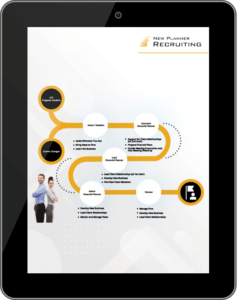 Download your free copy of the New Planner Career Roadmap! In this roadmap, you'll be guided through the details of various stages of your financial planner career, including position descriptions, licensing, skill and experience level requirements, and compensation ranges.
Get the Full Episode Transcript:

Read the Transcript Below:
Welcome to the New Planner Podcast, where it's all about helping you successfully enter the financial planning profession and accelerate your financial planning career. This podcast will help you understand the profession, become familiar with the various career paths available to you, and avoid the mistakes that limit your success. Join your host, Caleb Brown, to explore the human side of creating a successful planning career through interviews, personal experience, and insights from the trenches. Let's get started.
Caleb Brown: Welcome to the New Planner Podcast. This is Caleb Brown, your host. I'm joined today by Andrew Bencivenga, a financial planner at Brindle & Bay Wealth Management. Andrew joins the show to discuss how he entered the financial planning profession and how he leverages his experience as a teacher, entrepreneur, and business owner to better serve clients.
I hope you enjoy this episode with Andrew Bencivenga.
Hey, Andrew. Welcome to the New Planner Podcast.
Andrew Bencivenga: Hi, Caleb. Thanks for having me.
Caleb Brown: You got it. Thank you. I know we had to reschedule this a couple times, so thanks for not giving up on us. So, you got a really cool... we go back a little ways, so you've got a really cool story on the career-changing and the pivoting, getting into the financial planning profession, so I wanted to have you on. And maybe just start with what you were doing because this was a career changer. What were you doing prior to changing careers into financial planning?
Andrew Bencivenga: Sure. I came through the side door, for sure. I was living in South Korea when I entered the profession, and I had gone out there when I was about 24 years old in a year that will remain unspecified. But I was an English teacher out there, and then I transitioned into being a business owner. I was a partner in a craft brewing company, and we had been opening some franchises, and I was just running a bar basically at that point.
But I was getting a little bit old, you know, you're nearing 40, kicking drunks out at 2:00 a.m., little kid at home that's getting long in the teeth. So I did an inventory, and I took a look at where I was and what skills that I had, and decided that financial services would be the career that I'd transition into.
Also, kind of looking back to getting into the States. So I just studied my butt off, running prep in the mornings over at the bar, studying on the chairs, sleeping on tables, running service, going home, taking care of the kid, and managed to pass the CFP test, what is it, 2019 maybe. And then just started cold calling and got myself into the industry, kind of like a donkey.
Caleb Brown: Wow. Okay, there's a lot there. Let's go back and look at this. So South Korea, so you were an English teacher, and you were doing the bar thing as well, or was that—
Andrew Bencivenga: Sure. There was about 10 years in between the two. So I got off the plane 10:00 at night. Next morning at 8:00 a.m., they had me in a classroom in front of 30 kids, right? And so I did that for, yeah, seven to 10 years where I was just teaching. Started at the high school level, taught little kids, preschool, university level as well, but there's a real glass ceiling there. And one can only teach so much. I love the people that are natural teachers, but it's a lot, right?
And so that paired with the glass ceiling concept, I had also been doing some side hustle on my own, cooking food, making sausage, doing pop-ups and stuff. And a guy in the city was opening that brewery, and he said, “Hey, you got a couple of bucks you want to invest and give it a go?” And I had no experience in that either, so that was another nice little jump that I decided to make.
That was right after we got married a little bit. And bless my wife for being supportive of it, and we just got it going and moved into that. So did that for another seven to 10 years. I was out there for a total of 17. There was some overlap between the two. But yeah, that was kind of it.
Caleb Brown: You said you took inventory of your skill set and interests. I mean, how did you land out on financial services?
Andrew Bencivenga: Sure. It really came down to a question of: What am I good at? What can I get paid well to do? And what are the barriers to entry? And what can I actually have some meaning around, right? I want to do well, but also do good, right? I'm not Superman, but...
So the teaching background wound up being something that pivoted really well into financial planning. I'm also a planner by nature. I've always been the kind of person that's looking 10, 15, 20 steps down the line. And so, I've also got a very good proclivity for numbers and taking large amounts of information and distilling them down.
It's funny, in college I studied English, and so you kind of get out and there's not much for you, but there's a lot of research skills, there's a lot of distillation of information, there's a lot of explanation, and the ability to write and listen and communicate even wound up—I was like, “That is all financial planning.” So.
Caleb Brown: Got it. And then you—I just want to go back to something you said earlier too. It sounds like you were going through your CFP coursework while running the bar and working crazy hours, is what I heard.
Andrew Bencivenga: It was nuts, yeah. Yeah, so I would literally show up at the bar maybe 10:00 or 11:00 in the morning, and I'd be working on prep work, and something's going on in the kitchen, I'm at a table studying.
And then I'd run service from 6:00 p.m. until 11:00, 12:00, 1:00, or 2:00, get home, my wife would hand me a screaming baby, try to put it down, and then it would just start again. So yeah, it was... That's why I said I was a donkey, 'cause for a number of years there it was just put your head down, show up, get the work done.
And luckily, I did pass the CFP test on the first try. I had to travel for that and do the whole hotel bit and everything, and so I got it done and just... then that's—passing the test is the easy part. 'Cause like you're in the business. Getting a job, getting a good job, that's where you're going to get killed.
Caleb Brown: And I want to come back to that, but just wanted to comment. I've noticed, and maybe it's a generational thing, 'cause I think you and I are closer. A lot of the candidates that I talk to now that are, let's just say younger than us, so let's just say 40 and younger—and again, maybe the sample size is really small, 'cause I'm certainly not talking to everybody.
But hey, I'm, “Why don't you take that…” “I quit my job so I could go study for the CFP exam.” So them working a bar job and do—not entered their mind at all. It's like, “Nope, that's too much.” It's just interesting to me that how things have shifted a little bit. And it's not a knock on the next generation, it's just different, right?
I mean, so when I hear stories like this, what you just said, I'm like, “Wow, let's explore that.”
Andrew Bencivenga: Yeah, I mean, I had no choice. I was living abroad as an American. I was the breadwinner, and I'm fine with that; that's what we had going on. Not to take anything away from my wife, 'cause she worked her butt off and is an incredible mom.
But it was like, “You're not quitting.” There's no quit. And so I legit—I was sleeping on bar tables. We had these wooden tables in the back, and I would take a 25-minute nap on a wooden table with a bar towel under my head before service started, and it was like, “Look, put your head down and get the job done.”
Luckily, I did, and so when I passed that test, then it was like, “All right, now find the firms that are going to be willing to take you on in a remote position from Korea with that time schedule.” And so that started that next slog where it was like, figure it out.
Caleb Brown: And talk more about that, if you would. You said you started cold calling a lot, like yours truly, to get a job. And it's unfortunate, but I mean, I think there's also some good things about that. I mean, you just were calling American companies and just saying, “Look, I passed my CFP. I have no experience. Hire me as a remote planner”? I mean, was that the pitch?
Andrew Bencivenga: That was pretty much it. So I knew that no bigger firm was going to take me, right? And I knew that wasn't the kind of work that I wanted to do. I wanted a small firm. I wanted a tight-knit community. I wanted people that I could really step in and say, “Look, I might not be experienced, but if I get some good mentorship, I'm going to fly.”
And so I looked at the XYPN website, and I put together an Excel sheet. And I went down the line vetting out advisors, vetting out their firms a little bit. But really, it was just a bazooka shotgun approach where I'd send out a couple emails. I'd make a couple of phone calls when the times lined up.
And I was probably doing 20 to 30 phone calls and emails a day at a certain point, and 99% were just kind of bouncing back, and got myself into a couple conversations, but finally landed on a guy where it was truly the best person I could have landed with. So it worked out really well.
Caleb Brown: And tell us more. Why was that—why was it a perfect fit?
Andrew Bencivenga: I wound up landing with a guy named Ben Martinek, who runs Bona Fide Finance, and it's spelled Bona Fide Finance, but it's bona fide from the Latin for finance and good faith. Anyway, small firm: him, his wife, his mother, and me for a while, and just such a bright, technically sound planner with tax chops. And he was running a small firm, 50 to 70 families on the financial planning side of things, and then we were also doing tax prep.
So that was another crazy situation 'cause the calendar nev—there's never a lull in that. And he took me on, started me at 15 bucks an hour, but I didn't care 'cause at that point it was kind of like a part-time situation. I was still running the bar, and then I'd close down at the bar at 2:00 a.m. or 1:00 a.m., and I'd stand at the bar and take meetings. The lights would turn off. I had a computer there. I'd stand there and take meetings.
Caleb Brown: 'Cause there's a—the time difference, I mean, there's a big time difference, right?
Andrew Bencivenga: Yeah. The time difference, yeah. So for a while there. Then also when I was in Korea doing this, I was working the split shift. So I would do meetings at all hours of the night, wake up, send my son to school, try to figure that out, and just kept working at it. But the grounding in technical knowledge, the ability to be in client meetings from a very early stage, and just the person that Ben is—the mentorship that was there naturally, the patience that he had was incredible.
Caleb Brown: That's really cool. Really cool that he took a chance on you, and it was a good fit. I mean, 'cause a lot of times... I mean, I know you did some research, but you're throwing a dart at a dartboard, right?
Andrew Bencivenga: Oh, yeah.
Caleb Brown: So, I mean, you had a good run there, right? I think you were there around five years or so. So what happened after that?
Andrew Bencivenga: Yeah. I was there five years, and so in 2024, in the summer of 2024, we had moved back to the States and moved back to the Greenville area. And yeah, you start looking around a little bit more, right? And you said, “You're throwing darts.” At that point, I was throwing darts.
When I came on with Ben and Bona Fide, I was throwing darts, and I was going to work for anyone that could fog a mirror. Pretty much like a firm owner that starts, you're going to work with anyone. So the true story is once I landed back into the States, those opportunities opened up, and you're getting emails from recruiters, and you're getting random messages.
And so there was a firm here in Greenville where the owner of the firm had actually wound up sending me a message on LinkedIn and talking about this, talking about that, made a very appealing offer basically. And I had first said no to him. That was around Thanksgiving time of 2024. I had said no to him, and then he came back to me around Christmas time, and I wound up saying yes and making the move.
Caleb Brown: And I want to unpack that a little bit more before we get too far away, though. I mean, Bona Fide, what value did you... I mean, you passed the CFP. I mean, what value did you provide to them? I know he's paying you the 15 bucks, but what were you doing to kind of help them? I know they were helping you, but what were you doing to help them?
Andrew Bencivenga: Yeah. When I first came on, it was like, “All right. You're a paraplanner.” And so 15 bucks, yeah, low, low, low. But my cost of living out there in Korea was also lower, right? So there was—it wasn't that much of a stress. And that 15 did not remain that way for long. He was very good. He gave me good raises.
There was good benefits. I'm not trying to say that he was paying under what he should have at all. Ben took very good care of me. But yeah, so came on as a paraplanner, kind of the gofer, kind of doing everything, taking meeting notes, writing follow-up emails, keeping in contact, a lot of research projects. You are vetting out everything. And then eventually I was just a lead planner. I was taking meetings. I had probably 10 to 20, 30 client families that I was running point on, and Ben was very minimally involved after a while. And at the same time, it was also like, “Well, Bud, we also do tax prep, so let's get you to learn that.”
And that also became a huge part of the offer. And at the same time, eventually, after doing that for a year or two, you got a couple years of tax prep under your belt, “Let's go study for the EA. Let's go pass those tests.” And so that was—
Caleb Brown: Enrolled agent.
Andrew Bencivenga: Ye. Yeah.
Caleb Brown: How much time elapsed between the paraplanner and then the lead planner role?
Andrew Bencivenga: Yeah, pretty quick really. Oh, boy. It's a little fuzzy. There was a lot going on in those years, but I'd say probably about a year and a half to two years. 'Cause I came in straight green. I had the CFP, and I think also I had gone through the AAMS and the FPQP or something like that.
I had pushed through two or three credentials right there in the beginning 'cause I knew I was coming in cold. I knew no firm or owner in their right mind would look at me and say, “Hey, this guy's done nothing and lives in Korea. Let's hire him.” Right? You'd be nuts. So I wanted some letters behind my name.
Caleb Brown: That's still a pretty good trajectory, two years from paraplanner to lead planner. And what do you think... I mean, other people it could take—I mean, everybody's different, but let me just say a new college grad could be 10 years, eight years, whatever. Is it the fact that you were older, a career changer, or maybe that you were a business owner? Did that impact this at all?
Andrew Bencivenga: I think it was, yeah, a fair combination of things. A feather in my own cap, I'm going to say it was also personality-based. I come in, and I want to be the guy. I want you to wake up in the middle of the night thinking about me 'cause you've got a problem and you're like, “All right, I need to give this to Andrew.” Just be the guy.
And so, I don't know. It could have been that I had that trust built. We also had a very deep relationship, right? I think it all comes from that relationship part. You always say that with the clients and everything, but the same thing is true internally. Once you get to know someone and you build that trust and that rapport, I think it's a lot easier for them to look at you and say, “All right, well, it might not be perfect, it might be early, but I know that this person's going to show up and do their best every day.”
Caleb Brown: Got it. Let's fast-forward back to the Greenville position. So firm owner's spending time on LinkedIn, reaching out—probably not the best use of their time, but they got you after you rejected them, and you joined them. Why? Because it was local, or what was the value proposition there?
Andrew Bencivenga: Yeah, there was a number of things. So I think first it was like, look, I knew what was going on at Bona Fide. I knew what was happening on that side of the street, and I was about five years in, so now you're kind of mid-career, and I was already long in the tooth to be mid-career, right? I was in my 40s with only five years experience.
So for me, it really felt like a situation where it's like, you need to know what else is out there. You need to go experience something else, see a different culture, see a different fit. The promised upside of the Greenville offer appeared to be higher than what might have been possible with where I was, so the combination of those two.
I wanted to see what was on the other side of the street. I was looking over the fence; the grass looked greener. And so I took a shot.
Caleb Brown: Was the grass greener?
Andrew Bencivenga: No, the grass was brown. The grass was being scraped.
Caleb Brown: Okay. So it wasn't a fit. All right, it wasn't a fit and—
Andrew Bencivenga: Yes, you're diplomatic. It was not a fit.
Caleb Brown: So, I mean, can you share why just it didn't work?
Andrew Bencivenga: Ugh. All right, let me use all of the words. It was not a fit because I believe what was promised regarding culture and position was not really being delivered on, and there was issues with management of the firm on a day-to-day basis.
Caleb Brown: And that happens. I mean, like we talked about earlier. I mean, that happens. That's out there. So a risk for any firm owner hiring somebody, but also the people trying to get a position and get a good fit. So then you joined another RIA, virtual RIA. So how's that been going?
Andrew Bencivenga: Incredible. This is it. I'm done. Yeah. And I'm not—I think by now you know I don't BS, so that's it. I'm done.
Caleb Brown: Why, though? Why? Well, I'm going to push you a little bit. Why? Why are you done?
Andrew Bencivenga: It's just the right people. Nick, I'm with Nick Davis over at Brindle and Bay now, and he's just an amazing person. The other people working there, Tori, also just a killer, right?
And so the combination of working with great people, doing good work. Also, he knows how to run a business. He's got amazing trajectory. He is the person that you see. He's got his YouTube channel, and he is the person that you see on YouTube. And just that authenticity, the potential for growth, and the management style, like, yeah.
Caleb Brown: Okay. And maybe talk—so it's lead financial planner. I mean, did you just inherit a book of business? Are you having to get your own clients? Walk us through that.
Andrew Bencivenga: Sure. So I came on, and he actually had a training program that was supposed to last a few months, I think. He had it all nice on a spreadsheet and everything.
I burned through it. I was done in six weeks. He was, “All right, let's get you in meetings.” And he's got enough leads coming in. He's got a three-meeting process basically, and you're closing them basically in that first meeting. You're having what's called an explore meeting, and they already know.
They're already warm. They know you. They've been on YouTube. And so if you're able to have that explore meeting and do well there and provide something with some continuity in terms of what they're expecting, they're coming on as clients. So started in those meetings, dropped a few balls, I'm sure, but eventually those wound up being my clients.
There is an intention to transition some clients, but it needs to be done really thoughtfully. You can't take people that have been on with the company with Nick or Tori for two to three years and say, “All right. Well, we're handing you off to Andrew.”
Caleb Brown: “Here's the new guy. Good luck.”
Andrew Bencivenga: Yeah, “Here's the new guy. Good luck.” No one likes that, and it's not right; it's not even ethical or moral. So occasionally here or there, I'll be pulling some clients from either Nick or Tori, but it needs to be a good fit. So basically, yeah, he's got enough leads coming in that I'm taking 15 explore meetings every week, and the ones that work out, they're my clients, right?
And so now I think I'm around 20 to 30 families. I started about six months ago, so 20 to 30 families in about six months is pretty good. And hopefully, we'll be adding one new family per week kind of thing until I get up to about 100 or so, and we'll kind of re-evaluate at that time.
Caleb Brown: That's great. And you touched on this a little bit about sort of the culture. I mean, anything else there? I mean, you said authenticity. You said growth opportunity, personality. I mean, anything else that makes it a good fit for you?
Andrew Bencivenga: Sure. I think the growth opportunities that are there are not really only just from a financial perspective, but Nick is crazy in the background.
He, at this point, is very much that COO and vision leader, and he puts together documents and plans where he recently gave me a document, and he said, “Look, man, you could go out, and you could do this, and you could get comped this way, or you could go out and do this other thing and get comped this way.”
So I know that internally there are different paths for growth here. I could stay as just a straight-up lead planner, do client relationships, and get comped out really well for it, or I could go ahead and mentor other advisors, keep my book of business, mentor other advisors, and do also really well on that side.
So the fact that, you know, for now I'm good, right? For now I'm good. Just put your head down, do some work, make sure that everything's looking good there. But eventually probably I will want to have a couple of people beneath me to mentor and help them grow, 'cause there's also a ton of value in that.
Meetings are good, but when you're in 20, 30 meetings a week, you get a little burnt out. That's a lot of client time. So if I could balance that a little bit with a mentorship opportunity and bring someone else up also, I love that too, and that comes from having a staff and seeing younger people grow and helping to mentor them.
I've been lucky, right? I've been lucky to have Ben and Nick and have a couple of really great mentors during the period of my life. So I'd like to give that back in some way.
Caleb Brown: And are you going to have to kind of tap into all the hiring and the firing, like at the bar job, I mean, to help with this? Being you're now the guy, you've got... You're managing a team, and you're leading and mentoring.
Andrew Bencivenga: I think that that will wind up evolving depending on where Nick is at. I'm certainly happy to try to be vetting out people, but you know, we were talking before the microphones went on, and it's tough. Yeah, I've made some terrible choices in the hiring and firing of people.
I've made some great choices, and sometimes it's just like, hey, when things get bad in the business, and you have a bad day, that's when you find out if you hired the right person.
Caleb Brown: That's right. Yeah. Well, Andrew, I mean, what a story. I got to tell you, I mean, just your—I'm with you, side door entrance. It's really, really cool. Any final thoughts or tips or anything you'd like to leave the New Planner audience with?
Andrew Bencivenga: I don't know. I mean, if it is really a New Planner audience, I'd like to have something insightful for you, but I've not done it that way. I've done it in the mud, and I think most of it is just show up. I think you want to have some intentionality.
I think you want to be thoughtful about the kind of work that you want to do and the kind of firm that you want to work with. And then I'd also say go out and get a specialty. Me having my EA and having some tax chops has just been incredibly valuable, and clients really latch onto that. I'd say, as a ramification of who our audience is, 90% of people are coming in, and they have tax questions.
So again, it's not pretty, and not a lot of people wake up in the morning and say, “Oh, I want to go hang out with the IRS for six hours today.” But if you're the one that's willing to—I'll use the bar analogy—if you're the one willing to clean the toilet at the end of the night, you're sticking around.
Caleb Brown: That's it. Thanks so much for coming on the show, Andrew.
Andrew Bencivenga: Thank you.
Thanks for joining us for this episode of the New Planner Podcast. If you are ready to discover the top career paths for financial planners and see which track is best for you, we created a free guide to help you. Grab your copy of the Financial Planner Career Roadmap at newplannerrecruiting.com/roadmap. There, you'll also find more tools and resources all created to help you build a successful financial planning career. Tune back in next week for another episode, and until then, we are here to help you succeed.
Share the Love:
If you like the New Planner Podcast...
Never miss an episode by subscribing via Apple Podcasts, Spotify, Amazon Music, YouTube Music, or by RSS!



Leave a Reply