What does it really take to successfully change careers and break into financial planning without starting completely from scratch? In this episode, we sit down with Adam Van Deusen, Financial Planning Nerd at Kitces.com, to explore his journey from journalism and international relations into financial planning. Adam shares how he discovered the fee-only planning world, tested the waters through education and volunteer work, earned his CFP® certification, and prepared for an initial 50% pay cut to make the career change.
Listen in to learn how he identified the type of financial planning firm and role that suited his strengths, found his first paraplanner position, and gained valuable experience working alongside multiple lead advisors. You'll also hear why he eventually moved from client-facing planning to Kitces.com, how he gradually expanded his responsibilities by testing new opportunities, and how pro bono financial coaching has allowed him to continue working directly with clients. Plus, Adam offers practical advice for career-changers and new planners on building professional skills, networking, gaining client-facing experience, and leveraging strengths beyond technical financial planning knowledge.
What You'll Learn In Today's Episode:
- How Adam discovered financial planning after a career in international relations. (2:45)
- Why testing different careers through education and extracurriculars can reduce risk. (6:00)
- How Adam prepared financially for a 50% pay cut during his career change. (10:50)
- How networking and job boards helped him find his first paraplanner role. (12:25)
- What he learned from working alongside multiple lead advisors. (16:30)
- Why he eventually transitioned from client-facing planning to Kitces.com. (18:30)
- How testing new responsibilities helped Adam grow his role. (20:00)
- How pro bono work provides valuable client-facing financial planning experience. (23:00)
- Why career-changers should lean into their existing professional skills. (25:25)
Ideas Worth Sharing:
“I would encourage anybody who's hiring to really consider career-changers … They might be new to specifically the financial planning world, but they could come to the table with professional experience.” - Adam Van Deusen Share on X “Podcasts and blogs … they're really helpful because it really shows you the different ways to get into the industry and see what resonates with you.” - Adam Van Deusen Share on X “It’s not going to be a switch that you flip overnight, right? … Whether it’s taking the coursework, preparing for the exam—this is a couple-year process potentially.” - Adam Van Deusen Share on XResources In Today's Episode:
- Adam Van Deusen: LinkedIn
- Financial Advisor Technician
- 3rd Decade
- Kitces.com
- New Planner Recruiting - Financial Planner Career Roadmap(opens in new tab)
- Finding your Path: The Roadmap from Student to Successful Financial Planner(opens in new tab) by Caleb Brown
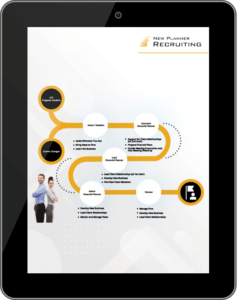 Download your free copy of the New Planner Career Roadmap!(opens in new tab) In this roadmap, you'll be guided through the details of various stages of your financial planner career, including position descriptions, licensing, skill and experience level requirements, and compensation ranges.
Get the Full Episode Transcript:

Read the Transcript Below:
Welcome to the New Planner Podcast, where it's all about helping you successfully enter the financial planning profession and accelerate your financial planning career. This podcast will help you understand the profession, become familiar with the various career paths available to you, and avoid the mistakes that limit your success. Join your host, Caleb Brown, to explore the human side of creating a successful planning career through interviews, personal experience, and insights from the trenches. Let's get started.
Caleb Brown: Welcome to the New Planner Podcast. This is Caleb Brown, your host. I'm joined today by Adam Van Deusen, financial planning nerd at Kitces.com. Adam joins the show today to discuss how he started out on the lead client advisor path and why he pivoted to his work on the Kitces platform, how he still works with clients on a pro bono basis, plus some of his tips for other career changers. I hope you enjoy this episode with Adam Van Deusen.
Hey, Adam. Welcome to the New Planner Podcast.
Adam Van Deusen: Thanks so much for having me.
Caleb Brown: This is gonna be a lot of fun. So we've known each other for a while now, but n- never really dove into sort of your background. You're a career changer, right? So this is gonna be fun to sort of learn a little bit more about this.
And maybe if you would, we'll change it up. Start with what you're doing right now at Kitces, and then we'll backtrack into how you got there.
Adam Van Deusen: Yeah, sounds great. Yeah, so my job title at Kitces is financial planning nerd, which is a great title. Anyone who's familiar with Kitces before knows we're very nerdy.
That's sort of one of the core values on it when it comes to financial planning. So within that role, I actually have a lot of different functions. I write some of our blog content, the Monday, Wednesday articles. I write the weekly Weekend Reading for Financial Advisors article that comes out every Friday.
The host of the new, Financial Advisor Technician Podcast, where we go in to talk about some of the technical side of financial planning. And then sort of behind the scenes, I help support the Financial Advisor Success Podcast. I manage some of our resources. I am a speaker speaking at industry events.
So, it's a great job, a good way to talk to a lot of different types of advisors and hopefully have an impact on the industry.
Caleb Brown: I love how you guys embrace the nerdism. Yeah. It's really cool. So you've got a lot going on there. Sounds like a lot of content. And then in your new podcast, we'll make sure we link to that in case anybody wants to check that out.
Let's go take a step back. So what were you... 'Cause you're a career changer. What were you doing before financial planning even popped up?
Adam Van Deusen: Yeah, it's interesting. I went into college thinking... I was on the fence. I thought one side of me thought about doing broadcast journalism, and another side of me thought about doing something in the world of economics, foreign affairs, something like that.
And so that ended up being my major in college. I majored in economics and foreign affairs, but a lot of my activities there were sort of on the journalism side. At school, I did—worked at the TV station, various radio stations, and the big experience for me there is I got to intern with the local NBC station there, doing ex- exactly what I thought I wanted to do, which was sports journalism specifically.
So I got to do everything from working the cameras, editing the tape, basically everything except for sitting at the anchor's desk as it is. It was a great experience and good to see, but it also showed me that actually not actually what I wanted to do as a career. So it was a nice way, and something I always recommend to folks who are still in college is, even if you're majoring in financial planning or whatever you're majoring in, to use extracurricular activities as an opportunity to try out different things.
It's a great way to experiment.
Caleb Brown: Got it. Okay. So broadcast journalism, that wasn't the fit, and then you pivoted into what?
Adam Van Deusen: Yeah. So I ended up getting a job working in financial journalism, sort of a written online publication, and that was a really good opportunity. I got to write about banks, insurance companies, things like that, and this was on the eve of the financial crisis.
This was like 2006, 2007, early 2008. And so it was a really interesting time to be in that position, though what I had thought at that point that I'd really want to get into more full-time and permanently was working in international relations. I, through middle school and high school and college, I had done Model United Nations forever.
Again, it was my major in college. And so, I ended up making a switch into international relations, and I ended up working in that field for about 12 years or so. So it was a really great career. It's a really interesting field. You do a lot of travel, sort of on the pulse of world events.
Yeah, it was a great field, but, during that time, I always had this side interest in personal finance. I wrote my own personal finance blog for a little while. I was always the person giving advice to friends. And, you know—Yeah... the missing piece of it was that I never realized something like the fee-only financial planning world, it even existed. I went to, University of Virginia, where we didn't have a financial planning major, unlike our friends at Virginia Tech. I know there's probably a lot of listeners out there, who are from there.
But unfortunately, we didn't have a financial planning program, so I wasn't really aware it was a thing until maybe in the early 2010s, I finally found Michael's blog at the Kitces blog, and it was great. It was just such a learning opportunity, both the technical side of planning and some of the nerdy personal finance things. But also just this idea that there was a group of advisors out there who were really focused on putting their clients first, really digging deep into the comprehensive planning side of things.
And, with XYPN starting and then their podcast and blog, I really started to dive into that on the side while I was otherwise having this, really successful career that I was enjoying.
Caleb Brown: And then what caused you to take the plunge and leave that, I mean, what you just said, successful career, and probably paid pretty well, and go over and make a complete shift?
Adam Van Deusen: Yeah, it's interesting, and financial planning is nice because you can... I feel like it lets you test the waters a little bit. So, the first step for me was doing one of the online-based education programs, the certification program. So I did that over the course of nights and weekends.
And, that probably took me at least a year or so, just 'cause I was working. Now I'm sure you could do it faster if you're doing it full time, but that was great, and it was... I thought it was somewhat low risk because there was a financial outlay for it, but the material was very interesting for me.
And I said, "Well, at worst, maybe it's applicable for my own situation—Yeah... or helping friends out or family out who ask questions." So, that was good. And so then, of course, you take the next step a little deeper, which is then studying for and taking the CFP exam. So again, another sort of, little bit of a financial outlay, definitely a time outlay, making sure to study to hopefully pass on the first go on that one.
So, pretty soon after I finished the education program, I did some more nights and weekends studying for the exam and then took and passed the exam, luckily, which was great. And so, at that point, it's sort of, being in an interesting position, right? Because I feel like those are pretty good credentials to have at least to...when you're thinking about applying for a position in financial planning to, sort of maybe register your interest, and perhaps even more so as a career changer in that, firms are gonna be interested. Well, is this person just—That's right... testing the waters, or do they wanna stick?
Caleb Brown: Are they serious?
Adam Van Deusen: Yeah. So hopefully—Yeah... that showed sort of the investment in it. And so, then the question for me became was, as you mentioned, this is gonna be a huge career shift for me. If I had stayed in my previous career, I had-- would have had lots of different opportunities.
Yeah, you mentioned salary, coming in and moving to financial planning was necessarily, having built up twelve years of experience in the field, was gonna not necessarily start at the very bottom, but it's definitely gonna be a reduction in salary as well. So that was something to prepare for financially.
So, a lot of thinking about it. But the big thing for me, and the thing that gave me a lot of confidence, was at the time I knew sort of exactly the kind of firm I wanted to work for and exactly the kind of position I wanted to be in, and that's why I think podcasts and blogs like yours, whether it's the XYPN one as well, our blog and our podcast as well, they're really helpful because it really shows you the, the different ways to get into the industry and see what resonates with you.
I'm sure there's a lot of people out there who really wanna be in the sales world, right? Like, that's their real skill in life, and maybe they wanna go to a position where that's focused. Other people, they wanna get nerdy into planning, and they wanna find a position that lets them dig into the analyses.
Or other people wanna be... and this was sort of my thought, was I really enjoy speaking with people, so being on a path to being sort of a client-facing advisor was really important to me. So I was looking for a firm that would potentially give that kind of opportunity as well as was really putting the clients first in that realm.
So that really helped narrow things down and gave me more confidence when I found a firm that I was very confident in, that the major job switch was hopefully gonna work out for the best.
Caleb Brown: Got it. Okay. So your goal was to become a client-facing lead advisor. When you... Is that what I just heard when you were thinking about doing this?
Adam Van Deusen: Yeah, that was my goal initially. And, again, in terms of testing the waters, another thing that I was doing at the time was a lot of volunteer work, especially after passing the CFP exam and feeling much more confident in that way. I found that, I had a... I was living in the Northern Virginia area at the time.
There's a terrific nonprofit up there that does both a combination of financial, literacy courses as well as sort of one-on-one financial coaching. And so that was a really good way to sort of really sharpen the tools, as it were, in terms of getting used to talking to people in a, a one-on-one setting and clients in that way, and I've sort of ex- I can talk about that later, sort of expanded how I've been doing that to sort of still get to work one-on-one with people despite, being in sort of a, a tangential role now at Kitces.
Caleb Brown: Sure.
Adam Van Deusen: But that was a really nice way, too, to test the waters, as it were.
Caleb Brown: I wanna go back to the financial piece, if you would, because I... This- I get this every week. It's a major hurdle for a lot of people, and I've talked about this at length on this podcast. I mean, these career changers, very successful, big money makers in other fields a lot of times, not feeling fulfilled, and they kind of want to move over.
And a lot of them, not all of them, they want to make the same thing right off the bat, and I'm the one that has to be the bearer of bad news most of the time. Like, "Ah, it doesn't really work that way. Now, you can get back up that, and you could probably make a lot more, but it doesn't work that way right off the..."
So how did you... I mean, can you just give us the, like, what kind... Was it a 50% pay cut? What did you have to deal with in terms of reduction, and then how did you prepare for that in your personal financial situation?
Adam Van Deusen: Yeah, you really hit the nail on the head there. For me, it was about a 50% initial pay cut, though as you mentioned before, as you said, there, of course, some people have been in the industry in a while, like, there is upward mobility, both in terms of your position and in terms of your income, depending on what kind of position you wanna be in, et cetera. So, but I knew that at least for potentially several years, I would be sort of working my way back up towards where I was before.
Yeah. Now, of course, the benefit is if you're interested in this field, you probably have an interest in personal finance, hopefully have your own financial situation in a fairly good place. So, thinking about having some runway there is very important. Mm-hmm. Also, of course, if you have a spouse or a partner, being on the same page as them.
So, I had conversations with her about whether, what this was gonna mean for our financial situation. Of course, I had the software, so I could show her exactly what the projections are looking like and all in that way. So, we could see where we were. But again, it is the kind of thing and if you're on the career changer side, is it's not gonna be a switch that you flip overnight, right?
There is some lead way into this, whether it's, taking the coursework, preparing for the exam. This is a couple year process potentially. And so if you are thinking about doing it, that says, "Hey, maybe I wanna shift some of my savings towards liquid savings to give myself a bigger cushion to handle the sort of cash flow shock that's gonna come with the change in careers."
Caleb Brown: Got it. And then maybe talk a little bit more about how you connected and networked with firms to find potential opportunities, and then maybe how you found the firm it sounds like you joined.
Adam Van Deusen: Yeah, I was very into a lot of the job boards, things like that, the NAPFA board, the FPA one, the CFP one.
I found those were helpful just to see what was out there, and sometimes I knew at that time I w- I wanted to stay in the DC area. So a lot of that was just looking at going to the firms' websites themselves and looking at the career—Yeah... pages on there. I found sometimes firms would post jobs there that wouldn't necessarily be on others.
So it was a good process. I ended up applying to a few things, some, a few that didn't work out. Eventually I found one that really ended up clicking. I think I initially-- I think they had posted the job maybe on... I think it might have been on your site and/or, on, on New Planner Recruiting and/or maybe the NAPFA board, something like that.
Okay. I found it there and then applied, and it ended up working out, which was great.
Caleb Brown: So you joined as a paraplanner or something? Or what, what kind of role was it?
Adam Van Deusen: Yeah, it was a paraplanner role, but it was really interesting because the way the firm was set up, I think there were one, two, three...
five lead advisors or so. Okay. So I worked with each of the lead advisors on a certain number of clients, which was a really terrific experience because you got to see so many different lead advisors who had very different styles in terms of how they're presenting information, how they're communicating with clients,
and all ter- I mean, they're all terrific advisors. And so it was just a really great experience to have that kind of exposure. And the position was really terrific because I was able to... you were doing some of the client service things, opening accounts, moving money. I will say that was the biggest surprise coming into the industry.
This firm was largely focused on, I would say, sort of the core pre-retiree, retiree set. There were some younger clients as well. But especially with the retired clients, I was very surprised coming in of how much of the job or how much even the advisors were thinking about this too, was moving money, right?
When clients need cash this month, where are you raising it from? How are you sending it to them, et cetera. That was a surprise for me coming in. So that was part of it, but it was a great position too. They gave me a lot of latitude in terms of doing the financial plan production, working in the financial planning software, coming up with the first draft of the plans that we would present in review meetings.
And of course, they were reviewing it, which was good. The senior advisors were reviewing it, and they had really good wisdom and good learning points there. So that was that. Getting to sit in on all of the client meetings was terrific, both just to see how the advisor was operating, but also taking notes was a really good practice there.
And I know nowadays... This was before I think a lot of the AI note-takers were here. But even in a world of AI note-takers, I think just getting it down in pencil and in writing is such a good practice to make your own notes, to remind yourself for later, to let the information really sink in. So I thought that was a really good practice as well.
And then, getting to interact with clients, being a face with them, whether it was email, sometimes, jumping on calls with them to help fulfill certain tasks and things. That was a nice entrée there. So an entry-level position, but one where I really got to have a lot of experience and see how a lot of the different functions worked.
Caleb Brown: What did you like least about the first year or two as in your new career?
Adam Van Deusen: Yeah, I think one thing that was really tricky was there was a lot of, there were a lot of tasks. Let's talk about the cash raising task. It's seemingly a simple task, right? It pops up in your CRM. We're like doing this, but there's so many things that you really have to be focused on the details with, and it's, I'm a fairly detail-oriented person, which was good. But, it was always, people talk about the Sunday scaries, right? You're on Sunday and you're worried about what's coming into the week. Yeah. That was the thing for me sometimes. It wasn't necessarily on Sundays.
It was the thing. It was like, "Ah, did I put this request in correctly? Because if it's not correct, it could, mess up their asset allocation or the money's not getting them in to them on time when they have to pay for something." So, I think it speaks to the... And of course, this was just starting out.
I imagine for folks who have been lead advisors for 10, 15 years, probably are it's like clockwork for them. But, I think it does speak though to the importance and the trust that clients put into not just their lead advisor, but into you as an entry-level person. They see you as a very important part of their financial planning team.
And so, with great power comes great responsibility as it is. And so I think over time that kind of nervousness went away. But I do think it is important for folks just coming into the field to recognize from day one you have a lot of responsibility on your plate.
Caleb Brown: That's really cool.
A-and in your role, did you... Were you required to bring in any clients or was it more of just a salaried support type role?
Adam Van Deusen: Yeah. Yeah. It was a salaried role, and that was something I was looking at, too. So that was one of my questions coming into the business is I really enjoy speaking with people and working with people and talking to people and I have no problem promoting something that I'm interested in.
So for example, when I was in college, at least at the time, I had set the record for the most admissions tours, at my college, right? So I loved selling that. What I was less interested in selling on was on that side of it was cold calling people, anything like that. That kind of stuff really makes me nervous.
I know some people are great at it, and I think that's really... I'm really impressed with those folks. But, that's not my kind of thing. I'm more of the, the, the warm lead variety. So, this job was nice in that there wasn't any responsibilities on that, at least in, in that position. So I... That was something I was specifically looking for and asking about.
When I was in, pre-calls or whatever with firms that I was asking about, "Is this gonna be a part of it?" 'Cause I knew at least initially, that wasn't-- I didn't want that to be the focus of the job. I knew that could be something come and something I would develop eventually, but at least initially, I was hoping to focus more on the, the planning side of things.
Caleb Brown: Sounds like a solid apprenticeship type model that you had. And maybe talk about how long did you stay, and then why did you leave?
Adam Van Deusen: Yeah. I was there for, at least a couple of years, and it was great. I was getting more responsibilities, things like that. I really enjoyed it, and I would have stayed there.
It was a great group of people, really great clients as well until, one day I saw that Kitces was hiring for this, financial planning nerd position. And so, of course, at that point, I had been reading and listening to the Kitces products for almost a decade, probably at that point.
And so what was interesting about that position, though, and how it was advertised, it was combining really a lot of the skills I had built up over the course of really my, not just financial planning, but my full career. I had done a lot of writing over the course of career, a lot of speaking and things like that.
And so it was a nice position to combine my interest in financial planning and the financial planning industry with the opportunity to flex sort of the writing muscle and, really, the way to potentially reach a really broad audience. I mean, Michael is in the platform is, I think, hopefully, a pretty well-respected and well-known in the industry.
So really able to reach a lot of the advisors who are out there who I think are doing some of the best work for their clients. So it just seemed like a great opportunity and something I had to throw my hat into the ring for and luckily ended up getting that position. And so I've been at Kitces now for about five years, and it's really been a great time.
Caleb Brown: Okay, so you're, you left the client-facing advisory side to move over to the Kitces platform. I mean, just talk to us about how your career has progressed there 'cause, I mean, your role is different than it was when you s- start, or is it?
Adam Van Deusen: Yeah, so yeah, it's funny. The title's the same, financial planning nerd, but my role has shifted over time.
And this is something I would... and this is, I don't wanna be so specific to Kitces, but it's something I advocate folks think about when you're just getting started in your careers, is to try new opportunities with whatever kind of business you're in and seek things and to... that you might be interested in, pulling on the strings.
So, at Kitces throughout this time, I've been writing some of the Monday and Wednesday posts, but weekend reading was something I was really interested in. I had been reading that for, again, seven, eight, nine years or whatever, and I actually thought that sort of fit into one of my strengths of, in terms of sort of analyzing and distilling information in sort of a, a very palatable, digestible way.
And so, that was something that was a possibility when I started at Kitces, but I told my manager and Michael at the time that was something I was very interested in, so I ended up sort of testing it out, right? There are 12 articles we write up every week. So, Michael started, let me take three articles.
I would write the, the blurbs and the analyses for those and, tested the waters. He gave feedback. I adjusted my writing based on the style and what he was looking for, and that ended up expanding into doing six articles a week, nine articles a week, and then eventually 12 articles a week.
And then, sort of writing the full column and then, Michael was editing the full thing, and then over time he had to edit less and less. And then, I think I started writing it full-time probably sometime in 2022, so it's been about four years at this point. But even then it expanded because, it expanded from Michael picking out all of the articles, doing all of the curation, and me just writing it up to me suggesting articles to him, and then he would do the final pick, to then me picking the articles and then having him give the final okay.
There you go. Yeah. To the point now where the whole thing is basically we have several members on the team who contribute articles, into sort of the main hopper, but then, I'm picking out all the articles and writing up the whole 5,000-word article every week. And so I think that's just a good sign for folks.
Now, this is very specific to my position, but, I could imagine if you're in a financial or paraplanner role, associate advisor role, maybe there's different things you wanna try. Do you wanna, maybe you work at a large firm that has a director of financial planning. Maybe you wanna work with them for a little bit on the planning analyses.
Or maybe you're interested in the operations side of things, seeing if you could do that, on the side for a little bit. It's a good way that, sort of a very low-risk way to test the waters on, a type of position that could really pique your interest and be the side of the industry that you wanna work in.
Caleb Brown: And talk to us about any pr- I mean, you mentioned in probo-- earlier pro bono, doing some pro bono stuff. So is that kind of one way you're sort of still scratching your itch of ta- helping on the individual side financial planning?
Adam Van Deusen: Yeah, exactly. So I'm a people person. I love working with people and one of the unique things about Kitces too is that we're a totally virtual company.
We're spread all over the country, and so we get together twice a year for in-person retreats, which is really great to see everybody in person. But otherwise we're virtual, and so you don't have that. We have, of course, Slack calls and Zoom calls and things like that. But you don't have the in-the-office environment.
When I was at the financial planning firm, that was in the office, until the pandemic came and then went remote. But, in the remote world too, again, I like really enjoy seeing people. So, that has been something that's been nice. I work with this again, this local nonprofit in the Northern Virginia area, which has been good to do one-on-one coaching the classes.
I also volunteer with a really great national organization called Third Decade, and with that one is a really great opportunity and something I'd really encourage folks who are, early on in your careers, and especially folks if you're relatively younger, to get to work with folks your age.
I know that's an interest a lot of people had if you're in your twenties or thirties or forties is working with people your age, which isn't always the prime demographic of financial planning clients, and sometimes it is. But Third Decade is really nice because it works with folks, I think it's between eighteen and thirty-five, something like that.
And what it does, it's an education program for them. But where you come in is you'll come in as a financial mentor to meet with them three times over the course of two years. First meeting's like two hours. You're putting them through a, a sort of a one-page financial plan and that process. And so it's a really great way to then see folks multiple times over the course of, again, two years.
So it really is sort of like the client environment, that you'll have in the planning firm where you'll have, multi-year, multi even decade relationships possibly. So, and again, a nice way to practice that. And I will note for any firm owners or managers out there, they partner with firms to help sort of get their junior advisors into this program to give you those sort of client-facing reps.
Now, it's different. It might be different types of clients than you have at your firm, but it's a nice way to sort of get the reps as it is and sort of practice that way without being the solo person in front of your five million dollar client at the firm.
Caleb Brown: That's awesome, Adam. Thanks for doing that.
W- And we're gonna link to their website and all their materials in the show notes. We've covered a lot of ground here. I mean, this has been really cool to see how your story's unfolded. I mean, any final thoughts or comments that you wanna leave the audience with?
Adam Van Deusen: Yeah, I mean, I'd give something that's probably a shout-out both to the, any potential career changers out there, but also that something good if there's any, college students or folks just getting started out there.
I think in financial planning, a lot of people focus on the technical side of things. So when you're doing the CFP education program, for example, a lot of that is on the technical side: tax planning, retirement planning, et cetera. All that's really important and is a lot of the value that you bring to the table.
But I would really encourage folks to lean into your other skills that you bring to the table. So this could be everything from speaking to writing, put what I would call professionalism, so being a good teammate, responding to emails, client emails promptly. And that's something I would encourage any firm owners or anybody who's hiring out there to really consider career changers on because I find that a lot of career changers, again, they're, they might be new to specifically the financial planning world, but they could come to the table with this sort of, I would call it professional experience that I think takes time to build.
It just takes time working in a full-time professional working environment to get, and I think that's something that those career changers bring to the table. And then, for folks who are just getting going, again, I would really highly recommend leaning into those skills. And I don't wanna sound like the elder millennial that I am here, but in a world of AI and when it's become easier to have thing, it's just so easy to do a lot of certain tasks, especially when it comes to writing.
I would really encourage folks to keep those skills sharp if possible because those are the kind of things, whether it's, writing, speaking, responding, communicating, being a professional that can really last across not just a career in financial planning, but in your life, and maybe you wanna end up doing something else one day.
Having those skills at the ready can really translate into a wide variety of positions, whether it's within the industry or even in other industries. So keeping those professional skills developed and sharp, I think could really take you a long way.
Caleb Brown: Adam, thanks so much for coming on the show.
Adam Van Deusen: Terrific. Thanks so much for having me.
Thanks for joining us for this episode of the New Planner Podcast. If you are ready to discover the top career paths for financial planners and see which track is best for you, we created a free guide to help you. Grab your copy of the Financial Planner Career Roadmap at newplannerrecruiting.com/roadmap. There, you'll also find more tools and resources all created to help you build a successful financial planning career. Tune back in next week for another episode, and until then, we are here to help you succeed.
Share the Love:
If you like the New Planner Podcast...
Never miss an episode by subscribing via Apple Podcasts(opens in new tab), Spotify(opens in new tab), Amazon Music(opens in new tab), YouTube Music(opens in new tab), or by RSS(opens in new tab)!



Leave a Reply