How can you decide which path is right for you? Today, I'm joined by Lonniece McDonald, an associate wealth advisor at HIGHLAND Financial Advisors. Lonniece opens up about how she discovered financial planning and earned her CFP, her transition from a large family-office environment to a smaller boutique RIA, and how internships helped her explore different areas of finance.
Listen in to learn what she values about working with a smaller team, as well as what she believes newer planners should focus on as they build their careers. You’ll also hear what has been central to Lonniece's development as a planner, her take on AI, and what we can do to increase awareness of the profession and encourage more women to pursue CFP careers.
What You'll Learn In Today's Episode:
- What an associate wealth advisor does day to day. (1:45)
- How a “diamond team” structure works. (3:00)
- The differences between large and boutique RIAs. (7:00)
- What internships can teach you about career fit. (12:30)
- How to qualify for the CFP exam without a planning degree. (15:00)
- Why curiosity and networking can accelerate your career. (20:00)
Ideas Worth Sharing:
“This industry is only going to continue growing… People still want to talk to people as it pertains to their finances.” - Lonniece McDonald Share on X “I think that AI is a tool, and we can certainly take advantage of it and use it to expedite the work that we do.” - Lonniece McDonald Share on X “Continue to be curious. I think my curiosity got me far.” - Lonniece McDonald Share on XResources In Today's Episode:
- Lonniece McDonald: LinkedIn(opens in new tab)
- HIGHLAND Financial Advisors(opens in new tab)
- New Planner Recruiting - Financial Planner Career Roadmap(opens in new tab)
- Finding your Path: The Roadmap from Student to Successful Financial Planner(opens in new tab) by Caleb Brown
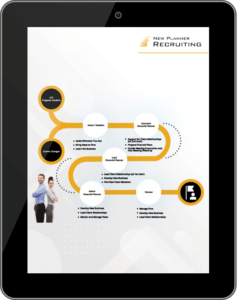 Download your free copy of the New Planner Career Roadmap!(opens in new tab) In this roadmap, you'll be guided through the details of various stages of your financial planner career, including position descriptions, licensing, skill and experience level requirements, and compensation ranges.
Get the Full Episode Transcript:

Read the Transcript Below:
Welcome to the New Planner Podcast, where it's all about helping you successfully enter the financial planning profession and accelerate your financial planning career. This podcast will help you understand the profession, become familiar with the various career paths available to you, and avoid the mistakes that limit your success. Join your host, Caleb Brown, to explore the human side of creating a successful planning career through interviews, personal experience, and insights from the trenches. Let's get started.
Caleb Brown: Welcome to the New Planner Podcast. This is Caleb Brown, your host. I'm joined today by Lonniece McDonald, an associate financial advisor at HIGHLAND Financial Advisors. Lonniece joins the show today to discuss her recent transition from a large family office-type firm to a smaller boutique RIA, how her role has shifted, and what she's learned throughout the process, and how she's fitting in with the new firm, plus her thoughts on AI taking her job and tips for newer planners.
I hope you enjoy this episode with Lonniece McDonald.
Hi, Lonniece. Welcome to the New Planner Podcast.
Lonniece McDonald: Hi, thanks for having me.
Caleb Brown: Thank you so much for fitting us in on a Friday afternoon. Really appreciate that.
Lonniece McDonald: Yeah. Happy Friday.
Caleb Brown: I would like for you to start, if you would, on—we're gonna flip it up a little bit. Maybe just describe your current role. What are you doing right now every day for the majority of the day?
Lonniece McDonald: That is a great question. So I'm currently an associate wealth advisor at HIGHLAND Financial Advisors, and my day-to-day honestly looks very different. But, to sum it up, I would say I am the middleman between the advisors, lead advisors or senior advisors, and some of the analysts that we work alongside.
So my job is to be in those meetings with the advisor, supporting them, making sure that any client action items are getting completed, any follow-up items are being completed, any recap emails are being sent out. But I'm also making sure that any analysts or any, I mean, analysis or any financial plans that we are planning to present on are accurate and updated.
I'm helping assist as we onboard new clients, kind of walking them through that process from start to finish and making sure that we are dotting our I's and crossing our T's.
Caleb Brown: Got it. So it sounds like it's a heavy client-facing role. Are you dealing with the clients?
Lonniece McDonald: Yeah, correct. So I could be interacting with them via email. Sometimes they'll call me directly via phone, and then we also have in-person or meetings via Zoom.
Caleb Brown: And is the career track in HIGHLAND kind of, you mentioned analysts. Is that kind of more the entry level and then it's sort of you, the associate wealth, and then there's somebody on top that's maybe the lead? Is that the way it's structured?
Lonniece McDonald: Yeah. I guess the structure that we kind of know or are known for is a diamond team structure. So any diamond could have two associate wealth advisors. At the top is the senior or lead advisor, and then we kind of work with one or two analysts.
Caleb Brown: Okay. And then just give us a sense... I mean, so you're reviewing, these analysts are putting together the analyses and the plans. You're reviewing them and then presenting it to the client or to the lead advisor. Is that what you said earlier?
Lonniece McDonald: Yeah, that's correct. When we get a new client, we kind of wanna take a look at all their statements and all the information that they provide. We obviously wanna put it together in a plan that makes sense to them, but also to us as we plan to kind of discuss their financial plans and incorporate their goals and all of the things that they wanna achieve in life. And from there, we'll kind of present it to them, get their consensus of how they feel about it, if there's anything that we need to change or make adjustments to. And yeah, have them kind of like sign off on it, and then we'll make iterations as we meet with the client over time.
Caleb Brown: And when you joined the firm, did you start working with the existing clients, or have you had to bring in clients of your own?
Lonniece McDonald: That's a great question. I started working with existing clients, but as new clients come on, I do get exposure to them as well. So a little bit of both. But I am not responsible for, or it's not my responsibility at this moment to bring in clients. If I do, that's awesome, that's great. If I don't, it's also equally, that's okay.
Caleb Brown: Okay, so there's not a lot of pressure to bring in family and friends or cold call people or anything like that is what I'm hearing.
Lonniece McDonald: Yeah. Correct.
Caleb Brown: Yeah. Okay, cool. Well, 'cause you've only, you've been in the new role, and we're gonna work backwards, I guess. You've been in the new role about five or six months. What has been the most enjoyable part of the new firm and new role thus far?
Lonniece McDonald: Yeah, that's a tough question 'cause I have a lot of favorites so far. Obviously, I really do enjoy helping individuals. So whenever we do present on a financial plan or if there's any kind of nuanced task that the client doesn't necessarily wanna do that we take care of, kind of getting their feedback and hearing “I'm so glad to be working with you all,” that really is like a highlight of my day when a client is like, “I don't know what I would've done without you all.” Kind of getting that positive feedback.
But outside of that, it's just being the gap, like bridging the gap. So, our analysts are doing a lot of things. You can imagine senior advisors are busy, so kind of like making, keeping things on track, making things, making sure things are running smoothly, and things are getting completed. We never wanna say we're gonna do something and not follow up on it. So I enjoy kind of like ensuring that things are getting done from start to finish.
Caleb Brown: Yeah, that's not a good value proposition if you're in a service business, right? Promise something and then not deliver and although there are businesses out there that do that, and somehow they're still in business, but okay. So talk to us about the—let's just go back on your career history. So you were with, before this, I think a bigger, like a family—talk to us about the other firm that you came from, and how maybe the current firm that you're with now is different in size, scope, and structure.
Lonniece McDonald: Yeah, no, that's a great question. I was at Hall Capital Partners, but I think they're now called Pathstone. And just some differences, they're a much larger firm. So I wanna say we were, originally, Hall was around 125 employees, and then with the merge with Pathstone, we were looking at maybe eight hundred employees. So really large.
So here, at HIGHLAND, it's really small, which I really value. You kinda have a hand in everything, and you get to learn a ton. Even though I'm an associate wealth advisor, I'm learning things from the analysts and the senior advisors. It's really a team feel, which is really helpful. And the fact that we're smaller, we could just have more conversations quickly.
From a client perspective, I wanna say that Pathstone, I worked with a lot of families. So AUM was a little larger. I think my smallest client was maybe $150 million, whereas our ideal client here at HIGHLAND is usually somewhere one million to two million. So a little bit smaller in terms of AUM, but I'm enjoying. I think what is consistent is the nuance or the different scenarios or case-by-case scenarios each client brings. They all have unique experiences or things that they need assistance with, so that's what keeps me on my toes and kind of remained the same from both organizations.
Caleb Brown: Sounds like the other firm, it was ultra-high-net-worth people, 100 million and up, and now it's more affluent, mass affluent, and there's—I'm sure there's still some ultra-affluent people in there, too, so. And it sounds like you've embraced sort of going to a smaller firm. You've enjoyed that. What about working—you touched on this a little bit, but maybe for our audience, what are some of the pros and cons of working with these? 'Cause there's probably some career changers, other people like, “Man, if I could just work with someone that had $100 million, all my problems would be solved.” Maybe talk about some pros and cons of working with that level of client and then versus someone who's got a couple million bucks.
Lonniece McDonald: Yeah. That's a great question. I also forgot to mention some of the work we do is slightly different. So at Pathstone, it was predominantly investment management focused, so it's ultra-high-net-worth clients, managing their investments, ensuring that they have the cash or liquidity they need to make their purchases or take care of whatever bills or expenses they may have. Whereas at HIGHLAND, it's a little bit more of a comprehensive, holistic financial planning. So the scope of the work is slightly different. There's a little overlap, but very different.
But to answer your original question, working with ultra-high-net-worth is very high touch. As client requests come in, it's really important to make sure that you're on top of those things. Like I said, it's predominantly investment management, so there's deadlines and dates that you wanna be mindful of as it pertains to subscribing to an investment fund or even withdrawing from an investment. So very high touch, high-level things.
In terms of the client service, I think that doesn't change. You always wanna make sure that as a client has requests coming in, you are making sure to acknowledge them, follow up on them, and kind of not leave a time to wait. For example, when you just think about it, if you had to wait a day or two for your money, you probably wouldn't like that. So I would say the client service part is still the same.
Some other differences, I would say, maybe the nuance or the level, some things that we're doing. For example, there's clients, because naturally the client has a little bit more funding, their estate planning might be more drawn out. There might be numerous trusts that they're kind of working with. Whereas, working with a smaller client with less AUM, you may not have that nuance there. It may be one trust or it may be no trust. Sometimes that's not necessary as we think about their estate plans.
Caleb Brown: I mean, you're not dealing with airplanes and businesses in different continents, usually with somebody that's got a couple million bucks versus someone who has a couple hundred million.
Lonniece McDonald: Mm-hmm. Yeah.
Caleb Brown: Okay, cool. And then so be- before Hall Capital, wh- what were you doing before then?
Lonniece McDonald: That is a good question. Before Hall, I believe I was working at Allstate as a finance analyst. Very different from wealth management. And my role, I believe I was on the expense team, and my role was kind of putting together analysis, trying to understand where we're spending the bulk of money, why we're spending, if there are ways we could reduce spending, what trends that I'm noticing, and kind of like presenting that information to the board of directors and all the constituents.
Caleb Brown: Was that your first job out of college, Allstate?
Lonniece McDonald: No, I feel like I worked somewhere else. I'm trying to remember. It feels so long ago. I've had internships within the field. Yeah, I guess you can say like first full-time, serious full-time in finance.
Caleb Brown: All right. What caused you to get all these financial planning intern, I mean, you've got a lot of other internships too, but what caused you to get all these internships in financial planning? I mean, when did you decide, “Hey, this is really what I wanna try to do”?
Lonniece McDonald: Yeah, no, that's a great question. Well, I've always known I wanted to do finance. Ever since I was a little girl, I was like, “Oh, I'm pretty good at saving, like helping people.” As I thought through high school and college, I'm like, “Well, how can I make a career out of that?” So it was always either gonna be finance or accounting, and I took one accounting class and figured out very quickly it wasn't accounting that I was seeking.
I guess the reason why I did as many internships as you can see on my resume is because I wanted to get an understanding of, okay, what part of finance are you more drawn to? Finance is so vague and there's a lot of things you can do. You could do FP&A, which is very different from wealth management and things of that sort. So I just wanted to narrow it down and be a little bit more specific about what it is I wanted to do. And it's very easy to say that you like a job without knowing what that job entails. So I just wanted to get as much exposure to the different avenues and see what actually felt comfortable to me. And I think initially I started down the FP&A route, so just doing—being a financial analyst, doing financial analysis. And then I realized that I haven't tried wealth management yet, so that was kind of why I segued from Allstate to Hall Capital Partners, to kind of like deviate.
Caleb Brown: And just for the people, FP&A, just explain to them what that is.
Lonniece McDonald: So it's pretty much like I mentioned at Allstate, right? You are looking at a lot of balance sheets, expenses, revenue. And depending on where you sit, you're just conducting a few analyses, looking for trends, kind of using that information to help—I think at the very top would be the CFO, but you have like finance managers and people that you work alongside. So—
Caleb Brown: Corporate finance, right. Corporate finance versus personal.
Lonniece McDonald: Mm-hmm.
Caleb Brown: Okay. Got it. Got it. Cool. All right. So, and then in college you did not get a financial planning degree, at least I couldn't, I wasn't able to see that.
Lonniece McDonald: No, I didn't. I don't know that my... I went to SUNY New Paltz. I don't know that they offered that, so that would've been super helpful to know about. But I just got my bachelor's in finance.
Caleb Brown: But then somehow you—how did you end up getting qualified to sit for the CFP exam?
Lonniece McDonald: So there's some schools that offer that degree, but if you don't go to a school that offers that degree, you have to take some prerequisite courses. So I would say a year and a half going through, I wanna say six modules to kind of qualify me, and then coupled with my work experience, that's how I qualified to sit for the CFP.
Caleb Brown: Okay, so you got the CFP when you were... Was that when you were at Hall, or when did you pick that up?
Lonniece McDonald: Yep, I was at Hall.
Caleb Brown: Okay. Got it. And any, I mean, any other designations or credentials that you're looking at?
Lonniece McDonald: That's a good question. I don't think so. I think my CFP allows me to do all of the things that I'm interested in doing at the moment, servicing clients. I think my CFP will be all for now. That may change. Who knows?
Caleb Brown: Okay. And then let's go back to your current firm, your current role. I mean, what... For you to move up, if you want to, if that's one of your goals, to the, I think you called it the lead advisor—
Lonniece McDonald: Mm-hmm
Caleb Brown: What other ex- Do you have to have more experience? Do you have to develop another skill? Do you have to bring in clients? Or maybe it's all of those. What do you have to do to get to that level, if you want to?
Lonniece McDonald: Yeah, I think it's just more experience, and then eventually bringing in more clients as well. So, it's a combination of... I think right now I work side by side with a lead advisor. I think the trajectory is, as I get more experience and get a handle on my clients, kind of handling those clients on my own, and then the next tier after that is doing the same, but then bringing on more clients, so.
Caleb Brown: And then you're the lead person and you've got someone kind of helping you, right?
Lonniece McDonald: Yep.
Caleb Brown: Okay. Awesome stuff, Lonniece. I really appreciate you sharing this. Just curious about your thoughts on the future of the business. I mean, you've been at it for a while now.
Lonniece McDonald: Mm-hmm.
Caleb Brown: But still early on. I mean, do you see any major trends or changes or anything that could be happening over the next couple decades?
Lonniece McDonald: Yeah. People keep—I'll have conversations with some of my family or friends saying, they're like, “Oh, you're not concerned like AI is gonna take over, steal your job?” And I think that this industry is only gonna continue growing. I think that AI is a tool, and we can certainly take advantage of it and use it to kind of like expedite the work that we do. But I think at the end of the day, people still wanna talk to people as it pertains to their finances. You usually see that people seek financial advisors when something is going on in the world, and I don't think that's ever gonna stop. So I think that the industry is just gonna continue growing. I feel like there's an increase in CFPs. We're just growing and kind of like making a name for ourselves, so I have high hopes for the industry.
Caleb Brown: How do we get more women CFPs in the profession?
Lonniece McDonald: That is a good question. I think, like for me, I think it would've been really helpful to go to those schools that don't have the financial planning degree and kind of get that installed or added as a program. That would've been really helpful for me in my experience. I think it's also just creating exposure, starting as young as high school, middle school, kind of like going into those schools and just creating an awareness. I don't think that many people know what a CFP is and who they are and the path or trajectory to becoming one.
It took me some time, like by trial and error, just constantly networking with folks to understand that this was an actual career, that it's attainable. But prior to college, I had no exposure to the profession. I had no idea what a CFP was. If I wasn't curious or just inquisitive and asked my professor what those letters behind his name meant, I would've never known. So just getting into the schools early and creating that exposure and bringing awareness to the profession is super helpful.
Caleb Brown: I want to go back to something you said earlier. I mean, your professor was a CFP and that's what... Is that what happened. So you, maybe you just lucked out and just got lucky? Is that what happened?
Lonniece McDonald: Yeah. Funny enough, it was a tax class, and he had so many letters, but I remember CFP, and I just asked him kind of what that was. Also, he was the same professor for my financial planning course. So although they didn't necessarily have a degree program, there was a financial planning course that I had to take that kind of mimicked a little bit of what CFPs do. So that's kind of how I discovered and had like an aha moment.
Caleb Brown: So if there's any firm owners out there listening to you, if you're... Go teach classes. One, it helps the profession, but two, it might also be a good recruiting tool for you.
Lonniece McDonald: Could be.
Caleb Brown: Okay. This is awesome. What else, Lonniece? Any other final thoughts or... Well, maybe just your, I'm just looking at this. So I don't know, about five, about five years, is that right? Five years in the business. I mean, what is your biggest takeaway after five years in a financial planning career?
Lonniece McDonald: I'm gonna say, I would say continue to be curious. I think my curiosity got me far. It led me to asking questions, networking and connecting with people, trying to learn, trying to see what opportunities are out there, trying to learn the business a little bit more, becoming more educated on different subject matter. Being curious led me to creating study groups where I can constantly connect with people to keep myself sharp and updated on things that are happening in the world and staying current. I think being curious and constantly wanting to learn is super helpful.
Caleb Brown: Got it. Well, anything else that you'd like to share with the audience before we close out? I really appreciate you coming on and sharing your story. It's really amazing.
Lonniece McDonald: Yeah, I mean, thanks for having me. I definitely enjoyed being here. If there's anyone who wants to connect to learn more, I'm always happy to talk and talk about my path, my journey. I think this profession is awesome. I love what I do, and yeah, I look forward to working with the folks that I'm working with and growing.
Caleb Brown: Is there any other profession that you could ever see yourself going to or getting recruited away to?
Lonniece McDonald: Oh, that is a fun question. I jokingly tell people I would've been, like, a therapist, so. I kind of look at myself as a financial therapist as is, like a regular therapist. Or maybe, I don't know, a gym teacher, a gym coach, or some kind of fitness—
Caleb Brown: Yeah. Okay.
Lonniece McDonald: Yeah.
Caleb Brown: Awesome stuff. Well, great chatting with you. Thanks so much again for coming on the show.
Lonniece McDonald: Thanks for having me.
Thanks for joining us for this episode of the New Planner Podcast. If you are ready to discover the top career paths for financial planners and see which track is best for you, we created a free guide to help you. Grab your copy of the Financial Planner Career Roadmap at newplannerrecruiting.com/roadmap. There, you'll also find more tools and resources all created to help you build a successful financial planning career. Tune back in next week for another episode, and until then, we are here to help you succeed.
Share the Love:
If you like the New Planner Podcast...
Never miss an episode by subscribing via Apple Podcasts(opens in new tab), Spotify(opens in new tab), Amazon Music(opens in new tab), YouTube Music(opens in new tab), or by RSS(opens in new tab)!



Leave a Reply