How do you go from an intern ordering office supplies to owning your own financial planning firm? Nick Scheibner shares the journey that took him from accidentally discovering financial planning at university to spending 14 years growing within one firm before taking the leap to launch his own RIA. You'll learn why saying "yes" to every opportunity accelerated his career, how taking on overlooked responsibilities made him indispensable, and why confidence is built one client conversation at a time.
Listen in as Nick opens up about the personal experiences that motivated him to become a business owner, the challenges of leaving a stable career, and the lessons he's learned building his own practice. Whether you're a student, intern, associate advisor, or considering starting your own firm one day, this episode is filled with practical advice on developing your skills, earning trust, building relationships, and creating a career you'll never regret pursuing.
What You'll Learn In Today's Episode:
- How Nick discovered financial planning. (1:30)
- What financial planning is truly all about. (3:40)
- How to make the most of an internship. (6:45)
- What it takes to build confidence with clients. (9:00)
- The value of communication skills. (15:00)
- Lessons from becoming a business owner. (22:00)
- How to balance career growth and family. (26:30)
Ideas Worth Sharing:
“Take on as many roles as possible because you're not going to start off talking to clients right away. If somebody needs help, volunteer to do it—you'll learn more than you ever expect.” - Nick Scheibner Share on X “Financial planning is a people business. It’s all about people.” - Nick Scheibner Share on X “Relationships are built when you say you're going to do something, and then you follow up and actually do it. I hear a lot of times where people leave their advisor because the communication's not good.” - Nick Scheibner Share on XResources In Today's Episode:
- Nick Scheibner: LinkedIn
- New Planner Recruiting - Financial Planner Career Roadmap
- Finding your Path: The Roadmap from Student to Successful Financial Planner by Caleb Brown
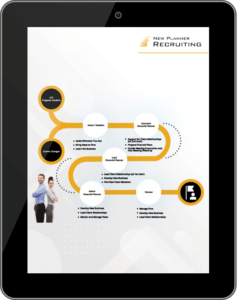 Download your free copy of the New Planner Career Roadmap! In this roadmap, you'll be guided through the details of various stages of your financial planner career, including position descriptions, licensing, skill and experience level requirements, and compensation ranges.
Get the Full Episode Transcript:

Read the Transcript Below:
Welcome to the New Planner Podcast, where it's all about helping you successfully enter the financial planning profession and accelerate your financial planning career. This podcast will help you understand the profession, become familiar with the various career paths available to you, and avoid the mistakes that limit your success. Join your host, Caleb Brown, to explore the human side of creating a successful planning career through interviews, personal experience, and insights from the trenches. Let's get started.
Caleb Brown: Welcome to the New Planner Podcast. This is Caleb Brown, your host. I'm joined today by Nick Scheibner, founder of Supportive Financial. Nick joins the show today to discuss his career entry pathway, how he worked his way up for 14 years with one firm, and then decided to go out on his own. I hope you enjoy this conversation with Nick Scheibner.
Hi, Nick. Welcome to the New Planner Podcast.
Nick Scheibner: Hi, Caleb. Pleasure to be here.
Caleb Brown: I say this every time, but this is going to be so fun. I love catching up with all my... I mean, you're an old guy like me in the profession now. We were just sort of joking about that, and it's always fun to catch up with you guys. You have a really cool story to share that could help, I think, a multitude of cohorts.
So why don't you just start with why you even chose financial planning as a career? Or maybe you didn't; maybe you fell into it like a lot of us did.
Nick Scheibner: I would say I fell into it, and I'm thankful I did because it really suits a lot of my skills here. But you know, it's funny, you and I probably know each other almost 15 going on 20 years now. In 2007 or 2008, I went to William Paterson University in Wayne, New Jersey. I went in as a history major not knowing really what I wanted to do, and I just got lucky that that same year, William Paterson got the financial planning program started at the school. I really got hooked up in there, and I've been doing the financial planning world ever since.
Caleb Brown: And maybe just expand on it a little further. So you're a history major, so in my mind, you're over here kind of doing something else. How did you even realize the financial planning major was new or added?
Nick Scheibner: I just got a... it was a business class on a different campus and just was in that world. William Paterson kind of has two campuses: the main campus, and then they have this separate little business school. But what's great is that the business school gets really tight-knit. And I just started hearing about this program getting started and learning about the program director, who we both know, at the time. I really just said, “You know what? Maybe I'll kind of roll with this.” And it's worked out well.
Caleb Brown: Yeah, Luke Dean. So it's what... let me see if I can get this right. Cotsakos College of Business or something like that?
Nick Scheibner: That's right, yeah.
Caleb Brown: I've spoken there a couple of times. I hope I can get it right.
Nick Scheibner: Yeah, Lucas Dean. Lucas Dean, he came in at the time, really embraced the New Jersey culture, and him and I got along really well. We really started building up the program, got the financial planning club started there with him, and won a financial planning championship with William Paterson while I was there. So I really just jumped all in on the financial planning life.
Caleb Brown: And we're just dying to know, why was this such a good fit, and why was this so much more interesting than a history major?
Nick Scheibner: Well, I think at the base of it, financial planning is a people business. You know, it's all about people. Also, what's nice about it is people are different, their stories are different, and their situations are unique. So just being able to talk about different stories, and not every solution fits every person.
What I like about it is I like trying new things, and I like doing different things. You are able to do that because you're dealing with people so much, just learning about their uniqueness. What I've learned over time is that I get a lot of joy and energy talking to people. Like, when I'm sitting with either a client, or even a prospect, or even a professional just talking business, at the end of it, I feel energized, right? So I started to learn that, man, this is kind of where I'm supposed to be as opposed to reading a history book and writing a report on something that happened, you know, 50 years ago.
Caleb Brown: Got it. All right, so you were in the program, you were working your way through the classes, and were you able to secure, well, you said, what'd you say, 2008 or... So were you able to secure an internship, or when did you have to get an internship, and then when did you graduate?
Nick Scheibner: So I graduated in 2011, but I got an internship in 2010. So my senior year, I got an internship. And what was good about—
Caleb Brown: That's still a tough time. Tough, tough time.
Nick Scheibner: Tough time. Tough time. But because I was in the financial planning club at the time, we were all... When you're starting out in school, your first job is to get an internship, get your foot in the door somewhere. So what was great about being in the program and having a club is I would bring in professionals from around the area. I started actually cold-calling firms in the area and saying, “Hey, we started a financial planning club. Why don't you come in and talk to the kids about your business, about how you got into it?”
So just personally, I started bringing in firms, just looking at NAPFA, looking at Google, just cold-calling them saying, “Hey, do you wanna come in?” So that was kind of a warm way to get them in the door, and it helped me get an internship because that's how I ultimately got an internship. But it also helped a lot of other kids and also professionals learn that, hey, William Paterson has a program here. My hope is that it helped other kids kind of get a foot in the door there.
Caleb Brown: Very nicely done. I love the initiative like, “Hey, I'm helping everybody else, but if I happen to get something out of this, too…” I'm with you. I like that.
Nick Scheibner: That's right.
Caleb Brown: All right. So you got the internship, and then you graduated. What happened after that?
Nick Scheibner: Then I graduated with the same firm from the internship. Between 2011 and 2014, I just I took the internship as, “I'm gonna take on every little responsibility I can at the firm.” And I would recommend this to anybody who's getting an internship anywhere. Take on as many roles as possible because you're not gonna start off talking to clients right away, especially when you're 20-something years old and you're just getting started.
But somebody's gotta order the supplies. Somebody's gotta go refill the printer. Somebody's gotta maybe start binding marketing presentations. Anything that somebody else is doing—if you can start taking on some of those little responsibilities, all of a sudden everyone starts to say, “Man, we can't get rid of this guy or girl because all the stuff that we were doing, he's doing it now.” Then that gives everyone else more time to do high-level stuff.
So that means taking on as many little responsibilities as possible and just volunteering to do whatever. “Hey, we're looking at a new fund choice.” Okay, well, maybe you take the initiative and do a little homework on it and then bring it to the investment committee meeting. “Hey, we have a compliance meeting coming up.” “Hey, can I join? Can I sit in?” Just volunteer as much as you can and just soak it all in. What I did during that time is really kind of the, you know, what they say, “growing up in the mail room,” so to speak, where you really start to learn the operations of how the business works.
Then over time, you start getting comfortable, and I was very lucky to be at a firm that gave me a lot of client interaction kind of early. What was great about my firm at the time was they let me sit in on some client meetings as a note-taker. Again, when you're doing that as a younger person, number one, I think dressing the part gives you confidence and gives the other person confidence. You kind of do a lot of listening, but you chirp in with a couple of home runs. Like, if they have a, “Hey, how much can I put into my IRA this year?” “Oh, I know that. I'll help. I'll answer it.” You know? And then you kind of let everyone else talk. So kind of just chipping away at it is kind of what I've been doing the past 15 years here.
Caleb Brown: Building confidence, right, when you start out?
Nick Scheibner: Building confidence. That's kind of the hardest—building confidence. That's the hardest thing because—
Caleb Brown: Yeah.
Nick Scheibner: Especially when you're younger, you know, you're talking to somebody who's in their 60s and 70s, and you're telling them whether they're gonna make it or not in retirement. That doesn't come automatically. It takes a lot of reps. But if you do a little bit at a time, you start to say, “Hey, you know what? I know some things here.” You could bring up webinars that you went to or conferences that you went to and say, “Hey, this might be of interest of you.” Then after time, people start to say, “Man, maybe this kid actually knows a few things and I should listen.”
Caleb Brown: Or, “I just read something, I just heard about this.”
Nick Scheibner: Right.
Caleb Brown: Yeah. Hey, I wanna, I like the comparison that you made earlier about the mail room. But what would you say to those students, career changers, whoever it is, who are like, “Nick, come on, bud. I got a degree from William Paterson. I'm not gonna go over here and order supplies. Come on, man. Like, I'm highly educated, got a degree. I passed my licensing. I'm ready to rock and roll. I wanna talk to the clients and be the main person.” What would you say to that person?
Nick Scheibner: I would say you have to think of it also from the business perspective. Hiring an employee costs money, resources, and time, and you wanna make yourself as indispensable as possible, especially if you're not bringing in new clients right away or talking to clients right away. How else can you support the rest of the firm so that if, let's say, there was a downturn... I always thought of it because I got into the program in 2008, you know, so during the financial crisis. I always thought of it as, “Hey, if things were going south, who's the first person they're gonna cut?”
Well, if at least you're contributing and providing value—even though you may not be bringing in all the prospects or talking to all the clients right away—bring as much value to everybody else. Make everybody else better. Make the other advisors better. Make the compliance guy better. Help support all these people because, one, it's gonna take some load off of them, but also you're gonna start learning things. You're gonna start learning a lot of things from just a business operation aspect as well.
Caleb Brown: So you came in right out of school, the same firm that you interned with. You're kind of doing a lot of the, I'm gonna call it grunt work, you know? But they're seeing this, and they're letting you get into some client meetings, do some other things, kind of working with you, and giving you some speaking, some time to talk to the clients. Walk us through—was that like an associate planner role, or what? Walk us through the career track.
Nick Scheibner: Yeah, so it was an associate planner role. I went from intern to, let's say, associate planner, and then in 2014, I did the CFP exam, so I got my CFP.
Caleb Brown: Okay.
Nick Scheibner: And then from like 2015 to 2018, what ended up happening at my firm is that some other advisors left. And then every time an advisor would leave, I would add more responsibility for me. That would either mean, “Hey, can you take on this marketing role? Can you take on being part of some more client meetings?”
Then the major thing was compliance, believe it or not. Our chief compliance officer left like 2018-ish or something like that, and when everyone was looking around asking, “Who wants to do this?” I raised my hand. Again, just the theory, the thought of taking on responsibility. And I can tell you, even though it's not the sexiest—compliance is not the sexiest—that really teaches you how everything works. You gotta know almost every aspect of what's going on at the firm when you're doing the compliance. Because when FINRA or the SEC comes in and starts asking questions, you better know every little knob that has to get turned.
So that was really, between after the CFP exam and after becoming compliance officer, I went from associate advisor to junior advisor, and then ultimately senior advisor in the early 2020s.
Caleb Brown: Yeah, you were probably the only guy that raised their hand to be chief compliance officer that we've ever had on the show. It's like, yeah. But to your point earlier, you're making yourself indispensable. It's like, “No, we can't get rid of Nick,” or, “Man, we'd be in big trouble if he left because he's doing all this other stuff and he's our compliance person. No one else wants to do it.” So I love the way you've kind of positioned yourself here as your career progressed.
Nick Scheibner: Yeah, again, just taking the jobs almost that nobody wants, but that has to be done. And again, really from the aspect of learning the business, but also just making yourself indispensable. Then over time, in between the client meetings, you start to get those reps. You start to get those reps of finally talking to people.
And then even with being in the compliance department, you're talking to other professionals. If you have an SEC audit, you're talking... You gotta get as many reps in, especially as a younger person. You wanna get as many reps in talking to older people in a point of authority or in a point of, “Hey, this person knows what they're talking about.” They came in, and if they first see you and they go, “Oh, he's probably 25, 22 years old,” but then you start saying, “Hey, well, I know how this works, and if you have a question, I'll help you answer it. Or if I don't know it, I'll find it out for you,” and then following up.
I think the majority of this business overall, of course, is relationships, but relationships are built when you say, “I'm gonna do something,” and then you follow up and do it. I hear a lot of times where people leave their advisor because the communication's not good. It's very rare that it's a return situation like, “Hey, the returns weren't good,” because markets have been good over the past 15, 20 years. We've had some dips, but a lot of times it's the communication. So if you can get your communication reps in, one way or another, you're gonna be fine.
Caleb Brown: So you've got this lot of responsibility, chief compliance officer, but then you also are building your career. Are you bringing in clients, or are you also working with clients as well? So it's almost to me like it sounds like it's two pretty big jobs.
Nick Scheibner: Yeah, and because we were a smaller firm, you know, we didn't have more than 10 people at any time, so everybody's doing multiple things. Chief compliance officer, of course, there was a lot of annual stuff that would happen, and then quarterly. But in the meantime, dealing with new inbound prospect phone calls, and I was in on a lot of client meetings because just over time, and again, some advisors left and we didn't hire as many other replacements there. So by the time I left, I was in a lot of client meetings, but also doing compliance, the training, and being an officer there.
Caleb Brown: And then at this point, were you just working with the clients that the parting advisors had left or that came into the firm, or were you out there building your own book trying to get clients of your own?
Nick Scheibner: No, it was all about the firm. What was good about where I worked is that how we did it was two advisors to every client and one client service person. So there was, let's say, a team on it. It was very rare that you'd have one advisor at any time, and I think that was a great thing that they did—to have two advisors and one client service person. That was good in case you ever had an advisor want to take a vacation or something, or they weren't there. Then also, you had multiple points of contact, so I think that was a great way for them to do it.
Caleb Brown: And you mentioned earlier, you mentioned when you left, so maybe just walk us through that. You were there, looks like about 14 years. What caused you to leave the firm?
Nick Scheibner: Yeah. Well, I was very, very content there, very happy. The people are great; the people are the best. But what ended up happening, I had a personal situation. My father passed away in 2023 unexpectedly.
Caleb Brown: Oh, sorry to hear that.
Nick Scheibner: Thank you. And he was a W-2 employee, worked for multiple jobs his whole life, couldn't wait till the day he retired. Then at 62, he gets diagnosed with pancreatic cancer, and he's retired for maybe three weeks.
Caleb Brown: Oh, no.
Nick Scheibner: So that kind of puts your whole life into perspective, and I started saying, “Oh man, do I wanna do that? Do I wanna just kind of work a job for the next 30 years? And what if I don't make it? And what do I really wanna do? How do I want my daily life to be?” So that kind of sparked the, “Okay, I gotta really look at what my future's gonna bring,” because I had somebody I, of course, loved passed away. So that was kind of the impetus there.
What ended up... I had a couple of different options, and I was very content being an employee. I never set out to be a business owner or entrepreneur. But one of the things that we didn't have... we had a lot of great things at the firm, but the one thing we didn't have was a defined succession plan. When you're at, you know, at that time, I'm in my 30s, I got two young kids, my father just passes, and you wanna know, “Okay, well, what does my future look like?” When it's not defined, you start making your own thoughts of what it could be.
That was really the impetus to saying, “You know what? Well, if we don't have a defined path here, maybe I should explore going out on my own.” And really from an aspect of, “I don't wanna regret not doing it,” you know? Going back to, hey, my dad passed, and I said, “All right, well, I don't wanna have any regrets.” I don't wanna make it another 30 years and be like, “Man, I really wish I took a shot at maybe doing it on my own.” So that was really kind of the impetus of starting my own firm in 2024 when I left.
Caleb Brown: And then did you have to start from scratch, or were you able to start with a couple of clients? Or how did the financial piece work?
Nick Scheibner: A few clients found me and came with me, but a lot of it was kind of from scratch. I tried to do some social media marketing, which, there's of course some a lot of good financial advisors out there doing it. It does take a while to kind of get that off the ground.
But what ended up happening for me is probably about a year into the business, I'd always had a family friend who was an advisor, as a mentor during my process. I'd always reach out to him with any questions or kind of, “Hey, what do you think about this?” And he started to think about his own kind of succession plan. So we started talking and now we're kind of in the final phases of potentially doing a succession plan on his end. So that has kind of helped stabilize some things for me and also for him as well. So we're kind of working on coming up with a kind of succession plan.
So it's really going from the internship to the advisor role, to starting the business, and then ultimately entering some sort of a succession arrangement.
Caleb Brown: Oh, okay. But that's a new, because you've been on your own, just a solo for a couple of years, and this is a recent development.
Nick Scheibner: Yeah. Yes. Yes.
Caleb Brown: Wow.
Nick Scheibner: Yeah.
Caleb Brown: Okay, that's great. So potentially taking over someone else's book of clients. Maybe just walk us through. I mean, Nick, you said, “I never set out to be an entrepreneur or a firm owner,” and here you are. You left sort of what you... I mean, I think you referred to it as a comfortable, content, maybe is that what you said? And a W-2 sort of probably high-paying job. Then you kind of go and have to hit the reset button. Then it sounds like you got some traction, you built back up. But here you are about to potentially take over someone else's business. I mean, how have you handled this, managed this shift?
Nick Scheibner: Well, what has been great is that the advisor community is very supportive. So I reached out to a lot of other advisors that I kind of followed on social media, and got a lot of support and hand-holding during that time. There's a couple of advisors who kind of did this before me, and so before I kind of made this overall decision, I kind of reached out to the community, and they gave me a lot of good feedback and kind of helped walk me through that. XY Planning Network was great to kind of get things started, but really, it was the other advisors that kind of helped kinda talk me through it.
I could tell you, if it's something that people are thinking about, what they say is it takes about three years to kind of see it—the, as Kitces would say, the hockey stick. That first year is gonna be the hardest, and that's for sure true. That's for sure true. But what's good, what I like about it now, is that you do have a lot more daily life flexibility, but you don't have as much “you-can-turn-yourself-off” flexibility.
Being a business owner, you might be able to, let's say you don't really take a vacation day, so to speak, because you're always... you might be down the shore or something, but you're always looking at your phone because you might not have a traditional boss, but now all your clients are your boss. So you have to... there's definitely a difference between, hey, you know, as an employee, you have three weeks' vacation, you have sick days, and paid time off, and that's great. But also, you have to be in the office sometimes from 9:00 to 5:00. Whether you're working 100% or if you have some downtime, you're there.
What's been good for me is that I got two young daughters, and so for now, as long as I get all my necessary things done and there's no client meetings, I can drop them off at school, I can pick them up, and that has been really beneficial for just daily life. But it's definitely not for everybody. And you have to go through, again, not having the steady paycheck anymore and then going into, for a while, you're gonna have to cut into savings, and you're gonna be stressed like you've never been. But eventually, you kind of, you know, you keep at it and you work your way through.
For me, I always thought—and again, this was talking with other advisors in the community—I figured, well, if it doesn't work... “doesn't work” meaning the stress gets too much. I figured, well, I have 15 years of experience in the business, and potentially I have a little book of clients that if I ever had to get another job at some point, hopefully I'd be in a good position to do that. So as planners, we're always looking at the worst-case scenario, the downside. What's your out, you know? So that was kind of always my thought of, “All right, well, let me give this a shot,” because again, I don't wanna get to a point where I say, “I wish I tried it.” But I always thought, “Okay, well, if it doesn't work, I'll try to get another job.” So there was always kind of a backup plan, but so far things have been working out.
Caleb Brown: Yeah, I mean it's... and I've heard other guests and just other people I've known in the industry say the same thing. Like, what's the worst that could happen if this fails? “Yeah, maybe my pride's a little hurt and I have to sort of kind of admit that I've failed, but at the end of the day, I'm a CFP with 15 years of experience.” You know how many firms are looking for that person right now? They may not want to pay the salary you require, but they'd love to talk with you and probably find a way to make it happen. But exactly how you said it, I mean, I think that's a good way to frame it because it's a different mindset.
You're right. I think Dan Sullivan was always telling me like, “Take these free days,” and like, “You need to go try to go 24 hours without thinking about the business.” And oh man, I think I failed. I just cannot do it. I'm just constantly thinking about this. And he's like, “You've got to do this to, so you have your focus days and you can really build the business.” I got the concept; it was just poor execution on my part.
Nick Scheibner: Sure.
Caleb Brown: But totally got it.
Nick Scheibner: And it takes a while. It takes a while to build your own structure because what's good about being an employee is that you know where you have to go, you know your hours, and you know what you have to do. As an owner, your hours could be whatever you want them to be, and that sounds good, but sometimes you start the day with, “Okay, what time do I have to get in, and what am I supposed to do? What am I doing today?” Or you start getting... you could get caught up with working all the time.
When the first year I started, it was just nonstop. You know, you'd work during the normal hours, and then once the kids were asleep at night, you were working, and on the weekends. And then you were just... what you thought was good actually probably wasn't. So what I've kind of learned over time now is, you know, this is my job now. My wife helped me with that; she was like, “This is your job now.”
I usually get in around 8:30. What's also helped, too, is for me, I was working from home for about a year, and some people do thrive with it. For me, getting a small little office now that I have has really helped because it just kind of, again, it's really a mindset piece. Doing business is really all about your mindset. You go in every day and you've got to really determine what you're gonna do that day, but being out of the house really has helped. So I was working from home for about a year, and then last year I got an office pretty much 10 minutes down the road from my house, which has been good. So now I have a conference room I can meet clients in, and also just have a designated space to work. Everyone has to do what's comfortable for them, but for me, going back to the office—even if it's not 9:00 to 5:00 five days a week—has really helped. That's helped as well.
Caleb Brown: As we kind of wind down here, can you give us just a sense of what type of client that you're trying to go for, and then maybe your pricing structure?
Nick Scheibner: Sure, yeah. When I was kind of growing up in the financial planning world and going to conferences and webinars, I always loved the estate planning ones. I always loved like Denise Appleby and doing RMD, like, for some reason, estate planning and RMDs—again, not the sexiest thing—but it was always something that I always found very interesting. Stepped-up cost basis, I get excited about it. I don't know why.
So my main focus right now is I deal a lot with estates. I deal a lot with inherited IRAs, and because 2020 came out and you have the new RMD rules. Also, again, with my father passing, kind of helping my mother with a lot of financial stuff, it leans well to my general sense of being, which is just helping people when they need it. So that's... and also, I deal a lot with some special needs families. I have a special needs brother, so dealing with, again, estate planning for that. So it all kind of revolves around thinking about your estate, whether it's you have an inherited IRA or you have a special needs child. That's really been my focus.
And right now, as far as pricing, of course, I could still do a percentage of AUM or something like that, but I also have a financial planning RIA that I can do on retainer or hourly. So I've really positioned myself where I can try to help as many people as I can in whichever way fits good for them. Because some people still like having someone manage their funds and also having financial planning, but some people say, “You know what? I have a 401(k) at work. I'm not gonna retire for another 10 years, but I need some help.” So being able to do it a few different ways has really helped.
Caleb Brown: Really awesome, Nick. Well, any final comments that you'd like to leave the audience with?
Nick Scheibner: I think the main thing is that if you like people, and you like trying new things and learning about different things, I think this is a great profession. And also, I've always found the financial planning community to be very, very supportive. I've never met one advisor that if I said, “Hey, do you mind if I ask a question?” or, “Hey, do you wanna meet up for coffee?” I've never had anyone say no. I've never had anybody say, “No, I don't have the time of day.” The overall community really is supportive, and in different aspects, that's been great. Whether it's been the advisors at my old job, whether it's been doing the financial planning program and having advisors come in and talk to kids, or even now just having some other advisors to kind of support you and lean on each other. It's been an overall very, very supportive community.
Caleb Brown: Nick, awesome story, man. Congrats on all the success, love to see this happen, and thanks so much for coming on the show.
Nick Scheibner: Thanks, Caleb. No, I'm happy we were able to do this, and looking forward to our next conversation.
Thanks for joining us for this episode of the New Planner Podcast. If you are ready to discover the top career paths for financial planners and see which track is best for you, we created a free guide to help you. Grab your copy of the Financial Planner Career Roadmap at newplannerrecruiting.com/roadmap. There, you'll also find more tools and resources all created to help you build a successful financial planning career. Tune back in next week for another episode, and until then, we are here to help you succeed.
Share the Love:
If you like the New Planner Podcast...
Never miss an episode by subscribing via Apple Podcasts, Spotify, Amazon Music, YouTube Music, or by RSS!



Leave a Reply