
What happens when a software engineer decides to start over and build a career in financial planning? In this episode, Jamie Clark shares their journey from a successful career in technology to becoming a CFP professional and founder of their own financial planning firm. You'll learn how they navigated a major career transition, prepared financially for a significant pay cut, built confidence in a new profession, and discovered that financial planning was the right fit for their long-term goals.
Jamie also discusses what new planners can learn from working with hundreds of client situations, the realities of launching an independent firm, and why building systems, boundaries, and confidence are essential for success. Whether you're considering a career change, working toward your CFP marks, or dreaming of starting your own practice, this conversation offers practical insights into building a rewarding career in financial planning.
What You'll Learn In Today's Episode:
- How Jamie became interested in financial planning. (1:20)
- What prompted Jamie to keep track of all of their spending and earnings from a young age. (4:00)
- The power of being intentional with your spending and saving. (9:00)
- What it was like changing their career and starting a new job at the beginning of 2020. (11:20)
- How Jamie found the confidence to start their own company. (14:20)
- How they got their first clients. (19:57)
- The importance of believing in yourself and your value. (26:55)
Ideas Worth Sharing:
“Once you have the CFP marks, there's just this huge confidence boost that you can't imagine before.” - Jamie Clark Share on X “Belief in yourself is a really big piece. Belief in yourself and belief in your value.” - Jamie Clark Share on X “You can't run a business without feeling confident in your value, in the services that you provide to clients.” - Jamie Clark Share on XResources In Today's Episode:
- Jamie Clark: LinkedIn
- Ruby Pebble Financial Planning
- Find your right path in financial planning
- New Planner Recruiting - Financial Planner Career Roadmap
- Finding your Path: The Roadmap from Student to Successful Financial Planner by Caleb Brown
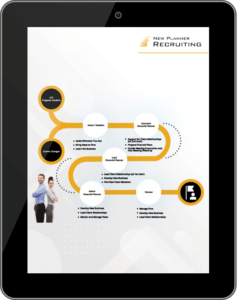 Download your free copy of the New Planner Career Roadmap! In this roadmap, you'll be guided through the details of various stages of your financial planner career, including position descriptions, licensing, skill and experience level requirements, and compensation ranges.
Get the Full Episode Transcript:

Read the Transcript Below:
Welcome to the New Planner Podcast, where it's all about helping you successfully enter the financial planning profession and accelerate your financial planning career. This podcast will help you understand the profession, become familiar with the various career paths available to you, and avoid the mistakes that limit your success. Join your host, Caleb Brown, to explore the human side of creating a successful planning career through interviews, personal experience, and insights from the trenches. Let's get started.
Caleb Brown: Welcome to the New Planner Podcast. This is Caleb Brown, your host. I'm joined today by Jamie Clark, founder of Ruby Pebble Financial Planning, who walks us through transitioning from a career in tech to joining the financial planning profession and ultimately starting a firm. I hope you enjoy this episode with Jamie Clark.
Hi, Jamie. Welcome to the New Planner Podcast.
Jamie Clark: Hi, Caleb. Great to be here.
Caleb Brown: This is going to be so fun. Ever since you agreed to do this, which I appreciate you doing, I've been looking forward to talking with you. I really wish you'd just start with how you became interested in financial planning, and then we can talk about how it became a career and where you are now.
Jamie Clark: Yeah. So I feel like now there are bachelor's degree programs in financial planning and all sorts of things that were just not there when I was growing up. But otherwise, I feel like I somewhat have an origin story that sounds like people who did go through a bachelor's of financial planning program. My parents, when I was a kid, they gave us an allowance that was supposed to do the discretionary spending that they were spending on us, like us budgeting for clothes and hanging out with friends and different things like that.
And I have my spending tracking data back to when I was 16.
Caleb Brown: Whoa.
Jamie Clark: And when I was in college, so I have a—my undergrad is in computer science and French, and when I was an undergrad, I got tired of having a big Excel spreadsheet managing all of my finances. I first wrote an application in PHP and with a MySQL database, and then I wrote a Ruby on Rails program that I still to this day use to manage some of my personal finances.
So I have, like, all of my net worth history going back to when I was 16 and, like, how that's evolved over time. And I started filing my own tax returns when they got too complicated for my mom to figure out what to do with that. I used her TurboTax login and did my own tax returns. And yeah, I feel like I've just always been interested in the financial side of things and trying to understand it.
And when you get a job out of college as a software engineer, and now you have stock and you've never had stock before and you don't know what to do with it, I spent a lot of my free time in my 20s researching what I should be doing with my finances. “What is a Roth IRA?” “Oh, I can contribute more to my 401(k) than just the match amount? Oh, should I contribute pre-tax or Roth?” And, you know, some of these questions, the more experience and age I have, I realize there aren't exact answers to some of these questions that you kind of want when you're a 23-year-old engineer and trying to figure things out.
There's so much more nuance, and I feel like that's part of what makes my job interesting now as a financial planner but also makes it hard for consumers to figure out what to do. And oh, I feel like I veered off from your original question.
Caleb Brown: Oh, no, great. I just want to go into... I mean, I get it, the computer science degree, but you built, you coded your own budgeting and net worth tracking, like your own financial planning software. I love that. Jamie, that's awesome.
Jamie Clark: Well, so it doesn't do financial planning. It just tracks the transactions and then shows the net worth progression. I never... I started doing the budgeting. You know, budgeting software is really hard to build. It's just so complicated.
Caleb Brown: Yeah, I appreciate that. You got out of school, you went into software engineering, I guess the high tech field, and got some options, had some high income, complicated situation, and then what? You just enjoyed it so much you just started to think like, "Hey, I want to do this for other people," or how did that evolve?
Jamie Clark: Yeah. Well, there came a point where I didn't want to work in tech anymore, as happens for many people who work in tech, and I had done a really good job saving, and so I had the money to take a break and evaluate what I want to do. And I also had the spousal health insurance, which helped with that in this country of health insurance. Yeah, I took some time off. I just took a break from work. I was just done with work.
And then one of the pieces of advice I got was that sometimes you just don't know how long the break is going to be when you take a break from work. They're like, “You just evaluate it and consider over time what makes sense.” And eventually, I decided I did want to go back to work at some point, but I didn't want to go back to tech. And I spent some time evaluating what that might look like, talking to people who were financial planners, researching what this might look like, looking at job applications, trying to figure out what are the requirements that an employer would be looking for.
And one of the ways I did that was looking at different employers near me and what they wanted from entry-level hires. And I took the Series 65 before I started any of the CFP coursework.
Caleb Brown: Okay.
Jamie Clark: Which was really helpful because it was a lot cheaper of a time and money investment on my part to help get a baseline. Because, I mean, I just bought the Kaplan Series 65 textbook and the online QBank, and spent a few months working through that because I didn't have a bachelor's degree in finance. I didn't know the answers to many of those things. And that helped me feel like, okay, yes, I do want to go and do this.
And so then I enrolled in the Dalton CFP program and went through that coursework in 2019. And I did that... I don't know how people do it when they do the CFP coursework while they're working. It's a lot.
Caleb Brown: Yes.
Jamie Clark: And I did that over the course of a year, treated that as my full-time job, and did that during the day. And I kept applying for jobs while I was working on the coursework, but looking for remote roles or looking for fee-only financial planning roles in the Seattle area. I feel like as you got further along, you were more attractive to employers, and employers would ask the question of, “Well, why do you want to make so much less money doing something else?” And it was, yeah, it was definitely an interesting experience.
And some of the employers that I interviewed with, I've met them later on, like at conferences and things, and they've told me that they were not surprised that I started my own firm eventually, because that was something they could guess from... which is funny because I didn't realize that about myself until after I got the CFP mark, that that was something I might want to do.
Caleb Brown: So, before that, you didn't feel like you were entrepreneurial? Is that what you were saying?
Jamie Clark: Yeah.
Caleb Brown: Okay.
Jamie Clark: I wanted to work for a firm that... I wanted to work with clients that I enjoyed working with, work for a firm, and kind of be in that structure. I mean, my previous career, there wasn’t, like consulting wasn’t the same sort of thing, like starting your own firm wasn't the same sort of thing. So I feel like that just wasn't a path that had registered with me.
Caleb Brown: Thanks for sharing that. I'm tracking with you. Can you talk about the reduction in income a little bit more? Because that's where I lose a lot of career changers. They contact me like, “Hey, I want to do financial planning.” And then I explain to them, “Okay, do you know what that looks like at an entry level?” and I kind of lose them from there. So can you just talk about, “Hey, I knew I was going to take less money,” or whatever your thought process was and how you navigated it. I mean, I know you worked in a lucrative high-tech field, but a lot of these other people that contact me have high incomes and could have been saving and doing a lot of this on their own too, but maybe they weren't and didn't have the flexibility.
Jamie Clark: Yeah. And I feel like that's something that I talk about with clients now, too, that some people just live into the income, and they're not intentional about what they're spending. But yeah, I mean, I feel like it's one of those things, too, that even if financially you can afford to take that pay cut, it's still psychological.
Caleb Brown: Yes.
Jamie Clark: It's very strange, like, when I was in an associate role, I made less annualized than I did as an intern in 2008 as a software engineering intern. And that's now almost 20 years ago.
Caleb Brown: Big adjustment, right? I mean, that's what you're trying to say, right?
Jamie Clark: Yeah, it's a huge adjustment, and it's not just the income part, but also, you have to be comfortable with not being the expert anymore, and that is really hard to do. But as I said, I'd taken some time off, so honestly, even having less than software engineering intern pay was exciting and felt like a decent amount of money. Because here I—
Caleb Brown: When you're going from zero, going back up is psychologically better, right? I'm with you.
Jamie Clark: Exactly. Yeah, exactly. And I mean, it's hard. I'm not going to lie, that is a hard thing to work with.
Caleb Brown: Okay, so you took a career break for—it looks like it was about three, is it three? What, about three years or so? A little over three years?
Jamie Clark: Yeah, it was about three years.
Caleb Brown: Okay. But you were doing the CFP, some Series 65, looks like maybe some other stuff to get yourself prepared for the potential career. And then what did you do? Were you able to find a firm?
Jamie Clark: Yeah. So I ended up finding a local, fee-only hourly firm that does project-based work, and I accepted the offer in January 2020.
Caleb Brown: Ouch. Yeah.
Jamie Clark: And started there the last week of February 2020.
Caleb Brown: Oh, man.
Jamie Clark: Which was definitely an interesting time to start in the financial planning profession, start a new career, start a new job, and all of that.
Caleb Brown: And I know we were kind of joking around, humming and hawing, like, how was that? I mean, that was a challenging time for everybody.
Jamie Clark: I was really glad I took the CFP exam in November 2019 and not March 2020, because I'd been hemming and hawing. My spouse and I moved and sold our old place and bought the place we're in now while I was studying for the CFP exam. He packed up our apartment around me studying for the CFP exam. We didn’t move because we didn't have internet. And I debated when I took the exam. I'm very glad I took it in November 2019, because the Prometric Center would've been closed in March 2020 when I would've taken it.
And yeah, I don't know, I feel like it was just a very intense and strange time to be a new financial planning—I don’t know, I feel like I don't even have words to describe it. It was just, in some ways, like, time disappeared. And also, it was a really great time for my career, because I was growing in this new career that I was really enjoying at the same time. It was an interesting dichotomy between those two—of how hard and stressful a lot of things were, and also this amazing, incredible new career that I absolutely loved.
Caleb Brown: And had you been working remotely in the tech firm before coronavirus at all?
Jamie Clark: No. No.
Caleb Brown: You were in person, okay.
Jamie Clark: Yeah, I was in person. And the firm, we ended up going, so I started the end of February. We ended up all going home when the governor told us to at some point in March 2020. And before that, I'd been told the associate role was entirely in person.
Caleb Brown: Mm-hmm.
Jamie Clark: And the firm had met with some clients over the phone before, but basically everything had been in person. And so we had ShareFile and stuff, but everything, so it was a huge adjustment for the firm.
Caleb Brown: And how, I mean, just because you had a prior career, I mean, you had to essentially learn how to be an associate planner virtually. What were the challenges there, and how'd you overcome them?
Jamie Clark: I think a big challenge there was just the firm was set up for in-person collaboration. And sorry, I feel like I don't have words for some of that experience. It just kind of was what it was.
Caleb Brown: Well, a lot of people are at a loss for words for those couple of years. Well, and so you managed to obviously make it through it, right? I mean, I guess you stayed virtual, then you guys came back at some point, and then maybe just talk about—
Jamie Clark: I actually never went back to the office.
Caleb Brown: Never went back. Okay. So you were always virtual with that firm, and then you, what else did you learn there that gave you the confidence to... because I think after this you started your own company.
Jamie Clark: Yeah. And it wasn't until after I got the CFP marks that I had any thought of starting my own company. I feel—and I talk to a lot of other people about this—I feel like once you have the CFP marks, there's just this huge confidence boost that you can't imagine before you hit submit on the experience hours and it's like, you're a CFP professional. And then you get the yellow paper card in the mail and the big certificate, and it just feels very different and a lot more real. Because when people are looking for someone, they're looking for a CFP professional. They're not looking for someone who just is a career changer and they kind of don't know what they're doing.
But yeah, I feel like at that firm, I learned so much there in the two years that I was there. We worked with people of all ages, from people in their 20s to people in their 80s. We had families where we worked with the parents, and we helped them with their parents' finances, and then sometimes we would work with their kids. We worked with people at a variety of income and asset levels. We had people who were just starting their careers. We had people who were in retirement age.
And we just had such a—I'm not sure how many people they work with now, but while I was there, we worked with 400 to 500 clients a year. We had a really high client panel size. Yeah, we had a really high volume. And I feel like that's just such a great... When someone's asking, “What is the ideal firm to work at early in your career?” I feel like for me a big answer is somewhere that you can learn a lot and grow a lot and figure out: Who do you like working with? How do you want to work with people? And I feel like those are questions that are impossible... you have these ideas in your head, but just seeing that many client situations and helping with that many client situations helps you form this understanding of the nuance that I don't feel like AI can replace, for example.
There's some amount, like, the CFP exam helps you memorize all sorts of different concepts, and then actually being in the room with clients and helping other advisors go through the documents and formulate the plan and pull everything together. And then like now, I have ongoing client meetings, and we're sitting there in the meeting, and we're adjusting what the strategy is in real time. And that's a skill that just takes experience to develop.
We also worked with clients that worked at a lot of the large companies in the area, and so I feel like that gave me a lot of understanding of, hey, if someone is at this company, then these are things that we should be looking for. Yeah, and also, now I work with a lot more younger folks, but we worked with a lot of older folks. And you see a lot of different careers that people have and different jobs that people have. There were some really cool people that I got to talk to or see their life. It just, I don't know, there are people with jobs that I didn't even know existed, and it was just like, “This is something that people get paid to do? That's so cool.”
Caleb Brown: So it sounds like it was a pretty good fit for you. You learned a lot there, built confidence, got to see a lot, you got the CFP marks, and then you just launched your own firm after that? Or maybe what went into that thought process?
Jamie Clark: You make it sound like there's just a magical, you snap your fingers and you've got a firm, Caleb. Starting a firm is a lot of work. And it really takes a certain type of person for it to be a fit as well. And I feel like there was so much involved in that that I did not know going in. And I'm glad I did it, and I'm glad I'm here, but it was a lot of work. You have to figure out a business plan, who you want to work with, how you want to work with people. And you have to do a bunch of that before you even have any clients, and know, like, how it makes sense to work with people.
And filing the ADV and working with a compliance consultant to do, that takes time. I'm in Washington State, and our regulators are very detail-oriented, and it takes time to get registered. So, I quit in March 2022, and I took a month off. We'd just gotten a new puppy, and it was a little hard to have two people working full time with a tiny puppy who really needed a lot of just sitting on the steps outside in the spring.
And so I spent a lot of time just reading for a month. And then May came around, I started branding work, and the ADV was filed in June, and it was October before my ADV was approved. And so I quit in March, but it wasn't until October that my ADV was approved by the state. And then I was able to launch the website and get going with things, but it was, I don't know, there are so many things. And those first clients are really foundational to figuring out how you want to run your firm and really helped shape what my service model still looks like today.
Caleb Brown: And maybe talk about that a little more. How did you get the first clients?
Jamie Clark: I feel like this is something that, so I'm now in my late 30s, and I feel like that's an age where a lot of people start thinking more seriously about their finances. They're not me, who was thinking about it in their 20s and when they were 16 and tracking things. Most people are not that person. And so, and I've lived in Seattle for 16 years, I have a pretty wide network, having worked at larger companies. And so my first couple of clients actually came through my network and were people who had reached out to me.
And I think my third client came from NAPFA. There's a huge reach for folks looking for, yeah, actually, my first 10 clients, everyone either came from NAPFA or somewhere in my network of financial planners sending me people who weren't quite a right fit for them, or acquaintances of acquaintances, or things like that.
Caleb Brown: And other planners too, that would get prospective clients that they weren't a fit for, they would refer them to you. Great job on building out the network and reaching out. I mean, that's amazing.
Jamie Clark: Yeah. Yeah, I definitely feel that is something that I always tell people to do if you're ever feeling stuck in your firm, or not even stuck, just it's helpful to have a network outside of your firm. And I feel like that's something that's interesting too about this more virtual world, is that I have financial planning connections across the US. So if someone's looking for a more local person or something, I can probably direct them to someone who is closer to them. Or, every time when I have someone who isn't quite the right fit for me, I'm sending them referrals of several other people who I think could be a better fit.
Caleb Brown: And maybe talk a little bit more about your business. So, I'm a new client, I sign up—or you may have a specialty niche, so you may not take me. So, who are you looking for?
Jamie Clark: I probably wouldn't take you, Caleb, sorry.
Caleb Brown: Who are you looking for, and then how do you serve them? How about that?
Jamie Clark: Yeah. So I primarily work with folks in their 30s, 40s, maybe early 50s. My plan is to age with my clients, and I'm starting to... I'm a little older than I was four years ago. But yeah, but generally, people with non-traditional goals. So most of my clients are generally either child-free, not married, or not partnered—some combination of the above. Most of my clients either identify as LGBTQ+ or allies.
Intro: Mm-hmm.
Jamie Clark: And really just people... And also, one of my big boundaries is that both partners need to be engaged in the financial planning if your finances are together, which in a community property state like Washington, unless you have a prenup or a postnuptial agreement, your finances are together regardless of whose name is on the accounts.
Caleb Brown: That's right.
Jamie Clark: And you know, some people don't like that, and that's okay, because I have many clients who really like that. And I've had a number of clients working together for several years, and there's a lot more financial literacy when both partners are coming to the meetings.
Caleb Brown: I love that. Thank you for sharing that and sticking to your guns. I learned that lesson early on in my early 20s. Somebody came, and the husband in this case said, “Hey, I'm the one that deals with the money. My wife…” I'm like, “Sorry, I know you have $4 million, and we just got started, and we would love the fee, but we can't work with you.” I mean, that was tough. So I'm glad that you mentioned that because I'm with you. I believe in that philosophy pretty strongly. Okay. So is it an assets under management, planning, hourly, or project model? How do you work?
Jamie Clark: Yeah. So I start everyone off with an initial financial plan, and I bill hourly for basically all of my services, and that's part of why I do the initial plan structure. I do half up front and then half after the last plan meeting. Those usually take three to four months, depending on the client, to work through. And pricing varies from $4,000 on the very low end up to $10,000 for the initial plan, and I bill at $400 an hour. So, and those are, like, I've been doing this for four years now. I've signed 60 initial plan clients, and I have good data on what that looks like.
Caleb Brown: Of course you do. You're a computer science major, right? Jamie!
Jamie Clark: Oh, we didn't even talk about all the automations that I've done to make my life easier in my business, Caleb.
Caleb Brown: Well, in all seriousness—I mean, so are you... is it a sole practitioner? I mean, do you have anybody? So it's you doing all the work. So maybe just talk to us briefly about all the stuff you've set up to help you serve these clients.
Jamie Clark: Yeah. My business primarily runs on my time tracking software that auto-drafts my invoices every quarter for my ongoing clients. It helps give me the data of how much I should be charging clients. I have automation set up, so when someone schedules an intro meeting, they get created in my CRM, DocuSign drafts an agreement for them, a Google Drive folder gets created, the quote worksheet gets copied, and a variety of other tasks within those softwares.
And when someone signs a new initial plan agreement, the DocuSign gets auto-copied into Google Drive, the projects get created in the time tracking software, the items get updated in Wealthbox, and a bunch of all the new initial plan files get copied within Google Drive from the templates. And one of my goals has been to not need to hire a human to do work that I can automate. So, like, when my software sends invoices, I always CC myself, and I have Gmail auto-add a label to those for invoices, and then I have an automation that watches for new emails under that label. It saves that invoice—the attachment of the invoice PDF—to Google Drive, renames the file, and copies it to the client's invoices folder.
Caleb Brown: That's amazing. I mean, for a non-tech person, I'm just looking at this like, “This is so cool.” I mean, like really so cool. One click of a button, all this stuff happens. Really neat.
Jamie Clark: Yeah.
Caleb Brown: Well, I mean, it sounds like you're... because you've been at it about four years now, the new firm. Been at it four years. Anything you wish you'd done differently, or any sort of gotcha moments that you want to maybe point out to somebody else that might be considering this?
Jamie Clark: Belief in yourself is a really big piece. Belief in yourself and belief in your value. And I feel like the CFP coursework is all really great on the technical side. I ended up going through Nancy Noel's Genuine Sales class when I was a couple of years into running the firm. I feel like I had a good foundation in sales, but going through sales school, I feel, is something... People go into financial planning thinking we're not salespeople, but we are, and you can't run a business without feeling confident in your value, in the services that you provide to clients, and being able to sell that service. I'm essentially selling my time to folks.
Caleb Brown: Yeah.
Jamie Clark: And I have to be confident in what I'm willing to do and what I'm not willing to do. And the sales part, I feel like, is a big key to that, that a lot of people kind of sweep under the rug and just try to avoid. But you also, like it's a business. And I feel like a lot of people, like we have all this time and all the setup, and that helps see the business as a separate entity from yourself. But I feel like that's something that I've done a good job of from the beginning—is the business is its own entity and has its own cash flow and its own structure, and it's not just an extension of me.
Caleb Brown: Love it. Absolutely. Yeah. And maybe you mentioned this, I just didn't catch it. So how many ongoing clients do you have? Is there a target that you try to bring on every... I mean, do some people drop off or do they kind of stay with you indefinitely?
Jamie Clark: I feel like it really depends on the client. I have some clients that have been with me for a while, and I can tell they'll be with me for a while yet. Yeah, I don't require investment management. I actually bill hourly for most of my investment management in addition to financial planning. I feel like financial planning is the really important part and why people come to me, and that's part of why I lead with it. So substantially, I don't charge a percentage of AUM fees. I charge flat fees or hourly fees for clients. I have about 25 ongoing clients at the moment, and I feel like I'm starting to find that sometimes you might have tried to push “ongoing” on someone when it wasn't quite the right fit, and just sticking to your—It's really hard to stick... Setting boundaries and picking the right people and being true to yourself, I feel like that's just like a constant exercise in running a business.
Caleb Brown: Yeah. Scope creep. Everybody deals with that, right? “Yeah, I can do that. Yeah, I can do a little of this.” I'm like, “No. Stick to your guns.”
Jamie Clark: Well, and especially hourly, when you're ultimately just billing for your time, you have to be really careful with the scope creep, and that's why I don't give firm estimates for ongoing anymore. I just bill hourly for whatever time I do each quarter.
Caleb Brown: That's great. Is there any kind of minimum in there, too, so you kind of are protected on the bottom, on the lower end?
Jamie Clark: There's technically no minimum, but if I'm not providing the level of service that I want to be providing and feel like the client needs, then that's not ultimately a long-term fit.
Caleb Brown: Yeah, okay. Well, congrats on building a nice business that you have and walking us through the ins and outs. Glad to know you and glad to have you in the profession, and you're out there doing great work for people. Anything else you'd like to share before we close out?
Jamie Clark: You're never too old to change careers. It's never too late to do something different. We don't need to be stuck into whatever we decided to do when we were 18 when we went off to university. Life is long, and I feel like there are so many transferable skills. My computer science degree is very helpful for building some of the operational side of my firm, and yeah, I don't know. I feel like it's just, don't wait. Figure out what you want, and do it if you can.
Caleb Brown: Absolutely. Agree. Agree completely. Jamie, this has been a lot of fun. Thanks so much for coming on the show.
Jamie Clark: Thanks, Caleb. Happy to be here.
Thanks for joining us for this episode of the New Planner Podcast. If you are ready to discover the top career paths for financial planners and see which track is best for you, we created a free guide to help you. Grab your copy of the Financial Planner Career Roadmap at newplannerrecruiting.com/roadmap. There, you'll also find more tools and resources all created to help you build a successful financial planning career. Tune back in next week for another episode, and until then, we are here to help you succeed.
Share the Love:
If you like the New Planner Podcast...
Never miss an episode by subscribing via Apple Podcasts, Spotify, Amazon Music, YouTube Music, or by RSS!



Leave a Reply