
Changing careers after 25 years in another industry is one thing. Starting again at the bottom of the ladder is another. Kimberly Keesler Herrera, Associate Advisor at Tessara Wealth, made that leap from a successful career in tech into financial planning, approaching the transition with plenty of research, a financial runway, and a willingness to be the “kindergartner” again.
Listen in to hear how Kimberly researched different firm models, why she chose the RIA path, how she prepared for the financial realities of starting over, and how she has used skills from her previous career to build confidence in a new one. She also shares why approaching firms like a prospective client can be a valuable way to learn about the profession and make connections. Her experience offers a practical look at what career-changers can expect when entering financial planning, so make sure to tune in!
What You'll Learn In Today's Episode:
- What a financial planning residency looks like. (1:30)
- How Kimberly discovered financial planning. (5:00)
- How to research different firm models. (6:55)
- Why Kimberly chose the RIA model. (9:45)
- How she prepared financially for the career change. (11:50)
- What it’s like starting over professionally. (15:30)
- How to leverage skills from another career. (20:00)
- Why career-changers should interview firms as clients. (22:20)
Ideas Worth Sharing:
“I would say to career-changers: leverage what you already know how to do.” - Kimberly Keesler Herrera Share on X “My salary is not just what defines success.” - Kimberly Keesler Herrera Share on X “You never know where conversations will take you.” - Kimberly Keesler Herrera Share on XResources In Today's Episode:
- Kimberly Keesler Herrera: LinkedIn
- Facet
- Finding your Path: The Roadmap from Student to Successful Financial Planner by Caleb Brown
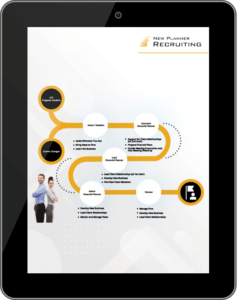 Download your free copy of the New Planner Career Roadmap!(opens in new tab) In this roadmap, you'll be guided through the details of various stages of your financial planner career, including position descriptions, licensing, skill and experience level requirements, and compensation ranges.
Get the Full Episode Transcript:

Read the Transcript Below:
Welcome to the New Planner Podcast, where it's all about helping you successfully enter the financial planning profession and accelerate your financial planning career. This podcast will help you understand the profession, become familiar with the various career paths available to you, and avoid the mistakes that limit your success. Join your host, Caleb Brown, to explore the human side of creating a successful planning career through interviews, personal experience, and insights from the trenches. Let's get started.
Caleb Brown: Welcome to the New Planner Podcast. This is Caleb Brown, your host. I'm joined today by Kimberly Keesler Herrera, a financial planning resident at Tessara Wealth. She joins the show today to share how she has successfully transitioned from a long career in the tech space and how she has been progressing in the financial planning field for the last year and a half. Be sure to also check out part two, where she talks about how she posed as a client to interview various firms to try to figure out her path, plus some tips for career changers.
I hope you enjoy this episode with Kimberly Keesler Herrera. Hi, Kimberly. Welcome to the New Planner Podcast.
Kimberly Keesler Herrera: Hi there. Thank you for having me.
Caleb Brown: This is going to be so fun. I know we were just kind of chatting off the air here, but if you would, just start us off with what you're doing right now. I mean, what does a financial planning resident do at your current firm?
Kimberly Keesler Herrera: Sure. So it's essentially a fast track to becoming a lead planner. So the very first week I joined the firm, I was sitting in on client meetings, I was helping prep decks. I was thrown right into it. And it's very interesting because from what I've heard, that's not always the career path of somebody going into—maybe working for a bank or something like that.
So I come from tech. I had 25 years of experience in tech, and tech was always the safe, stable career that earned a good income. It was never really my life's passion, but, you know, it paid the bills, and I was good at it. I was in sales; I was in account management. And back in 2023, when tech started to get really volatile, I said, "You know, maybe it wouldn't hurt to look at a second career, a second set of skills that might help," and that's when I went back to school to do the CFP.
And what's really interesting is the firm I'm at now is based in San Francisco. They help people in tech, and a lot of our clients—not all, but a lot of clients—are coming to us saying, "I'm a little unhappy in my role now. Tech has changed. I want to get out. Help me build the runway." I think one of the reasons the firm owner hired me was I'm essentially who our clients were five years ago.
Yeah. So I was in tech. I had built up that runway. I understood why it's very common. You can spend your career in one place and then kind of suddenly wake up and say, "Wait a second, you know, what's next?"
Caleb Brown: Wow. Thanks for sharing that—a lot to unpack there. I want to go back to something you said earlier. In the first week on the job, you were in client meetings? I mean, that—
Kimberly Keesler Herrera: Oh, yeah...
Caleb Brown: That is amazing.
Kimberly Keesler Herrera: Well, I'm a salesperson. I think Sean knew, "Okay, Kimberly can talk to clients." Like, I can teach her the financial planning, but I don't have to teach her how to relate to a client.
So I think that's probably why. But yeah, it was a great exposure because if you're not in the client meetings, you're not really understanding or learning what it is the firm does. You know, doing the back office, doing the paperwork—that's great, and that's a skill that you definitely have to learn, and it kind of helps you get your feet wet. But I think it's very important to be in the client meeting and understand the culture of the firm, what the firm finds important, and how they talk to a client. So it was really great exposure, and I got that from the very first week.
Caleb Brown: How impactful was that for you to say, "Okay, this is really what I..." Because you've been there about a year and a half now, right?
Kimberly Keesler Herrera: About a year and a half, mm-hmm.
Caleb Brown: Okay. So, "I got right into client meetings. This solidified it: I've made the right choice, and this is what I want to do."
Kimberly Keesler Herrera: Oh, yeah. If anything, I had to remind myself to let the lead planner lead because somebody would be like, "Hey, I've been in tech. I want an escape." And I'm like, "Oh my God, I just did that!" So no, it was 100% solidified. But I do think it was very unique to me. I mean, what are the chances that I found myself in a firm supporting people who were exactly like me a couple of years ago?
Caleb Brown: And maybe you just answered that, but I would... You said, "I did this, and I was looking at another..." You could've picked any profession, any other vocation. How did you land on—to go back for your second act—how did you land on financial planning?
Kimberly Keesler Herrera: Okay, so quick story. When I was in my 20s, I worked for a software company. They had brought in a financial planner to meet with the sales team, and I thought, "You know what? I'm 24. I should hire a financial planner, start taking my commission checks, and having them invest it." What I didn't realize at the time—I didn't quite hire a planner. I hired somebody who took my $2,000 commission check and took $1,000 in commission, so I got burned real bad. Oh.
So at 24, I was like, "Well, never going to do that again. I'm going to learn investing for myself," and I became a do-it-yourself investor, and I loved it. And so throughout my whole career in tech, I used to always love talking about money and investments, and I became known as the person in whatever company I was working for as, "Oh, if you want to know about investments, buying real estate, or your 401(k)s, talk to Kimberly."
So people would take me out to lunch, and I would help them understand investments a little better. So when 2023 hit and tech started to implode, to me it was natural. This was always my side hobby. This was something I would always do on a Saturday morning for fun. What if this actually became my profession?
So it was always there; I just never thought this could be something I do for a living.
Caleb Brown: So you were helping people with their options and equity comp and all this on a pro bono basis?
Kimberly Keesler Herrera: Since my 20s. Oh, yeah, it was fun. To me, this was brunch talk. Girlfriends were like, "Let's go out for wine, and we'll talk about this." This was always fun for me, and maybe because it was fun, I never thought it could be a career. That sounds strange, but yeah, this was something I've done all my life. I loved learning about investing.
Caleb Brown: Talk to us a little bit more about how you figured out what channel, firm structure, and compensation model you wanted to target, and then let's work into actually how you found Sean and your current firm.
Kimberly Keesler Herrera: So this was a challenge because I realized, spending my whole life in tech, I knew who the big players were: the Googles, the Microsofts. But financial planning—I knew nothing. I knew that there was a Vanguard, I knew there was Schwab, and I would look at job postings, but I really didn't know what I didn't know.
So I was like, "You know what I'm going to do? I'm going to do some research. I'm going to pretend that I'm a client looking to hire a financial planner, and I'm going to interview about 15 different places."
Caleb Brown: Wow.
Kimberly Keesler Herrera: And that's exactly what I did. And I reached out to all the big names. I knew what a CFP was, so I reached out to some CFPs, and I was just like, "I'm Kimberly. I'm in tech. I don't know what my next step is, but I think I might need a planner, and what does that look like if I were to hire you?" So, yeah, it took me about three months. I think I met with about 15 to 20 different people, and I learned real quick: I don't want to be selling insurance. I don't want somebody who's just going to take the money but not talk to me about budgeting and cash flow, and that's where I realized, okay, nothing wrong with selling insurance, but I really like these smaller firms called RIAs. I didn't even know what that meant at the time. They kind of sit down and talk to me about what I'm trying to achieve, how much I am spending monthly, how much we are putting into investments, and whether everything is set up correctly. And so that's when I was like, "Okay, this right here—that's what I want to do. I want to work for a small firm where they call themselves planners, and they touch every part of your life that touches money. It's not just investments; it's not just insurance; there's no talk about selling an annuity—it's the whole picture." But that's how I had to find it: I had to pretend to be a client.
Caleb Brown: Wow, and I know other people have probably done that, but I just haven't heard about it. I mean, that's really cool. You're talking about being on the front lines and getting a peek behind the curtain. What better way to do it? But a different interview, right?
Kimberly Keesler Herrera: Yeah, exactly. But I figured that was the way to figure it out because that's what is going to be expected of me. And so it just felt a lot more natural when you're meeting a person, trying to get to know them a little bit about their goals, and you're not immediately going in with a sale. And I was a salesperson, so I understand sales and I'm very comfortable with it, but there was something different about these smaller firms. It was more, "I'm going to recommend for you what is best for you, and we're going to go through everything before I even make a recommendation."
Caleb Brown: So you met with firms in all different channels: wirehouse, bank, brokerage, insurance, and RIA—everything. And that's what you landed on—
Kimberly Keesler Herrera: Yep, RIA. RIA. I'm like, "Okay, I want a small team," and then when I started to interview RIAs, I found they were very specialized. I interviewed with one firm in the Midwest that supported military families, and I'm like, "Oh, that's super cool." And they were even like, "We're kind of really looking for somebody who comes from the military because they can relate." And then I was like, "Ooh, that makes sense. Maybe I can find a firm in San Francisco that supports people in tech."
And then when I saw the ad for Sean's firm, I couldn't hit reply fast enough. I'm like, "This was made for me. This was created for me."
Caleb Brown: And there are a lot of firms, though, in the Bay Area that focus on tech, so how did you know it was a fit with him?
Kimberly Keesler Herrera: He was hiring. The timing was right. The timing was perfect.
The way the role was described: you're going to come in, you're going to support planners, and you're going to learn the basics. It's a residency, but our clients are young professionals in tech, mostly in the Bay Area, with stock equity. And so I knew, okay, well, the clients you're describing, that's me and my friend group or my former client group. So I knew I could relate to the client. And then when I met Sean and his team, I was like, "Yes, this is perfect."
Caleb Brown: So you came in as a salaried, sort of entry-level apprentice. Is that accurate to describe it that way?
Kimberly Keesler Herrera: Salary, yes. Salary, entry-level. Apprentice is a great way to describe it. That's essentially what a residency is. I hadn't passed the CFP yet; I was still studying. I had finished the education portion, but I was studying for the CFP. So I was hired in February of 2025, and I passed the CFP that November.
Caleb Brown: I'm thinking of someone in tech sales, and I'm just imagining the salaries and the income. How did you navigate that pay reduction to going to an entry-level planner, which is much lower than you were making?
Kimberly Keesler Herrera: Oh, yeah. So again, because I was in tech sales and because I was always interested in money and investing, I had built my runway years before I knew I'd need it. So the good news was I had my fund that was my sabbatical/new career fund.
And I had said, "Okay." I had left tech, I had taken a sabbatical, so I didn't even start looking for a new job for maybe six months after I left, and I had runway. I was like, okay, I have $X$ amount of years before I need to be up to a certain level of salary. So this was years in the making. This wasn't something I woke up one day and said, "You know what? I think I'm going to try this out." I had to plan for years because, yes, especially living in the Bay Area, it's not like I suddenly went and lived in a lower cost-of-living area. I had to really know my numbers.
But I would say this: I kind of feel like if you do something you love, the money will follow. Yes, you have to be prepared for it. You have to kind of build out the plan, but I actually felt like it was riskier to stay in tech.
Caleb Brown: Maybe explain why, because a lot of our listeners are in tech and are career changers. Why is that?
Kimberly Keesler Herrera: I was at my last company for 10 years, and a lot of my coworkers were also there seven, eight, nine years. Now, people I worked with at the company are changing jobs every year and a half to two years if they're lucky, because of layoffs. So even though it's the higher salary, you almost have to be willing to accept more risk for that higher salary, knowing your job is no longer stable or safe, even if you're a high producer.
I was in sales, and I was always hitting quota—it doesn't matter. So sure, I'm taking a lower salary, but now I feel more in control than I did when I was earning more in tech.
Caleb Brown: And maybe I missed this, but did you voluntarily resign, or was there a layoff?
Kimberly Keesler Herrera: I voluntarily resigned. I had a job; I was there for 10 years. And I got to the point where my longtime boss retired, and I was looking around thinking, "You know what? This is a good time. It's now or never." I had already completed the CFP coursework. I was starting to study, and I thought, "I've been with this company for 10 years; let's take a break. Let's pass the CFP and let's go do this. It's now or never."
Caleb Brown: How has this change improved your life over the last year and a half?
Kimberly Keesler Herrera: If you have to work, as most of us do, it's a lot more fun when the subject you're working in is something you actually enjoy. You're always going to have hard days—maybe a client gets upset about something, or you think, "Oh goodness, I've got to do all this work." But if it's a subject you like, it makes it so much better.
Not that I didn't enjoy tech; I enjoyed the people. I used to support Google. I liked working with Googlers, and here I am, still working with Googlers. But now the subject matter is financial planning, not, "How are we going to staff this AI project?" So I just enjoy the subject more now that it's financial planning.
Caleb Brown: How have you handled the transition from being a very successful, longtime tech person with a high-flying career at the top—having mastered that—to starting down at the very bottom in something else?
Kimberly Keesler Herrera: It is very humbling to come into something where I always tell my teammates, "I'm the kindergartner here." Whereas in my last role, I was high up and used to train all the new hires. I could do something in three minutes in my head. Now, it's learning new skills. It's humbling.
That said, the way I think about it is I still feel I'm very successful. Salary is not the only thing that defines success. I was able to leave a career—I was 49 when I left my career—start over from scratch, and I'm still kicking. So to me, not a lot of people can just up and say, "You know what? I don't want to do this anymore; I'm going to go do that." And to me, that's what success looks like. I know a lot of people who are like, "Oh, but I've been doing this for 20 years. What if I..." I don't know, we get one life. Let's have a little fun.
Caleb Brown: Yeah. What did your cohort or your friends say when you said, "I'm going to do it"? Did they say, "Kimberly, you're crazy! Why are you doing this? This is a huge risk," or were they supportive?
Kimberly Keesler Herrera: Everybody was like, "You should've done this 10 years ago! We've been telling you to do this for years." Especially family—my sister said, "I've only been telling you to do this for 20 years." So no, it was the opposite. I feel like people knew this is what I was meant to do.
Caleb Brown: And talk a little bit about—because you're a year and a half into this, approximately—what have been the biggest surprises about this career change for you?
Kimberly Keesler Herrera: All right. I noticed when I first started in tech, there was a lingo or a certain corporate speak that you kind of had to learn to be successful. I was actually surprised to find it's no different in financial planning. And so, in the first couple of months, I'd be in a financial planning meeting—and now this is coming from somebody who passed the coursework and passed the exam—and a phrase would be thrown out there, and I'd say, "What does that mean?"
And I thought, maybe I am going to not speak that way because I feel like, unfortunately—and I've had friends come and tell me this—they are a little intimidated by financial planners because we speak a certain way. And so to me, if my 10-year-old niece can't understand what I'm saying, maybe I'm saying it wrong. So I want to change that. If a client is looking at me like they don't understand, I want to say, "Wait, before we move on, I want to make sure you understand completely what we're describing." So I was surprised. I thought tech only spoke in tech lingo; I didn't realize there was a whole language here as well.
Caleb Brown: Gotcha. And talk to us maybe a little bit more about the resident role. Is there a certain number of months or years you stay in that before you become a lead planner, or is there another stop along the way? What does the career progression look like?
Kimberly Keesler Herrera: It's two years, and in two years, I'll have hit my requirements to be a CFP. So from what I understand from Sean's firm, that's usually the path: two years in the residency program, and then you're off to the races—you're an advisor with clients of your own.
Caleb Brown: And is the way it works that you get the clients—you get all your tech buddies—or are the clients given to you by somebody else?
Kimberly Keesler Herrera: It's a mix of both. We have quite a nice funnel, so I think Sean has built a name for himself in the Bay Area. A lot of people find us from Google search, from referrals, so we have a steady stream of new clients coming in. I know for a lot of people, sales might be the scary part. I actually enjoy that, but here it seems like it's going to be a mix.
Caleb Brown: Yeah, I mean, we had him on our last episode, and he talked about when he started his own firm, he just sent out an email and all these people reached out to him. I feel if you did the same thing, a lot of your people would be like, "Yeah, this is great. Kimberly, where do I sign up?"
Kimberly Keesler Herrera: Well, yes, a few former clients I supported have already come over and said, "Oh, you do financial planning now? Great." So, yes.
Caleb Brown: And maybe this is a good segue: talk to us about how your confidence has developed and increased over the last year and a half in this brand-new field.
Kimberly Keesler Herrera: So I will say what helps—let's put the technical financial planning stuff aside. Because I had already built up skills in another career, I was already client-facing, in sales, and problem-solving. I could go into a team in tech, not understand what the issue was, but know how to ask questions to get them talking.
So coming into financial planning, that's kind of how I see it. If I can understand what the client is concerned about and what they need, then I can go and work with my teammates on the technical side and be able to come back and deliver the answer. So I would say to career changers: leverage what you already know how to do, and then the financial planning—because it's something you're interested in—you're going to want to spend your time learning, studying, and developing those skills. But leverage what you already do well, because that's helped me a lot.
Caleb Brown: What was the most difficult thing for you to pick up in this transition?
Kimberly Keesler Herrera: Taxes. I don't love tax projections, and taxes—I feel like it's its own animal. And so we have an incredible CPA who's got 25 years of experience. So what I like to do is say, "Hey, I might own this, but Joanne, you're going to sit with me, and you're going to make sure that I'm not missing anything."
So that's another thing: when I was in tech, I wasn't expected to do everything and know everything. I had a team. I had an ops person I would pull in, a marketing person, and a legal person. So that's what I do here. I might own the client relationship or need to get back to them with an answer, but I've got experts I can pull in. So that's been very helpful.
Caleb Brown: Yeah, really the point person, quarterback, personal CFO, whatever you want to call it, right?
Kimberly Keesler Herrera: Exactly, yeah.
Caleb Brown: Kimberly, this is awesome. I'm glad you're in our profession, and we need more people like you to make their way over to this side because, as you talked about, it's rewarding and fulfilling, especially if you're already doing this as a hobby and enjoying it on the side. So we have a lot of career changer listeners out there. Any other final tips, thoughts, or stories that you want to share with them?
Kimberly Keesler Herrera: I really think there is something to be said for acting like a client and going around interviewing small firms in your area to just get a feel. Who knows, you might make a connection.
In fact, I'll tell you this real quick: when I was doing that, I met Facet, which is a big firm. And the CFP was like, "Hey, do you want to get an interview here? I'll get you an interview." And I hadn't even passed—I hadn't done anything yet! And I interviewed there. So you never know where conversations will take you. Just start by talking to the people in your area, and you might get really lucky.
Caleb Brown: That's awesome. Great advice. Kimberly, thanks so much for coming on the show.
Kimberly Keesler Herrera: Yeah, thanks for having me.
Thanks for joining us for this episode of the New Planner Podcast. If you are ready to discover the top career paths for financial planners and see which track is best for you, we created a free guide to help you. Grab your copy of the Financial Planner Career Roadmap at newplannerrecruiting.com/roadmap. There, you'll also find more tools and resources all created to help you build a successful financial planning career. Tune back in next week for another episode, and until then, we are here to help you succeed.
Share the Love:
If you like the New Planner Podcast...
Never miss an episode by subscribing via Apple Podcasts(opens in new tab), Spotify(opens in new tab), Amazon Music(opens in new tab), YouTube Music(opens in new tab), or by RSS(opens in new tab)!



Leave a Reply