What if the fastest way to build a successful financial planning career isn't going it alone? Victoria O'Tool is Executive Director of the FinServ Foundation and a financial planner at Mercer Advisors, and she joins the show today to share how mentorship, community involvement, and saying yes to unexpected opportunities helped launch her career just months after graduating.
Listen in to learn why finding the right firm matters more than landing the first job, as well as how the FinServ Foundation is helping develop the next generation of financial planners. You'll hear lessons learned from balancing multiple roles while studying for the CFP®, the value of networking, and why experienced professionals have an important role to play in giving back to the profession.
What You'll Learn In Today's Episode:
- How Victoria got into financial planning. (2:00)
- How she found her ideal career path. (5:30)
- Tips for balancing work and CFP studies. (8:45)
- The role of the FinServ Foundation. (9:13)
- Why giving back strengthens the profession. (15:00)
- What makes the RIA model appealing. (17:20)
- The importance of putting in the hard work. (24:20)
Ideas Worth Sharing:
“People are here to support you. There are programs, resources. And if you are a veteran in this industry, this is your opportunity to be the mentor that you may have never had.” - Victoria O'Tool Share on X “The passion for what I'm doing is what fuels me.” - Victoria O'Tool Share on X “So many times I see students get offered to be mentored or just receive help, and they never follow up. So follow up with people.” - Victoria O'Tool Share on XResources In Today's Episode:
- Victoria O'Tool: LinkedIn
- FinServ Foundation
- New Planner Recruiting - Financial Planner Career Roadmap
- Finding your Path: The Roadmap from Student to Successful Financial Planner by Caleb Brown
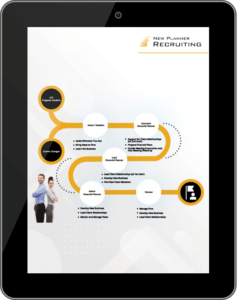 Download your free copy of the New Planner Career Roadmap! In this roadmap, you'll be guided through the details of various stages of your financial planner career, including position descriptions, licensing, skill and experience level requirements, and compensation ranges.
Get the Full Episode Transcript:

Read the Transcript Below:
Welcome to the New Planner Podcast, where it's all about helping you successfully enter the financial planning profession and accelerate your financial planning career. This podcast will help you understand the profession, become familiar with the various career paths available to you, and avoid the mistakes that limit your success. Join your host, Caleb Brown, to explore the human side of creating a successful planning career through interviews, personal experience, and insights from the trenches. Let's get started.
Caleb Brown: Welcome to the New Planner Podcast. This is Caleb Brown, your host. I'm joined today by Victoria O'Tool, Executive Director of the FinServ Foundation and a financial planner at Mercer Advisors. Victoria joins the show today to discuss how she entered the financial planning profession, how she started as the Executive Director at the FinServ Foundation, and how the organization is helping grow the profession, as well as an overview of her role as a financial planner in a large RIA firm. I hope you enjoy this episode with Victoria O'Tool.
Hi, Victoria. Welcome to the New Planner Podcast.
Victoria O'Tool: Hi, Caleb. How are you doing today?
Caleb Brown: I'm great. It's Friday. I know we were talking about all the fun things that we have going on for the weekend, but I am, just like all my guests, I am genuinely excited to talk with you and learn about you and your story, and so is our audience.
So if you would, just maybe start from the beginning, if you can, on financial planning. Was this something you wanted to do when you were really young? Did you transfer, career changer? Did you fall into it like me and a lot of other people did? Just maybe walk us through, through that.
Victoria O'Tool: Yeah. So to give a little bit of background, I'm a military kid, so I moved around quite a bit growing up, and there was really not much that was pretty constant in my childhood. But I will tell you, my mother's emphasis on giving back to your community and being really involved in the different places we lived was always something that was really important to her, and in turn, that became really, really important to me as well.
And also, my dad was super-duper influential in teaching me about financial literacy and the stock markets and helping me be engaged with our Edward Jones financial advisor. So I had two of those things growing up that really, really shaped the person I became, and when I was exploring career paths in high school and went through a financial literacy class, I was like, “Whoa, I could do this as a career. This is helping people, helping my community. I can be involved,” and it's also kind of itching the scratch I had for financial literacy and the stock market. So I was a little stubborn in high school, and I said, “I want to put myself through college without the help of my parents,” because they both did that.
And my dad was like, “No, Victoria, you can't do that. That's crazy.” But I was like, “Well, both of you did it, so it can't be that crazy.” So I was looking at schools with good finance programs. Didn't know about any, like what the CFP programs were, but I ended up getting a full ride to the University of Alabama, and I decided to take it 'cause it was pretty much—
Caleb Brown: Nice.
Victoria O'Tool: free. And my sophomore year, I ended up being involved in the financial planning program there and running the financial planning club, and that's kind of the start of it.
Caleb Brown: Lots to unpack there. One, that's an amazing—
Victoria O'Tool: Yeah. I know, Caleb.
Caleb Brown: We're two minutes in, it's like amazing parents, that they were able to do that.
Victoria O'Tool: Absolutely.
Caleb Brown: that's really cool. And then the second thing is, did you, I mean, I know you got the full ride, but did you know about the University of Alabama's CFP program before you got there? Did you mention that?
Victoria O'Tool: No, I had no idea that there, I didn't know what the CFP was, CFP programs. The Edward Jones financial advisor did not have a CFP. Great, great guy, but he didn't have it, so I just, I didn't know
Caleb Brown: Okay, so you kind of fell into it, at least the major—
Victoria O'Tool: I did
Caleb Brown: Like a lot of people do. And man, I just hope by the end of my career, and I say this every time, that will not be the way that people do this.
Victoria O'Tool: Absolutely.
Caleb Brown: They won't be like, “No, I'm doing, I know all the schools. I'm gonna go to the financial planning major.” Okay, so you got involved. So Georgia couldn't do anything? I mean, I just nothing against Alabama, but man, that's kind of a—
Victoria O'Tool: I never applied. I'm not from the South.
Caleb Brown: Oh, didn't even give us a shot.
Victoria O'Tool: Alabama wasn't, like it wasn't on the radar. I had no intention of like applying to a big SEC school. But I just got a random letter in the mail that said, “You should apply to Bama,” and talked to the college counselor, and I'd applied to all the really great East Coast schools.
But I was like, “Sure,” Alabama. And they just ended up giving me the most money. That's really how I ended up there.
Caleb Brown: All in good fun. Great, great school. Okay, so you found the major, and then you got involved and then you started—
Victoria O'Tool: I got very involved ...
Caleb Brown: Yeah, talk to us about that.
Victoria O'Tool: Yeah, so my freshman year I was set on this industry, but I wasn't exactly sure where I fit in it, and that's where my FinServ Foundation journey really helped me figure out my path within this industry. So freshman year, I was so proud of myself for landing a Northwestern Mutual financial planning internship.
I was like, “I'm a freshman. I got this incredible internship,” and it was just not the experience I thought it was. So that was my introduction really to the industry.
Caleb Brown: And why not? Why not? 'Cause we may have listeners that are going that route.
Victoria O'Tool: Yeah, for me, I was putting my— like I had no financial... Well, my parents could have helped me.
I decided to not let them help me. But I was on my own financially, and the compensation model for me did not align well with starting off my career, and I also just felt like it was a little salesy, and I'm not a salesy person. And frankly, Caleb, I was not good at selling insurance policies. It was just not a skill that I was good at, was selling.
So it just wasn't a good fit for me. But that's how I was introduced to the industry, was through that internship. And then my sophomore year, I found out there's a financial planning club. So I got paired up with a mentor. His name is Jim Sumner, through that. It is like a financial planning FPA chapter.
It was like associated with the Financial Planning Association, and got paired up with a mentor. I got introduced to the FinServ Foundation, which we'll talk about later, I'm sure. But that was kind of the start of it. I did some other stuff, but yeah, to answer your question
Caleb Brown: So I'm looking at your LinkedIn. So member, then you became the president. And the co-president.
Victoria O'Tool: Yeah.
Caleb Brown: And then I guess you graduate. So when was it? When did you get out of University of Alabama?
Victoria O'Tool: A woman that never reveals her age.
Caleb Brown: Oh, sorry. Okay.
Victoria O'Tool: I've been trying to keep that hush, hush. I graduated in December of 2023. So six months.
Caleb Brown: What?
Victoria O'Tool: Yeah.
Caleb Brown: Like six months ago?
Victoria O'Tool: No, I've tried to delete it.
Caleb Brown: No way.
Victoria O'Tool: Yeah, I've tried to delete it off the internet, yeah.
Caleb Brown: Oh my goodness. Yeah. Okay, you are doing, you have done a lot. I love this. Okay, so you, then what, you graduated. Here you are, six months. What did you do after that?
Victoria O'Tool: So I moved to New York City from 'Bama, and I started my career at Mercer Advisors. So I'm the Executive Director of the FinServ Foundation. I do that after 5:00 PM, and before 5:00 PM, I am building financial plans for our clients, and I'm presenting them either to our wealth advisors or I'm presenting them to our clients in meetings.
Caleb Brown: Got it. And I wanna come back to that and talk a little bit more about the role, but you're, I mean, here you are. You're like, “Hey, Mom and Dad, I don't want you to pay for my school.” “I'm gonna pay for my school.” “Hey, hey, I'm gonna go work two jobs.” I like—
Victoria O'Tool: Yeah
Caleb Brown: Is everything okay? What's going on? Your peers are probably looking at you with weird sort of eye, like, “What are you doing?”
Victoria O'Tool: Yeah. No, it's a great question, Caleb, and you can blame my dad for the workaholic genes. That really what it boils down to. I don't like to not be very busy. I am. I'm also studying for the CFP. I'm taking that July 16th.
Caleb Brown: Oh my gosh.
Victoria O'Tool: It is at the point where it's becoming quite a bit, Caleb. Yeah.
Caleb Brown: Well, how are you... I mean, okay, so we talked a little bit about the financial planner role. The FinServ. I mean, you're just doing that on the weekend or... Tell people what that, I mean, help them understand what that is.
Victoria O'Tool: Yeah. So first I'll give my background on how I found the FinServ Foundation, and then what we do and a little bit of our history. So my end of sophomore year, I had done, I'd already done this financial planning internship with Northwestern Mutual, and then I was ending my JPMorgan, like it was a risk internship.
It was under the Wealth Management Division of the bank. And that also just was not a great fit for me. So I sort of, I was like, “I love this industry, but I'm just not finding a place where I fit well.” And then I was introduced to the FinServ Foundation. So what really appealed to me was that Bama didn't allow students the opportunity to attend conferences, and I was like, networking's really, really important, so getting access to conferences.
Also, I could have the opportunity to be paired up with a mentor. That was super appealing to me. I'd had some phenomenal mentors, but can you ever have too many great mentors, Caleb? So, I got paired up with a mentor, I got conference access, I got a lot of coaching. And through the coaching that the FinServ Foundation provides, I was able to find out that the RIA industry was really, really a great fit for me, and that led me to Mercer, where I interned and took my full-time position.
So, I was hired on as the Executive Director last year. So it's been about a year I've been in the role. So I was doing it while I was a student, and now as a full-time professional. But a few board members encouraged me to apply, and I kinda laughed at them. I said, “Me? Like, I kind of didn't even finish this two-year program, and you want me to run it?”
And I kinda laughed at them and I was like, “No.” And then I looked at the job description, and I kind of fit 90% of the qualifications. So I applied, I wrote the cover letter, I did the interviews with the board members, and now I run the program. So basically what we do is we have a free two-year fellowship program for college students.
They get paired up with a mentor for six months. They have two years of monthly virtual coaching calls, soft skill development, hard skill development, industry knowledge. They have access to get their SIE, Holistiplan certificate, eMoney, all of those, really great, and then they also have the opportunity to attend one industry conference free of cost. So that's our program. That's what we do.
Caleb Brown: It's amazing. I know that's what did it for me when I was at Texas Tech a long time ago. They took us to a NAPFA and an FPA conference, and just man, I'm sold. This is awesome. Yeah. So I, and I just, my natural question, why didn't Alabama let you guys go to conf—I mean, is that, why did—what was the deal?
Victoria O'Tool: There was just no funding.
Caleb Brown: The funding. Yeah, funding. Okay. Got it.
Victoria O'Tool: Yeah.
Caleb Brown: Every university deals with that, but I know Georgia, their financial planning program, they take students to quite a few programs. So, okay, this sounds amazing. So is this available to everybody, this free two-year, like how, or is it an application and a selection process?
Victoria O'Tool: Yes. So we have a formal application twice a year. Two different cohorts, one in the spring, one in the fall, and you fill out an application. It shouldn't take you more than an hour. And then if you are selected, you will go through a 20-minute interview with either myself, Jamie Hopkins, our founder and president, or one of our board members.
So that's the process. Applications will open late fall. We just kind of closed them for our fall cohort, so we're pulling, we'll be pulling for spring at the end of fall. So if anyone is interested in what they're hearing, they can go to our website and sign up for a notification from me when the next application opens.
Caleb Brown: And we'll link to this in the show notes so we'll make sure it's easy for people to get to.
Victoria O'Tool: I love that. Thank you, Caleb.
Caleb Brown: And I remember when Jamie reached out to me at UGA a, a number of years ago about this, and I'm glad to see that, and I think some of our people have gone through it. I'm glad to see that it's gotten so much traction. How is this funded? And where are you guys getting the money for all this?
Victoria O'Tool: Yes. We have a lot of really, really incredible donors, and they're financial planning companies for the most part, who provide us sponsorship. So Vanguard is one who recently came on and helped support 200 of our students to go through the SIE, so they're a really incredible donor. We also have AssetMark. We have Orion. The list is like 20 plus, but we have a lot of really small donors. And Carson Group and BlackRock, they were our founding donors back in 2019.
Caleb Brown: Got it. Okay. Great.
Victoria O'Tool: And fun fact: Effie from Georgia, she's on our advisory board.
Caleb Brown: She's great. Oh, yeah. Man, this is awesome. Okay, so can you just give us a sense on how big the cohorts are?
Victoria O'Tool: Yeah. Great question. Our cohorts, we do two a year. They're 100 in each cohort. We've had over 700 students go through our program year to date.
Caleb Brown: And I just wanna put, I mean, obviously any of our listeners, try to sign up for this if you're a newer planner. But also, if you're a financial planning firm owner, consider contributing to this, you know, as a sponsor, or even if you don't wanna do that. I mean, you should be able to. I mean, just look where valuations and look where the market is, right? But also maybe a mentorship. Be a mentor.
Victoria O'Tool: Yes. Absolutely.
Caleb Brown: Is that something that you guys could set up if some firm owners reached out to be a mentor?
Victoria O'Tool: Yes. Caleb, you are just such an advocate. I love it.
Caleb Brown: Yeah.
Victoria O'Tool: On our website, there is a Get Involved tab, and right at the top of that tab is the sign-up to become a mentor for one of our fellows.
So it's about an hour commitment a month, and we have a Director of Mentorship. Her name is Samantha Allen, works at Merit, and she is the one who sends out all, does all the pairings, sends out monthly emails with topics, discussion questions, worksheets, and it is a formalized mentorship program. So it is the responsibility of the fellow to reach out, schedule all the meetings, do all the work, and really, the mentor is just there to show up and provide guidance and support.
Caleb Brown: It's amazing. All right, that's amazing. It sounds like a really big job, so how are you doing the full-time financial planner job and then doing this in the evenings and weekends?
Victoria O'Tool: Yeah, not a lot of sleep, Caleb. I could have a little bit more sleep, but it's just time management, and I'm single and young and no kids, so that's what I always like to say, but it is a little bit of a compromise. You don't have that much of a life sometimes because you are doing 20 interviews on a Sunday back to back to back all day.
Caleb Brown: You're in New York City. Don't you wanna go to the restaurants in Central Park and the Knicks games?
Victoria O'Tool: I do. Just not as much as my peers, and that's totally fine because I'm very young, and hopefully, I have a lot more years of life to live. Hopefully.
Caleb Brown: Maturity well beyond your age. I mean, that's a ... I had no clue that you just graduated. This is amazing to me. And again, I just
Victoria O'Tool: It's gone from everywhere. I deleted it, and I cut the hair to help, too.
Caleb Brown: Yeah, we may have to get the editors to script all that out so nobody can track you down. But man, that's a, and it just, I say this a lot, too, but I mean it. This makes me feel really good about the next, I mean, people like you and getting going on the next sort of iteration of the financial planning profession. I love it. All right. So now we covered FinServ. Talk to us about—I mean, it was pretty instrumental on helping you find a fit 'cause you tried a couple channels on your own and, “Hey, thank you for the opportunity, not a fit.”
Victoria O'Tool: Absolutely.
Caleb Brown: And this helped you. So RIA, why did you end up going the RIA route?
Victoria O'Tool: Yeah. Well, the RIA route really, really appealed to me because, well, there was a lot of variety within the RIA industry, but when I found Mercer, Mercer Advisors' model is really unique, where they separate business development and a lot of the different roles from the wealth advisor.
So I knew I didn't want to have to do the business development, the sales, the marketing, have to know everything about state, tax. I didn't want to be an expert in all of that 'cause I just, I wanted to focus on what I'm really good at, which is building relationships and being in front of clients. And Mercer Advisors' model really, really fit what I'm looking for long-term in a company.
So I had the opportunity to start as an intern, was hired on as a client service specialist, be a planner. So you kinda get to see the back office side, then you get to be really hands-on, take all the financial information, build the financial plans. You're presenting them. The wealth advisor, they then have the opportunity to really build that relationship with the client, and then they leverage an estate team, a tax team, an investment team.
We have marketing team, and then we even have three different types of salespeople at Mercer Advisors. So there are people who do the cold calling, absolutely, and then there are also people who work directly with Schwab and Fidelity to win over the clients that they don't serve. And then they also have different, more organic ways to bring clients in the door through community events.
So it's a really, really cool model, and I thought it was super unique and a great fit for me because I could really focus on getting good at one role and then move to another role, and then also have the financial support to get all my credentials that I want through the firm. So it was really, it was that sort of model that I saw a lot in the RIA industry that made me sorta look at the top RIA firms.
Caleb Brown: So if I'm looking at through your LinkedIn profile, so client ser—I know you did an internship with them. I think you talked about that.
Victoria O'Tool: I did.
Caleb Brown: And then looks like you, you were in the client service role one month, and then they promoted you to a financial planner? Is that really right?
Victoria O'Tool: So I did my summer internship, and I got the full-time role to start as a client service specialist, and I started my role, and it was the Friday after I'd started, and I got a phone call from the lady who hired me.
And she said, “Hey, Victoria. I know you're starting soon. We're gonna move you and promote you to the financial planning role.” And I was like, “Oh, it's so funny. I actually started on Monday.” And she was like, “Oh, you started already?” And she was like, “Some people were saying, you've already done your CFP coursework, and you'll be sitting for the exam soon. It's honestly, it'd just be a better fit to just have you skip over the client service role and be a financial planner.”
So I was like, “Absolutely. Let's do it.” So yeah, pretty crazy. It was, like, two weeks in, I officially got the promotion and switched training courses, but it was the Friday after I'd started that I got the phone call.
Caleb Brown: Nice work.
Victoria O'Tool: Yeah. And you get that sort of benefit when you work for a smaller company versus a larger one as well, which appealed to me.
Caleb Brown: What's been the most surprising thing your first six months into the profession?
Victoria O'Tool: To be a little vulnerable, it's how much I don't know. I have been building the skill set of being a leader, running organizations, like, being really, really great at organizing, being people-facing, and that's the skill set I've built since middle school.
I have been focusing a lot of time on that skill set, and this skill set that's required to do a client service specialist role or the financial planner role I'm currently in is something that I'm learning from scratch. The CFP courses were helpful. You learn a lot, but it's really, really different when you just talk about that information and learn in a class to how it's actually applied in using the financial planning software.
So it's just, it's been a really big learning curve, Caleb. I'm doing something that I've never done before, and I've just... It's all new.
Caleb Brown: Yeah, and I think just having the... One, appreciate you sharing that, and the confidence just to raise your hand like, “I don't know how to handle this,” or, “What the client's asking, I have no idea,” and I—
Victoria O'Tool: Yeah ...
Caleb Brown: And that's why the apprenticeship model and what you guys are doing at FinServ, I mean, that's why it's such a good thing, and we need more of this. So you have a fan here, and I'll do everything I can to try to help you guys continue to grow that. Really cool stuff. And as kind of we're winding down here, just share a little bit, if you would, about you're managing two kind of full-time big jobs, and you're also studying for the CFP exam.
So what are you, how are you studying? What's your, magic elixir to—'cause when you pass, not if you pass—
Victoria O'Tool: Yes, when I pass ...
Caleb Brown: In July, when you pass, just how, what are you doing right now to get that pass?
Victoria O'Tool: Yeah. Well, I started studying in April. The exam's July 16th. I've been putting in the time, been putting in the effort.
I've been going through all my books. I've been staying very, very disciplined, and I guess my mindset is if that isn't enough this first time around, then, you know, we can't all be perfect all the time. So, yeah, I've been putting in the time, working through the coursework. I'm doing it with, and they've been a really, really great resource.
It's been very focused, and I feel like they really tell you what exactly is expected to be on the exam. And I'll be taking my first practice test on Saturday, so maybe a little later than I should be taking my first practice test, but we'll be able to course-correct and focus on those areas I might not be as confident in after Saturday.
So that's the plan. I've just been staying consistent. I normally end work right around 5:00 or 5:30, and then I stay at the office, and I do my studying in a conference room for an hour or two hours, and then I normally go home and do my FinServ work. But it's a challenge. I'm not gonna say it's super-duper easy. It's a lot of discipline, and really the passion for what I'm doing is what fuels me.
Caleb Brown: And that, I love that you shared that 'cause that's, I think that's the key. You stay at work, shut off the other stuff, go to another con— If, 'cause if you go home, it's oh, some laundry—
Victoria O'Tool: That can happen.
Caleb Brown: Oh, get some food.
Oh, let's flip on the World Cup. And it just goes downhill from there. But isolating yourself like that, and I've shared this before, but people that are disciplined, that put in the time, and that study the subjects that they know they're not good at and they don't like and they score horribly on, on the practice tests and exams and exercises, those tend, at least the people that I've talked to, those tend to be the people that pass.
Where they get into trouble is people who obviously don't put in the time. But sometimes people put in the time, but they just study what they enjoy, and for most of the people, it's the investments, and they get absolutely slaughtered on the other sections.
Victoria O'Tool: Yeah. Absolutely, Caleb, and I know myself well enough that after a very, very long day, if I go home and I try and study, I'm just gonna go to my bed.
I'm not gonna sit at my desk and be productive. And that's just me knowing myself well, so you have to build in the discipline and I guess just the habits when you know yourself well.
Caleb Brown: Well, I feel like I'm talking to a 30-year veteran here. I mean, this is awesome, and that's a compliment, not a dig. That is awesome.
Victoria O'Tool: Thank you.
Caleb Brown: All this stuff that you're doing, any—you've already given us a lot, and I'm very motivated, just talking with you so I appreciate that, and I hope other people are as well. Any final tips or anything that you, words of wisdom that you'd like to leave the audience with?
Victoria O'Tool: Oh, that's harsh. Gosh. Hard, not harsh. So I'm gonna take it two different ways. If you are young in this industry looking for your place, just know that there are organizations, resources, and people out there to help you. It's just finding the programs like the FinServ Foundation, like Amplified Financial Planning's externship program, getting plugged into your school's financial planning club, or starting one if you don't have one at your school, and it's really taking people up on their offer to help you.
So many times I see students get offered to be mentored or just receive help, and they never follow up. So follow up on people. People are here to support you. There are programs, resources. And if you are a veteran in this industry, this is your opportunity to be the mentor that you may have never had.
So you can mentor through so many organizations, and you can also get plugged into your alma mater and help out that way as well. It's so rewarding. We hear this again and again in our mentorship program that the mentors get a little bit more out of it than the mentees, which is just so shocking to hear being a mentee and not yet a mentor.
So I don't know. I took, I've taken so much out of all the mentorships I've had. So for a mentor to say that they have learned more from me when I don't know anything is just... gives you a little bit of different perspective on it. So give back, and if you are trying to find your place in this industry, know that there are people who are looking to help support you.
Caleb Brown: Victoria, thanks so much for coming on the show. It was a lot of fun.
Victoria O'Tool: Thank you so much for the opportunity, Caleb.
Thanks for joining us for this episode of the New Planner Podcast. If you are ready to discover the top career paths for financial planners and see which track is best for you, we created a free guide to help you. Grab your copy of the Financial Planner Career Roadmap at newplannerrecruiting.com/roadmap. There, you'll also find more tools and resources all created to help you build a successful financial planning career. Tune back in next week for another episode, and until then, we are here to help you succeed.
Share the Love:
If you like the New Planner Podcast...
Never miss an episode by subscribing via Apple Podcasts, Spotify, Amazon Music, YouTube Music, or by RSS!



Leave a Reply