What if the career you're looking for doesn't exist—yet? In this episode, Tiffiny Hubbard, a financial planner at Elwood & Goetz Wealth Advisory, shares her unconventional journey into financial planning after spending seven years as a stay-at-home mom. From earning her CFP® designation through self-study to discovering that being client-facing wasn't the only path to a fulfilling career, Tiffiny explains how she built a role that aligns with both her professional strengths and her family life.
Listen in to learn how to transition into financial planning later in life, navigate career changes with confidence, and explore the many opportunities available beyond traditional advisor roles. Tiffiny also offers an inside look at investment trading within an RIA, how she applies financial planning principles behind the scenes, and why flexibility, curiosity, and finding the right firm can lead to a more rewarding and sustainable career.
What You'll Learn In Today's Episode:
- Tiffiny's path into financial planning. (1:30)
- Her experience returning to work after seven years at home. (4:00)
- What it was like starting at Merrill Lynch without industry experience. (7:25)
- How Tiffiny transitioned from client-facing planning to investment trading. (8:45)
- What her role currently looks like. (13:30)
- How RIAs manage portfolios and trading. (17:40)
- Why financial planning offers many career paths. (22:20)
Ideas Worth Sharing:
“What I have learned is if you find a firm that values you and you value them, there are so many opportunities there to be able to use such a wonderful designation as your CFP®.” - Tiffiny Hubbard Share on X “Don't feel like it's one role and done. Even as a senior financial planner, I felt like my role evolved and the way that I engaged with clients changed.” - Tiffiny Hubbard Share on X “The human condition needs humans. Be there in a capacity where you feel like you're making a difference for firms and for clients, because it's really important.” - Tiffiny Hubbard Share on XResources In Today's Episode:
- Tiffiny Hubbard: LinkedIn
- New Planner Recruiting - Financial Planner Career Roadmap
- Finding your Path: The Roadmap from Student to Successful Financial Planner by Caleb Brown
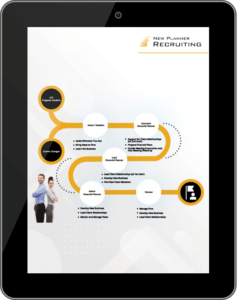 Download your free copy of the New Planner Career Roadmap! In this roadmap, you'll be guided through the details of various stages of your financial planner career, including position descriptions, licensing, skill and experience level requirements, and compensation ranges.
Get the Full Episode Transcript:

Read the Transcript Below:
Welcome to the New Planner Podcast, where it's all about helping you successfully enter the financial planning profession and accelerate your financial planning career. This podcast will help you understand the profession, become familiar with the various career paths available to you, and avoid the mistakes that limit your success. Join your host, Caleb Brown, to explore the human side of creating a successful planning career through interviews, personal experience, and insights from the trenches. Let's get started.
Caleb Brown: Welcome to the New Planner Podcast. This is Caleb Brown, your host. I'm joined today by Tiffiny Hubbard, a financial planner at Elwood & Goetz Wealth Advisory. Tiffiny joins the show to discuss how she entered the financial planning profession, how she reentered the workforce after being a stay-at-home mom for seven years, and how she has carved out a unique niche role working with trading and investments, and has balanced being a mom and having a successful career. I hope you enjoy this episode with Tiffiny Hubbard.
Hi, Tiffiny. Welcome to the New Planner Podcast.
Tiffiny Hubbard: Thank you. Thanks so much for having me, Caleb.
Caleb Brown: Yeah, this is going to be great. So fun. I know a little bit about your story, but I'm looking forward to learning more because I think—if I got it right—this was a career change for you, right?
You didn't come out of school doing financial planning directly, did you?
Tiffiny Hubbard: Right. That is correct. I didn't start this until my late 30s when I made the decision to kind of go back, and I studied for my CFP on my own. But yeah, in my early 20s, I graduated with a business degree, so nothing finance-related.
Caleb Brown: Got it. Okay, so you graduated with a business degree. What did you do before you went back in your late 30s?
Tiffiny Hubbard: Yeah. So right out of college, I did IT recruiting. I worked for a firm, and it was great, it was a fantastic job. I did more of the sales and recruiting side. And then I had a tragedy in my family: lost my dad to cancer, and really just wanted to go make an impact there.
So I started working for the American Cancer Society and did that for several years. I really did project planning-type fundraising roles with the American Cancer Society. Then I became a mom. My husband and I—it was just part of our plan that I was going to stay home for as long as I either wanted to or financially we could allow that and still maintain our lifestyle.
So I was home for seven years, not working at all, not keeping up with anything in the business world, totally checked out. It was wonderful. But I have three boys, and I knew when my youngest turned two that I was ready to go back and do something. I didn't want to go back to the recruiting/sales-type role, so that's kind of where financial planning entered the scene.
Caleb Brown: Yeah, those recruiting guys, they're a mess. I'm with you.
Tiffiny Hubbard: Yeah. It's a lot.
Caleb Brown: Well, in all seriousness, I'm sorry to hear about your dad.
Tiffiny Hubbard: Oh, thanks.
Caleb Brown: I think that was really cool, though, that that motivated you or got you interested in the American Cancer Society, and I really appreciate all your work there. Maybe just talk about that a little bit. I mean, you were a stay-at-home mom staying home with the kids for seven years. When you decided to come back when your youngest turned two, just walk us through that transition. From an outsider, I have not experienced it, that seems like it would be kind of challenging.
Tiffiny Hubbard: Yeah, so it's very much like the American Cancer Society role. I got on fire about financial planning, and it was really doing personal financial planning for my household. My husband and I got on a Dave Ramsey plan.
If you know anything about him, he really gets after people for paying off all of their debt, including their home. So we really just, we were on fire with that and paid our house off. We basically had four to five years of saying no to everything, but it was fantastic. In the end, I just felt like it was such an accomplishment, and it was so life-changing for us as a family that I really wanted to do that for other families.
So that is actually how I got into financial planning, and I started my career in that regard. When I went back to work after being at home for seven years, I went and worked at Merrill Lynch, very much in a support-type role. I had to get my Series 7 and 66, and I just said, “You know what? Why stop here?”
And I loved it so much—just kind of working with the clients and the advisors—that I decided I was going to go on and get my CFP. So I studied on my own, kind of did a self-paced program, and knocked it out in 11 months. Was really excited about that.
Caleb Brown: Wow.
Tiffiny Hubbard: I can't tell you how long I studied, but it was probably easily 30 hours a week, you know? But I was so excited about it, and I still am, and it's one of those accomplishments that I'm super proud of. And when I got my CFP, I felt like I had the knowledge base to really help other families with financial planning. Still very timid with it, but I saw how to do it in my own life, and really, there's a lot of plug-and-play in it as long as you know what you're doing.
So yeah, that's kind of how I transitioned into the financial planning role. I was a senior financial planner, and then decided maybe client-facing is not so much for me. And that kind of led me into the role that I'm in now, which is, I still get to use my CFP in every capacity; I just kind of do it on the back end, Caleb.
So I do… really the investment trading for Elwood & Goetz. So I very much get to focus on asset location, really think about the tax consequences of trades that I'm making, and prioritizing in non-retirement accounts versus retirement accounts. So I still get to use my CFP and think about financial planning, but very much in a different capacity in my current role now. So I've kind of seen a lot of different ways to use the designation.
Caleb Brown: And I want to come back and unpack what you're doing right now. But I just want to go back to that transition piece. I mean, you got Merrill to hire you—no experience, no licenses or anything—you got them to hire you just coming right out of the stay-at-home mom thing?
Tiffiny Hubbard: I did, and I tell you what: I will forever be grateful for that. I had a friend who I worked out with at the gym who was a financial planner at Merrill and had been there for years. And I just sat down and met with him and told him what I had done personally in terms of my budgeting experience and my investment management experience—really just dabbling with my husband's 401(k).
I didn't have a 401(k) of my own at that time. I did, but it was very small, from the American Cancer Society. I wasn't there for many years. But yeah, we just sat down and had a conversation, and he had faith in me. I'm super grateful for that, and so that really was a true launching pad for my career in financial planning.
Caleb Brown: So you started in, I think you said, like a CSA role or something like that, and then you moved up to a senior financial planner, which was a client-facing planner role. Not an advisor role, but a planner role. And then was there anything there with the clients that made you think, “I enjoy the work, but I don't want to be client-facing”? Was there any sort of trigger point there at all?
Tiffiny Hubbard: Yeah. I mean, it's so interesting that you ask that. There's the professional piece, but there's also the personal piece. For me, a young family, three kids, and my husband has a big job, works, travels a lot, and we just decided as a family that a more part-time role would be best for us as a family, as a whole.
With his travel schedule, it was really hard for me to be able to commit to working full time, but I also didn't feel like I could give my clients everything they needed in a part-time role as a senior financial planner. I love meeting with clients, it just felt like, in terms of the capacity that I had as an individual, I needed a different role.
But I still certainly wanted to be in the space, and that's where Elwood & Goetz has just been so gracious to me. I just love the firm. They really explored other opportunities with me, like how I could still work in the space but have a part-time role and kind of cut back on the hours.
Caleb Brown: And that's the beauty of the profession where it is now. You have all this flexibility, all these different roles, and these RIAs that have developed. There are just a lot more roles. When I got started, there wasn’t, you didn't have all this stuff, you know? It's really cool. Okay, so maybe just walk us through how that transition has been. Do you miss... I mean, because I'm with you—it's kind of hard to be a part-time planner or part-time advisor and say, “Hey, sorry clients, I'm only available for…” It doesn't work that way, right? At least with my people and what I've seen. How has that transition been? Have you missed the client relationship side?
Tiffiny Hubbard: I have, yes. To take a step back, you're exactly right; that's what I was running into. ‘Cause I did do a part-time senior financial planner role for about a year, and I really felt like I wasn't giving them everything that I could. It was really just time restraints. If I wasn't working on a Tuesday afternoon and they needed me, I was going to make myself available, but then again, that kind of went against the part-time deal.
So yeah, in my current role, do I miss the client interaction? I do. However, I still feel very much like I'm a part of the client experience.
The way that it works in my role now is the senior financial and assistant financial planners will meet with the client, and then typically there are a lot of–I shouldn’t say a lot—but there are a handful of adjustments that need to be made post-meeting. So whether the client is ready to start taking their RMDs or if they have an upcoming cash need, all of that has to be communicated to me by the senior planner.
They have to let me know, kind of debrief me on the meeting, so that I can take that information and make the best decision for the client in terms of where are we going to generate that cash. Like, where is it going to come from, what accounts, and how do we need to rebalance on the back end to make that cash available to the client with the least tax consequence?
So I still feel like, although I'm not meeting with the clients face-to-face, I still know a lot of their story. For me, this is the perfect role. I kind of get the best of both worlds, where I get to work behind the scenes independently, but I also get a lot of interaction with my colleagues, and I feel like I'm still very much a part of the clients' situations.
Caleb Brown: You may not be on the front lines, but it's a very important role to get all this stuff executed in terms of investments, assets, and getting all that moving.
Tiffiny Hubbard: Totally. Absolutely, yeah.
Caleb Brown: Okay. I think we've got a pretty clear picture, but how do you spend most of your time? When you're working, can you maybe talk to us about the schedule you work and how you spend the hours, like what you're doing?
Tiffiny Hubbard: Yeah, absolutely. As a part-time employee, I do work five days a week, and I really focus my attention on cash flow needs for clients.
The advisors will let me know, “Hey, so-and-so needs X amount of money; can you please free up cash for that?” So I'll really go in and look over the portfolio. I'll see how much in capital gains we've realized year-to-date, do some digging there to make sense of, okay, where do I need to pull this cash from.
Then I just free up cash for the client and kind of pass it back off to the advisor at that point so that they can transition or transfer that cash to the client. I also review all of our portfolios, and if they are out of tolerance, which, as you know, in market conditions like we are experiencing recently, happens pretty regularly, right? We may have a run-up in tech and want to take some of those gains and realize some of those gains, so that we can then reinvest them into some of the stocks or funds that are not performing as well, so we can buy them on the low end. So we're taking gains off the top and then reinvesting them to really rebalance that portfolio on a constant basis.
I know a lot of firms talk about tax-loss harvesting, and they may wait until the end of the year to do all of that. No, we're pretty much doing that on a regular basis. Of course, we're not trading when we don't need to; it has nothing to do with timing the market. But if you look at the market yesterday—let's just use that as a good example—it was down maybe two percent or so.
That's a great opportunity for us to lock in some of that so we can then offset some gains. So we'll lock in the losses if the client is okay with it and then be able to offset some gains in the future. So, on a daily basis, Caleb, that's really what I'm doing. We are full-on thinking about long-term strategies for clients and how we can set the investment portfolio up today to really benefit them long-term.
Caleb Brown: What kind of training did you have to go through? Let's start with the training, and then I want to get to: are you involved in making the decision on what funds and vehicles out there the firm is using, or is someone else doing that? So maybe, if you could just talk on that for a minute.
Tiffiny Hubbard: Yeah, I love that question. In fact, I hesitate when I tell people what I do and say I manage investment trading for my firm. I do all of the trading for our firm. I always hesitate to say that because I feel like people are going to ask me the follow-up question, “Well, what do you think about Google or Facebook?” Or, “What do you think about all of these things?”
Caleb, that is not my role, okay? I pretty much stay in my lane. We have an investment committee at ENG, and that investment committee is smart and they are very competent. They do their due diligence, all the research to pick the various funds that we use as a firm, and I trust that, right?
So I understand the funds that they choose. I know what to look for within those funds, their performance. I'm very comfortable gauging all of that, but I'm not picking individual stocks. I am not picking individual ETFs or mutual funds to buy and sell in client accounts. I am really just implementing what our investment committee puts together on a quarterly basis.
So they review that constantly, and then that kinda, it has a trickle-down effect. They communicate that information to me as a trader, and then I implement. I really just execute the trades rather than deciding what funds to buy and sell.
In terms of training, because of what I just said, for my role specifically, there's not a lot of… I shouldn’t say not a lot of, but I don't need to have my CIMA, whereas the lead on our investment committee has his CIMA designation because he knows the ins and outs of all investments, right? Knows how to pick them. That's not my role or my area of expertise.
But because I have my CFP, I really find that super valuable in my role because what you learn when getting your CFP about the investment piece is really just asset location, tax-loss harvesting, offsetting gains and losses. All of those things are very important from a planning standpoint. So I don't feel like I had to have a lot of training other than on the platform that we use to trade—that was kind of a learning curve. But in terms of knowing kind of how to trade in general, like which accounts to place trades in, all of that really came from my Certified Financial Planning experience.
Caleb Brown: So it sounds like it was mostly the tech—learning the trading system of the custodian.
Tiffiny Hubbard: That's exactly right.
Caleb Brown: Is that Schwab and Orion? Is that what you're using?
Tiffiny Hubbard: That's correct, yeah. Schwab is our custodian, and we use Orion, which has a trading platform called Eclipse. That's what our firm uses, and we do block trades, right? At the end of every day, we submit all of the trades that we have made throughout the day—we submit that file to Schwab, and they actually execute those trades.
Which is really a good point because that is very different from what I did at Merrill Lynch. Being a broker-dealer, when we were placing trades, the team that I was on—yes, we would submit those trades, and they were executed immediately. So there was a lot of due diligence around, okay, let’s review the trade, make sure all the information was correct, what we were buying and selling there.
Versus at ENG, as an RIA, we use a group of funds for all of our portfolios that are selected by our investment committee, and we stick to those until we decide that a change needs to be made. So when we submit our block trades at the end of every day, it's a culmination of all the trades throughout the day of those selected funds that our investment committee has picked.
Caleb Brown: Got it. Thanks for walking us through that. It sounds like the role is really a good fit, and you're enjoying it. Has it worked on the family side too? Have you been able to balance... It seems like you have. You've been able to balance the time with your three sons.
Tiffiny Hubbard: Yeah, it's fantastic. I really do feel just so grateful for the opportunity and just to have a firm that really allowed that. You were asking before like when I went to Merrill without experience and they just hired. I really think, Caleb, that there are so many options with this level of knowledge in this field.
And I would just say to folks, don't give up. If you start in a role and feel like, “Oh, I don't really love everything about this; I feel like I still want to be in the space, but do something differently,” what I have learned is if you find a firm that values you and you value them, there are so many opportunities to use a wonderful designation like your CFP.
I worked so hard for that, and I wanted to be able to incorporate it. And I feel like ENG has helped me find a role that is perfect for me. I can work part-time doing it. That gives me time back with my family, but I also feel like I make a huge impact, not only for the firm, but for our clients as well.
Caleb Brown: Do you think going forward—like the future of the profession—is it this part-time, fractional... I mean, that's not necessarily what you're doing, but I know a lot of people want to do fractional paraplanning, marketing, or investment. Do you see that, is that where the profession is going?
Tiffiny Hubbard: Yeah, I don't know that I could really speak to where the profession is going, but I will say—obviously I'm a woman in my mid-40s, I have a young family—and I know women who are in similar positions as myself, and I don't mean professional positions, I just mean life situations as myself, and really trying to balance all of that. While I don't know if it's where the industry is going, I’ll just say, I think if you can find a firm that you enjoy working for and like the people you work with, don't be afraid to propose a position or maybe a job share with someone that you trust. I think there really is a need for a lot of that.
And, again, being a female, but to keep women in the workforce and in this space emotionally, like we do a great job of connecting with clients. I think it's really important just to have that presence with the client. They can have a male and a female—I've seen it be very important in meetings.
So if you're a woman out there, keep going until you find what's right. I think there is a huge benefit in having the option to kind of work part-time or do a job share with a counterpart that you trust and you honor their work as well.
Caleb Brown: That's so well said. I really appreciate you sharing that and your perspective. You've already given us a couple of tips, but as we're closing out here, any final thoughts that you want to share with the New Planner audience?
Tiffiny Hubbard: I'll just say there's so much opportunity. Don't feel like it's a “one role and done”. Even as a senior financial planner in the period of time that I did that, I feel like my role evolved, and the way that I engaged with clients changed, even in one role.
With AI coming on the forefront, I know there can be a lot of fear around where do I fit into all of this. I'll just say that the human condition needs humans. So be there in a capacity where you feel like you're making a difference for firms and for clients, because it's really important.
There are also just so many things that you can do with a degree or designation like this. It's really incredible. So explore. If the first thing is not right, continue to explore until you find what's right for you.
Caleb Brown: Awesome. Tiffiny, thanks so much for coming on the show.
Tiffiny Hubbard: Yeah, you bet. Thanks so much for having me, and good luck to everybody.
Thanks for joining us for this episode of the New Planner Podcast. If you are ready to discover the top career paths for financial planners and see which track is best for you, we created a free guide to help you. Grab your copy of the Financial Planner Career Roadmap at newplannerrecruiting.com/roadmap. There, you'll also find more tools and resources all created to help you build a successful financial planning career. Tune back in next week for another episode, and until then, we are here to help you succeed.
Share the Love:
If you like the New Planner Podcast...
Never miss an episode by subscribing via Apple Podcasts, Spotify, Amazon Music, YouTube Music, or by RSS!



Leave a Reply