
What does it take to move to a new country, earn an MBA, become a CFP®, and launch a wealth management firm—all in under four years? In this conversation, Imade Iyamu shares how she built Arusha Wealth after immigrating to the United States, and why her mission is focused on helping immigrants and cross-border clients navigate some of the most complex financial systems in the world.
We explore the real challenges behind building financial stability in a new country, from credit systems and taxes to visas, estates, and retirement planning across borders. Imade also breaks down how she went from law to finance, earned her CFP®, and launched an RIA while designing a business model rooted in education, community, and long-term trust. This episode offers practical insight into niche firm-building and what it really means to start a business while still learning the system yourself.
What You'll Learn In Today's Episode:
- Why moving to the U.S. as an immigrant exposed major gaps in financial education and planning. (3:35)
- How Imade’s background in law and private client work shaped her financial planning approach. (4:50)
- The complexity of navigating U.S. financial systems alongside immigration rules. (7:30)
- The power of community when starting a new business. (14:00)
- What pushed Imade to start her own business. (16:45)
- Why building a client base through referrals and community was essential early on. (20:15)
- The process of onboarding a new client at Arusha Wealth. (25:00)
Ideas Worth Sharing:
“The U.S. financial system is very uniquely complicated, even in comparison to other countries.” - Imade Iyamu Share on X “If people can trust you with their financial lives, they can trust you with anything.” - Imade Iyamu Share on X “There's a difference between being good and being right for you, and that's not something anybody can tell you. So know yourself and don't shut that part of yourself out that knows what it wants.” - Imade Iyamu Share on XResources In Today's Episode:
- Imade Iyamu: LinkedIn
- Arusha Wealth
- Find your right path in financial planning
- New Planner Recruiting - Financial Planner Career Roadmap
- Finding your Path: The Roadmap from Student to Successful Financial Planner by Caleb Brown
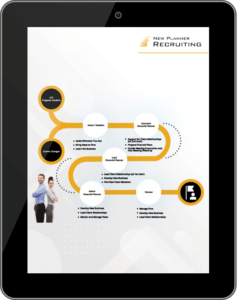 Download your free copy of the New Planner Career Roadmap! In this roadmap, you'll be guided through the details of various stages of your financial planner career, including position descriptions, licensing, skill and experience level requirements, and compensation ranges.
Get the Full Episode Transcript:

Read the Transcript Below:
Welcome to the New Planner Podcast, where it's all about helping you successfully enter the financial planning profession and accelerate your financial planning career. This podcast will help you understand the profession, become familiar with the various career paths available to you, and avoid the mistakes that limit your success. Join your host, Caleb Brown, to explore the human side of creating a successful planning career through interviews, personal experience, and insights from the trenches. Let's get started.
Caleb Brown: Welcome to the New Planner Podcast. This is Caleb Brown, your host. I'm joined today by Imade Iyamu, founder of Arusha Wealth, who shares her story of immigrating to the United States, securing an MBA, earning her CFP certification, and starting her own firm in less than four years. I hope you enjoy my conversation with Imade.
Hi, Imade. Welcome to the New Planner Podcast.
Imade Iyamu: Hi. Thank you so much for having me on. Appreciate it.
Caleb Brown: Absolutely. I am, like, so excited about this, and really just want to start, if you would, just by—I mean, maybe just kind of introducing yourself and what you're doing right now, and then we can back into how you got started and the journey from there.
Imade Iyamu: Mm-hmm. So yeah. My name's Imade. I came to the US as a new immigrant myself in 2022, fall of 2022, and that was when I started at business school, and since then, it's been just a whirlwind of different things that have been happening. The journey has definitely been crazier than I expected.
And, at the beginning of this year, I officially launched a registered investment advisory firm, a wealth management firm called Arusha Wealth. And what we do is we specifically provide investment management and financial planning to recent immigrants, so people who are first-gen, second-gen, people who recently moved to the US and are navigating that new financial system.
So that includes people who are mainly in the US and then people who kind of have a cross-border kind of life with different assets, interests, and relationships in the US and maybe some other second or third countries. So it's been really interesting so far. In terms of my own professional background, I went to law school initially and then started working with private clients in that practice, moved around a lot, and then did my MBA, which is how I got here to the country.
So I really, yeah, I'm really interested in working with people who are—really just starting that part of their careers where they're making a lot more money than they ever thought they would, but they're also the first people in their families to be in that position. And you see a lot of people that are kind of, these things that we take for granted in terms of financial knowledge and expertise, it's something that could help a lot of communities. This isn't something that they're used to. And so being in those two different worlds, Wall Street and then immigrant communities, that was what led me to starting Arusha.
So yeah, great to be here and talk about what the journey has been like.
Caleb Brown: Did you say you got to the United States in 2022, as in, four years ago?
Imade Iyamu: Yeah. It's going to be four years in August, so.
Caleb Brown: What. Okay, I'm sorry. There's a lot to unpack here. And you've already, you started, you got through school and then you started your own RIA firm?
Imade Iyamu: Yeah. I mean, for context, I did have experience before coming to the US. Definitely not completely fresh out of college. But yeah, it's been a whirlwind kind of because you're also involved in that process, like figuring out the way that we all know that, as planners, we all know that the US financial system is very uniquely complicated even in comparison to other countries.
The immigration system is even more complicated, especially when you're a kind of person that wants to do things the right way and follow the system. It can be extremely complicated. So navigating that myself and then meeting a lot of people along the way who also had those kind of problems and kind of being someone to be there for them.
Things like immigration lawyers are very helpful, but the way it's really helpful to have that knowledge for finances—immigration is very complicated, and the lawyers can kind of make it a lot more complicated than it is too, so.
Caleb Brown: Oh, lawyers never do that. They never do that.
Imade Iyamu: I am a lawyer, so I definitely understand why, where that... Because that's what the training is like. But then it was also kind of being this kind of translator for people who want to understand what the system is and how to get through it and do things the right way and achieve your dreams and everything. So yeah, I... When you get through that, I think one thing that comes through for myself, for the people around me, is that's really step one, which is you enter this new place, and it's so much more different.
Even things as basic as building credit, and then all up to the way of things that, okay, I'm maybe on a temporary visa or something like that, a work visa, what happens to my retirement plans or my insurance when either I want to move back, or I have to move back. So navigating things like that from the simple to the complex, and then every layer of that is an added layer of complexity.
When you think about maybe even spouses, like one is a US citizen or resident, one is not. That just has different layers to it on the US side and the other country side. So there's a lot of things that are not really... And then when you think about it, 'cause I also went through the CFP program and training and all, and I think the only time that there's even a grazing of that is when you talk about the QCDs and the trusts and all that.
Caleb Brown: Yeah.
Imade Iyamu: And it's very one-off. There's nothing that really goes in depth, and I understand why that is the case. So I did think that there was something there. There was a need there, and there was a need on the education side as well. So that's really important to me, and that's what got me really interested in working with people directly.
Caleb Brown: So amazing. So glad you're out there helping. I know that group needs help. It seems like every Lyft or Uber driver that I talk to that's an immigrant. They start explaining all this to me: “I gotta come over here, sort of start as the driver, kind of work my way up and try to figure things out.”
And a lot of them are making just horrible mistakes with their personal finances 'cause they don't understand, one, the language or the culture or the tax system or anything. So I'm glad that you're out there to kind of help. It sounds like you're helping people like that when they arrive here.
Imade Iyamu: Yes. I mean, it's people who recently arrived, but also people who have been down the road already, and they need extra hands. So for example, currently working with someone who—he's been in the US for 20-plus years, been working with these international organizations, World Bank, the UN.
Caleb Brown: Mm-hmm.
Imade Iyamu: So they're technically residents, but they also have a lot of exemptions and special rules and things like that. So he's now relocating back to his original home country, and that—and then he's had things like a home here. So what he was planning to do was relocate without selling the principal residence.
And you know with that you have issues with maybe not getting the exclusion on capital gains. So people... So all these small things that maybe you wouldn't even be aware of, but they can mean so much. Yeah. Because that can mean so much in terms of what happens when you actually do sell it. And then when you think about it, on his home side, they have something like what the US has with the exclusion, but they also have...you can only do that once in your lifetime. Like when you sell it, when you sell a home in that country, and you get exclusion on all the gains, so not the 250 cap, but all the gains.
But that only happens once in your lifetime. So you need to do it when you need to do it. So things like that, just navigating the two systems, seeing where there can be advantages for maybe arbitrage opportunities, and how to basically live the kind of life that you're envisioning and avoid a lot of these traps underneath. It's been extremely intellectually challenging, rewarding. Also just the relationships, 'cause I like things like this where you're talking to people. I think, 'cause I did investment banking for a very short period.
I don't like the thing of being at your desk crunching numbers for 99% of the time. I can do it, but it's not what I'm best at. I really love working with people directly. And yeah, I think that this speaks to all my different strengths, and it's something where things are always changing. Things are always changing.
Caleb Brown: That's right.
Imade Iyamu: On the US side, we've had so many tax changes as from last year coming into this year with the new tax season. And because most of my clients are Nigerian at this point, there have been so many tax changes starting from this year as well. So it's been very interesting just being at the forefront of this. Yeah.
Caleb Brown: Okay, you mentioned Nigerian clients. Is that... I mean, I saw Arusha Wealth, and I'm familiar with the Arusha in Tanzania. But is this, how did you, what's the meaning of the name of the firm?
Imade Iyamu: Oh my God, I wish I had a more unified story around it. Maybe I will end up… But yeah, I mean, Arusha in Tanzania, it's a beautiful place. I haven't been. I'm sorry I haven't been there, but I mean, I know a lot of people who have. I know people from there. But when I wanted to choose a name, I wasn't so... 'cause the name is just one of the things you have to get done, but it feels small in the context of everything else that needs to be done.
You have to register, you have to do this and that, compliance. So I just kept putting it off and just kept calling it “the firm”, “the firm”. But at some point, I had to actually name it, and then every name I kept coming up with, it was closer to tree names because trees are long-lasting.
They are supposed to be like—
Caleb Brown: Yeah, strong. Yeah.
Imade Iyamu: Yeah, they're built to last for potentially 100-plus years, centuries, generations, but then it was all taken. You guys have all taken all the good names.
Caleb Brown: A lot of financial planners over here, yeah.
Imade Iyamu: Yeah, because I guess everyone is thinking the same way of “build for generations.”
So I was like, “Okay, what else? What sounds good?” Because when you think about companies or just generally names, I mean, they may not denote exact—they don't have to denote exactly what you're doing. Sometimes the company makes the name instead of the other way around. So when you think of Apple, it's not like they're doing anything related to selling food or things like that.
Caleb Brown: Mm-hmm.
Imade Iyamu: But we all now just associate it with technology. So yeah, that was a name that I've always had actually as a name for children, not for a firm. But I just think it's a really pretty name, and it's, I mean, not a lot of syllables. It's easily memorable. And then I think there's a historical relevance to it.
Honestly, that wasn't what I was thinking about, but there is a historical thing to it, which is whenever there's civil wars and things like that, at least in that region, Arusha is sort of like that middle ground, like Switzerland for negotiating those kind of things. So I mean, maybe there's also something to make with that kind of story, but honestly, it just—it was a name that resonated, and I think it's also a name that as time goes on, the work of the firm makes the name as well.
Caleb Brown: Very cool. So let's explore a little bit again your transition here. So it sounds like you got a law degree or—was it Nigeria, is that where you got that or...?
Imade Iyamu: Yeah. Yeah. So we also have common law, so it's basically a lot of similarities, especially with the UK and—
Caleb Brown: Okay.
Imade Iyamu: —the US, so that was easier to navigate in terms of the legal system. Yeah.
Caleb Brown: And then you came here for the MBA, and is that how... So did you challenge the CFP exam? Is that how you ended up getting the CFP? You took the capstone and then you took the exam, is that what happened?
Imade Iyamu: Oh, so I initially, for the CFP pathway, I initially—because you know they have the accelerated pathway for people with—
Caleb Brown: That's right.
Imade Iyamu: —that have been practicing law, which I had been. So that was just how I... So I took the capstone for the education part, and then with the experience part, again, I had already been doing a little private client work when I was a lawyer. And when I came to the US, I got some experience through working with the family office of Goldman Sachs—a lot more, I guess, white-glove than what I'm doing now in terms of the kind of clients and in terms of the kind of services.
But that was also part of the experience, too. And so they had a lot of generous sponsorships and things like that for things like taking the CFP exam. And then there was also a very generous scholarship from the CFP Board with the Peggy Ruthven Scholarship for women who are taking the exam.
So yeah, I ended up taking it. And that was—I wanted to take the exam too, but I kept postponing it. But when I wanted to start the firm, I felt like it would be such a nice fit to it. I felt like it would give me a lot more confidence having those letters behind my name as well.
Caleb Brown: Absolutely.
Imade Iyamu: Yeah. Yeah. So I really, really prioritized it at the time when I knew I was starting the firm.
So that was why I did it in November. And yeah, I got the marks too in November. Okay. And then officially launched the firm, officially registered the firm in January, launched the firm in March.
Caleb Brown: Yeah, and again, I'm going back to something I said, I'm just a little bit in amazement of all the stuff that you've got done in just the last few years.
So congratulations on getting all this knocked out and getting up and your firm up and going.
Imade Iyamu: I think it's also a lot of people, 'cause I'm in a lot of Slack groups and WhatsApp groups with people who are, I mean, at different stages, just different parts of the community. The FPA community is also great here in Austin.
So really just being around more people who are doing what you're trying to do or are way ahead of you also, so things like that. And it's a very, very helpful community because, I mean, I explored a lot during my MBA. I explored so many different industries and things like that. But in comparison, I would say the financial planning—especially this community especially—is very, very helpful.
So nobody is as territorial as you would think or expect, and everybody's looking to pay it forward, and everybody is looking to make it easier for the next person in whatever way. And this podcast is an example of that. So yeah, I think if you can just communicate with people more, you don't have to do things or...
I mean, I thought—because when I left business school, my idea was, “I really want to start something,” but then I didn't have that confidence. So that was why I started working at Goldman, 'cause I felt like, “Oh, I'm not yet good enough. I need to spend 10, 20 years working your way up.” That was my idea.
But then you talk to people—I mean, I know someone who is 25, and he has his firm, and I kind of even look at—maybe he doesn't know, but I look up to him for advice too. So I don't even see it as you need to be older than me for me to get advice from you. But you can get so much from anyone. So it's just this community.
If you can keep talking with people and keep trying to add value to other people, you'll definitely find where you're most useful. And it doesn't mean you have to start your own firm. A lot of people are on very good career tracks as well that are very good. For me, it was just a case of there are things that I know.
I know myself pretty well. I know my advantages as a person. I think I'm good at connecting with people, and I have real ideas for the kind of marketing and positioning that I think I would be best at. And it just means that being independent makes that more feasible.
Caleb Brown: Got it. And there's other firms out there, I I'm pretty sure, that are working with immigrants, so why did you maybe start your own firm versus joining one of the companies that was already kind of doing this?
Imade Iyamu: Yeah, so I think for me, it's more of what I see in terms of what I want to—the gap that I want to fill specifically. I do see people working with immigrants, but not specifically the kind of cross-border financial planning that I think is really needed. And another thing that I want to focus on is not necessarily...
Because now it's planning first and only, but, especially once we get to perhaps, especially even the coming months, the real thought behind it is to be a platform, a network, a community. Because a lot of times in professional services, whether it's law, accounting, financial planning, you're working one-on-one with a client, so my relationship with client A is different from my relationship with client B.
But even now that I have different clients at different stages of life, I see a lot of alpha potential opportunity connecting these people there. And then it's the thing of when you come to a new country, that's the first thing you're thinking about, “Who are the people who I can lean on in terms of advice, in terms of career?”
So that network layer—so for example, in July, there's an event that we're planning now with the Milken Center for Advancing the American Dream. It's in DC, and it's supposed to just be a small closed event for clients and community members and things like that. So if we can have more community and connections and building a network or a platform, I think it sounds—maybe it sounds ambitious, maybe it doesn't, but it is far out, but it's something where I want Arusha to be a platform for immigrants.
So, when you're coming to the US and you have so many concerns, but you have so many dreams of “I want to make it here, and I want to be able to contribute to this place and also do well for myself and my family,” how, or is there something I can plug into where that's already just going to advance me?
Whether it's connecting me to other people in the community that have done what I want to do, whether it's providing me with advice, not just around finances, but around everything we want to do. And so that's the eventual goal for Arusha, and so that's something that I don't see. I think financial planning or finances in general is a great segue into that or a way to get into that because it's a thing that people want the most.
If people can trust you with their financial lives, they can trust you with anything if you've proven yourself in that. So right now it's just about being extremely valuable to not just one aspect, but possibly the entire life cycle of coming to the US and then eventually making it. So just being a trusted partner at each part of the life cycle.
So that's not something that I see people doing, and that's something I think there's a lot of opportunity in. Yeah.
Caleb Brown: Got it. Got it. I'm with you. Really cool vision. I mean, that's really cool. I mean, I'm not aware of any other firms doing that, so it sounds like you might have something carved out there.
I mean, maybe if you would just... I mean, I think you said you started the RIA at the beginning of the year. So you've been at it, I mean, basically, one quarter. I mean, how has it been going so far? I mean, have you been getting clients and what... I mean, what's been your biggest hurdle over these last three or four months?
Imade Iyamu: To be fair, before actually registering the firm, I'd already had a number of different conversations with people that I thought would be a good fit, so I was starting from, I was starting from scratch, but I wasn't actually starting with zero clients. So after we officially got registered in January, which took a while because of the Texas system, but when we started, we already had people ready to onboard.
And then from there, it's just been—the focus right now is on finding better fits. And what I mean by that is finding, refining the channel. So right now, a lot of people come through because of things like social media and connecting with people online, or “I heard from someone,” or “someone referred me.”
But how can we systematize that and make it more of a repeatable channel, which it isn't right now. It just feels like everybody has a specific need or a specific way of finding us, and it doesn't feel like things are as repeatable as they should be. But I get it. And I didn't expect to be—everything to be nice and tidy immediately, but it's more of... I'm just trying right now to serve the clients that we have in the best way possible, and it always gets to that point—at least that has happened twice or thrice now—where they say, “Oh, can you send me something, like a brochure or something that I can tell someone else about?”
So I want to get to that point where that's very repeatable. And I want there to be more of a system. But I don't know if that's something... I mean, from the different kind of tracks that I've seen, that's not something to expect maybe in the first six months or even maybe sometime in the first year.
So I'm not going to rush it, but I'm just always trying to see where we can improve in terms of having a more repeatable system, because right now, each client or each prospect is its own thing. So I really want to systematize that whole process, but not being too, I think the more I can experiment, we can find what the best fit is for each person, that will become the system.
Another kind of, I guess, challenge that I'm having now is just because I'm doing a lot of things on my own. I do have an assistant, but it's completely... I'm doing a lot of things on my own. So everything from, I guess, the marketing and the networking, if you can call it that, and then the actual servicing of the clients, and then speaking with people who want to be clients or are good fits to be clients.
So it can be very challenging to switch contexts like that almost on a minute-by-minute basis. But yeah, I really like the fact that I kind of own end to end, and I don't know what it would look like to surrender any of that actually, because I think of it, if I kind of delegate sales—because even when I'm having a conversation with a person who wants to be a client or could be a good client, something in that conversation usually gives me, “Oh, this question that they asked, that would be really good as a post or as an email or something for marketing.”
So if I wasn't owning that process, how would I be able to? They all kind of feed into each other even though they're different activities. So honestly, I mean, I know there must be a way to delegate it, and there's probably a more efficient way to do all this, but I kind of like it, even though it's a lot of work.
It just means things are slower than they could be if different people were specializing in each thing. But I think for now, especially now that this system is not worked out perfectly efficiently, it's good because everything kind of feeds into the next thing, and I get to see all of that end to end.
Just one person that can see where the problems are with each thing. So yeah, for now it works, but it's a bit—it's a lot. But yeah, I foresee that maybe next year have more room, in terms of being able to maybe bring someone on full time. But yeah, for now it's just me and an assistant, so it's a lot.
But that—so those are the two main things, trying to make it more systematized so that it can possibly handle more demand, and two, just kind of my own personal schedule and everything, making it fit so that I'm not the bottleneck at all times.
Caleb Brown: Well, and that's the magic elixir. I mean, that's what all—gets all entrepreneurs, right?
They end up becoming the bottleneck, and it kind of keeps them from growing if they want to do that. Some entrepreneurs don't... Say they want to grow, they don't want to, though. They like being the bottleneck, secretly. Something I learned over the years. Hey, talk about the fee schedule and the process for a new client.
So a new client comes aboard, what are they going to pay you? How do they pay you? And then what do they go through for you to get an analysis done?
Imade Iyamu: Yeah. So right now there are two tiers of clients. They're all for now, what's the word, like repeat clients, so long-term—
Caleb Brown: Recurring revenue,
Imade Iyamu: Yes, long-term. Yes, exactly. For like long-term relationships. So there are two tiers of clients. One is a flat fee for mostly financial planning, some investment management, especially as it affects financial planning. The second tier of client is investment management plus financial planning, and these are mostly people, so far, they've been mostly people who are further along in the life cycle and in their own careers.
So for example, the person I was telling you about who is retiring and moving—not retiring because he's still going to be working, but he's moving to another country—someone like that is in the second tier because he's older, has a family, has so many interests, and then it's investment management plus financial planning. So the difference in services between those two is mainly the level of investment management plus, the second one, again, maybe 'cause of the life cycle, they get more estate planning types of services because that's where their head is mostly at.
And so after... But in terms of the progress from when they sign on as clients, it's very similar in terms of the steps. So the first step, and because that's something I also wanted to be something unique to Arusha, there's a very structured kind of welcome process for introducing—the onboarding and all.
Before it gets to collecting documents and things like that, there is a welcome package. Plus I've tried, so far I've done this with all of them—I don't know at some point if it will be too much—but for now, as long as we can do it, I've gone to meet each of them in person, and they've all been within the US, so that's doable.
And so just to get that, because I do think, I really want this to be a long-term relationship, and I want it to be something where you can see the value of it and feel unique and feel appreciated immediately. And so we've gone to meet them individually in about five different states now.
Caleb Brown: Oh, okay. So it's normally a virtual firm, but the initial meeting you meet in person? Is that what you're saying?
Imade Iyamu: Yeah, I go on to meet them—
Caleb Brown: Wow.
Imade Iyamu: Typically at their own places, yeah, with their spouses and everything. So yeah, that's—
Caleb Brown: Very cool.
Imade Iyamu: Yeah, it's a warm... And then we have that whole welcome package I prepare for them as well. So it's supposed to be when you're coming to the US, there's this kind of welcome and all that, especially either at the airport or in school or wherever you're being dropped off at, you feel that there's a welcome.
So I wanted to kind of mimic that experience of you're joining something new, you're joining something bigger than you that you can be part of, like a nation of its own. So yeah, that's part of the welcome experience. And then when it comes to the client service experience itself, it's mainly setting up their portal, setting up documentation, collecting.
The onboarding process itself takes a while because of the different parts of it, especially for people that are more advanced in their life cycle. So even collecting things like the estate planning documentation that they may have even forgotten about, and having those initial long-form kickoff calls.
And then after that, getting into the weeds of the planning itself. And depending on what they want to do, move accounts, open accounts, that sort of thing. But there's a whole structured process to it of different phases. And I think right now one thing I'm working on is how to do all that without it overwhelming people, because I realized...
And I thought it was as structured as it could be, but just again, just refining it based on feedback, there's some level of overwhelm with how much there is to do. So maybe staggering that, that's the next thing I'm planning on refining. How can we—like, how can we structure that people don't feel overwhelmed, but everything that has to be done is actually done?
Because there's a lot of part, moving parts to it. So yeah, that's what we're doing. And if there's anything urgent before then, because some people come in needing something immediately, so maybe not going through all these steps one by one, but working on some things first to start with. So yeah, it just depends on the person, and now it's just a matter of systematizing that.
So yeah, that's how it's been so far, and that's the business model fee structure.
Caleb Brown: Well, it sounds like you're doing great, and you've got a lot of momentum. I mean, you're still early on, and you've accomplished so much. So I just want to commend you for, one, just coming on and sharing all this stuff, but also just your work over the last few years, 'cause it's quite remarkable.
As we wind down here, is there anything else that you'd like to share for maybe any newer planners out there who are, what, thinking about immigrating to the US, or thinking about leaving Goldman Sachs, or launching their own firm, or what would you tell those people?
Imade Iyamu: Oh, yeah, I would say definitely try it.
I think if you... It depends. I think it—again, I think a lot of people would see a lot of things I'm doing as risky, but to me, it doesn't feel that way because I know myself, and I know what's good for me and what's not good for me. So if I were doing some, quote-unquote, “safe things,” those would actually be the risky things because it's counter to my own nature that I know.
So I think it would be: listen to yourself. If you have had different experiences, I think that's one thing that immigration does. It just throws you into the wild, and it's like you figure out who you are. And it doesn't mean you have to immigrate. You can do so from wherever. Self-discovery, which is you have different experiences.
You kind of note what you do and what happens to you and how you feel about it, where you thrive and where you don't. And then you gravitate towards more of—it's just like a product or a business, but now just for yourself. What worked, what didn't work, do more what works. Refine. And then always kind of note that if you've worked in big bank types of structures, the big broker-dealers, and that didn't necessarily play to your strengths, even if it was a good experience, right?
But there's a difference between being good and being right for you, and you should know that that's not something anybody can tell you. So it's more of just, I guess, in short, just know yourself, and don't shut that part of yourself out that is, that knows what it wants, because that's ultimately what you need to be doing, even if it's counter to what seems safe or structured.
Also, if you want to start a firm, I would definitely say go for it, but first have a meaningful amount of money saved. That's exactly what my dad said when I asked him, and I thank God that he said that because, yeah, it helps you think logically, even if... Because even for me, I haven't touched any of my long-term savings, but just having it there makes you feel calm and makes you feel like, “Yeah, I can actually take some risk that may not pay off immediately.” So yeah, practically speaking, I would say, yeah, focus on having some type of emergency funds or savings or something like that. But you don't necessarily have to feel like you have to be a millionaire before you can start.
I'm not. So yeah, you can start from wherever you are. It's not a super capital-intensive business like starting maybe a factory or a restaurant or something like that. You are your biggest expense. So yeah, just definitely go for it and gravitate more towards things that feel more like you. Even if they are not safe, try them.
That's what I would say. Yeah.
Caleb Brown: Imade, this has been so fun. Congrats again on just all the stuff that you've done in the last few years. Thanks so much for coming on the show.
Imade Iyamu: Thank you, Caleb. I have a podcast as well, but it feels good to be on this speaking side, and now I have a better sense of how they feel as well. Thank you. It's been great talking to you. Love the podcast and your work.
Thanks for joining us for this episode of the New Planner Podcast. If you are ready to discover the top career paths for financial planners and see which track is best for you, we created a free guide to help you. Grab your copy of the Financial Planner Career Roadmap at newplannerrecruiting.com/roadmap. There, you'll also find more tools and resources all created to help you build a successful financial planning career. Tune back in next week for another episode, and until then, we are here to help you succeed.
Share the Love:
If you like the New Planner Podcast...
Never miss an episode by subscribing via Apple Podcasts, Spotify, Amazon Music, YouTube Music, or by RSS!



Leave a Reply