What really happens in your first year as a financial planner when you move from the classroom into real client meetings? In this episode, Krystal LaFollette, Financial Planning Associate at Schulz Wealth in Mansfield, TX, shares her journey into the profession and what it was really like transitioning from student to practicing advisor. From early nerves and imposter syndrome to finding her footing inside a small, hands-on firm, Krystal reflects on the highs, lows, and unexpected lessons of her first year.
Listeners will learn how new planners can build confidence in client meetings, why real-world experience accelerates professional growth, and how mentorship shapes early career development in financial planning. Krystal also breaks down her day-to-day responsibilities—from meeting preparation and client follow-ups to estate planning work and early exposure to trading—and highlights practical strategies for becoming more confident, present, and effective in advisory conversations.
What You'll Learn In Today's Episode:
- What it feels like transitioning from student to professional advisor. (1:30)
- How imposter syndrome shows up in a new financial planning career. (3:00)
- Why early career fatigue is common in client-facing roles. (4:00)
- What paraplanning and meeting preparation look like day-to-day. (6:30)
- Why confidence is one of the biggest early career challenges. (10:40)
- How client relationships improve with personal connection and trust. (12:30)
- What initially got Krystal interested in financial planning. (14:40)
- How we can get more women in the industry. (18:25)
Ideas Worth Sharing:
“You have to be not only absorbing information, but ready to provide it.” - Krystal LaFollette Share on X “Don’t discredit or disqualify yourself.” - Krystal LaFollette Share on X “They’re going to hire someone that is a person, not a resume.” - Krystal LaFollette Share on XResources In Today's Episode:
- Krystal LaFollette: LinkedIn
- Schulz Wealth
- Find your right path in financial planning
- New Planner Recruiting - Financial Planner Career Roadmap
- Finding your Path: The Roadmap from Student to Successful Financial Planner by Caleb Brown
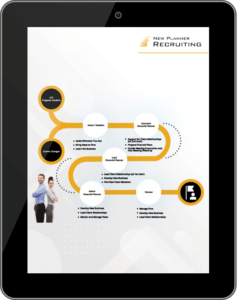 Download your free copy of the New Planner Career Roadmap! In this roadmap, you'll be guided through the details of various stages of your financial planner career, including position descriptions, licensing, skill and experience level requirements, and compensation ranges.
Get the Full Episode Transcript:

Read the Transcript Below:
Welcome to the New Planner Podcast, where it's all about helping you successfully enter the financial planning profession and accelerate your financial planning career. This podcast will help you understand the profession, become familiar with the various career paths available to you, and avoid the mistakes that limit your success. Join your host, Caleb Brown, to explore the human side of creating a successful planning career through interviews, personal experience, and insights from the trenches. Let's get started.
Caleb Brown: Welcome to the New Planner Podcast. This is Caleb Brown, your host. I'm joined today by Krystal LaFollette, a financial planning associate at Schulz Wealth in Mansfield, Texas. Krystal joins the show today to share how she entered the profession, transitioned from student to professional, and the highs and lows of her first year as a financial planner.
I hope you enjoy this episode with Krystal.
Caleb Brown: Hi, Krystal. Welcome to the New Planner Podcast.
Krystal LaFollette: Hi, Caleb. Thanks for having me.
Caleb Brown: This is so fun. So it was a year ago since we talked last. So I'm just curious, like, I want you to start with coming out of school, coming out of the A&M CFP program, and then let's just talk about the last year of your career. I'm just very curious to see how it's been going.
Krystal LaFollette: Yeah, great. I can't believe it's already been a year. It's been very eventful and just such a great blessing of a year. Coming out of A&M, you know, A&M has a pretty big CFP program at this point. They've been building it up very well over the last handful of years, and so it was really great and kind of an accomplishment to be able to say I came out of that program.
They make the job search very easy, and they're very helpful. They're inspired to get other people into the program and out of the program into the real world. From there, my first year, it couldn't have been any better. I came into a smaller firm, so I've kind of had the opportunity to be very hands-on and just very present in meetings—a lot of responsibilities that you may or may not see at a bigger firm. It's just a different light shed on the whole situation compared to a different experience that other people might have. But other than that, it's been just super fun, super great. A ton of learning going on over here.
Caleb Brown: Is there anything different than... I mean, did you get there and think, "Yes, this is what I thought it was going to be," or like, "Oh my gosh, I have an OMG moment, what have I gotten myself into? This is not the career I thought it was"?
Krystal LaFollette: In a certain way, I would say it was a bit surprising, just from the sense of I don't necessarily think it wasn't what I was expecting. I think it was more of a, "Wow, these people know a lot, and I don't know that much that they know." And just kind of that feeling of maybe this isn't what I thought it was.
But it really was just the little bit of nerves that kick in when you're starting a new job, especially when it's real, out of college, you're graduated. The pressure to feel like you need to know just as much as everyone there, but that's really not the reality. So yeah, it was nervous, but I would say once the nerves calmed down, it was exactly how I imagined it, and I've loved it.
Caleb Brown: Yeah, I mean, and everybody kind of—it's a little bit of the imposter syndrome. Everybody kind of deals with that. "Man, I've got to know this. I've got to know a lot." You know, I mean, when I've been in my career.
Krystal LaFollette: Exactly.
Caleb Brown: Okay, so maybe just talk, because you mentioned A&M earlier, what changed in your routine? I mean, now going from student to professional, maybe just talk about that for a little bit.
Krystal LaFollette: Yeah, I would definitely say it took some adjusting on how I operated. I think at A&M, at least for me, a lot of the classes at the moment when I was taking the financial planning courses were online just because the program was still being built. So I almost had a lot more flexibility with my time. Like having an online class, I can work from anywhere. I can kind of do anything as long as I'm getting my work done. There are deadlines and certain things I had to meet. I know exactly what I need to get done and when.
Whereas for work, it's more of a little bit more structure. You have the classic 8:00 to 5:00, or you show up and you have your assignments and then you go home. So for a little bit, I would come home and just be drained. I would be so tired. I would be like, "Wow, I used my brain all day." There wasn't much downtime, I would say. Especially when you first start, you're absorbing a lot of new information, a lot of new expectations, and operations of how things work. So I would be going to bed at 8:00 PM and I would be like, "Wow, this is something I would've never seen for myself." But yeah, it was definitely a change in routine.
Caleb Brown: You made fun of those people, right, when you were probably like, "They're going..."
Krystal LaFollette: I remember distinctly watching, when I was younger, watching TV with my parents at night, and then they'd be like, "Ugh, Krystal, it's time to go to bed." It'd be 9:00 PM and I'm like, "What? Are you old? It's 9:00." And now I'm begging my parents, because I ended up moving back in for a little bit and I begged them. I was like, "Please, can I just go to sleep?” Like, I don't know.
Caleb Brown: Well, a lot different. I mean, you're making them, I mean, in tongue-in-cheek, a lot different than having a Monday, Wednesday, Friday, 8:00 to 8:50 or 9:00 to 9:50 class and you're done for the day, right? Like you've got a full business day where you have to be available for your clients, but also learning and researching and solving their problems, and it's a lot of responsibility. I mean, it's quite a bit different than being a student.
Krystal LaFollette: Yeah, 100%. It's a lot of studying, but for different things. It's a lot of learning in different ways. And exactly how you said, you have to be not only absorbing information as it comes to you, but also ready to provide information to clients or to your boss who needs X, Y, Z done by the end of the day. So yeah, it's been a very interesting dynamic change, but it's great.
Caleb Brown: Talk about your role, if you would, like where you are now, and then if you started in a different role and kind of how you've progressed.
Krystal LaFollette: Yeah. So, my title is officially financial planning associate. It's kind of like a paraplanner role, essentially doing the pre-meeting preparation, making sure all of the updates that needed to be made are updated, making sure I know who's coming in, and why they're coming in. Just kind of about, especially in that first... so we do quarterly meetings, especially in that first quarter where I didn't know the clients very well, I had to go through old notes and just familiarize myself with who I'm about to see, who I'm about to meet walk in the door. Just so that I might be a total stranger to them, but I'm kind of aware of the situation going on.
And so it would start off with just a lot of prep and then a lot of follow-up after meetings, making sure tasks were getting done, and post-meeting summaries are getting sent out, certain things like that. As I've kind of progressed in the past year in the same role, same title, I have had a lot of opportunities to work on our estate planning, specifically section. So I've gotten a lot of wills and trusts and power of attorney documents read. Not the most fun documents to read, I must admit. But they all have their interests, and it's a very unique opportunity to get to see that.
And then also, actually funny timing, in the last couple of weeks I've been diving into a little bit of trading. So my bosses have been working me through that and just allowing me to, you know, they're sitting down and they're saying, "Well, what would you do?" And they're walking me through that. And a lot of hands-on experience, and I definitely get nervous hitting that submit button, but at the end of the day, it's all something we have to go through.
Caleb Brown: It's kind of like buying that airplane ticket. I get so nervous. "Oh my, oh no, I've got to get my money back," and then...
Krystal LaFollette: Exactly. Exactly. "Am I actually going?" No, for sure. For sure.
Caleb Brown: People's money, though, the stakes are a little higher obviously, but—
Krystal LaFollette: Yeah.
Caleb Brown: You said your bosses work or are kind of just, "Hey, what would you do here?" Kind of quizzing you, kind of role-playing. What other sort of training and mentoring have they provided?
Krystal LaFollette: Yeah, no, my bosses have been outstanding with their training. So kind of just to backpedal a little bit. Originally in our meetings, how they kind of work is we walk through financial updates, cash, and that sort of situation. And then a lot of our clients are business owners, so whereas, I don't know, maybe some other firms have the plan pre-made, it kind of doesn't necessarily work that way for us. And we'll pop RightCapital up on the screen, and I'm actively updating it as they're telling me things.
Caleb Brown: Nice.
Krystal LaFollette: Yeah. So at first, they kind of had me in the background doing it, and asking questions in meetings can be difficult, so I would have a hard time speaking up. I'd get nervous. But they kind of just talked to me through that and made me really comfortable with asking questions because the clients don't know the questions that I want to ask. Any question I'm asking, they're like, "Oh, yeah, good question," to everyone else in the room.
And so they've really allowed me to dive, genuinely hands in, like hands-on experience, just updating that plan actively. And they do a really good job of, if they assign me a task, and maybe it's a new task, they're like, "Hey, if you need help with that, reach out." And just a lot of that type of training, kind of giving it to me, and then if I need assistance, they're always open. And sometimes, with trading when it's a little less, a little more risky to just let me do it, they'll sit next to me at the computer and walk me through the steps and let me make decisions when it's my time.
Caleb Brown: What do you feel like you've struggled with the most over the last year, just in the learning, in the training, or the transition? Anything.
Krystal LaFollette: Yeah. It would definitely have to be confidence. And that's probably a really common sentiment among new professionals, coming in and just having the ability to be present in the meeting, not just someone kind of sitting on the sideline. Your client says, "Oh, hi, nice to meet you," and you don't want that to be where your voice stops. You want to be able to contribute to the meeting in a meaningful way for the clients to remember you, for you to be helpful to your boss, to every situation.
So definitely building up the confidence to say things, even if they're wrong. Being corrected or bouncing ideas off of the other people in the room can be a challenge, and that's something I'm still working on. I think that just takes time, especially with being such a young person in the room. I think sometimes you can get a little overlooked, which is normal. But I think it's just a lot about presenting with confidence and saying things when it's your turn to say things.
Caleb Brown: I mean, remember, at the end of the day, you have a financial planning degree from Texas A&M University, which is amazing.
Krystal LaFollette: Yeah.
Caleb Brown: And you've got a year of experience, you know way more than most of the clients and the prospects that are coming in.
Krystal LaFollette: That is true, and that's kind of what my bosses reiterate. They're like, "They don't know what you're not supposed to know and what you do know. It's okay. You're probably more educated than they are."
Caleb Brown: Yeah, and I appreciate you sharing that and the transparency. I mean, is there anything that you've been doing? It sounds like you've got some good mentors, and they've been kind of helping you build the confidence. But is there anything you've been working on your own to help you get more comfortable and build the confidence?
Krystal LaFollette: I think something that has really helped me is kind of doing almost like an icebreaker at the beginning of a meeting. If a client comes in, introduce yourself, "Hi, my name is so-and-so." And then maybe once y'all are all settled down—obviously don't jump the gun—but maybe, "So how was y'all's weekend?" Kind of get the conversation rolling on yourself.
That way it allows you to kind of have a seamless transition, and you get a little more comfortable. You talk to them just as a person about their personal life. And then that way in the meeting when a financial question comes up or something financial-related, you feel a little bit more comfortable. You've already broken that barrier to say what you want to say.
Caleb Brown: Yeah, just as long as it's not like, "How's the weather," right?
Krystal LaFollette: I mean, I would usually say that's right. If it's a sunny day, maybe not, but sometimes it freezes here in Texas, and you do say, "So how about this weather?"
Caleb Brown: And it's 100 degrees the next day, right?
Krystal LaFollette: Yeah, exactly. So yeah, just having a personal conversation.
Caleb Brown: I remember one time a long time ago, I was prepping for a meeting like you, and I noticed that the... and I was brand new, and the client had gone on this big Europe trip or something. And I remember I was just like, "I'm going to ask him about it." And man, they went on for 45 minutes. It was awesome. And I felt like I had them. I mean, they were like, "Okay, this is the new guy, but he knows us. He's interested in us even though he doesn't look very old, and he looks like he's right out of school. We're open to listening to him." And just little things like that ended up working out. I mean, it sounds like kind of that's what you're doing as well.
Krystal LaFollette: Exactly. But it's so ideal when they've just been on vacation, or you know they had family in town. People love to talk about that, so find something that they want to talk about and they'll feel more comfortable with you, and you'll feel more comfortable with them.
Caleb Brown: Ask about their grandkids or their soccer games or something, you know what I mean? Soccer.
Krystal LaFollette: Exactly, yeah.
Caleb Brown: Thanks for sharing all this. It's really cool just hearing sort of how you've developed. How did you even get interested in financial planning? I mean, why didn't you just go do accounting or medicine or law or architecture or something?
Krystal LaFollette: Yeah, it's kind of a somewhat funny story, I guess. So I came into A&M as a forensic science major—a very different turn there. So I came in as forensic science and quickly realized that that might be some people's career path, but it wasn't mine. And so, I guess I just entered into the general studies program and was taking pretty core-level classes that most people have to take.
I stumbled upon an econ class, and I was like, "Well, I like econ, but maybe not enough for that to be my job." And so then I actually came across a money and foundations class, or foundations of money. And I really enjoyed that class, and we would talk about things that are so common: buying a car, how to pay taxes, very simple things that everyone has to do. And I just remember sitting there being like, "Why is this not a required course?"
Caleb Brown: Yeah, good question.
Krystal LaFollette: Yeah, and so I just kind of really enjoyed going to that class. And then one day my professor had a couple of guest speakers in that were financial planners here in the DFW area, and they kind of spoke on what they do for clients, and things that they had to do, and just what it kind of meant to be a financial planner. And I was like, "You know what? That sounds really cool because I like numbers, I like math, I'm good with money, but I also like to talk to people and be helpful in that way. Let me look into this."
So I ended up just talking around, asked, talked to my professor, went to the financial planning career fair, and just kind of dove headfirst into financial planning. Went to my advisor and got financial planning added right on, and that was the best... it was within two weeks of having those guest speakers that I made that decision, and it was the best decision I've ever made.
Caleb Brown: Wow, that is so cool. Well, we’re certainly glad to have you. And I mean, maybe just stay on that for a minute. I mean, is there a way to make that more of a smooth process so more people can be attracted to this? Or is that, well, I just, I mean, hey, everybody finds it their own way. I mean, any thoughts there?
Krystal LaFollette: Yeah, I mean, it's a little bit like you kind of find it in your own way. I think you have to be already maybe not necessarily financial planning, but maybe a numbers person. Maybe you stumble upon it that way. I know that I kind of mentioned earlier the program at A&M has been growing so much. It just became a major a couple of years ago; it had been a minor up until that point. So it was not overlooked, but just underexposed, I would say. But they have done a phenomenal job just promoting it.
So I think if someone isn't sure, I would say start taking a class here and there. Take a generic money class and see if that even interests you at all. And if that piques your interest, then I would continue along that path. If it doesn't, then there's another path for you. But yeah, I think that's probably how I would recommend it.
Caleb Brown: And then, I mean, I always try to ask the people—we need more planners, that's pretty well documented, but more female planners. How do we get more females interested? I mean, it's still a male-dominated profession. How do we get more females?
Krystal LaFollette: Yeah, that's a great question. I wish I had the 100% correct answer for how to do that. I think it really is just one of those things over time with exposure, and it's kind of almost like a marketing tool. On platforms where schools can promote these financial programs, maybe start posting more pictures of women or kind of maybe not necessarily incentivize, but really promote and make it clear that it's not just a male thing.
I think kind of like you said, finance has been very male-dominated for years. And when I was actually coming into the industry, I was worried about that in a way—not necessarily that I was less than, just who am I going to be surrounded by and is it going to be comfortable for me? And from my experience, it's been great. Every female CFP or financial planner that I've spoken with—you get the here and there comment—but I think overall the industry has super grown towards women. A lot of the people I went through the program with actually were girls. I had a class of, I don't know, 30 students, and I would say over half of them were girls. So I really do think it's about exposure, somewhat marketing towards girls a little bit more. And I think slowly over time, it'll become even.
Caleb Brown: In my class at University of Georgia, it's similar, about a 50/50 breakout. So that's good to see consistency. What are your goals? Any major goals or milestones you're trying to achieve in the next year?
Krystal LaFollette: Actually, I am planning to sit for the CFP in July, so.
Caleb Brown: Wow, okay. Now we're talking.
Krystal LaFollette: Yeah, that's about the biggest milestone you can get at this point. So yeah, that's just on the horizon. I started studying about a week ago, and it's full throttle. You dive in and they say, "Hey, you might want to turn off your social life for just a little bit," and they are not kidding. They're not kidding at all, but that's, yeah, on the horizon. So hopefully, at least by the end of 2026, I would pass the exam.
Caleb Brown: That's a great goal. You were joking earlier about going to bed at 8 o'clock. Now it's like you get off work at 5:00, and then you get to go study for three hours, then you can go to bed at 8 o'clock. Sounds real fun, doesn't it?
Krystal LaFollette: Yep, wouldn't ask for anything different.
Caleb Brown: Well, Krystal, this is so, so much fun. I'm glad you're doing well. Is there anything you'd like to tell people that are a year behind you, that are starting their career right now?
Krystal LaFollette: Yeah. I would definitely like to say something that I wish I would've maybe heard coming in: don't discredit or disqualify yourself. Because I felt like someone, you know, I had changed my education path so late in my school year. I was a junior by the time I found financial planning. I didn't necessarily have the paper resume that showed like, "Hey, I've interned here, I've worked here." I didn't necessarily have that, so all I had was who I was and my passion. And I think that's something that people need to hear is don't discredit yourself.
If you see a job application, you apply for it. Don't be the one to tell yourself no. Let them tell you no. Because at the end of the day, they're going to hire someone that is a person, not a resume. So you need to be able to talk with people, and you still need the education of course, but there is a level of personal and personality that you're going to have to have to be in this job successfully.
Caleb Brown: Love it. Yeah. Last question: funnest part of the career and the job so far.
Krystal LaFollette: Funnest part, getting to interact with clients in a maybe not so serious way. Each year at my company, we host a charity golf tournament, and so this past year, I don't play golf, I didn't. And so I was riding around the golf cart with our photographer, getting to be like, "Hey, take a picture." And they came in after for meetings, and they were like, "We saw you riding around." And it's just a really fun getting to build that relationship just outside of the meeting room, and it was really fun. So the golf tournament, and we have something coming up for Cinco de Mayo. Those types of things are very fun.
Caleb Brown: Krystal, thanks so much for coming on the show, and best of luck on that CFP exam.
Krystal LaFollette: Of course. Thank you so much.
Thanks for joining us for this episode of the New Planner Podcast. If you are ready to discover the top career paths for financial planners and see which track is best for you, we created a free guide to help you. Grab your copy of the Financial Planner Career Roadmap at newplannerrecruiting.com/roadmap. There, you'll also find more tools and resources all created to help you build a successful financial planning career. Tune back in next week for another episode, and until then, we are here to help you succeed.
Share the Love:
If you like the New Planner Podcast...
Never miss an episode by subscribing via Apple Podcasts, Spotify, Amazon Music, YouTube Music, or by RSS!



Leave a Reply