What if your first job in financial planning didn’t just lead to experience but to a partnership in under three years? In this episode, Hanna Molta, Partner at Seven Hills Financial, shares her unusual and fast-tracked journey into the financial planning profession, starting with zero financial literacy and a chance conversation at a restaurant.
Listen in as Hanna walks through how mentorship, initiative, and a willingness to start with administrative work helped her move from student to advisor to partner in a remarkably short time. You’ll learn how she built trust early, transitioned from apprenticeship to client-facing work, and developed her own book of business while still being supported by a collaborative firm.
What You'll Learn In Today's Episode:
- How a chance encounter sparked a career in financial planning. (1:30)
- Why mentorship can accelerate early career growth. (5:00)
- How Hanna got a firm to hire her with no experience. (7:00)
- How apprenticeship-style roles help new planners learn faster. (10:55)
- Why starting with administrative work can be a strategic advantage. (13:00)
- Ways to build a client base without aggressive sales targets. (14:00)
- How referral networks and community involvement drive growth. (15:00)
- Advice for younger women looking to get into the industry. (19:00)
- What it takes to become a partner in a financial planning firm early in your career. (21:45)
Ideas Worth Sharing:
“Being a financial advisor is so much more of a people business than it is a numbers business.” - Hanna Molta Share on X “For new advisors and people looking to enter this industry, seek mentorship. That really is the pillar and the foundation of how I entered this industry.” - Hanna Molta Share on X “Never stop learning. I think that's just a really important thing both in your personal and professional life.” - Hanna Molta Share on XResources In Today's Episode:
- Hanna Molta: LinkedIn
- Find your right path in financial planning
- New Planner Recruiting - Financial Planner Career Roadmap
- Finding your Path: The Roadmap from Student to Successful Financial Planner by Caleb Brown
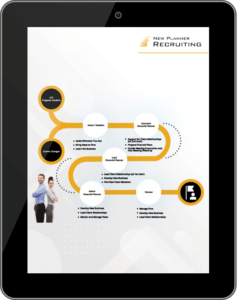 Download your free copy of the New Planner Career Roadmap! In this roadmap, you'll be guided through the details of various stages of your financial planner career, including position descriptions, licensing, skill and experience level requirements, and compensation ranges.
Get the Full Episode Transcript:

Read the Transcript Below:
Welcome to the New Planner Podcast, where it's all about helping you successfully enter the financial planning profession and accelerate your financial planning career. This podcast will help you understand the profession, become familiar with the various career paths available to you, and avoid the mistakes that limit your success. Join your host, Caleb Brown, to explore the human side of creating a successful planning career through interviews, personal experience, and insights from the trenches. Let's get started.
Caleb Brown: Welcome to the New Planner Podcast. This is Caleb Brown, your host. I'm joined today by Hanna Molta, a partner at Seven Hills Financial in Tallahassee, Florida. Hanna joins the show to share how she entered the financial planning profession and earned partnership after only two and a half years in the business, plus how she brought in clients and manages her work schedule with a young daughter at home. I hope you enjoy this episode with Hanna Molta.
Hi, Hanna. Welcome to the New Planner Podcast.
Hanna Molta: Hey, Caleb. How's it going?
Caleb Brown: Going well, thanks so much for—I'm glad we were able to connect, and thanks so much for agreeing to come on the show. I'm really looking forward to learning more about your career progression here.
Hanna Molta: Absolutely. Really excited to be here.
Caleb Brown: So let's just start with why did you want to become a financial planner? Or when did you realize you wanted to become a financial planner? Maybe we can start there.
Hanna Molta: Yeah, so my story, I think, is kind of funny. So I grew up with zero financial literacy. This was just not on my radar whatsoever. And I was in college, and I worked at a restaurant waiting tables, and I was waiting on a gentleman who, I didn't know him from anyone that walked in the door, anyone else. And he goes, "Hey, do you know anything about the stock market?" And I was like, "No." And he goes, "I want you to just look into the stock market." It was just the most vague advice. And I was 21 at the time, or 22 at the time, and so I said, "Okay." And so I started doing some research on the stock market and just understanding how investments worked and things like that. And I was like, "Well, maybe I should change my major and start taking some finance classes."
And from that point, it was just like drinking from a fire hose. And what really was the pivotal moment in my story is I had a professor. I took a portfolio management class, and I had a professor who's actually a friendly competitor here in town. And I, one day after class, went up to him and I was like, "I think I want to do what you do." And I was like, "Can I pick your brain? Can I ask you some questions?" And so pretty much every evening after class, 'cause my classes were from like 5:30 to 8:00, I think, I would just stay, and he was so kind and gracious, and I would ask him questions for probably 30 minutes. And he was just such an incredible mentor to me and just really gave me a lot of information, and the rest is almost history.
He actually introduced me to my now business partner. When I told him that I wanted to be a financial planner and work in this industry, he was like, "I think I have some people that may be looking to grow." And so he set up an introduction between me and one of the other advisors here. Came in for just a meeting. It wasn't even an interview. I was in my, I think, last semester of college, and it was really just a, "Let's have a conversation, see what you're looking for, talk about our firm, and go from there." And we never, I don't think, ever had a formal interview. We had probably four or five of those meetings, and graduation was rolling around, and I was just very direct with them, and I was like, "Hey, I'd really like to work for you guys. What can we do to make that happen?"
And they weren't necessarily ready to hire somebody at that point, but they, I guess, liked what I had to offer and my drive. And I ended up starting with a part-time position with them for the first roughly six months, really an apprenticeship structure while I got my licenses and learned more about boots on the ground, like in the industry. And yeah, after about six months I became a full-time advisor. Well, I became full-time at the firm, eventually got my Series 65, and then again, worked under that apprenticeship model, really just learning and being a part of the firm until I eventually began building my own book of business. And now eight years later, I am a partner at the firm.
Caleb Brown: That's awesome, Hanna. Thanks for sharing all that. A lot to unpack there. So I just want to go back to a couple of things. Really amazing story, and we're only a few minutes into this. Why did you take so much effort? I mean, here you are in these evening classes. Is that what you said they were, like 5:00 to 8:00 or something?
Hanna Molta: Mm-hmm.
Caleb Brown: And then you stayed another half hour to ask this guy questions? I mean, I guess I'm just a little surprised, but I don't really see a lot of people doing that. I mean, the effort that you put in is impressive.
Hanna Molta: So I mentioned, thank you, I mentioned that I did not grow up with financial literacy. I actually grew up in an environment where I watched poor decisions being made, but I didn't know any different. And so I didn't know any different. And so when I found out there was a different way, I was just so passionate about that. I'm like, "Wait a second. There's another route here." And like I said it was just drinking from a fire hose. I couldn't get enough of it. And so I just wanted to pursue that as much as I could. And again, this professor was just so gracious with his time and willing to mentor me and answer questions. So yeah.
Caleb Brown: Got it. Okay. Got it. Really cool story. Okay, so then you, so you did not get a degree, or did you get a degree in financial planning from a CFP Board-registered program?
Hanna Molta: No. No. I graduated from Flagler College. My major was business administration 'cause they didn't offer finance as a major, but I did minor in finance.
Caleb Brown: Okay, so then you met with these, your professor introduced you. I mean, that's amazing. Got you, mentored you, then sort of helped you get the job. I mean, really, really cool stuff. And now you're a friendly competitor. Wow, that's come full circle, right?
Hanna Molta: Mm-hmm.
Caleb Brown: But it just, it's a testament to how cool this business is and how people do want to help. And I mean, certainly there are firms and there are people that are cutthroat and want to silo and just scarcity mentality out there—
Hanna Molta: Right.
Caleb Brown: Absolutely. But man, it just, that, the timing all looked like it lined up for you. So you didn't have a formal interview process. You just, sounds like you met with these people, and it was just kind of a more of an informal, casual thing. And then they agreed to hire you. Now, granted, being part-time, so no experience, no financial planning degree.
Hanna Molta: Mm-hmm.
Caleb Brown: And I understand you're direct, and I appreciate that. How did you get them to hire you? I mean, what value were you bringing?
Hanna Molta: So my last semester of college, I had one of my business management courses. Our capstone project was we had to find a local business and build a business plan for them and present it. And so I had already met the gentleman at my firm, and so I had reached out to them and said, "Hey, I'd love to use your business as the target for this project."
Caleb Brown: Ah.
Hanna Molta: So it was a group project, but knowing what was almost on the line here, I really tried to take the lead. And so we had worked with them to get the information and kind of understand what their goals as a business were. And so the week before I graduated, they came to our class, and me and my group members, we presented this plan to them. So they had seen a little bit of my work product and my work ethic, experienced it in that way. So there was that window almost into it. Yeah. And part of why they hired me is, was they were saying, "Let's go ahead and execute this plan." So It was pretty cool to be able to develop the plan and then work on executing it after.
Caleb Brown: Great initiative, yeah. I mean, and I mean, that's part of the firms that hire now, that's part of their recruiting process. "Hey, we're gonna make you do this business plan as presentation." So you got to do that as part of your program. Really, really cool. Okay, so tell us more about you joined though. This was an existing RIA firm, financial planning firm, and maybe just was there, give us the metrics. How many clients did they have? Was it a small, big, medium-sized firm?
Hanna Molta: Yeah. So at the time it was just two advisors. They had actually become partners earlier in the year that I joined, right? So they, their wives had worked together, and they were both going out on their own, and they joined together at the beginning of that year. I think between the two of them, it was probably about 60 million in AUM, and probably 120 households. So small team, small, very, very family-type firm kind of. And they really brought me on in, like I said, that apprentice mentorship guidelines. So when I joined, they paid me a salary, right? I didn't have to immediately nose to the grindstone, go out and look for anybody as a client. They included me in all of their meetings, and just really I shadowed them and learned how all this worked.
Caleb Brown: That, I mean, that's amazing. I mean, I just, what do you, I mean, I have people calling me every day looking for that. What do we need to do to get more financial planning firms to offer that? Any thoughts there?
Hanna Molta: It's tough because we still do things like that, right? We have an internship program. So we're in Tallahassee, Florida. There is a very big university here, and we get cold emails from finance students all the time asking us whether it's about the internship program or if they're looking to get into this field and would we take a phone call with them, and we say yes. We actually, we take those calls often because we really want to continue that and pay it forward. I think for other firms to do it, it's just—if it's important for you, try to carve out some time. It's easier said than done. Obviously, we're all very busy, but especially for me entering this industry the way that I did, it's no question that I'm gonna continue to do something like that, right? Because I wouldn't be here without people who did that for me. So I'm definitely gonna continue that.
Caleb Brown: Tell us more about your apprenticeship role. So I know you were observing and they're mentoring, but what were you doing? How were you helping the firm?
Hanna Molta: Right. So part of it was I was studying to get my Series 65, so I was really just understanding how this landscape works. But it also, it started with administrative work, right? So I was sitting in the meeting, listening to the questions that needed to be asked. I was helping with the follow-up, so whether it was filling out custodian forms or sending follow-up information, loading things into our financial planning software, but also collaborating with them. So, when we would get the information into a financial plan, then we would sit there and strategize the options, and they would almost test me. The existing advisors, they would be like, "Well, what would you do here based on your knowledge already?" And then they would say, "Okay, yes, let's build on that," or, "No, this is the approach that we would take from it." So it was really a learning experience, and obviously, that was a huge benefit to me. But for them, that was a huge benefit because I was really able to shape my advice career in the way that aligned with our firm and our values.
Caleb Brown: Yeah. I mean, it's, that's called brainwashing, quote-unquote brainwashing. This is how we do it, so someone did that for me.
Hanna Molta: As the only fiduciaries. I think there's worse, there's worse brainwashing to be done.
Caleb Brown: Well, that's really cool. So I mean, I like that sort of the grassroots. And you said something that's important. You said, "I started with the administrative work." I mean, I just lost half my audience, especially new college grads, when you said that because it's, "Nope." And not all of them take that approach, but a lot of them are like, "Uh-uh. I'm not doing that. Got a degree from so-and-so." But I love that cornerstone. And so then you got the Series 65, and then did your role change at that point?
Hanna Molta: So my role changed at that point in once that I was licensed, I was able to start looking to grow my own book of business. But at the end of the day, I didn't have these really aggressive sales numbers put on me, and I was able to then try to find and grow my book in a way that made sense for both the firm and me personally. So I was still doing all of those things, right? Because I had capacity, and I was still learning, so I was still helping in the administrative capacity, but it was then merging into I was doing some administrative stuff for my own book that I was building, not just the others.
Caleb Brown: So it's, it sounds like a hybrid role. You were kind of helping them with some stuff on their clients while you were trying to add clients of your own.
Hanna Molta: Exactly.
Caleb Brown: And you were still being paid some sort of salary or something to kind of keep things, the lights on while you generated, built up a base to generate revenue.
Hanna Molta: Exactly.
Caleb Brown: All right. And so maybe just pick up there. So I'm just looking at, I mean, you didn't have a lot of experience, so you were going to people saying, "Hey, please work with me." Or how were you getting the clients to sign up with you?
Hanna Molta: That was tough. There's no sugarcoating that. That was tough. I got a lot of nos. Being 25 in this industry is hard. People look at you and say, "Well, you don't know what you're doing. You're not old enough to know what you're doing." But I was very fortunate that the advisors here really, they really backed me, right? They're like, "Maybe you lack the experience, but we're gonna be there with you every step of the way." So if I had a prospect meeting, they sat in with me and they said, "Hey, we know she's a new advisor, but we're here too, and we're here to back her up." All right. And I, their names are Jeff and Donald, and I'm eternally grateful for them because they just have helped me tremendously throughout my career.
Caleb Brown: But you still had to get the—you still had to get them in front and get them to the office. So I mean, maybe just can you talk a little bit when you were in your early to mid-20s how you did that? Because that is a big challenge.
Hanna Molta: Yeah. So I tried to tap into my organic networks. So, whether it was the community I was involved in from, I'm trying to think. I'm a big dog lover. My husband and I actually met because of our dogs. So, whether it was that community or my husband, I have to give him credit where credit is due. My husband, he is a retired Marine officer, and so he tapped into his own network and was able to help me get referrals in that way. And yeah, so it was really just trying my hardest at organic networking.
I did pay for a lead service for a period of time. Served a purpose, learned a lot from it, but at the same time, I just tried to lean into the community, the things I was passionate about, and just getting out there, whether it was from organizations that I was a part of. I was a volunteer and on the board for Junior Achievement, which is an organization that goes in, teaches financial literacy in schools. So yeah, I was trying to just tap into those networks and get exposure that way.
Caleb Brown: And it sounds like you weren't getting a lot of pressure from these other guys like, "Hanna, you gotta bring on five clients a month. Hanna, you gotta bring on five million a month." It doesn't sound like there was anything like that.
Hanna Molta: Correct. Jeff and Donald, everyone's entered this industry in a different route, and they had a lot of negative experiences coming up, and they're like, "Hey, we're gonna teach you about these, but if we can avoid you having to learn some of these lessons in the way that we had to learn them, we want to." And one of those was teaching me the value of a client being a good fit, right? So a lot of times when you put those really intense sales goals on a new advisor, they're just taking on anyone that's willing to bring them an account.
Caleb Brown: That's right.
Hanna Molta: Right? And man, you learn some lessons from that by taking on somebody that's not a good fit. You pay for it later usually, whether it's in one way or another.
Caleb Brown: Okay, so I'm just trying to understand the firm. So that's three, there's three partners, three partners or three main people? Is that the way it's structured right now?
Hanna Molta: There's three partners right now. We do have two additional advisors and one support staff. We're growing, both from a client and AUM standpoint, but also from a staffing standpoint. We're working on that right now, looking to get a little bit bigger.
Caleb Brown: Does everybody have their own book of business, kind of like a silo, or are they all clients of the firm?
Hanna Molta: So everyone has their own book of business, so each person tends to their varying book. But one thing that I think is really unique, and a huge reason why I think I was able to be successful in this industry, is we work as a team. I went on maternity leave, and I just turned my book loose to the other advisors here, and they were able to, and my clients already knew them, right? Because we truly work as a team. When we're working on a financial plan, we bounce things off of each other. And so, there really was that aspect of everybody is willing to help everybody and approach things with a team mentality.
Caleb Brown: Gotcha. All right. That's helpful. So let's go back to your journey. You were getting some leads, bringing in some business. You got your 65. Then did you go through the CFP coursework to, to get your CFP?
Hanna Molta: I did. I immediately started working on my CFP after I passed my Series 65, going through the program just to get the education component of that, and then ultimately sitting for the exam, I think in 2023. I sat for the exam in March of 2023. So yeah. And then after, I'm kind of a forever student, so after that, I went and I got my MBA. Like I said, being 25 in this industry, being a young woman and that sort of a thing, I was looking to make sure I had the credentials to back up the passion and the skill that I had, but maybe people didn't necessarily perceive.
Caleb Brown: Well, we'll talk about that for a minute. I mean, because this is still a male-dominated industry. I mean, getting the MBA and getting the CFP, I mean, I get all that, but I mean, you weren't deterred from, hey, this is just, it's just a bunch of old white guys. You kept at it. I mean, what advice would you give to younger women who want to get in this business?
Hanna Molta: You deserve to be here just as much as anybody else. Don't be intimidated because you walk into a room and people don't look like you, right? To me, that's a learning opportunity, right? You may look at various aspects of this career differently than they do, but try to learn from that. Don't be afraid to ask questions and like I said, you deserve to be there, so don't second-guess yourself. I gotta give Jeff and Donald credit again. That was an obstacle for me, right? There was a prospect who it was very clear he did not want to work with me because I was a woman, and they told him there was no place at this firm for him, period, right? If he weren't, if he wasn't willing to work with me on that standpoint, there was nothing to be done for him here at all.
Caleb Brown: It's awesome. Yeah. I mean, they're sticking to their guns. I mean, that's, a lot of firms say they'll do that, and they don't do that.
Hanna Molta: Mm-hmm.
Caleb Brown: All right, so CFP, MBA, got some experience. You got your Series 65. You're getting some clients, and then what happens? How does your role shift?
Hanna Molta: My role shifts because we are just on a really intense growth path from there, and I really shift into servicing my own book. Again, we all still do work as a team, but the beauty of a small firm is just because I was no longer filling some of those administrative needs, the advisors were just taking that back, right? We have added support staff since then, but so it really just focused on becoming an advisor and being the best advisor I could for my clients, so staying on top of both market trends and behavioral finance aspects of this job. I do actually currently serve as the firm's Chief Compliance Officer, so there was a lot of learning in terms of compliance and filling that role. So yeah, it's just with a small firm, you typically wear a lot of hats.
Caleb Brown: Gotta do a little bit of everything. I'm with you.
Hanna Molta: Mm-hmm.
Caleb Brown: Am I reading this right? On LinkedIn, December 2018, is that when you started?
Hanna Molta: Yes.
Caleb Brown: And then it says on LinkedIn, "Partner, July 2021." Am I reading that right?
Hanna Molta: It was. Yes.
Caleb Brown: Am I doing the math right? Is that two and a half years or something? Am I doing that right?
Hanna Molta: It's something like that. Yeah.
Caleb Brown: What in the world? How in the, so you became a partner at the firm less than three years into the business?
Hanna Molta: Yeah. So, as I told you, they had just joined about a year before I joined, and so there was still a lot of growth and figuring things out. And I was able to fill a lot of needs from a company level that it made me kind of invaluable in some ways, and that's not lost on me, and I'm grateful for the ability, and they just appreciated what I was doing. And so, that opportunity was afforded to me, maybe a little bit sooner than I would have expected or is common in this realm.
Caleb Brown: Hanna, that's—I mean, don't downplay. I mean, that's awesome. I mean, that is super cool.
Hanna Molta: Thank you.
Caleb Brown: I mean, you really got in there and did some great work, and I guess for them—
Hanna Molta: Thank you.
Caleb Brown: Well, how did your mindset shift? 'Cause at that point you'd been an employee just for a couple years. And now you're like, "Okay, I'm a partner."
Hanna Molta: Mm-hmm.
Caleb Brown: Your title changed, role changed. Did your mindset shift at all? And if so, how?
Hanna Molta: I don't think it did, and I think that's honestly part of how I got where I did, is even though I wasn't a partner initially, I always had this mindset of we're in this together. I'm passionate about this company and the mission and what we're doing for clients. So I truly don't think it did in that aspect. But from a business planning standpoint, it was, "How can we run this company efficiently? How can we make sure that we have legacy planning done? What does our service model look like? Are we filling the needs of our clients? Could we be doing better in some areas?" So it definitely, I think it expanded my mindset in some ways of let's tackle this and make sure that we're really doing the best we can for people. But in terms of my commitment to the team, I don't know that it did.
Caleb Brown: Yeah, I mean, that's just an amazing feat. And I mean, that's part of it. I'm with you. You've always had the owner mentality. So here's another question for you. If you can get the clients, why don't you just go start your own firm and just go do your own thing?
Hanna Molta: Oh man, I love this team. And to me, a team is everything, right? I'm just one person, and I may be a forever student. I never want to stop learning. But there's been so many instances where, you know, your eyes are crossed because you're deep in a financial plan for a couple of hours, and you go into a conference room with another advisor and say, "Hey, I need a fresh set of eyes on this." And there was something that you could've stared at that for two more hours, and they'll bring to the table for you. And I do it for them, and it's just, to me, the team is everything. And our clients feel the benefit of that. I feel the benefit of that. Like I said, the fact that I went on maternity leave and was able to just know my clients were being cared for in the same way that I would, there's no replacing that.
Caleb Brown: Hanna, you mentioned going out on maternity leave, so I'm drawing an inference there that you have kids, or at least one kid. So just tell me, if you would, how you manage being a mom, wife, work-life balance, building your book, keeping your clients happy, all that stuff.
Hanna Molta: Yeah. So I do, I have one daughter. She's almost two. And work-life balance is really important to me and my firm as a whole. And so a little bit of that comes on the personal side of I have an incredible partner in my husband who supports this. But also, sometimes I just work some weird hours. So my daughter wakes up at 7:30, so sometimes that means I'm up long before then answering emails, and sometimes it's a little bit of emails after she goes to bed. But I try to make sure that I'm always getting that time in with her that I can, but not sacrificing what my clients have in the service that they're receiving. So yeah, I just think just nurturing both of the things that are very important to me has been a key goal for me.
Caleb Brown: Where do you think you've grown the most professionally over the last seven and a half years?
Hanna Molta: Probably in my understanding of this business, in that most people, when they hear that you're a financial advisor or financial planner—
Caleb Brown: They run.
Hanna Molta: They want to talk to you about markets.
Caleb Brown: Oh, I was just kidding.
Hanna Molta: They want to talk to you about markets, and truly, that's what I understood this business to be about when I first started. But that is a very important component of this, sure, but so much of this business is relationship building and expectation management and habit building for clients. It's so much more of a people business than it is a numbers business, and so I think that's where most of my growth has come from. Because at the end of the day, some of the technical, right, the technical analysis of a portfolio, it doesn't change, right? The Sharpe ratios don't change over time, but how you handle a client in crisis or handle a client who is retiring, whether it's prematurely or they can't retire as soon as they'd hoped, it's really that relationship management and the behavioral economics of it all that I think I've grown the most.
Caleb Brown: Really cool stuff, Hanna. I wish we could talk all day, but I know you gotta get back to your clients, and I gotta get some of my jobs filled. So, any final tips? I mean, this has been so fun. Any final tips or anything you want to leave the New Planner audience with?
Hanna Molta: Yeah, so one thing is just never stop learning. I think that's just a really, both in your personal and professional life, I think never stop learning is a good one. But in terms of new advisors and people looking to enter into this industry, seek mentorship. That really is the pillar, and the foundation of how I entered this industry, is the mentors that I was able to get connected with. So mentorship and teamwork is really, it's gonna get you far in this industry.
Caleb Brown: A lot of fun. Thanks so much for coming on the show, Hanna.
Hanna Molta: Thanks, Caleb. It was really great talking with you. Have a good one.
Thanks for joining us for this episode of the New Planner Podcast. If you are ready to discover the top career paths for financial planners and see which track is best for you, we created a free guide to help you. Grab your copy of the Financial Planner Career Roadmap at newplannerrecruiting.com/roadmap. There, you'll also find more tools and resources all created to help you build a successful financial planning career. Tune back in next week for another episode, and until then, we are here to help you succeed.
Share the Love:
If you like the New Planner Podcast...
Never miss an episode by subscribing via Apple Podcasts, Spotify, Amazon Music, YouTube Music, or by RSS!



Leave a Reply