What happens when a psychology major discovers financial planning and decides to completely rethink how advice can be delivered? In this episode, Andy Baxley shares his journey from teaching English in South Korea to working at large financial institutions, discovering the fee-only RIA world, and ultimately launching his own firm, Two Trails Financial Planning. Andy opens up about the career pivots, self-doubt, and entrepreneurial lessons that shaped his path, along with the mindset shifts that helped him finally make the leap into business ownership.
We also dive into how Andy is using AI to create more personalized, high-quality client experiences rather than simply automating tasks or reducing costs. He explains how advisors can use AI tools to build bespoke solutions for clients, why understanding psychology and communication is becoming even more important in the age of AI, and how newer planners can find the right career path based on their personality, strengths, and long-term goals. If you’re interested in entrepreneurship, career growth, financial planning, or the future of AI in advice, this episode is packed with practical insights you won't want to miss.
What You'll Learn In Today's Episode:
- How Andy transitioned from psychology into financial planning. (1:50)
- What led him to discover the fee-only RIA world. (6:00)
- How he knew it was time to launch his own firm. (9:00)
- How Two Trails Financial Planning structures its service model. (11:00)
- Why overcoming perfectionism matters in entrepreneurship. (14:30)
- How Andy uses AI to create bespoke client tools and experiences. (16:30)
- Why psychology and communication skills will matter even more in the future of financial planning. (21:00)
Ideas Worth Sharing:
“The gap between ideas and implementation of ideas used to be massive. It's now virtually non-existent for certain ideas, and I think there's just something really incredibly powerful about that.” - Andy Baxley Share on X “There's not a lot of room for perfectionism in entrepreneurship, just because there's so much to do. You're not going do everything perfectly.” - Andy Baxley Share on X “The key in this career is to find the space that is best suited to your personality and preferences and goals.” - Andy Baxley Share on XResources In Today's Episode:
- Andy Baxley: LinkedIn
- Two Trails Financial Planning
- Find your right path in financial planning
- New Planner Recruiting - Financial Planner Career Roadmap
- Finding your Path: The Roadmap from Student to Successful Financial Planner by Caleb Brown
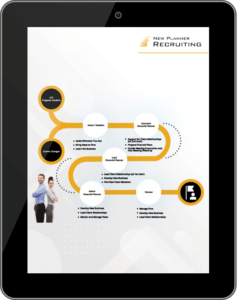 Download your free copy of the New Planner Career Roadmap! In this roadmap, you'll be guided through the details of various stages of your financial planner career, including position descriptions, licensing, skill and experience level requirements, and compensation ranges.
Get the Full Episode Transcript:

Read the Transcript Below:
Welcome to the New Planner Podcast, where it's all about helping you successfully enter the financial planning profession and accelerate your financial planning career. This podcast will help you understand the profession, become familiar with the various career paths available to you, and avoid the mistakes that limit your success. Join your host, Caleb Brown, to explore the human side of creating a successful planning career through interviews, personal experience, and insights from the trenches. Let's get started.
Caleb Brown: Welcome to the New Planner Podcast. This is Caleb Brown, your host. I'm joined today by Andy Baxley, founder of Two Trails Financial Planning, serial AI tinkerer, and a next-gen planner advocate. He stopped by to share how he entered the financial planning profession, ended up starting his own firm, and how he uses AI.
Welcome to the New Planner Podcast. I'm Caleb Brown, your host. I am joined today by Andy Baxley, who is the founder of Two Trails Financial Planning, who is a serial AI tinkerer and just all-around great guy, and I'm glad that he has joined us today just to talk about his career. Andy, welcome to the show.
Andy Baxley: Oh, thanks, Caleb. I'm so grateful to be here. It's been a... feels like a long time coming. I can check this off my list of—it's one of my goals in my career to be on this podcast, so this is great.
Caleb Brown: Oh, too funny. Too kind. Thanks for sharing that. And I want to just start with h- how you got started in financial planning.
Andy Baxley: Yeah, if you'd asked me, or if you had told me back when I was, say, like 20 that I would end up being a financial planner, I would've thought that was very strange and probably wouldn't have believed you. I had really no inclination or interest in personal finance in my early adult life. I thought I was gonna be an academic psychologist.
I went down that path for a bit and realized pretty quickly that it wasn't for me. Ended up spending, ah, about four years living in South Korea teaching English in my 20s and ended up, you know, at a certain point in adulthood, you just kind of realize you kinda gotta get your own stuff together financially.
And so I started picking up a personal finance book or two and, just for whatever reason, just found myself really drawn to it. I think I'd underestimated just how much psychology there is involved in money and so, that being my first love, psychology, it just felt like a really interesting natural segue.
So when it was time to come back to the States, I knew nothing about the profession. I didn't know you were out there, Caleb, and I didn't know what an RIA was. I didn't know anything. So I just went and applied at Fidelity, which was like the one company I knew at least a tiny little bit about, so I had a brokerage account there. And so that's where I started 10 years ago.
Caleb Brown: Gotcha. I'm tracking with you. I mean, it's surprising to me how many people actually enter this career because they've had, like what you said, "I had to get my own financial house in order, and man, I kinda really enjoyed this and I wanna do it for other people."
Andy Baxley: Yeah.
Caleb Brown: It's amazing. All right, so you started a large asset management firm, and what was your role there?
Andy Baxley: Well, initially it was just answering 1-800 calls, resetting passwords, placing mutual fund trades. The true entry-level position. I pretty quickly expressed interest in going down the path to offer advice, and so got on that path pretty quickly, and worked my way through a couple of roles there.
And then spent, ended up spending a couple years there before jumping over to TIAA. So another fairly large institution.
Caleb Brown: Why did you leave Fidelity to go to—
Andy Baxley: I sort of had felt like I could fast-track my path. At that point, my goal was really... I still didn't really know much about the RIA world, the fee-only financial planning world, which is where I am now.
I really wanted one of the sort of more established wealth management positions within a larger firm, and got offered a faster path to that at TIAA, which at the time had a large office in Denver where I was living. So a former colleague who had left from Fidelity to go to TIAA basically came knocking on my door and shared the opportunity, and it made sense. It was a good switch, I think.
Caleb Brown: So, so that—more on the path to the advisor position. Is that what I heard? They offered that?
Andy Baxley: Yeah, I was doing, you know, I was licensed and I was giving advice at Fidelity, but it was in a very limited capacity. It was like 401(k) allocations or—
Caleb Brown: Yeah.
Andy Baxley: Managed accounts, that kind of thing. There really wasn't a lot of financial planning happening there.
Caleb Brown: Got it, okay. And then you were with TIAA for a couple years or something like that?
Andy Baxley: Yeah, another couple years, and then eventually, discovered Kitces and just started going down the rabbit hole of gosh, there's another way to think about this. There's another way to do it. Which is not to say the people at TIAA aren't doing great work, but if you really wanna be doing comprehensive financial planning, if you really wanna be going deep with folks, that's probably not the kinda place you wanna be.
'Cause I think, you know, I had 300 families I was responsible for, and a lot of them I had never met. And, ultimately it was a sales job, right? Like, it wasn't a financial planning job. It was a sales job. And, so the further I went down the Kitces fee-only financial planning rabbit hole, the more I sort of realized that's where I wanted to be. So I started laying plans to jump ship.
Caleb Brown: And I've had other people describe it as like, "Hey, the curtain was kinda pulled back and I saw this other side where you're like—"
Andy Baxley: That's exactly right...
Caleb Brown: "Where's this been?" I mean, and that's sorta what I'm getting from you. So the Kitces stuff, and that just kinda opens up a whole new world.
All right, so sales job, then you left that firm, and then you did what?
Andy Baxley: So this was during COVID. TIAA had offered basically like a buyout package for folks 'cause they were trying to reduce head count, and so getting paid to not work for a few months sounded pretty good to me.
So I took 'em up on it. And initially I toyed with the idea of starting my own firm then, which I did ultimately go on to do, but I'm really glad I didn't do it then actually. I don't think I personally would've been ready either financially or psychologically for that. So I ended up going to work for a mid-size RIA with locations around the country, but my office was here in the Midwest, called The Planning Center.
So, just to give you a sense of scope, they are responsible for roughly $1 billion of assets under management, so certainly not small, but not one of the behemoths either. And I was in, ended up being there for four years, and really kinda consider that to be like my second undergraduate degree 'cause that was really where I learned how to do this job well.
Caleb Brown: Got it. Okay. So you started in like an associate planner position and then worked your way up for over four years. Is that what happened?
Andy Baxley: I didn't actually. I started in a more senior-level financial planning position—
Caleb Brown: Okay
Andy Baxley: At The Planning Center, and I think a part of that was just that I had a lot of experience working with academics. They had a lot of academic clients in the Chicago office, so I had a bit of expertise that I was able to bring to the table that they didn't have. So I think that helped me a lot. And so, yeah, I was in the senior financial planner role there actually the whole time that I was there.
Caleb Brown: Got it. Well, and you had five years of experience when you joined, I mean—
Andy Baxley: Exactly. Yep.
Caleb Brown: I got it. Okay. So you're there four years, so that was a good run. And then why'd you leave?
Andy Baxley: Oh, gosh. Do we have like three or four hours to talk about this?
Caleb Brown: You got about 30 seconds now.
Andy Baxley: Cool. Perfect. All right. 30 seconds sounds good. The simplest answer I can give to that, Caleb, which I think can also be repackaged as a piece of advice to other folks is if you are a creative person who really values autonomy, you have to make sure that the container that you're in is large enough to fit your creativity. And if it's not, that can get frustrating very quickly.
Now, what I want us to be very clear about is it was a great job. My colleagues were wonderful. I loved everyone there. I truly thought it was the place I would spend my entire career, but then I just realized as I got my feet underneath me that I had all these ideas, things I wanted to try doing differently, and it wouldn't have been fair to them to try to push through every single one of those ideas 'cause they had established practices, right?
And I wasn't there to be an entrepreneur. I was there to be an employee. And so eventually I just started sort of realized that my creative energy was a bit like dammed up. It was like—there was a backlog of it, and I just got really interested in this idea of, well, what if I go off on my own and all of a sudden have total autonomy and creative freedom?
What might that feel like? And it took me about two years to get the courage to actually do it but that was ultimately the biggest impetus, I would say.
Caleb Brown: And then maybe just talk to us about how it was. I mean, did you start with any clients, or was it just like, "Hey, I'm leaving a high-paying job and a salary and going to zero with no clients"?
Andy Baxley: I didn't know if I was gonna be starting with any clients. When I left, it was not the sort of situation where I could let folks know I was leaving and say, "Hey, come on over with me." So there was... I had a couple friends and family that I was pretty sure would probably wanna come over into my new practice, but I also knew it's a lot to expect of a client to sign off on coming over to a brand-new practice, right?
Caleb Brown: That's right.
Andy Baxley: It's a brand-new thing. And so I didn't know. That was my first test to figure out just how much some of my clients trusted me, 'cause I didn't know, right? Like they said they did, but you don't know. And then I launched my practice and was very pleasantly surprised to see that of the clients that were in my core sort of demographic for who I was trying to serve in my new firm, I'd say all but one or two ended up coming with me.
And so that was the first really big surprise of starting my new practice, was that I actually did start with a pretty substantial—
Caleb Brown: That's good...
Andy Baxley: Base of clients, which made it a lot less stressful.
Caleb Brown: And then maybe just talk about your, how you've set up your firm. Who are you going for, and then what's the service model?
Andy Baxley: Yeah, so the who I'm going for isn't very creative, which is to say, it's just versions of myself that I feel like I know the situation really well. Which is to say, dual career, often, not always, but usually a dual career, a lot of young kids—
Caleb Brown: Okay. Yeah
Andy Baxley: Out there, just navigating the demands of that middle part of life where you got, you're kind of being pulled in every direction, a lot of, like, sandwich generation type stuff, where you got aging parents or grandparents that you're thinking about, and just a lot of stuff going on.
And so when I think about my ideal client, it's somebody who, their family looks a lot like our family, and I think there's a certain power in that because I can really deeply empathize with what they're going through. And so that's the ideal client. I started with that vision of who my ideal client was in mind and then designed my service model around that.
So I have sort of a two-track service model. The first is called Base Camp. I'm from Colorado originally, so everything's mountain themed. First, it's called Base Camp, and it's meant to be like a four- to five-month just super deep dive foundational financial plan. So over the course of about six meetings, we build something that's really actionable, and my goal is to then leave them in a state where they're empowered to go off and DIY if they want to.
Now, some of my clients don't want to. They're busy, and they would rather have an ongoing thought partner or somebody to delegate to or have them, have hold them accountable. And so for those folks, I have Summit Wealth, which is a more ongoing service model where I do a flat fee that's based on net worth and income that ranges from five to twenty thousand a year, depending on those variables.
Caleb Brown: Yeah, on your LinkedIn, financial planner for mid-career professionals. I mean, I think, I mean, it's pretty—
Andy Baxley: Yep.
Caleb Brown: Very clear what you're going for. I like the two business model. And is that two, two trail. I mean, is that the Two Trails? Is that kinda how you tie it back?
Andy Baxley: Two Trails has multiple levels of meaning. That is one of them. The original one when I decided on the name is I'm just really interested for all of us, but especially for my clients, in this idea that there's always just sort of this like one path in life that there's a bit of just inertia and gravitational pull towards either because of family expectations or societal expectations or just cultural norms.
But then there's often this other path that, for me, it was starting my own business, and I just... you kinda flirt with it, and you kinda think about it, but it takes a ton of courage to go that other direction for a lot of folks. And so that's really where the name came from, is exploring, like, what do you really want from life?
Like, what does a successful life look like to you? Not financially, really, but you know, more holistically than that. And how do we create a financial plan that helps you to, if not just totally dive off the deep end and go straight for it, at least like inch towards it over time and start to craft something that at the end of your life you'll look back and feel really proud.
Caleb Brown: I mean, based on, again, LinkedIn, you've only been at it a year and a half. I mean, it sounds like it's going pretty well. I mean, maybe talk about some of the challenges that you faced over the last year and a half.
Andy Baxley: Yeah. It is overall going really well, unexpectedly well, and that's not false humility. I just... it's more just I have a long history of not believing in myself enough, which is why it took me two years to do it in the first place. So before I talk about the challenges, I'll just say, like, the biggest surprise, and again, I think I could repackage this advice as advice to others, is, like, just trust yourself a little bit.
Like, if you want something and you're in a good position to do it, doesn't have to be starting a business. It could be getting your very first role in the industry. There's always, for some of us, gonna be that voice of imposter syndrome, but gosh, I'm glad I didn't listen to it. I'm glad it didn't stop me from taking action.
In terms of challenges, I think another thing that I've sort of dealt with my entire life is a bit of perfectionism, and there's not a lot of room for perfectionism in entrepreneurship, just because there's so much to do, you're not gonna do everything perfectly. There's very much this sense that you get the foundation laid, you get the really important stuff figured out before you take on a single client, but a lot of the other stuff you're building the plane while you're flying it, and you're constantly iterating and changing.
And so I've had to get really comfortable with the idea that it might not be perfect the first time, but really it's like that 1% better every day mentality has, for me, served me really well, and it's been a very necessary shift.
Caleb Brown: Yeah, I know Kitces talks about that a lot, trying to do these incremental changes. And I like what you said about the perfectionism. I mean, someone told me, I think it may have been Strategic Coach, Dan Sullivan, like, just get something and just or mentally viable, just get it out there. Just put it—
Andy Baxley: Yeah...
Caleb Brown: Out there and just, it's, it probably can be improved and it's not gonna be perfect, but people will resist putting something out or moving forward just 'cause like, "Well, let me tinker with it, get it perfect," and they never do anything because it can't, it's not perfect.
So, all right. Cool stuff. Well, you, I mean, and we'll just stay on that for a minute. I mean, you have, you're very active on social media, LinkedIn, and just maybe talk a little bit about, you know, big proponent of the AI tools and getting people to move on that, and then you even recently created this little career track or this...
Could you just talk about—we're gonna link to it in the show notes, but will you just talk about just sort of your AI philosophy and then just some of the other things you're doing with it?
Andy Baxley: Yeah, absolutely. I have been thinking about this more than anything else the last, I think a lot of us have, but certainly the last, like, five, six months, and especially since Claude Projects came out, which is largely where I build a lot of the stuff that I'm building.
And I'm pretty convinced that AI represents the next, like, really major shift in our profession. And so much of the conversation in AI is around how do we do the same thing but faster or with fewer staff involved or just at a lower cost point in general. And while I certainly understand how important that stuff is, that's actually not really where my interests lie.
Where my interests lie is how do we use AI to create a client experience that's just higher quality. It's deeper, it's higher quality, it feels better, it looks better. I'm really interested in this idea of quality as it comes to AI, which I think is a little counterintuitive because most of us are used to, you see an AI-written post and you're like, "Well, this is," scroll right past it, right? It's like the moment you can tell it's written by AI, you don't want anything to do with it. This idea of, like, AI slop. I think the tools that one can create with Claude Projects or Claude code or Codex from, OpenAI, which I haven't used, but I've heard is great, these tools are the opposite of slop.
It's like taking your creative ideas that exist in your head, those ideas where it's like, "Gosh, wouldn't it be nice if... dot, dot, dot." And two years ago you'd have that thought and be like, "Well, yeah, that would be nice if I had $50,000 to pay a software engineer to build it for me."
Caleb Brown: That's right.
Andy Baxley: Or if I had years to work on this project. But now it's that, I call it the idea-implementation gap. So the gap between ideas and implementation of ideas used to be massive. It's now virtually nonexistent for certain ideas. And I think there's just something really incredibly powerful about that. And so for me, the way I've thought about that in my own practice is, well, how do I use these tools to create really interesting bespoke tools for my clients?
So it could be at the level of my firm, like I have a certain way of thinking about values-based financial planning and life planning, and so I've created tools that are very bespoke to my firm, but I've also created tools that are very bespoke to the individual client, which is, I think, a really interesting iteration on all of this.
Like, I have one client who had a really complex healthcare plan where they... it was the high-deductible plan versus the PPO, and just a really complex decision actually. And so it took me a couple hours, but I created a calculator to help make that decision and illustrate the trade-offs.
And they're just enormously grateful, and I feel very confident that they'll be loyal clients for a long time. Because that was a level of individualized service that they just wouldn't have gotten from the bigger firms, or many firms, I think, for that example. So when I think about how do small and medium-sized firms win in the age of AI when we're competing against not only big firms with incredibly deep pockets, but also AI itself, frankly, I think that's, from my perspective, by creating a really individualized, bespoke, high-quality experience for our clients. So I'm really very interested in this idea.
Caleb Brown: That's great. Yeah. Love... I've been, like I said, I've been following you and just watching all your stuff and really cool, and glad you're out there doing that.
I wanted to come back to something that we kind of glossed over. So if I'm reading this right, you ended up getting your undergrad in psychology. Is that right?
Andy Baxley: I did. I did, yep.
Caleb Brown: How do you... I mean, has that made you a better planner. I mean, kind of a loaded question, but, like, has this made you a better planner versus, I mean, just like, yours, I mean, who just like, "I just got a financial planning degree"?
I mean, I've wrestled with this over my career, is like, do I tell the students to go get a psychology degree because that's kind of the job they're going into, now that I've been in it? And then maybe, like, layer on some financial planning training or education on top of that. So I just, I wanted to get your thoughts on that.
Andy Baxley: Yeah. Going back to the other part of the last question that I didn't answer, you had asked about the career path tool I created, which we can talk more about. But one of the things I talk about in that tool is, I really think when you're getting into this industry, there are three things that you wanna do.
You wanna get your CFP, which is not to say it's the best designation. I've had some pushback on this or that, it's the only designation. But I do think it's the most well-marketed designation to the general public, and that does matter. And I also think it's quite good—
Caleb Brown: Yeah...
Andy Baxley: From a quality standpoint. So get your CFP, learn AI, and the third is understand psychology and client communication. I think in, again, back to this idea of how do we thrive in the age of AI. Well, what's AI gonna get really good at? All the quantitative stuff. What will people not really want AI to do? I really think that's the more, like, human connection type stuff, asking good questions, understanding your client on a deeper level.
And so, yeah, a psychology degree is pretty darn helpful for that. I don't think it's the only path. If I were 18 starting my college career today with everything I know now, I'd probably dual major. I'd probably do psych and financial planning if I was at a school that had that. But a psych—I would say a psych, to answer your question more directly, I would say a psych minor, maybe with a financial planning major. Yeah.
Caleb Brown: Yeah. Awesome stuff. Well, Andy, this is, this has been amazing. Again, just appreciate you donating the time and coming on. Is there a- any other final tips or i- ideas or any thoughts you wanna share before we close out?
Andy Baxley: I do encourage folks to go check out that tool that you'll link to in the show notes.
The way I created that one was really neat. So I've done over 2025, 2026, I don't know how many, like, 30-minute one-on-one calls with aspiring financial planners, but it was a lot. And so I took the transcripts from all of those and used those transcripts to train a tool that feels an awful lot like what it would feel like to have one of those calls with me.
I wanted to figure out how do I create a tool that will effectively allow me to give advice at scale? And so the feedback has just been amazing on it. I've gotten emails from university students and career transitioners and all kinds of people. It's been really, really positive. So, I think that's my favorite use case actually of AI.
I probably built two dozen tools at this point, and that's my favorite one that I've built just because I think it really does represent how I think about this profession, and more than anything, I just want people to avoid the mistakes I made in my career. Which I think was really, like, staying in that institutional space too long, which for some people is exactly the right place to be.
For me, it wasn't. The key in this career is not, “Oh, fee-only is better than large institutional.” It's just find the space that is best suited to your personality and preferences and goals. And for me, that just took a little bit longer than I think it otherwise might have if I had some good mentorship.
Caleb Brown: Amazing. Well, thanks so much for coming on the show, Andy.
Andy Baxley: Caleb, thank you. Great to be here.
Thanks for joining us for this episode of the New Planner Podcast. If you are ready to discover the top career paths for financial planners and see which track is best for you, we created a free guide to help you. Grab your copy of the Financial Planner Career Roadmap at newplannerrecruiting.com/roadmap. There, you'll also find more tools and resources all created to help you build a successful financial planning career. Tune back in next week for another episode, and until then, we are here to help you succeed.
Share the Love:
If you like the New Planner Podcast...
Never miss an episode by subscribing via Apple Podcasts, Spotify, Amazon Music, YouTube Music, or by RSS!



Leave a Reply