What does it really take to build a successful financial planning career, and how much of it comes down to education, persistence, and understanding human behavior? In this episode, Gary Clement shares his unconventional journey from a math major with an interest in investments to an experienced financial planner, educator, and PhD holder. He walks through his early days in the industry, the lessons learned from working in high-pressure sales environments, and the pivotal experiences that shaped his transition into financial planning and education.
Listen in to learn why behavioral finance is becoming central to the future of advice, how advisors can help clients overcome suboptimal decision-making, and why understanding human behavior is just as important as technical knowledge. Gary also unpacks how real-world experience, licensing, and continuous education can shape long-term career success in financial planning. You'll hear about career strategy for new planners, the importance of early job experience, and how to build momentum in a competitive industry.
What You'll Learn In Today's Episode:
- How Gary first became interested in financial planning and investments. (2:00)
- The impact of 9/11 on his early career and transition. (5:05)
- How he discovered the importance of coaching in financial advice. (7:00)
- Why he pursued the CFP designation for independence and credibility. (8:30)
- Why education is always important and something to pursue. (15:30)
- How behavioral finance is shaping the future of financial planning. (17:15)
- Advice for those on the hunt for work. (21:00)
Ideas Worth Sharing:
“Education is always important. There’s always something that you can pick up—and it might be something small—and it’s worth taking the time to advance your education.” - Gary Clement Share on X “Anybody can advise someone on what they should do. But if we can't get people to do what they say they should do to meet their goals and objectives, then all the other things that we do with them are a waste of time.” - Gary Clement Share on X “Once you learn about behavioral finance, you understand that people are making suboptimal decisions in predictable ways. If we can figure out those predictable ways … now we stand a chance to help.” - Gary Clement Share on XResources In Today's Episode:
- Gary Clement: LinkedIn
- New Planner Recruiting - Financial Planner Career Roadmap
- Finding your Path: The Roadmap from Student to Successful Financial Planner by Caleb Brown
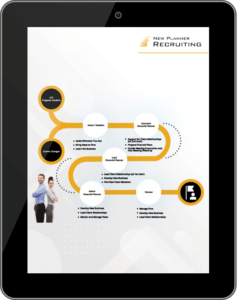 Download your free copy of the New Planner Career Roadmap! In this roadmap, you'll be guided through the details of various stages of your financial planner career, including position descriptions, licensing, skill and experience level requirements, and compensation ranges.
Get the Full Episode Transcript:

Read the Transcript Below:
Welcome to the New Planner Podcast, where it's all about helping you successfully enter the financial planning profession and accelerate your financial planning career. This podcast will help you understand the profession, become familiar with the various career paths available to you, and avoid the mistakes that limit your success. Join your host, Caleb Brown, to explore the human side of creating a successful planning career through interviews, personal experience, and insights from the trenches. Let's get started.
Caleb Brown: Welcome to the New Planner Podcast. This is Caleb Brown, your host. I’m joined today by Gary Clement, founder of Clement Asset Management and chairperson for the College for Financial Planning. Gary stopped by the show today to share how he entered the financial planning profession, sourced clients, started his own RIA, and why he’s passionate about educating the next generation of financial planners. I hope you enjoy this conversation with Gary Clement.
Hi, Gary. Welcome to the New Planner Podcast.
Gary Clement: It's my pleasure to be here, Caleb. Thank you for the invitation.
Caleb Brown: You got it, man. I'm so excited about this. I mean, I'm joined today by Gary Clement, and we've known each other for a while, and for some reason you were in my class a long time ago, and we had a talk about it, and you're like, "No, I don't think this is the best fit," because you'd already had your firm, and you'd been practicing probably as long or longer than me, and then you were getting, I think at that point, your PhD or your master's.
Gary Clement: Exactly.
Caleb Brown: And then you've since done a lot on the educational side. So just an advocate of the new next generation, the new financial planners, but also a great contributor to your clientele and your own firm.
So that's what I wanna explore a little bit today. So, if you would start with just how you got interested and why you picked the financial planner career versus something else.
Gary Clement: Yeah, that is a great question. You know, I was always interested in investment management, and this is from way back.
I started out as a college student as a math major, but I did not really want to do things like actuary work or what might have lended itself to someone who had a math degree. And my interest in investments was really strong, so I did a lot of my own personal reading about it, and at the same time, I tried to get into the business, without much success, I should say.
So I went through a lot of interviews, didn't really catch on, and then after I moved here from New York, I moved to Atlanta from New York, I got an opportunity to catch on with a discount broker. So I started with E-Trade in the business. And at that time, they were exploding, they were building really quickly, and they had a need for folks.
So I think that I was one of the warm bodies that they allowed to come in. So I looked at it as an opportunity to learn more about the business, get fully licensed, and that's exactly what happened. So, I got a chance to get in, got my Series 7, got my Series 63. I was encouraged to get the Series 65 at the same time, and since I'm a test-taker and one who likes learning, I went ahead and took that test as well, not knowing that it would make a difference later on down the line.
So one of the great things about being in that environment, though, was that I learned a whole lot. At the time, as a discount broker, E-Trade wasn't really able to give advice, so we were constrained in that way as employees at E-Trade. But what I got a chance to see through many calls that I got during the day, 'cause this was a call center environment, I got a chance to see how people were screwing themselves left and right as, you know, individual self-directed investors.
So I learned a lot of what not to do by seeing people shoot themselves in the foot over, and over, and over again. But my whole strategy came up was to take that opportunity to get licensed and then move on to a full-service broker, which is exactly what happened.
After I left E-Trade, I got a chance to go to Morgan Stanley, and that was really another hugely important learning experience. I got a chance to see a whole lot more about the business. I got a chance to see more about how asset allocation was important. Got a chance to see how brokers would interact with clients, and how it is we try to entice clients to come on with us.
Got a chance to, you know, push new issues. All kinds of things like that, that I hadn't really had exposure to in the past. But I was there around the time of 9/11, and in fact, I was training in building two of the World Trade Center, and left--
Caleb Brown: Whoa...
Gary Clement: --about two days prior to that plane hitting that building, and it went through the floors that we were on, so it was quite a.. yeah, it was quite a--
Caleb Brown: Wow.
Gary Clement: --a really crazy experience. So I left out of there, came back to Atlanta where I worked in one of the regional offices.
Caleb Brown: Well, let me just stop you there, Gary. Were you trying... Were you an advisor? Were you trying to build a book-
Gary Clement: Absolutely ...
Caleb Brown: --as a salesperson at Morgan? Okay. Got it.
Gary Clement: Absolutely. Absolutely, and that's where we did our training. So all the training was in World Trade Center in New York. So coming back, you know, it was a really strange experience after 9/11, and of course, that made things a little tough-
Caleb Brown: Yeah...
Gary Clement: --to continue to get clients. And one of the things that we don't talk about a lot in the business, especially in that end, is it's really, you're really evaluated on a number of metrics.
How many dollars you bring in, what are your commissions, and those types of things, and you're evaluated alongside of the people that you come in with, your cohort. And there's always an emphasis on staying in the top two quartiles. If you couldn't stay within the top two quartiles, off with your head.
Caleb Brown: Gone.
Gary Clement: You're gone. You know, and it's very difficult to do that, and we didn't realize that. Many of the new folks like me didn't realize that as people left, it got harder and harder to stay in the top two quartiles. But I'll say this, you know, after trying as hard as I could, you know, I was one of those folks that got laid off.
And at the time, I wasn't really sure if I wanted to stay in the business. I did end up making the decision to stay in the business, but there were some things that started to occur to me. I went with a smaller company, and basically was in operations in the business, and at the same time, it started to dawn on me that it really shouldn't be, in terms of how we advise clients, it really shouldn't be just, "Let's talk about investments."
There are other things that can help people meet their goals and objectives. So I started to see that coaching really should be something that should be melded with financial advice. I didn't really know where to take that at the time, but it was something that really nagged at me, and it was something that had me begin to think about the CFP process.
So at the time I was doing operations, working in operations, I decided I was gonna take on the CFP process. And for me, it meant going to a live class. There weren't really many places to go at the time, but just so happens that at Oglethorpe University, they had one of the few programs in town that were board-certified CFP programs.
So I went through the program there. The whole idea as I was going through that program was I wanted to be independent, and I felt that for me to be independent, I had to have a lot more knowledge, as well as I knew I was not gonna have the marketing muscle of a company like Morgan Stanley behind me. So I gotta really be able to show that I'm competent, and that was the whole reason for going through the CFP process.
Great experience, a lot of studying. Luckily for me, I put in as much time as I could and passed on the first attempt.
Caleb Brown: Did you have to take it when it was a two-day, 285 questions like me, or was it... were you after that?
Gary Clement: Yes, it was a two-day process. Four hours--
Caleb Brown: Wasn't that awful?
Gary Clement: ...on a Friday. Yeah. It was awful having to come back. You know, the four hours on a Friday.
Caleb Brown: You gotta sleep on it. You gotta spend the night with it, thinking about it.
Gary Clement: Yeah. And, you know, I think one of the really horrible things about it was, you know, when you come out of each one of those sessions, there are people milling around talking about--
Caleb Brown: That's right.
Gary Clement: The test, right? And you don't know whether they got those questions right,or whether you got those questions right. So it was kinda hard to really, you know, steel yourself in what you did and be confident in what you did while you're hearing all this stuff, other stuff buzzing around you. So yeah, that was a really daunting experience.
Two days, 10 hours in total, paper and pencil. A whole nother experience than doing it online.
Caleb Brown: So you got it knocked out the first time. Congrats there. And then what did you do? Did you stay in operations and with that same firm?
Gary Clement: No, actually, I got attracted to go back to E-Trade. They sold me on some things happening that were changing the business. So I went back there and had to wait because those were the days when we had to wait six weeks before we got our results too.
Caleb Brown: That's right.
Gary Clement: So that was another problem. The last couple weeks, really tough when you're on pins and needles checking your account multiple times a day.
And, I was really happy to get that once I saw the results. But yeah, I went back to E-Trade, but all the time I knew that I was gonna go independent \\eventually. So that was good. And, you know, shortly thereafter, I did have the opportunity to go independent. But I had an issue, and the issue is when I went independent, like I would say 95% of the folks that go independent, you're not really making much money.
Caleb Brown: Yeah.
Gary Clement: So my wife said, "You have to get a job." So, it was really something that not only spurred me to look for something, but one of the things that I said to her was, "I don't wanna do anything that's not synergistic with what I do as an advisor." And it just so happened I got lucky. So about five months after I passed the exam, it just so happened that Oglethorpe needed new instructors, and I was able to step right in as a new instructor less than six months after passing the exam.
Caleb Brown: Okay.
Gary Clement: And that was really great because it was extremely synergistic because as I got better as an advisor, I got better as an instructor, and vice versa. As I got better as instructor, I got better as an advisor. And I started to look at not just advising people, but educating people. I think that's one of the pieces that we miss, and I think that someone who is educated by their advisor becomes more comfortable with the advice that they're getting and more confident in the choice that they make, not only in their advisor, but the choices that they make in terms of their course of action to get closer to their goals and objectives.
Caleb Brown: Totally agree. I love how you put that. That's really, really awesome.
Gary Clement: Yeah, so that's kinda it in a nutshell of the first, you know, part of my career. I did eventually go independent, and I've been independent since. It's been a lifestyle practice, but when I told my wife about this again, I said, "This is as much a financial endeavor as it is a lifestyle endeavor."
So I always envisioned it as being something that I could do around other things. And when technology made it available, you know, I started morphing my business over to a virtual business, and that's what it's been ever since. Now, to get back onto teaching, I taught in certification programs for a very, very long time, and had the opportunity to teach it at Oglethorpe.
I taught in, actually, UGA's certification program down in Buckhead in Atlanta. And one of the things that I started to see was that a lot of the certification programs around the country were being pulled into degree-granting programs in colleges. And at the time, I thought, "Hey, you know, if I'm gonna continue teaching, I probably should have at least a master's degree."
So I went out and I decided to pursue a master's degree at College for Financial Planning and got that, and that was another great experience, and it led me to having a conversation with somebody who asked me, "Well, you ever thought about doing a doctorate?" And at the time I said, "Eh, no." You know, I hadn't thought about doing that.
It's not something I'm like--
Caleb Brown: "No way. Not for me."
Gary Clement: Never gonna happen, right? Yeah. And then I met a couple of other people. I met some instructors at UGA by chance as well, and the idea just kept coming up, kept coming up, so I decided, "Well, how hard could it be?" And I went ahead and went forward, and it also turned out to be a really, really great experience, and although a couple years in, I questioned why I chose to do it, you know, at that point you're so far in, it's like, "Yeah, I gotta finish now."
Caleb Brown: But at this point, your business was up and going. The wife, the spouse, was giving you two thumbs up like, "Hey, we got the we got some income coming in. Go ahead, enroll with it, Gary." Is that the way it worked?
Gary Clement: Yes, yes. And, of course, I had the flexibility to do it as well from the time standpoint, so it all worked pretty well.
Caleb Brown: Okay, so then you got your PhD. I mean, really cool foresight I think, like, "Hey, you know, I might need to do this if I wanna stay in the teaching side." I mean, frankly, personally, I saw what my wife went through to get a PhD. I'm like, "Oh, nope, never, never doing that," and I've held the line this far, so.
But I do wanna go back to, like, you getting all these, the licenses, the degrees. I mean, you coming back and getting your CFP, like, what would you say to your colleagues that are like, "Gary, you, what are you doing? You've already been in the business for a while. You don't need to deal with this silly stuff."
What would you say to that person?
Gary Clement: You know, education is always important. There's always something that you can pick up, and it might be something small, and it's worth taking the time to advance your education. It's just gonna make you better. Now, everybody who's seen my LinkedIn knows I got a lot of designations.
I'm actually pursuing a couple more now, and it's for the same reason. There's always something out there that can make you a little bit better as an advisor. The other thing is, and this goes back to the reason I took on the CFP in the first place, I look at designations like advertising, like marketing, because I don't have to have conversations about whether I'm qualified or whether I know what I'm talking about because I've got these five or six entities who have attested to my ability--
Narrator: Right.
Gary Clement: To not only learn this information, but apply this information. So for me, it's both marketing as well as I like the education, so I'll just keep going forward and getting more until I just decide it's time to hang it up.
Caleb Brown: We're gonna link to your LinkedIn profile in the show notes, but I mean, I gotta just say, self-described multi-designation nerd.
Gary Clement: That's right.
Caleb Brown: I don't think I've ever seen that before. Well, what, which one... are you able to share which ones you're working on right now?
Gary Clement: Yeah, I'm working on the certified financial therapist designation.
Caleb Brown: Oh, nice. Okay.
Gary Clement: And, I think that that is really where the business is going. And this gets back to what I was saying before about really feeling that coaching was gonna be an important thing in financial advice.
So I was always interested in the idea of coaching, but then I got exposed to behavioral finance, and that was my first foray into seeing that anybody can figure out the technical aspects of our job. Anybody can advise someone on what they should do. But if we can't get people to do what they say they should do to meet their goals and objectives, then all the other things that we do with them are a waste of time.
So it really started to dawn on me that what we really need to do is figure out why people are not doing what they should do. And the great thing is, once you learn about behavioral finance, you understand that people are making suboptimal decisions in predictable ways. If we can figure out those predictable ways that people are making these suboptimal decisions, now we stand a chance to help them help themselves.
So that's why I'm a big proponent on behavioral finance, and I think that the certified financial therapist designation just takes that to a whole nother level.
Caleb Brown: Love it. Yeah. This is all great stuff. Let me go back to something. I mean, while you were building the practice, I mean, I think we're clear on the teaching role and sort of the...what you were doing there? How did you get the clients? And what did that look like? I mean, how long did it take and... before you started getting some traction and some revenue built up?
Gary Clement: Yeah, it took a while. Probably, you know, about 18 months, 24 months where, you know, I basically focused on my warm market, of course.
And then one of the great things is you just gotta keep on finding ways to prospect, whether it's meeting people, going to networking events, trying to find those type of networking events or places where you're likely to find the clients that you would like to work with. And you just gotta keep doing it.
You just gotta keep going through the nos. I liken it to this, Caleb. It's like rolling a boulder up a hill. It's hard. It is really hard, especially initially. As you get closer to the top, it gets a little easier. And then once you get to the top and you're on the other side, it's really easy because now most of your business is gonna come from referrals, but it takes a long time to get to that point.
Now, the other thing, especially for new advisors, if they're gonna go to this route or even if they're in the full service business, here's the thing. One of the things that dawned on me as I was doing this was I had to figure out how much money do I need to have on a monthly basis, and that's my first goal.
That was my first goal. How do I get to this dollar amount? And once you figure that out and figure out how to get to that dollar amount, after you get to that dollar amount, you can really, I don't wanna say relax, but you can begin to be more strategic after that point, but it's understanding where you need to be- As soon as possible dollar-wise, and getting there as efficiently as possible.
And then after that, you can really focus on the kind of business that you wanna build.
Caleb Brown: Got it. Awesome stuff. And maybe just stay with that, if you would. Like, you deal with a lot of people, because now you're still teaching for College of Financial Planning. Is that right?
Gary Clement: Mm-hmm. Mm-hmm.
Caleb Brown: So as you see these people trying to get... Enter the business, and I know a lot of people reach out to you like, "Gary, what's your best advice for a career changer?" Or one of these people that's going through the CFP programs, what do you tell these people in how to have success as a financial planner?
Gary Clement: Yeah, that's a question I get a lot in terms of, you know, "How do I start?" "Where do I start?" "What do I do?" And then, for specifically younger students, it's about 'what should my first job be,' you know? And here's what I tell folks, Caleb. You wanna just get in somewhere. So the first job is not really as important as your last job, or in case of somebody that wants to be independent, their business.
Because the first job is to learn, and wherever you can get in, you're gonna get an opportunity to learn, and you're gonna learn on somebody else's dime, which is a great thing. But here's the other thing that I think people don't realize. They don't realize the different ways that you can operate in the business, the different places you could be in the business.
But if you've not been in the business, you don't have the capacity to compare one place against another. It takes getting in, and it takes experiencing one place to determine whether, first, if that's where you wanna be. If it's not, now you've got something to compare some other opportunities to, and I think that's the most important thing more than anything.
Caleb Brown: Just wide exposure to the various channels. Well, I mean..
Gary Clement: Exactly.
Caleb Brown: I think you and me preach that all the time. And, I mean, I try to tell, like, "Look, if you can get a little exposure to each one of the, you know, the wire house, bank, insurance, you know, brokerage, RI," I mean, you're gonna be real clear, you know, on where you wanna end up.
Gary Clement: Exactly. Exactly.
Caleb Brown: Well, what... Gary, this is... It's just always so fun talking to you 'cause you're just an interesting guy. You've got great story and great career, and you help a lot of people, and you're out there, you know, fighting the good fight and helping try to build the profession, and we all appreciate it.
Any final closing thoughts or tips that you wanna leave the audience with?
Gary Clement: Yeah, I'm gonna go back to behavioral finance. That's where the business is going. I mean, with AI, what is it that AI cannot do now, and certainly as it improves, what is it not gonna be able to do? Well, what it's not gonna be able to do is replace a human being in a relationship between human beings.
So this is gonna really put an emphasis on how we interact with people, how we help them overcome their negative... I don't--let me not say negative--suboptimal behavior. How do we help that, and how do we continue to nudge people along when there may be many factors that would stand between themselves and where they really wanna go?
So all of these things are gonna drive people back to how can we help people with their behavior? Because without actually helping people with their behavior, again, none of this other stuff matters. So that's what I would leave and hope that people who are getting into the business really understand, and it's regardless of where they end up in the business.
You really are still dealing with people with all the foibles that people exhibit, and it's gonna be: what value do you bring to that personal relationship as a human being?
Caleb Brown: Thanks for sharing that. Gary, a lot of fun. Thanks so much for coming on the show.
Gary Clement: Oh, man, you are quite welcome. Thank you for the invitation, and I hope that, you know, folks see something for themselves in our conversation.
Thanks for joining us for this episode of the New Planner Podcast. If you are ready to discover the top career paths for financial planners and see which track is best for you, we created a free guide to help you. Grab your copy of the Financial Planner Career Roadmap at newplannerrecruiting.com/roadmap. There, you'll also find more tools and resources all created to help you build a successful financial planning career. Tune back in next week for another episode, and until then, we are here to help you succeed.
Share the Love:
If you like the New Planner Podcast...
Never miss an episode by subscribing via Apple Podcasts, Spotify, Amazon Music, YouTube Music, or by RSS!



Leave a Reply