What do you do when rejection, setbacks, and uncertainty hit early in your career? In this episode, Francesco D’Amore shares how he turned college rejection, uncertainty about his career path, and limited resources into a clear plan to break into the financial planning profession. From teaching himself to pass the SIE exam using only YouTube to transferring schools and landing internships through networking, Francesco explains how curiosity and persistence shaped his journey.
Listen in to learn how to stand out as a student or career-changer, why networking conversations matter more than formal applications, and how internships actually turn into opportunities. You'll hear Francesco's long-term plan for becoming a financial planner, pursuing the CFP certification, and building a career in the industry.
What You'll Learn In Today's Episode:
- How Francesco discovered financial planning in high school. (2:12)
- How he used free YouTube videos to pass the SIE exam. (3:40)
- What he did to land an internship while at a wedding. (4:52)
- How he turned a summer internship into a year-round role. (13:30)
- What it's like working at a large company vs. a small firm. (17:00)
- Advice for students on standing out and building a network. (21:30)
Ideas Worth Sharing:
“I passed my SIE by myself without taking any major finance classes. No sort of higher-level classes—just YouTube.” - Francesco D’Amore Share on X “If you want to leave good impressions and help yourself stand out and build your network, it starts with a genuine curiosity.” - Francesco D’Amore Share on X “You can only control what you can control. So if you're going to do it, you want to make sure you do it right.” - Francesco D’Amore Share on XResources In Today's Episode:
- Francesco D’Amore: LinkedIn
- New Planner Recruiting - Financial Planner Career Roadmap
- Finding your Path: The Roadmap from Student to Successful Financial Planner by Caleb Brown
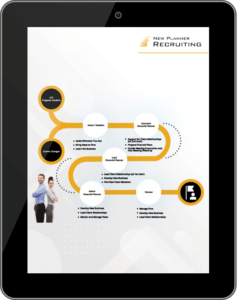 Download your free copy of the New Planner Career Roadmap! In this roadmap, you'll be guided through the details of various stages of your financial planner career, including position descriptions, licensing, skill and experience level requirements, and compensation ranges.
Get the Full Episode Transcript:

Read the Transcript Below:
Welcome to the New Planner Podcast, where it's all about helping you successfully enter the financial planning profession and accelerate your financial planning career. This podcast will help you understand the profession, become familiar with the various career paths available to you, and avoid the mistakes that limit your success. Join your host, Caleb Brown, to explore the human side of creating a successful planning career through interviews, personal experience, and insights from the trenches. Let's get started.
Caleb Brown: Welcome to the 275th episode of the New Planner Podcast. This is Caleb Brown, your host. My guest today is Francesco D'Amore, who is a current finance student at Rutgers University. Francesco joins the show today to share why he chose financial planning and how he ended up at Rutgers. He shares how he was rejected by most of the schools that he applied to and ended up at a backup school, which wasn't the best experience.
He goes on to talk about how he turned that bad experience into launching his career by diving into financial planning and being able to transfer to Rutgers. Francesco goes on to share how he leveraged his network and how a pitch at his sister's wedding landed him an internship. He shares how he's able to add value to organizations and set himself apart from other candidates. Stay tuned to the end to hear his game plan for pursuing the CFP certification and what he is looking for in a role after graduation. I hope you enjoy this episode with Francesco D'Amore.
Hi Francesco, welcome to the New Planner Podcast.
Francesco D'Amore: Hi. Thanks for having me.
Caleb Brown: Absolutely. Pleasure to connect with you. I guess it was a week or so ago and we had an interview and just some of the stuff you shared. I thought it would be a good, kind of inspiring story for some of our new college or recent college grad listeners. But why don't we just start with how you got interested in financial planning, financial markets, and why you went to Rutgers and are pursuing a career as a financial planner? Just start there, if you would.
Francesco D'Amore: Yeah, a hundred percent. Obviously, it's a little bit of a long story. It started when I was in high school. I had no idea what I wanted to do, and I started getting into personal finance and investing for myself. Someone said that I started investing at the perfect time. It was around 2021, 2020, so markets were doing incredible. It was hard to not enjoy it a little bit.
Then I ended up going to Marist College first for my freshman year. I got rejected from most schools that I applied to, so that was kind of a backup option. And as soon as I got there, I knew it wasn't for me. Culturally, it was a small school, and socially, I just didn't find a lot of things to do around campus. However, the one pro that did come out of my experience at Marist was I had a lot of time to really dedicate toward myself and toward my learning, my major, and what I wanted to do.
So I spent a lot of time that whole first year learning about financial markets, following the markets, and keeping up with the news. I knew that I was very dedicated and I wanted to find a way to set myself apart. At the time, my brother-in-law, who is seven years older than me, was doing his Series 7, his 66, and getting certified. I saw all the preparation he was doing and I was asking him if I could do it, and he told me the first step would be getting the SIE.
So my freshman year of college, I got exposure to what it was through my brother-in-law and I said, "I want to set myself apart and this is how I'm going to do it." My freshman year, I passed my SIE by watching all YouTube videos. I didn't sign up for a course, I didn't pay for anything. I had no money. So I was like, "I want to take this test. It costs 60 bucks to take the test." And I just watched a bunch of YouTube videos for about three months and I passed my SIE by myself without taking any major finance classes, no sort of higher-level classes, just YouTube, which is my claim to fame, I'd say.
Caleb Brown: That is incredible. I don't think I've ever heard that before. Congratulations.
Francesco D'Amore: Thank you. I took a very unique route and everybody that asks me, like, "Frank, should I take my SIE or how should I prepare for it?" I'm like, "Don't do what I did, take a course," but that is how I did it.
After my first year, I transferred out of Marist College. I transferred to Rutgers just because it was closer to home and they obviously have an incredible business school, so it offered anything and everything that I really needed. That following year, so going into the summer of my sophomore and junior year, I got my first internship experience at Skypath Private Wealth. Going into finance in general, I knew that I wanted to do something that was in the mix of an extroverted job but still technical because I wanted to cater to my strengths a little bit. I thought advising would be a perfect fit for that, but I always say you don't know until you're actually in the role.
That first internship experience at Skypath Private Wealth was incredible because it showed me the day-to-day of the role, and I was able to decide by just observing it if that's what I wanted to do or not. Luckily, I loved it and that is exactly what I want to do. So I spent about two months there as a summer intern and I always say, "Ask and you shall receive," right? At the end of my intern period over the summer, it was about two months, there were 10 interns with me. I'm at Rutgers University and they're in Short Hills, New Jersey. I asked, "Hey, I'm not that far. Do you guys need an intern throughout the school year?" And they said, "Definitely." So now all of a sudden it went from 10 interns to just me.
Caleb Brown: Nice.
Francesco D'Amore: And that's exactly how I started making deeper connections and how I got to learn more than just the surface level of what they're doing. I got to really take a deep dive into the financial planning world, and that's sort of where I started to fall in love with the financial planning aspect, not the markets, not the stock picking, not just finance in general, but the financial planning itself is when I really started to fall in love with it.
Caleb Brown: Sounds like an amazing internship. Can you just go back, if you would, to just talk about how you landed the internship?
Francesco D'Amore: Yeah. It's one of my favorite stories to tell. I would always recommend: keep up with your network in the sense that you should be aware of people that you know, not reaching out and checking, but be aware of everybody you know and where they're at in their life, right? Because you never know if they have an opportunity for you that might stick out.
My sister is seven years older than me, so luckily for me, this offers a unique benefit for me when I'm 17, 18, 19, where all of her close friends, that I have known from a lot in my life, are in the workforce. So going into her wedding, I was able to kind of keep track of what everybody was doing, if anybody was doing something in finance or anything that I was interested in. And one of my family friends, one of her friends, was working at Skypath. I didn't want to be pushy, I didn't want to ask him for an internship and pull that sort of "you've known me for a long time" card, but I really just approached him out of curiosity. So I saw him at the end of the wedding and I approached him and I just asked him about his job.
Believe it or not, people like to talk about themselves. So I just asked him about his job and he was telling me about it, he loved talking about it. He talked for 30 minutes, 45 minutes about how great it was, the work he was doing, the growth that he's seen, and how much better it was than his previous job. I was so intrigued that I was naturally asking questions and was naturally curious because he was so enthusiastic about it. Then I asked, "Do you guys take interns?" And he was like, "Oh my God, I had no idea you were into finance." He said, "Absolutely. Send me a resume and I'll put it right on top." So that's how I got that internship. Also, it was my sister's wedding, so he’s not really allowed to say no to me. I'm sure that helped.
Caleb Brown: So you pitched somebody at your sister's wedding? Well, not really pitched, but that is really cool. Good confidence. I like that. Okay, thanks for sharing that. I do want to go back to one other thing you said earlier that I wanna continue on with the story. You said, "I got rejected to most schools I applied to."
Francesco D'Amore: Yes, sir.
Caleb Brown: I appreciate the transparency for sharing that. And then you went on to say several times, "Hey, I'm trying to set myself apart." Is that because you got rejected, that this need to "set myself apart" is kind of on the forefront?
Francesco D'Amore: Yes, to a certain extent. I think that I've always had confidence in myself academically and striving for what I want to do. Whenever I put my head down and work for something, I've seen results. I’ve seen where things have worked out well. In preparation for college, I worked really hard on my SATs and my grades. I thought that my scores reflected a certain tier of college, the tier right below the Ivys, that's where I thought I was kind of aimed at. Unfortunately, that's not how it panned out. I didn't get in anywhere where I thought I was. I got a 1420 on my SATs, and there were schools with a criteria of a 1300 that were rejecting me.
Caleb Brown: Why did they do that? I mean, know they don't really give you a lot of feedback, but why do you think they did that?
Francesco D'Amore: I mean, maybe it was my essay, maybe it was my grades. I have no idea. But it all works out for a reason. So, yeah, so that hurt. It made me realize that I really have to stick out. I thought I was doing that with my SAT scores or my essay, or the classes I was taking, but I felt like everybody else that was applying was also doing similar things. And I’m thinking, "What could I do to help really stick out?" Something that not many people do. Getting my SIE at 18 was one of those things. Getting my 7 and my 66 now, before I reach my senior year in college, is also one of those things. I don't think there's that many people out there that are fully certified before they graduate college. It's just been my goal to stick out because I've been rejected before when I thought I did enough, so I don't want to ever leave it to a point where I'm not doing enough.
Caleb Brown: Yeah. I wanna say, and I'm probably gonna butcher the numbers, but last time I looked at it, University of Georgia, there was like 30,000 applications for maybe 5,000 or 6,000, or 7,000, 5,000 slots, or something like that. I couldn't believe it. This was several years ago. I'm sure it's gotten even tighter now. So you persevered, right? That's sort of the takeaway here. You seem to be really passionate about this financial planning stuff. Other than the internship, have you done, do you have any experience doing planning for anybody?
Francesco D'Amore: Outside of the internship, technically, no. I mean, I've helped with family, providing sorts of advice and taking a look for my mom, my dad, and my brother. But outside of the actual planning aspect, not really. The only other experience I had was I did a Wells Fargo case competition. They gave you a pretend case and you had a team, and one of the aspects was using eMoney to create a financial plan. I loved it because it was such a challenging problem. Each week they threw a new problem at you. "Oh, she wants to retire at 55," or "Maybe she got hit with a hospital bill." So it was constantly making adjustments.
The holistic planning side, I think, is so powerful because it's really how you're going to help people. People can pick stocks that they can actively manage. I think the true value comes with having like a financial life coach, someone that's going to do more than just the investments or performance. They're going to make sure your expenses aren't too high, they're going to double-check your income, they're going to help with all tax purposes, all estate purposes. They're just going to look at the full picture. I think in order to do the best, you have to look at the full entire picture. That's where I fell in love with the planning part, not from actually doing it yet, but from observing how I can serve clients in the best way possible. And I think it starts with the full picture financial plan.
Caleb Brown: Let's pick it back up with Skypath. You did the two months, then you reached back out to them, good initiative, and said, "Can I do it year-round?" You went from 10 down to one, so that's obviously more time and attention being directed toward you because you're not splitting it up with the others. So maybe just talk to us about that experience and what that turned into.
Francesco D'Amore: Absolutely. Being the singular one was so valuable because you were able to ask all of your questions and you kind of got all the attention. I think there are currently five or six advisors there. I think I spent at least three hours in every one of their rooms across those next six months when I was there, bombarding them with questions, all types of questions. How do they get their clients? How do they like to plan? Do they recommend certain products? Just picking their brains, right? And I think that was the most powerful and the best part about being the only one there is I was the only one picking their brains, right?
So, they're not answering the same question a hundred times over. I was able to really sit down with them and have that one-on-one conversation. I was able to ask them about advice for my life as a college student. "I want to do this, how do I get there? What are the steps I take? How can I build a book at my age?" A lot of the concerns I had, I would bring to them openly and they would guide me in the right direction. One of the best things about Skypath is I love their age differences in advisors. They have advisors in their 60s, 50s, 40s, 30s, and 20s, every single decade. Everybody has different perspectives and advice. They've seen the industry change in every way possible. So I just found that being the only intern there, I was able to ask every question in the world, and they had every and any type of answer and every different type of perspective to help guide me through my decisions.
Caleb Brown: Why do you think they said yes to having you back as the intern? What kind of value were you providing?
Francesco D'Amore: I think they needed the help. No, I think that they recently moved from Merrill Lynch. I knew backend-wise there was still a lot of cleanup, I’d say, that needed to be done, things that were more tedious where they just needed someone to do it because they had time.
I was able to help with adjusting client risk tolerance. I was able to help with clients' taxes, analyzing the documents, getting 1099 nines, K-1s. I saw my value increase as my time was spent there. I think they really just needed the extra hands, and then I hope that I provided more than what they were expecting, and what I could provide to that team.
Caleb Brown: Okay. So you ended up staying there, was it a little over a year?
Francesco D'Amore: I left in April because I had a surgery, and then I was starting my next internship with PGIM, so I took a break in April and May, and then I worked with PGM after.
Caleb Brown: Talk to us about PGIM. How did you get that and what do you do with them?
Francesco D'Amore: PGIM was a job I got strictly just through applying.
Caleb Brown: And this is Prudential, correct?
Francesco D'Amore: Yes, sir. It’s their investment branch. I got my job at PGIM strictly from just applying online, getting a HireVue, which is the online interview, getting to a Super Day, and then earning the internship. I didn't have any connections to leverage. I would say I just got lucky in that sense. With that job, I was doing investment operations, which was a lot of accounting work. This whole thing we've been talking about has been financial planning, and this is the complete opposite. It's at a large company, it's accounting, and not financial planning. The culture is different, the team sizes are different. It was a complete change from everything I was accustomed to.
However, I think it was awesome because I had no experience in accounting and my only experience was with wealth management. and you wanna make sure that maybe there's something else out there that I'll enjoy even more. I’m checking all your boxes. I thought I would despise accounting, but I actually started to like it a lot more as time went on, and my experience at PGIM became so much better throughout those 10 weeks. It was great to learn about a different size company. I got to see how a massive global leader in insurance works from the inside out.
There's so much more that goes into those types of companies that I couldn't even imagine. So I was very grateful to have that experience, and I think it was very valuable because it helped solidify my perspective and also what I want to do and where I want to go in life in the industry.
Caleb Brown: So here you are, you've got the SIE, Series 7, 66. You've got about a year at an RIA firm, and then how long were you with Prudential?
Francesco D'Amore: Just three months.
Caleb Brown: Okay. That's a lot for a college student. You're not even in a CFP program, are you? A board registered program?
Francesco D'Amore: No, sir. No, Rutgers does not have anything.
Caleb Brown: You've got graduation coming up in just a few months. What are you looking for? Where are you trying to go?
Francesco D'Amore: Yeah, Ideally, I want to just get experience in any sort of realm in regards to the financial world. I remember when I was talking to some advisors at Sky Path and I asked them, you know, “Should I just come out of college and be an advisor? Like, what do you guys think? Is it tough being 22 and being an advisor? Will I be able to do the best job?” I got all different types of advice. One thing that one of the advisors said to me, he said, “Go out for three to five years,” and he goes. “And just learn,” like anything finance, whether it's an internal job, external job, analyst, accountant, who knows?
He said, “Just go and learn.” He's like, “'Cause when you come back to advising, you'll have a different perspective and a different knowledge base that you'll be able to provide.” At a company like SkyPath with 10 to 12 employees, all I'm learning is how they do things, right? So it's important to—I think it's important to see the world and see how everybody else does things.
So I'm not just gonna follow how SkyPath does things, but I could figure out my own way of how I think things should be done, right? So I'm looking for anything out there to help myself grow, and then ideally, one day move into the financial markets, become a financial planner and advisor, and grow my business from there.
Caleb Brown: Gotcha. What about the brother-in-law? Is he still in the business? I mean, is there anything you could get going there?
Francesco D'Amore: I mean, hopefully one day. He got his CFP and he is in banking, so he's not in wealth management specifically, but he does have a CFP. So, you know, luckily, hopefully I get my CFP when I get out of college, I'll have to pay for that.
So that'll be fun. But it's definitely something that I think will help me stick out again, like we were talking about earlier. It's just something I wanna strive for. So I'm gonna get that CFP hopefully within the next few years. And then, who knows where we go with that?
Caleb Brown: you're gonna have to, so you're gonna graduate then get back into school to get your CFP courses going? Is that what I just heard?
Francesco D'Amore: Yes, sir.
Caleb Brown: Okay. Yeah, I mean, it's gonna be hard for someone to say, “Oh, Francesco, he's not really serious. He's just a new college grad. He doesn't know…” I mean, it's gonna be hard for someone to say that. “He hasn't shown any commitment.” So I think you've done a heck of a job on really demonstrating your commitment to the career and passion for the profession, which a lot of candidates that contact us say they have those things, but they really haven't done anything to prove it.
Francesco D'Amore: Yeah, a hundred percent. It really stems from I just want to be the best at what I do, in any capacity, right? So it's not me showing commitment. I know you meant this in a nice way.
It's not me showing commitment to just show that I care. I'm trying to impress anybody. It's genuinely because I find it very interesting. I think financial planning is very important and I think that if you want to be successful, it starts with doing work the right way, the honest way, and really providing the best service.
And that's what I think sometimes this industry might lack, and I really just want to give my own and give the best to clients
Caleb Brown: And maybe you're still trying to figure this out, but it sounded like you wanted to kind of get some exposure, multiple different data points, which I think is smart. I mean, do you see yourself, and maybe you mentioned this on the plan or the advisor, but working with clients, being a client facing, working one-on-one with, you know, the Smiths and the Wilsons and the Browns, is that kind of where you see yourself ending out?
Francesco D'Amore: Yeah, absolutely. I see myself in all different, I can picture myself in all different types of—definitely in the financial planning realm and I would love to tackle the advising, client facing part, you know, in front of that. I have no problem doing all of it, but I definitely just want to—I think, overall, the financial planning starts with helping people, right? So whether I'm client facing or not client facing, I have no problem doing either, but I just wanna be able to provide the best service.
Caleb Brown: for sharing all this, Francesco. Really, I mean, it is pretty impressive just for sort of how young you are still a college student and not in a CFP board registered program. I mean, it'd be a little bit more common if someone was in one of these CFP board registered programs, but you're not. You've already shared a lot, but what tips would you give, maybe college students or career changers or whoever it is out there that aren't in CFP programs, but they're about to graduate on making themselves stand apart. What would you tell 'em?
Francesco D'Amore: Yeah, I think the first thing I would really say, it starts with curiosity, right? Everything that I've learned, every position I've gotten, like that conversation I had at my sister's wedding, it started from a curious standpoint. I just wanted to know more. If you wanna leave good impressions and help yourself stand out and build your network, it starts with a genuine curiosity, not something that's forced or fabricated, but really being curious and asking questions and learning more, and wanting to learn more. Don't be afraid to ask questions because the worst thing they can say is no. Figure out whether it's in financial planning or any sort of realm what you want to do and attack it.
Figure it out and, and go for it, because you can only control what you can control. So if you're gonna do it, you wanna make sure you do it right.
Caleb Brown: Those are all great. I really appreciate that. I mean, I would like the second one, be open to being told no, being rejected. I mean, the fear of failure is what holds a lot of people back.
Francesco D'Amore: A hundred percent.
Caleb Brown: All right, Francesco. Well, great chatting with you again. Thanks for donating the time coming on the show. Anything else you'd like to share before we close out?
Francesco D'Amore: No, I'm all good, Caleb. Thanks for the opportunity to talk. I appreciate it. And thank you again.
Caleb Brown: Thanks for coming on the show. Bye-bye.
Thanks for joining us for this episode of the New Planner Podcast. If you are ready to discover the top career paths for financial planners and see which track is best for you, we created a free guide to help you. Grab your copy of the Financial Planner Career Roadmap at newplannerrecruiting.com/roadmap. There, you'll also find more tools and resources all created to help you build a successful financial planning career. Tune back in next week for another episode, and until then, we are here to help you succeed.
Share the Love:
If you like the New Planner Podcast...
Never miss an episode by subscribing via Apple Podcasts, Spotify, Amazon Music, YouTube Music, or by RSS!



Leave a Reply