David Tenerelli is a financial advisor at Values Added Financial, and he joins the show today to share his transition from middle school band director to a career in financial planning. You’ll hear about his pivotal decision to leave after 10 years for a new opportunity, why—despite his experience—he chose not to start his own firm, and what ultimately shaped his path forward.
Listen in as David talks about how he discovered his passion for personal finance early on, yet initially dismissed financial planning as a career because of the sales-driven stereotype often associated with advisors. You'll hear how he eventually embraced the idea of becoming a CFP, landed his first position, developed his technical and client-facing skills, and advanced within his firm.
What You'll Learn In Today's Episode:
- How David transitioned from teaching to financial planning. (1:00)
- How he discovered the CFP path and realized there were fee-only career options beyond sales. (6:50)
- His path to securing an internship and transitioning into a full-time associate planner role. (13:15)
- How mentorship, teamwork, and a supportive firm helped David grow into a lead planner. (19:40)
- Why he ultimately joined a firm focused on sustainable and impact investing. (20:45)
- Advice for new planners. (22:00)
Ideas Worth Sharing:
“I stumbled upon Mint.com and started getting really into just figuring out personal finances for my own sake.” - David Tenerelli Share on X “Personal finance content was all I read for a year—maybe longer—and I started asking myself, ‘Can I turn this new passion into a career somehow?’” - David Tenerelli Share on X “My ultimate self-actualization as a financial planner, a necessary ingredient of that is being able to do values-aligned work.” - David Tenerelli Share on XResources In Today's Episode:
- David Tenerelli: LinkedIn
- Finding your Path: The Roadmap from Student to Successful Financial Planner by Caleb Brown
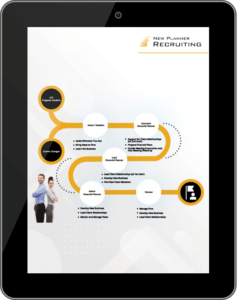 Download your free copy of the New Planner Career Roadmap! In this roadmap, you'll be guided through the details of various stages of your financial planner career, including position descriptions, licensing, skill and experience level requirements, and compensation ranges.
Get the Full Episode Transcript:

Read the Transcript Below:
Welcome to the New Planner Podcast, where it's all about helping you successfully enter the financial planning profession and accelerate your financial planning career. This podcast will help you understand the profession, become familiar with the various career paths available to you, and avoid the mistakes that limit your success. Join your host, Caleb Brown, to explore the human side of creating a successful planning career through interviews, personal experience, and insights from the trenches. Let's get started.
Caleb Brown: Welcome to 265th episode of the New Planner Podcast. This is Caleb Brown, your host. My guest today is David Tenerelli, who is a financial advisor at Values Added Financial. David joins the show today to share how you transitioned from a middle school band director to a financial planner. David talked about discovering his passion for personal finance early on, but how he was hesitant to consider it a viable career for him due to his aversion of sales and the product-pushing persona commonly associated with the financial planning profession.
He goes on to share how he warmed to the idea of becoming a CFP and pursuing a career as a financial planner, how he secured his first position, developed his skills, moved up in the company, and why he left a firm after 10 years for a new firm and didn't start his own firm. I hope you enjoy this episode with David Tenerelli.
Hi, David. Welcome to the New Planner podcast.
David Tenerelli: Hey, Caleb, it's great to be here. Thanks for the opportunity.
Caleb Brown: Absolutely. This is gonna be so fun. I'm looking forward to this. School teacher turned financial planner. Okay, so that's the story. So we're gonna walk, we're gonna backtrack on how we got there.
So, just, I mean, start us out. I mean, how you were a school teacher and maybe just start there and then we can move into how you got interested in financial planning.
David Tenerelli: Yeah, totally. Yeah. So I started my career right out of undergrad as a music educator, actually. I was a middle school band director for nine years at a public middle school.
Oh, God bless you.
David Tenerelli: Thank you.
Caleb Brown: Oh, man. Thank you so much for that.
David Tenerelli: Yeah. Yeah. It was a great career, a great job. I loved a lot of things about it, and I still miss a lot of things about it, honestly. But yeah, like I moved to Texas, grew up in Michigan, moved to Texas. Because Texas is like a really awesome place to be a music teacher, actually.
It's like really well supported. There's a great music ed lobby, I guess, in Austin that makes sure that there are the resources there to have just really high-achieving, high-performing bands and like having really good experiences for kids. So at least historically that's been the case and I hope it continues to be because I'm still a Texas resident now.
And hopefully, my kids will be able to have a similar experience, but yeah, it's like a great career. It's super rewarding. Played lots of fun concerts and cool places, and just the day-to-day with the kids, like making music, being around music, engaging with kids through like just the collective accomplishment, I guess, of playing music together and just feeling the joy of like working hard on something and then doing it really well, and that's really special.
So yeah, it was a great career, but as I was doing that work, probably three-ish years into that career, I started, there were sort of two things that started happening in parallel. One is I discovered a real passion for personal finance and investing, which was triggered by a sort of random event, which I'll talk about.
And then also I was sort of exploring a possible shift into school counseling at the time. But yeah, like the random thing, so like, it's like 2010, 2011. I'm like three years into teaching and I got this weird letter in the mail, and the letter is from the Bureau of Labor Statistics, which is a 25-year-old, like you get a letter from something that looks really official. You're like, “Oh gosh, what did I do? Like, is this legit?” So yeah
Caleb Brown: IRS audit, something like that.
David Tenerelli: Yeah. Something like, who knows, right> So I'm like looking this up online. This letter, it says, “You've been selected for the Bureau of Labor Statistics, CPI interviews,” or something to that effect.
So I'm not sure, like this is brand new for me. Never heard of anything like this. So I'm just looking this up. “Is this legit? What's involved?” I think I actually stumbled across the Bogleheads forum at that time, which was actually kind of a fun coincidence, but yeah, what it essentially was is that there was a Bureau of Labor Statistics representative, visited my apartment every few months to collect data about my spending, like, yeah, so I mean random guy comes into my apartment with a briefcase and a computer. We sit at my little kitchen table, in my little apartment, and he records information about what I spent over the last however many months.
Caleb Brown: Didn't ask you for account numbers, though, right?
David Tenerelli: Right. Yeah. It was all, yeah, it was all on the up and up.
It's a, I think they still do it this way, actually. This is one of the ways that they still collect data is by doing in-person interviews, or maybe it's Zoom, I don't know. But yeah, so I did that a few times every few months, which meant that because of that I had to start tracking my spending. I had no idea. I was early twenties, like I had money in the bank from having a job, more money than I had ever seen before as a college student and before that.
So yeah, I had to figure out what do I do? How do I track my spending in a way that's reliable? 'Cause I figured if I'm gonna do this, I might as well do it right. And so I discovered like this whole world of online personal finance blogs and like the Bogleheads and all that. And so yeah, I stumbled upon mint.com, started getting really into just figuring out personal finances for my own sake, which is sort of a–
Caleb Brown: Oh, I was just gonna say for all those people out there saying, “Hey, the government's not good for anything.” It got you into the profession.
David Tenerelli: Indeed.
Caleb Brown: Like this is amazing. A letter from the BLS gets you in the profession. What a story. Wow. All right. I interrupted you. I just, I couldn't hold that in. Go ahead.
David Tenerelli: Right. Yeah, so I'm learning all about personal finance, learning about investing especially, probably started with all the normal places that can sort of be a little bit adverse as you get too deep into it, but yeah, it was a really interesting new path. Started reading like Mr. Money Mustache, which was a big blog at the time, and that really kind of resonated with how I was brought up, frugal living, spending on things that matter.
So I was all in like money content, personal finance content was all I read for like a year, maybe longer, like books and blogs and podcasts and news and everything. And I started asking myself like, “Can I turn this new passion into a career somehow?” Like, what does that look like? And so I started learning about financial advisor career paths and honestly was really turned off by what I found because I did not discover the fee-only independent RIA model until at least a couple years later.
But I did eventually discover that, discover that the CFP was a thing, probably through the public awareness campaigns that they did at the time. So yeah, if anyone is ever complaining about their CFP renewal premiums, then yeah, CFP Public Awareness campaign. It works. It made me aware of the CFP as a possibility.
Caleb Brown: I was gonna say, yeah, from the consumers, but also that, like, in your case, the career development, like letting people like, “Oh, I didn't realize this.” So, and maybe just expand. I think I know what you're gonna say, but when you were initially reviewing this and you said you were turned off, I mean, what were you seeing that made you turned off to the profession?
David Tenerelli: Right. Yeah. Like, I didn't wanna sell annuities. I knew I didn't wanna work at a wirehouse. It wasn't for me, especially not doing that for my natural market, which was teachers. For me, those products didn't feel like a right fit. And so I wouldn't feel good being involved in that, selling those to other teachers or other folks in similar situations.
So, there's a place for those kinds of things, of course, and there are people where that is a great fit, but for me, it just wasn't right. So yeah, I kind of decided to just let it simmer and just focus on my own situation for the time being, which was fine, like my teaching career was going well. I started to figure out some things like bands were playing pretty well.
I got promoted, which brought some new challenges and some new rewards. So it was working for me, but at the same time, yeah, that kind of leads into the other thing that I mentioned, the sort of the other factor, which was the counseling thing. So yeah, after teaching for several years, I started to just reflecting and realizing that the best part of the job for me was like the relationships with the kids and the families, especially as a band director.
Like we see, I taught the same kids for three years and then when their siblings come through the band program, I get to teach them too. And so you really develop relationships with the families over time and there's a community element to it for sure. So yeah, I mean, I love making music. That was great.
But at 30 years old, being a band director, especially in Texas, there's a certain commitment to 10-ish hour workdays plus a lot of weekends, plus a lot of evenings, plus an increasingly big chunk of summer break, vacation. And so that wasn't working for me quite as well as it did when I was 23. Someone who aspired to eventually have a family and like, how am I possibly gonna do this job well at the level of commitment that I'm at right now?
And also be able to, yeah, so I would say at that point I'm wondering to myself, like how can I continue to lean into my favorite part of the job, which was like nurturing relationships with the kids and with families, but doing it in a way that felt sustainable for someone like me who wanted to like see my kids when I did have kids eventually.
And so yeah, I was exploring a shift into school counseling and did some shadowing, some informational interviews. I actually started a master's degree in counseling with a little bit of free time that I had in the evenings, and I got one course into that coursework. I really loved the content. I really love the opportunity to do research, like as a nerdy new passion that I found that was not something that I knew was gonna resonate with me as much as it did.
But that was really great. And the first course, actually, it wasn't focused on school counseling. School counseling is its own thing for sure, but there's like introductory sort of survey course that I took as my first course, which was like an introduction to clinical mental health counseling, all about the various modalities that counselors and therapists have used.
And it was really interesting. I was pretty sure pretty early on that I didn't want to do clinical mental health work, but I was sort of really interested in the coaching element sort of goes along with that. And so while this is going on, I'm still nerding out about personal finance stuff just for my own situation, right?
And then I stumbled across the work of George Kinder and Dick Wagner and financial planning, financial life planning more generally and the fee-only independent RIA model. And so at this point, okay, I've got this passion for the counseling slash coaching thing. I'm starting to realize that there is possibly a path for me to do the kind of personal finance and investment management work that I didn't realize was even out there before.
And yeah, I finally saw how I might combine the passion for personal finance with the elements of counseling and coaching. And it was a light bulb moment. Like I realized that there are advisors out there who don't have to sell products, they don't have to work on commission. They're doing life planning along with financial planning.
Sign me up, right? And so at that point, I dropped the counseling coursework and I shifted towards transitioning to financial planning. So that was a lot.
Caleb Brown: That's amazing. Yeah. Thanks for sharing all that. And then you started pursuing the CFP, or did you get hired and then pursue the CFP?
David Tenerelli: Right. Yeah. So, transitioning into financial planning. At that point, I'm still teaching. I have no idea how I'm gonna get my foot in the door and start this, but I did figure that education was gonna be a really critical part of that mix, right? And so yeah, I started the CFP coursework doing sort of an asynchronous program through University of Georgia.
I knew that was one of the top financial planning degree programs. So, yeah, coming in with no experience or other education, I figured like some brand prestige probably couldn't hurt. So I did the Georgia CFP coursework. I also found, got into industry reading. kitces.com was several years in at that point.
This is like 20, late 2015, 2016. So yeah, Kitces, XYPN podcast had started up, and so I'm learning about not only planning and like technical things, but also about the business and the industry. And so yeah, I'm doing that for several months and I decided I should probably try to find an internship. I should find a way to get some experience because education by itself is probably not gonna help me launch in the way that I want to if I were to leave teaching.
And I didn't really know how to find an internship, but I knew that CFP board had like a career center website with job postings. And I just happened to stumble on a post for an internship role at a firm that was local to me, which it just so happened to check like all the boxes.
It was fee-only, independent, planners were CFPs. They had a really strong focus on life planning. It was a small company, which was really appealing to me, and so I applied, like I applied, I talked to the founder, set up an interview, and which ended up being like a couple hours long, which seemed like a good sign. And yeah, sure enough, they offered me sort of a unique internship opportunity 'cause I was still teaching at the time.
Caleb Brown: Got it. Yeah, I was gonna ask about that, like, how did you work this? Because there's other people that are trying to do this as well. So we're hanging at the edge of our seat here.
David Tenerelli: Yeah. So the way we structured it, because yeah, I was still teaching. I mean, it's a full-time job and then some. So what I did, I went to the office a few times a week in the evenings after school. And I also did some full days at the office on school holidays. School holidays tend to be more frequent, I think, than, yeah.
So did some of that. And the advisors, they arranged their schedule so that they would be there when I was also there. So it was a real investment on their part to commit to this internship. And yeah, I mean, I just learned as much as I could. I did some shadowing, worked on some projects, a lot of help with like meeting notes.
This is before AI note taker stuff started picking up. And did a lot of sort of client-related tasks and technical work, but not client-facing at that point, right? And so I did that for a semester, and that actually ended up being my final semester of teaching because the internship turned into a full-time associate planner role.
They made that offer. And yeah, I just think, I mean, I think they saw the initiative that I was taking and my passion for the field. And even though I had no experience besides whatever they gave me and sort of a weird resume for a financial planner, they were still willing to take kind of a big risk on me.
And I was really motivated to make that risk payoff, because it felt like a really great fit. Like it was obviously, they obviously cared deeply about their clients. They were really intentional; it seemed about building a firm with just the right clients. Like my first evening with the internship was like a three and a half hour session where the founder just walked me through, “Okay, here's our clients and here's their stories.”
And yeah, it just showed, it's kind of in the level of service they provided. So it was a real win-win. I got to dip my toe in the water to see if I really wanted to leave my stable career with a pension to do something pretty radically different. And then the firm, they got to have sort of a trial run with a potential future employee.
I think I contributed a little bit in terms of like intern level tasks, which freed up some of their time. But also, obviously, it's a big commitment to bring on an intern too. So there's a trade-off there.
Caleb Brown: And it seems like it was a good fit 'cause you were there for like seven years or something. Is that right? You were there quite a while.
David Tenerelli: Yeah. Seven and a half, almost eight years if you include the internship.
Caleb Brown: And you, I wanna come back to that, but you keep saying like, “Hey, it was a stretch,” and like, complete. Like, I don't, I mean, like, that's what you do a lot as a financial planner. You're teaching people, I mean, that, like, I'm looking at your resume, like, “This is great.” Whenever I get people that have been from the teaching field, because this is what you're gonna be doing. Maybe the concepts and the curriculum's a little different, but, and maybe the stakes are a little higher, but a lot of similarities.
So it was a good fit. You already talked about that. Just talk briefly about how you worked up the career ladder and then why you left.
David Tenerelli: Yeah. Yeah. So I started, so started as an associate advisor. Well, I should say like, yeah, so that last semester that I was teaching, like I'm also doing my Capstone coursework for the CFP, studying for the exam, got married.
There was a lot going on, but it was a super like exciting time for sure, because yeah, there's this new trajectory. And so yeah, after I passed the exam, was my first day and started as an associate planner. Took a year or so probably, to just work, learn the clients, learn the business.
The founder was really intentional about helping employees just be encouraged to think like an owner, which was a really, I think, important part of my development early on especially, was to sort of be thrown in but also be supported. So, yeah, there was like just learning on the job for probably that first year.
And then I figured at that point, okay, I've been doing this for a little while, my only education here in this field is the CFP coursework, which was great. But like there's much more out there, especially around the internal dimension of money, right? Like talking with clients about their relationship with money and everything that goes along with that.
And so I had, this is where the counseling thing started to, I had more of an itch around that. And so I learned that there's this whole thing called financial therapy, which was sort of a burgeoning field 15-ish years ago, but now has really developed. There's a body of knowledge that is just really impressive and they're doing really important work.
So I was like, “Yeah, I'm all in on this. Let's see what this is about.” So I did the Kansas State Master's Program, which has a financial therapy certificate, like embedded in it. And that was right up my alley. It was a great program, both technically at the master's level for financial planning, but also learning about money scripts and life coaching and everything else that goes along with that.
So that was the way that I bolstered some of my credibility, I think, in the eyes of clients and just learned a lot and have been applying that knowledge ever since.
Caleb Brown: And then did–you worked up after the associate plan, you worked up the lead planner role and how long were you in that position before you moved on?
David Tenerelli: Yeah, so I was about two years, maybe two and a half in the associate role or in the CFP designation or the certification after the experience requirement, which was like, yeah, two years later. And from there, I was promoted to a lead planner role, or I think the title was actually financial planner rather than associate financial planner.
'Cause it was truly an ensemble practice. Every client was a client of the firm rather than a client of a particular planner. And yeah, so, I shared that title along with another planner who was also a CPA, super talented planner. Learned a lot from him as well.
Caleb Brown: Great. It sounds like the mentorship, there was a lot of mentorship and thought put in to sort of the development and training, which is, it can be lacking sometimes, so that was good. So I mean, it sounded like a great firm. Why'd you leave?
David Tenerelli: Yeah, it was a great firm and it still is and I learned a lot and over time I started to recognize that my sort of ultimate self-actualization as a financial planner, a necessary ingredient of that is being able to do values aligned work, so personal values aligned work, which I was able to do some of for sure at the prior firm.
But I knew that I wanted to do particularly SRI, socially responsible investing or sustainable responsible and impact investing, as well as doing some like off Wall Street kind of investing, which was really interesting and rewarding to me. And I had been, I had connected with a firm that does just that and who needed someone to take the lead on their impact investment program, and that turned into the next right step for me.
Caleb Brown: And you've been at that firm for, when this airs, about what, a year or so?
David Tenerelli: Right, I started January of ‘25.
Caleb Brown: Okay. Yeah, so, okay, gotcha. So, okay. And did you go to more of an investment role, or are you still doing the planning, but that the investment, the SRI stuff's just a bigger piece?
David Tenerelli: The SRI stuff is definitely a bigger piece. Yeah.
Caleb Brown: Okay. Well, how's it going? I mean, how's the fit so far?
David Tenerelli: It's phenomenal. Yeah. Similar to the last firm, it's a really caring group of colleagues, sort of the internal orientation is care for each other, care for our clients, care for the world, which really resonated with me and is a really encapsulation of how the firm is structured and run.
Caleb Brown: As you look back on your, I mean, was this the right move to get out of teaching, to do the financial planning stuff or do you ever have days you're like, “Man, I really wish I was chasing all those middle schoolers around, trying to herd them up and find their clarinet, their reeds and their flutes and…” Like, I mean, what do you think? Little tongue in cheek, but what do you think?
David Tenerelli: It absolutely has been the right move. Yeah, like I said, I mean, had this not all happened in sort of a serendipitous way, I mean, I would've had a very long and rewarding teaching career without a doubt. But I'm so glad that it's turned out the way it has.
Caleb Brown: You talked a little bit about developing credibility and bolstering the common, I mean, but how, I mean, here you are as a teacher dealing with all these middle school kids. You're essentially, now I know you came in as an associate planner, but you're taking someone's life in your hands. Like that's a lot of responsibility on the financial planning side. How did you get up to speed and get the confidence going there?
David Tenerelli: So I love working with a team. I know that is absolutely the right model for me to be able to have teammates with complementary skills and areas of interest and mastery of content. To know that I can lean on them and they can lean on me in other ways is not only great for clients, but also a really just rewarding way to–a way of being at work, right? To have that sort of communal and collective approach to serving clients. And I think that was a really important piece for me as I, especially as I was starting to learn the business and learn the technical elements of what we do and the internal money conversations that we have with clients.
Just having that team approach really helped me find my voice, I guess. Yeah, to find my voice as a planner in the same way that a writer finds their voice over time, that a musician finds their voice as an artist, as a, yeah. Like it's something that's always evolving and is always being iterated on and is always just becoming more actualized. But I think that was a really important part of it.
Caleb Brown: Did you ever think about just starting your own firm and not joining this other company?
David Tenerelli: I didn't. I knew that I wanted to, yeah, I knew for me that, if I was gonna take this leap from a really stable career, that the way for me to do it was to start as an employee, start with someone who had experience who was gonna be a great mentor.
Yeah. Like that was definitely the right path for me. And I was listening to XYPN podcast at the time, where they're interviewing all these folks who started their own firms, working with exactly the kind of people that they wanna work with and all that. And that's great. But yeah, for me, it just wasn't the right approach.
Caleb Brown: I've said this lots of times before, it's okay to not start your own firm. I mean, like very few people say that. It's okay not to have your own firm. Okay. So final tips for new planners or the New Planner audience, what do you have for us?
David Tenerelli: Yeah. If you have discovered, I would say if you've discovered a passion for financial planning for investments, for the inner dimension of money and doing that kind of work, I say go for it. Find yourself a cheerleader and or be your own best cheerleader and make it so, like finding the ways to get the education that you need, seeking out mentors who will be supportive, which so many people in this industry are. Like, reach out to someone at a firm near you and I bet, asking for an informational interview, I bet you're gonna get a lot of yeses because people in this profession really care and I think it's well worth it.
Caleb Brown: Hey, David, as we're about, I don't usually do this, but I'm gonna put you on the spot. Rapid fire. So, hardest instrument to play. What is it?
David Tenerelli: Hardest instrument to play well is the saxophone, although it's the easiest instrument to play to pick up and make a sound.
Caleb Brown: Okay. Got it. 'Cause I just as, the worst possible clarinet player you've ever heard. Like, I'm just like, that was a challenge for me. So I've been dying to ask you that. Thanks for coming on the show, David.
David Tenerelli: Thank you, Caleb. It's been great.
Thanks for joining us for this episode of the New Planner Podcast. If you are ready to discover the top career paths for financial planners and see which track is best for you, we created a free guide to help you. Grab your copy of the Financial Planner Career Roadmap at newplannerrecruiting.com/roadmap. There, you'll also find more tools and resources all created to help you build a successful financial planning career. Tune back in next week for another episode, and until then, we are here to help you succeed.
Share the Love:
If you like the New Planner Podcast...
Never miss an episode by subscribing via Apple Podcasts, Spotify, Amazon Music, YouTube Music, or by RSS!



Leave a Reply