Travis Hibbard is a financial advisor at Fiduciary Financial Advisors, and he joins the show to share his transition from engineer to financial advisor after 18 years in a large manufacturing company. If you're interested in making a mid-career transition, leveraging financial independence to create flexibility, or understanding the real-world decisions involved in starting a firm, this episode is for you.
Listen in as Travis shares how guidance from his mother, a financial planner, set him on a path toward financial independence and made his transition into the profession smoother. He also walks through the key decisions involved in launching his own firm—including choosing the right channel and operating structure—along with the pros and cons of his setup, how he found clients, and key lessons he learned along the way.
What You'll Learn In Today's Episode:
- How Travis’s early career and exposure to financial planning shaped his journey. (1:45)
- How he balanced a corporate career while preparing for a move into financial planning. (6:00)
- His process for evaluating and choosing the right financial planning channel. (9:15)
- How he balanced career and family during his transition. (13:00)
- How he nurtured his mindset to leave his high-paying corporate job. (21:20)
- Operational and compliance considerations when launching a firm. (23:30)
- Advice for aspiring financial planners. (25:20)
Ideas Worth Sharing:
“If you save half your income and live off the rest, the problem solves itself.” - Travis Hibbard Share on X “If you're passionate about the topic and you're passionate about helping people, I think it's a slam dunk, because of the flexibility you can get in this profession.” - Travis Hibbard Share on X “Find something you're passionate about. Life's too short. Go make it happen.” - Travis Hibbard Share on XResources In Today's Episode:
- Travis Hibbard: LinkedIn
- Fiduciary Financial Advisors: Meet Travis Hibbard
- Achievable
- Finding your Path: The Roadmap from Student to Successful Financial Planner by Caleb Brown
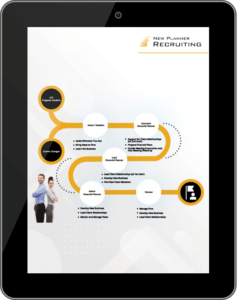 Download your free copy of the New Planner Career Roadmap! In this roadmap, you'll be guided through the details of various stages of your financial planner career, including position descriptions, licensing, skill and experience level requirements, and compensation ranges.
Get the Full Episode Transcript:

Read the Transcript Below:
Welcome to the New Planner Podcast, where it's all about helping you successfully enter the financial planning profession and accelerate your financial planning career. This podcast will help you understand the profession, become familiar with the various career paths available to you, and avoid the mistakes that limit your success. Join your host, Caleb Brown, to explore the human side of creating a successful planning career through interviews, personal experience, and insights from the trenches. Let's get started.
Caleb Brown: Welcome to the 263rd episode of the New Planner Podcast. This is Caleb Brown, your host. My guest today is Travis Hibbard, who is a financial advisor at Fiduciary Financial Advisors. Travis joins the show today to share his transition from engineer to financial advisor after 18 years in a large manufacturing company. He talks about how advice from his mother, who is a financial planner, put him on a path to becoming financially independent and how that eased his transition.
Check out the middle part too, where he shares how he worked through the many decisions that come with launching a firm, including what channel and operating structure, the pros and cons of his structure, how he got his clients, and some of his mistakes along the way. Stay tuned to the end for insight on what to consider when making a career change. I hope you enjoy this episode with Travis Hibbard.
Hey, Travis, welcome to the New Planner podcast.
Travis Hibbard: Hey, Caleb. How you doing?
Caleb Brown: I'm doing really good. I'm very excited to talk to you and our listeners, I think, are gonna really enjoy this because you're our first, I think, retired or partly retired guest that we've had on here, and we're gonna get to what that means, but we were talking off the air and we're sort of chuckling about that. But I want to start at the beginning and then get to sort of the retirement piece and sort of the second career for you. But maybe just talk to us about how you got started, 'cause this was a pretty big career pivot for you, so maybe just start at the top.
Travis Hibbard: Yeah. Yeah. So I went to school for engineering, so it's super technical background, kind of progressed through a manufacturing operations career, so doing some engineering work, grew up eventually into leadership roles and ended up being in like a large operations leadership position.
Alongside that career, I was a technical background person, but my mom actually worked in personal finance, so she worked at one of the big wirehouses out there. You turned 23, 24 with the big paycheck after working as a lifeguard in college or whatever. And she says, “Give me half your income and you can do whatever you want with the rest.”
And early on in my career, it's my mom. She's trying to look out for me. I did exactly what she said. I didn't know that would eventually lead to more freedom later in my life. So I was touched from a financial planning perspective very early on, thanks to her guidance and yeah, so hilarious how that plays out.
So she ended up retiring. The person that took over for her business, I didn't really trust. And so I was probably seven, eight years out from where I currently am. Got really interested in personal finance, what you can get back with flexibility in your time and kind of got in the weeds on every personal finance topic I could get my hands on.
And so I spent the last eight years trying to figure out how to create financial independence for my family, and as many people moving into the financial planning profession will find out, finance is one element of your life, and a big part of it is trying to find out what are the parts of your day that you really enjoy and you can find passion in.
And so it's, if you say work is optional, it's great. I could wake up every day and watch Netflix for eight hours, but you're not gonna have a super fulfilling life, right? And so I, I spent the last call it like three or four years pursuing, call them mental health activities, financial health activities, and physical health activities.
And how did I create a situation where if I leave my corporate role, what keeps my brain turning on a day-to-day basis? What keeps me excited about helping other people, 'cause that was a big passion in my corporate role. And that's how I, my wife actually was like, “Well, you love personal finance and you really like helping other people. Why don't you just, why don't you do a planning thing on the side?”
And so that kind of was the spark that got me researching what options were out there. And big kudos to you, The New Planner podcast was a part of, like trying to learn what's out there, what options exist. So I had your podcast and a few others, and I also had my mom's experience at a big wirehouse to give me kind of her flavor of, some of the training programs and some of the, you don't wanna say cold calling, but some of those strategies that don't necessarily fit in with what I was looking for from a relationship based kind of planning approach. So, yeah.
Caleb Brown: Wow, a lot to unpack there. And thanks for the mention, like, that's really cool, full start, 'cause you just reached out to me and said, “Hey Caleb, I'm just interested in coming on the show. I listened to this and helped me and wanna check in.” And here we are. And I just wanna go back to something you said earlier. Did you say you've been saving half a year income ever since you were 23 years old?
Travis Hibbard: Yeah. Yeah.
Caleb Brown: That's amazing. Congratulations.
Travis Hibbard: Yeah. I was just, but you know, you don't know. And so like you think about like young kids and people that are coming out of school, it's like if you save half your income and live off the rest, the problem solves itself.
Caleb Brown: You can be in good shape.
Travis Hibbard: Yeah. The problem solves itself. My mom was like, yeah, it was in hindsight, she always jokes to me about that being the best decision I ever made. And it definitely was other than picking my wife, of course.
Caleb Brown: Yeah. Okay. So you were in a leadership manufacturing company for, was like 20 years or something, or what?
Travis Hibbard: 18 years. Yeah. 18.
Caleb Brown: Okay. 18 years. And then your wife suggested starting on the–now, did you start something on the side, or did you do a cold turkey break? “I'm gonna break off from corporate and go start my own thing.”
Travis Hibbard: Yeah, good question. So I'm a walk before I run kind of person, and so while I was working in corporate, I started doing a ton of research on, should I do full blown my own business and go XYPN? Should I work at a wirehouse and go through like a training program, or should I look at other options that are out there? And so I was able to start up basically at night, so I studied for the Series 65, just to make sure that it was something I enjoyed. And then, yeah, worked for about 14 months in the role, finding clients, onboarding clients, doing planning, doing investment management stuff prior to giving my notice at my corporate role.
So, about just shy of a year and a half, I was doing both one at night and corporate during the day just to make sure it was something that I was really gonna enjoy, the time with. And so, yeah, after that year, I gave the announcement, part-time planner, part-time super dad, just honestly living the dream that I had hoped it would be.
Caleb Brown: Now, did your spouse work outside the home as well? Was there another source of income, or was this it?
Travis Hibbard: She was also working out of the home, but she's also planning on leaving her corporate role here in the next year. So she's now in the same process I was. So, you're gonna leave a 45-hour a week gig, you know what you're passionate about, you know what you love about your day-to-day life.
How do you reincorporate that on a 20 to 30-hour basis a week instead of a 40 to 50-hour week? So we're exploring that with her right now to try and find a passion project or passion career that she can pursue.
Caleb Brown: And then that helps a little bit. You had a little bit of a runway, right? You still had your corporate stuff coming in. You had a little bit of stuff from her. You were building, it sounds like you, it was for a year and a half or so, you were building up. Were you able to get some traction and get some clients to sign up during that period?
Travis Hibbard: Yeah, so I've actually, like, I've always been perceived as the finance nerd at work, and so you get a lot of people that are like, “Oh, there's a finance question about the 401k or HSA investing or whatever. Go talk to Travis.” And so, you organically end up with this like, this group of people that ask you questions. And so, once I announced kind of candidly to a couple folks that I was doing it, I think by the end of, by the time I left my corporate role, I had 18 clients.
Caleb Brown: Wow. Okay.
Travis Hibbard: Yeah. So, and I was planning on not a ton of income from this. It's like a balance of spending 20 hours a week helping people and not necessarily, “I gotta drive growth and find income in whatever way possible.” So in the 12 months that I started on the side, I had already exceeded what I ever expected to get an income from doing this profession.
So it more than achieved my income, I guess expectations early on, which was mind-blowing to me actually
Caleb Brown: be, because this is truly a work as optional situation it sounds like. Like you didn't need to do this financially, 'cause all those good decisions and the sacrifices you made for those, all those years.
Travis Hibbard: Yeah. It's all about purpose for me. Yeah. It's all about purpose.
Caleb Brown: Wow. Okay. So, go ahead.
Travis Hibbard: Yeah, so it's how do I craft a week where 20 hours, 15 to 20 hours, is financial planning, helping people achieve their own personal financial goals? Part-time super dad, they're in school now, and then call it physical and mental health stuff. I'm a big athlete. Love endurance racing, endurance, running, things like that. So trying to find a balance of all of it.
Caleb Brown: Let's go back to the channel selection, if you would. So there's kind of, I mean, you kind of got XYPN, and some other places where you just start your own firm and then you've got wirehouse, you've got insurance, there's lots of different channels, but you chose to join an existing firm and then be an advisor under, just walk us through. We have some people that aren't familiar with that setup.
Travis Hibbard: Yeah. So, yeah, you think of like the two main options. And what I had considered early on was you join a big wirehouse, you become an employee, you're salaried for a while.
It's a bunch of cold calling, but really good training program, right? So like really good foundation, really good onboarding and training. And then you have the XYPN route, which is your solo. There's a lot of infrastructure and compliance and things on your shoulders, and I'm a very, very good self-starter with things.
But from a risk perspective and making sure you don't make mistakes with clients' money, that felt a little too risky for me. Throughout all my research, I ended up finding kind of this middle ground where you can work for a firm but still be self-employed, kind of as a self-employed 1099 employee through that firm.
And so you get paid out on a grid, and the grid is much better than you'd find at a wirehouse, but there's other advisors that are there to help support and mentor you. And then by being an employee or a subcontractor with that company, they handle most of the operations and compliance stuff. And so I'm not opening new accounts, I'm not doing the ongoing compliance requirements.
They obviously send me updates and trading, authorization things that I need to approve and certify, but they handle most of the administrative stuff that I can focus on. Call it investment management, financial planning, all that stuff that I really am passionate about. And so, because I was so focused on the parts of the job that I really enjoyed, you know, I could always pursue an XYPN route later if I want complete ownership and customization. But the fee schedules on a lot of these companies are very modest and reasonable. And so I'm able to outsource the parts of the job that I don't either feel comfortable with or wanna spend my time on. And then I can spend most of my time in meetings with people or doing investment management stuff with people that I'm really excited about.
Caleb Brown: I know you said it's based on a grid, but just, I mean, like what is the approximate split? I mean, it's like for our newer listeners, maybe like what are you having to give up to have kind of a home office handle all this for you?
Travis Hibbard: Yeah, so I'm not allowed to talk about our specific grid, but I did a lot of research and it's from like anywhere from 25% to 40%.
Caleb Brown: Okay. Alright. Yeah, I mean that sounds about right. It's kind of a rule of thumb industry-wide.
Travis Hibbard: Yeah, it's a 25% to 40% and there's a, I found four or five different firms that had kind of this option or this structure out there. I ended up going with one that was a super good cultural fit.
They allowed me to meet a few of the advisors before joining the team. Joined a couple calls that they were on before the team, so they’re so extremely supportive that it, it made it a very easy decision on who to go with, but nice to have the option later. So one thing that I thought that was also really important to me, Caleb, is I don't want to be told how to handle my clients.
Like I don't want to be putting them in certain products or being forced to have them buy annuities or have the clients not be my own. And so many of these firms, they don't care how you manage your clients. They have expectations on fee schedules and things like that, so you aren't not meeting the fiduciary code.
But these clients are mine forever. So if the firm for some reason changes their values and I no longer agree with how they support treating clients, I'm free to at any point leave and go find another firm or go through XYPN. So there's really very little downside if you're starting out because you get kind of a mentor-mentee relationship. There's mastermind groups and a lot of operation support. So you get a really good foundation without needing to take all of it on for yourself.
Caleb Brown: And then just at the end of the year, instead of getting a W2, you're, or it's a 1099, they issue you. And that's what you're–okay, all right. Yeah. I mean, that's pretty simple setup, right? And sometimes people just don't know that's out there. I mean, just kind of bolting onto an existing firm and, but it sounds like you can–can you use the software that you want and take and have as many meetings as you want and the planning and charge what you want? Or is that, are there guidelines?
Travis Hibbard: Yes. Yeah, so they have like a, call it like a base architecture of software they provide, but they've been so open to pursuing new things. Like you could pick Schwab as a custodian. Fidelity as a custodian. Altruistic as a custodian. We do have a standard planning software with RightCapital, which is one of the big options that's out there. But that's one thing that's really fun about being with this company. There's a lot of, I would say, entrepreneurial spirit because we're all coming from different backgrounds and so the firm's very open to considering different technologies or approaches and we basically just all kind of talk about it as a group and see if there's shared interest, which makes it really fun.
Caleb Brown: How was that? Let's just go back because I mean, some people, they're not able to work on it for a year or two. They have to have kind of a clean break. So maybe just, I mean, how was that sort of managing two jobs and a family and a working spouse all at once?
Travis Hibbard: Yeah. I mean, I wouldn't say it was an easy time in my life or in our relationship.
My wife and I both have postgraduate degrees, where we went back for four years of secondary education at night. So we did like evening school. I do think, you know, I did mine before we had our kids. And so I think it's just a very difficult thing to be able to make sure that you're on the same page before you commit to something like this.
So my wife and I are both, I don't wanna say type A, but very goal-oriented people. And so we spent a lot of time talking about what this could mean and why it's important to try it before going into it. If you needed to hit a certain income replacement, I think there's definitely a level of commitment that you're doing late nights.
For me, my number one job is dad and husband, and so most of my side gig stuff was after the kids went to bed, and so I'm up eight to 11 working on certain handouts and stuff that I'm trying to develop for new clients and watching every RightCapital, tutorial you can to try and make sure I understand how to set up an S corp and Right Capital.
There's just so much to a new job. If you're excited about it, I think the time comes easy. You want to turn on your computer, you wanna dig into the details and try and learn some of the new tech and some of the new parts of the job. But at the end of the day, if you can't sustain a family and a relationship through that, it's not worth it anyway.
So I think, you know, every relationship's different, but if you can understand where it's gonna get you from a freedom and flexibility perspective, it's an easy discussion in the long run if you are on the same page with your partner about what that means.
'Cause now that I'm not in corporate, the work-life flexibility that I have in this career, in this profession, is unparalleled to my seven-to-four corporate role that many times needed me in the evenings, whether I liked it or not. So it just comes down to having a good plan and thought through, you know, who your potential clients could be, who you think would be somebody that would wanna work with you, and then ultimately, yeah, there's gonna be a leap of faith at some point.
But I think for me, being able to step into it in the evenings really made my comfort level high enough to know it's like, “No, I enjoy this and I see potential for growth beyond where I'm currently at if that's what I decide to do later.”
Caleb Brown: And I guess just, and I've debated this before with Kitces and Alan Moore and some other people too, but I guess the downside, like if you don't make the clean break, it's just, and especially you have a spousal income coming in, it's like, “Oh, you never really, your back's not against the wall. Are you ever gonna jump off? You're gonna jump off the diving board.”
Travis Hibbard: Yeah. And for me, that's where I feel like if you're not passionate about it, don't do it.
Caleb Brown: Yeah.
Travis Hibbard: You need a self-employed profession like this where you're responsible for managing your own time, driving your own business, being excited about the work.
If you're not excited about it and you're doing it for income, don't choose this profession. You need to be excited about helping other people and helping other people in a finance space. And if you are, I think the ceiling is unlimited. But if you're chasing it for the dollars or for something that's not, more intrinsically motivated, it's a difficult thing. You need to make sure you're doing it for the right reasons, for sure.
Caleb Brown: Or at least the quick dollars, right? I mean, it's like, I was explaining to Georgia Tech students yesterday, like, “The funny thing about financial planning is you work really hard at the beginning of your career and you don't make very much, and at the end of your career you don't really work hard at all, and you make all this money.” I mean, it's like, it's just, and they're like, you could just see their mouths. Like what? Like, “Whoa. That's really cool.” Alright. In all seriousness, the clients, do you own, do you, is it only engineers? Is that all you go for? Or is it everybody?
Travis Hibbard: No. So I'm a generalist. I don't have a niche. I don't really, not to say I don't believe in it, but one thing I do love about this financial planning approach with this firm is they don't care how I charge. And so what that means is I can charge AUM and only get $2,000 a year from a low income, low net worth client, because I think financial planning should be available to everyone, and I can have a high limit fee where I don't want to charge over $8,000 per household because I feel like anything more than that is unfair and not required based on the work content.
And so for me, I wanna make financial planning accessible to everyone. And so if that means somebody wants a couple hour discussion to help with setting up a Roth IRA, or I wanna do one-time financial plans, or I wanna do ongoing management, I'm open to helping anyone, which is one thing I really love about this profession as well.
It's not about minimums to me, it's not about finding high net worth people on LinkedIn. It's about finding people that need help and figuring out the right way to help them in an efficient way so that they get a good value for the services that they're looking for. And so that, it's fun for me 'cause I get a ton of variety. It's not very efficient because everyone's situation is different.
Caleb Brown: That's right.
Travis Hibbard: That's kind of the engineer in me. I like digging into the details of people's backgrounds and it makes the profession, I think, more engaging because of the different types of experiences and situations you can end up in.
Caleb Brown: And do you have, I know you said like, “Look, I don't really need this. I don't need anything.” But do you, I mean, have you set goals for yourself, like number of new clients or I mean, any type of metrics or something?
Travis Hibbard: Yeah, I have a, I would say like a number of clients goal per year. It's not revenue based. I actually want to have based on segment. So if you said like an AUM segment, a one-time plan segment and an hourly segment, I'd like to have, I'm shooting for 10% growth in each of those segments because I wanna make sure I'm helping people in each segment of that instead of being revenue focused or something that's more about call it service goals than like top line revenue goals.
Caleb Brown: I have something similar and when I'm looking at bringing on clients, like for every person that's. It's for sustainability for me, right? So every person that's withdrawing their portfolio, I gotta bring on someone that's accumulating to try to cancel them out. So that's just sort of the internal game that I play with myself.
And a lot of times it works, but sometimes it's hard to stick to that. If someone comes along and it's like, uhh. You gotta have goals, metrics, or something. Because again, it goes back to sort of, we gonna just sort of. Just drift around and do whatever. I mean, it sounds like it's going really well, Travis.
And I mean, like, I mean, somebody signed, well, you said you work with everybody, so, and that you'd have different fee schedules, so I'm not gonna go there. But what other words of wisdom would you give to people that are looking at making the plunge and leaving this quote-unquote cushy, sort of high-paying corporate job where it's comfortable, they know what it is and jumping into this?
Travis Hibbard: Yeah. If you're passionate about personal finance and you're passionate about helping other people, I think the biggest challenge and thing that I think will be just be a lifelong part of this position is the ongoing learning. That's one thing I love about this is there's a never ending level of knowledge, whether it's estate planning, insurance, investments, that seems like there's, I've got a list of things that I need to go track down that's a mile long because I'm passionate about it.
If you're passionate about the topic and you're passionate about helping people, I think it's a slam dunk because of the flexibility you can get in this profession. And really there's no limit to what you can achieve as long as you're excited about the content and you're excited about helping people.
And so if those two things are really like rooted in why you're pursuing this, I think it's honestly one of the best professions you can pursue because you can help so many different types of people and make such a lasting impact on other people's lives.
Caleb Brown: And I'll be a little bit more direct and blunt, like it's a lot more rewarding than working in corporate America, where, oh my gosh, you don't like, see the fruits of your labor and someone's stock goes up quarter of a point and they get a bunch more options.
Like great, that's great if you want to do that, but it's, I'm in a little different seat than most people, so, because I see people from corporate America calling me all the time wanting to get them out of there. So I don't like–
Travis Hibbard: Yeah, being able to control your own destiny and make the decisions you need to, and seeing those rewards in a week or in two weeks, or the email you get back from a client that says, “I really understand the difference between Roth and pre-tax and a 401k now. Thank you so much for explaining.” That's like the least sexy thing to talk about to a lot of people. But for me, it's exciting to get some of these topics that people feel overwhelmed with and have them walk away being like, “Oh, I actually understand it now and let's go do it. That makes sense.” So yeah, it's just fun to make that big of a difference for people.
Caleb Brown: I know you had kind of a, I mean, just my word, not like kind of a mothership you bolted onto, but any mistakes or anything like, “I kind of had a real big challenge here, or hurdle here, or here's something I learned along the way.” I mean, 'cause you're still pretty early on in this.
Travis Hibbard: Yeah. Yeah. Two years in, very new. Mistakes that I made. I think early on. One mistake that I made is I just jumped to the custodian that everyone recommended. And so I didn't really have a ton of hands-on experience at that point, but like, “Oh, go with this custodian.”
I'm not gonna say it just because I don't want to cause problems, but after spending a little more time and having I would say more of a connection to how I want my job to work from a day-to-day perspective, getting more time in the custodians beforehand would've allowed me to have a better feel for the interface, the services that each of them provides and it would've been an easier start.
'Cause then, you know, I had call it three or four clients that I'd opened in one custodian, then I had to move them over to this other one once I figured it out. It was kind of a, I would say, not the best client experience and that was an early learning for me that I think I played out through the rest of my technology kind of selections or choices because I'm like, okay, I wanna get into this, I wanna get into this, understand a little bit more before I get people set up, because then I'm not gonna be moving people around or having to make a new plan or things like that.
So I love Altruistics. That's a huge, they're a huge help in my business and a real simple element to my business and I can't be happier that I ended with them. And they're not a super common name compared to the big names out there. So that's probably a mistake that I made.
Yeah, I think there's a lot of great test planning softwares out there. It's like studying for the 65. I use a software called Achievable. They're a super great platform for helping study for the 65, really intuitive interface that made it easy and all PC based, not book-based. So if you're going straight into the 65 with not a finance background, that software was a wonderful tool to help me pass the test first try, and it went great.
Caleb Brown: This is amazing, Travis, congrats on sort of your success just this early on and you really do have a passion to help these people and we love getting people from other professions and other careers into financial planning.
So this is awesome. We get to highlight this. Before we close out and any other final comments that you want to make?
Travis Hibbard: No, I'd say like whether you're pursuing financial planning or you're listening to this, trying to decide if it's the right thing for you, find something you're passionate about, whether it's planning or something else. Find something you're passionate about. Life's too short. Go make it happen.
Caleb Brown: Thanks so much for coming on the show, Travis.
Travis Hibbard: Appreciate it, Caleb.
Thanks for joining us for this episode of the New Planner Podcast. If you are ready to discover the top career paths for financial planners and see which track is best for you, we created a free guide to help you. Grab your copy of the Financial Planner Career Roadmap at newplannerrecruiting.com/roadmap. There, you'll also find more tools and resources all created to help you build a successful financial planning career. Tune back in next week for another episode, and until then, we are here to help you succeed.
Share the Love:
If you like the New Planner Podcast...
Never miss an episode by subscribing via Apple Podcasts, Spotify, Amazon Music, YouTube Music, or by RSS!



Leave a Reply