
Emily Koochel is the Manager of Financial Wellness at eMoney Advisor, and she joins the show to share how she found her way in the financial planning world. If you're interested in exploring non-linear career paths in financial planning, blending education and technology, or understanding how fintech is shaping the future of the profession, this episode is for you.
Listen in as Emily shares how she was drawn to financial planning for its blend of numbers and people, and how a mentor encouraged her to pursue a master’s degree before starting her career at a small firm. She also talks about becoming increasingly interested in the relational side of the profession, which led her to earn another degree and spend time teaching in a CFP program. You'll hear about her current role in fintech, where she helps firms scale through technology, and her thoughts on where fintech is headed next.
What You'll Learn In Today's Episode:
- Emily’s transition from academia into the fintech space. (2:50)
- Her role and responsibilities at eMoney Advisor. (7:30)
- The benefits of eMoney’s certification program for university students. (9:20)
- Different career paths and opportunities within fintech. (17:20)
- The value of starting a career in customer service roles. (19:00)
- Emily’s perspective on the future of fintech and financial planning. (21:45)
Ideas Worth Sharing:
“I found my way over to the financial planning school, found out that I really wanted to work with people, got in my first financial planning course and absolutely loved it.” - Emily Koochel Share on X “It was learning about the way that people were managing money, these dynamics that folks had, that I became especially curious about.” - Emily Koochel Share on X “My impact no longer looks like a one-on-one conversation. My impact looks at me being able to scale the information that I have through technology, through opportunities like this, and being able to speak about it.” - Emily Koocheln Share on XResources In Today's Episode:
- Emily Koochel: LinkedIn
- Finding your Path: The Roadmap from Student to Successful Financial Planner by Caleb Brown
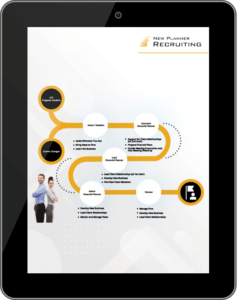 Download your free copy of the New Planner Career Roadmap! In this roadmap, you'll be guided through the details of various stages of your financial planner career, including position descriptions, licensing, skill and experience level requirements, and compensation ranges.
Get the Full Episode Transcript:

Read the Transcript Below:
Welcome to the New Planner Podcast, where it's all about helping you successfully enter the financial planning profession and accelerate your financial planning career. This podcast will help you understand the profession, become familiar with the various career paths available to you, and avoid the mistakes that limit your success. Join your host, Caleb Brown, to explore the human side of creating a successful planning career through interviews, personal experience, and insights from the trenches. Let's get started.
Caleb Brown: Welcome to the 262nd episode of the New Planner podcast. This is Caleb Brown, your host. My guest today is Emily Koochel, who's the manager of Financial Wellness at eMoney Advisor. Emily joins the show today to share how she found her way in the financial planning world. Emily shares how she went to school for financial planning because it combines working with numbers and people and how a mentor encouraged her to pursue her master's degree prior to working at a small firm.
She goes on to share how she became more interested in the relational side of the business, so she went back to school for another master's degree and also taught in a CFP program for a while. Stay tuned to the end to hear where Emily is now in her journey, working in FinTech, educating firms on how to scale through technology, and her thoughts on the future of the FinTech industry. I hope you enjoy this episode with Emily Koochel.
Hi, Emily. Welcome to the New Planner podcast.
Emily Koochel: Hi, Caleb. Thanks for having me.
Caleb Brown: Thank you so much for making the time to help us and then the New Planner community. And I just wanna start with how you have a little bit of a different path and again, that's why we wanted to have you on and highlight the story. So if you would just start out with how you got interested in financial planning.
Emily Koochel: Yeah, of course. So I'll take you back just to education at first. So, started out at Kansas State in the undergraduate program there. Started out actually in finance, but like other folks, I'm sure, found my way over to the financial planning school.
Found out that I really wanted to work with people. Got in my first financial planning course and absolutely loved it, had some of the best teachers there and certainly could not leave after joining their courses. From there, I had the opportunity to meet with a couple of, again, mentors that have really certainly come into play.
One of which is Dr. Sonya Lutter, who is at Texas Tech now. She had just recently come to Kansas State at the time from Tech as a doctoral student, and I had the opportunity to sit down with her. She encouraged me to go on to graduate school, so I go on to graduate school, pursue a master's degree in financial planning, and from there, end up staying in Texas.
So I stay in Texas and work at a small financial planning boutique firm. We specialize in retirement planning, but I had just a ton of curiosity about the folks that we are working with, more specifically, about the relationships of the folks that we are working with. So I called Sonya back up and a couple of others and she said, “Hey, you know what, I think you should do is do some research about them and find out why they're doing what they're doing with money.”
So I circled back to Kansas State again where she's at and a couple of others who are doing exceptional work, actually pioneering groundbreaking work in financial therapy at the time, and work closely with them and pursue a PhD actually in applied family science, which is a little bit different, but a combination of financial planning and family science to understand the family and couple dynamics, and then actually go on to academia and from there, eventually wind my way into FinTech and we can kind of get into that story. But that is a quick, abbreviated, windy path of my financial planning journey.
Caleb Brown: Wow. That's awesome. Thanks for sharing that. So, let me just make sure this, you have undergrad, was it two master's degrees and then a PhD? Is it?
Emily Koochel: I do have two master's, which I don't necessarily recommend to folks. Okay. It's not necessary. I grabbed one along the way.
Caleb Brown: I'm feeling woefully undereducated here. So it's amazing that you got through all that and then you, so you didn't go the go back to a firm route and start working with clients. You went another route. Is that right? So tell us about that.
Emily Koochel: Yeah, correct. Yeah, so like I said, after the master's program, I did that kind of a straight path into working with clients and had the opportunity to work with just a small firm and they were absolutely wonderful. They got me into client meetings on day one, and it was the opportunity to observe the client interactions that I found to be the most interesting.
Beyond that certainly of building the plans and financial planning in and of itself. It was actually the client interactions that I found to be really fascinating. A quick story of one couple that was very notable was a couple who was planning for the retirement. We were only meeting with the husband.
We asked if we were going to eventually meet with the wife. He said, “No, you will not. She actually is going to have her own financial advisor.” That seems a little curious. He said, “We are planning completely separately.” He added to that and said, “Essentially if she fails. I'm planning for myself.”
This is wildly different than anything we had ever learned about in any textbook when we were going through our retirement planning course, and certainly that's a bit of an extreme example, but it was a real experience. And so it was learning about the way that people were managing money, these dynamics that folks had, that I became especially curious about.
And so going back and pursuing the PhD allowed me to explore these couple dynamics, these family dynamics, further through the opportunity of research. Traditionally, when you pursue a PhD, you do a PhD for research, and the traditional path of a PhD is then to go into academia as a professor or a researcher. So I then pursued that path, which is a more traditional path from PhD.
Caleb Brown: Got it. I mean, when I was just–remind me never to call Sonya Lutter, like, she's gonna have me going back to grad school.
Emily Koochel: Oh, she certainly will. She certainly will.
Caleb Brown: In all seriousness, I mean, really cool that you went to your mentors and you found this niche, and I've shared this story before in some of my other interviews, but I remember the very first day I was, as a planner, on coming out of Texas Tech a long time ago.
Very first client meeting, husband and wife get in an argument in our office and I wanted to crawl under my desk. I was, oh my God. I was like, I'm so anxious, I don't know what to do. And you leaned into that. Like I said, I'm going there, I wanna try to understand this more.
Emily Koochel: Yeah, I said, tell me more.
Caleb Brown: What did you do after that? You didn't go the or did you go the academia teaching route?
Emily Koochel: I did. So I went to teach at Michigan State University initially, so I taught at Michigan State. Landed my job in 2020 of all the years, was teaching in the undergraduate program there, so was teaching their large classes.
So my biggest class was 400 students. My little class was 250 students, but they had an incredible program where students were that interested in learning financial essentials. So this was their class where they were getting folks interested in financial planning and then taught a smaller kind of resource management class, which was truly my baby class of about 30 to 35 folks there.
But along this path of kind of pursuing the opportunity to educate folks about financial planning, the opportunity of financial technology came around and the idea that you could educate a little bit differently, which is my job today. I have the opportunity to educate in a completely different way, which is I educate advisors for all intents and purposes, and so I scale education through technology, through the opportunity to lead our continuing education program, adding money through thought leadership and other opportunities like our research programs. So an incredible way to kind of change the perspective of how we think about using and applying financial education.
Caleb Brown: Very interesting. Okay, so you left Michigan State, so you're no longer teaching there. You joined eMoney full-time and you're helping them, I guess what it sounded like I heard like build a better product, right? And then also educating the advisors.
Emily Koochel: Correct. Yeah. So my role inside of there is leading our continuing education program, leading our university program, which brings the technology and a eMoney certification to university students and working with our next generation of planners, and still having the opportunity to pursue and work very closely with some of our research team, which also helps fuel some of our thought leadership and the research inside of eMoney.
Caleb Brown: Yeah, I know just the University of Georgia Financial, I mean, we appreciate the donation of the licenses for the students to practice on and learn. I mean, that makes them much more appealing candidates to hiring firms that use eMoney or, I mean, really use any software just 'cause they have a basic understanding. So I just wanna pass that along. We appreciate that. So, okay. Oh, go ahead. Were you gonna say something?
Emily Koochel: No, I was just gonna say, of course, we are more than happy to do it. We certainly believe that technology is important for all of the future financial planners out there.
Caleb Brown: I mean, just tell me, I mean the, is that what–I mean, are you, would you consider–I'm in FinTech, right? I'm in a FinTech role. Is that how you describe it to people?
Emily Koochel: It is how we describe it, and then we typically will go on to clarify the type of FinTech that we're in. So we'll talk about it being a financial planning technology that helps advisors, and we'll give a little bit more of a description for folks who aren't familiar with eMoney. Folks that are inside of financial planning and that career path or that profession are often familiar with eMoney or familiar with the financial planning software in general, when we say FinTech, FinTech certainly opens up quite a large conversation. So if you're not inside of financial planning, sometimes we have to offer some of that additional clarification.
Caleb Brown: So you're not working at all with end-user, American consumers. It's only financial advisors that are using the tool. Is that right?
Emily Koochel: Right. Yep. So we, so inside of my role, I'll give you a quick perspective of where I sit inside of eMoney in general. So eMoney has a ton of different teams. We, of course, when we think of a FinTech or technology company, we think of the product and those who are actually developing the product. Inside of my particular team, we are the financial planning group. Inside of that team, we have our practice management group and those that have a lot of the designations that you would expect your advisors to have. So a lot of folks on the team that I work closely with have CFPs or those that have AFCs or other designations.
Those are the folks that are going to help with people who are getting started with eMoney, who are getting onboarded with eMoney or those that are also helping to essentially translate what the advisors are experiencing to our product folks and those that are actually developing it. So we also have our translators because just because we're developing a product doesn't necessarily mean that they're as versed in financial planning and vice versa.
So we help kind of translate some of that as well. My team, more specifically, sits inside of that education piece for the financial planning group.
Caleb Brown: I mean, it can be a great role, right? If you have a little bit of experience, you have a CFP and all these technology companies, like you just said, need somebody who has dealt with the clients, has done some financial planning to go to the engineers, the software, say, “No, you can't. It's gotta be this way. The client's not, that's not gonna work. You need–here's some feedback. You've got to adjust this screen.” Or you have to, I mean, that's valuable, right? That's a solid career for somebody.
Emily Koochel: Absolutely. And a lot of our folks who are in those roles have even grown up inside of eMoney.
So one way that we encourage folks, especially if you're looking to get started in a technology path, especially like an eMoney path, is in our CS roles. So in our CS roles, they of course are going to be those that are talking to all of our advisors, and the reason that this is kind of an incredible opportunity is because you certainly become really well-versed on eMoney, but you are now troubleshooting all of these different financial planning scenarios.
So you also become incredibly versed on all of the different financial planning situations that an advisor could be calling in about. In addition to that, it does also go towards your experience hours if you are pursuing something like a CFP designation, so you have the opportunity to also be gaining not only in your experience with the technology, your experience with financial planning, but the experience towards a designation, should you be pursuing that.
Caleb Brown: Okay, that's great. So what I just heard was you don't necessarily have to start at a firm out of school or after, you can come right into the tech, the FinTech stuff and work your way up internally. That's amazing.
Emily Koochel: Yeah. Yeah. So if you have an interest in doing that's one path. Also, if you have an interest in technology in general, and you have an interest in financial planning, there is a combination where these two come together, if you have an interest in something like that.
Caleb Brown: So, let me ask you this. I mean, do you ever miss working in the trenches with the Smiths and the Wilsons and the Brown, whoever it is?
Emily Koochel: Occasionally. Yes. Yes, I think so. Because that's essentially where the initial passion or fire started was to help people.
All of our research says that I think most people that you ask who got started in financial planning or this type of work, everybody started out with some version of, “I wanted to help people. I wanted to help my family, my friends.” We all started out with that in mind and continue to have that. My version or my way of doing that just looks different and I have come to terms with the way that my impact looks different.
So my impact no longer looks like a one-on-one conversation. My impact looks at me being able to scale the information that I have through technology, through opportunities like this and being able to speak about it or putting research forward. So I have to think about my impact looking slightly different rather than the one-on-one conversation. And we all have the opportunity to have that impact. It's just the way that we do it.
Caleb Brown: I know that's a motivator for a lot of people. I mean, you go to a run-of-the-mill RIA firm, you're working with a couple hundred clients and you're helping a couple hundred people. But if you want to help more than, I mean it's either bring on a lot more clients or go do something else, right And I think that's, and that's one of the things, and I've talked about this before, why it set the recruiting business up, 'cause now we're helping really three cohorts instead of just one. So help people get jobs, helping firms hire them, grow, and then helping additional Americans get access to financial planners, everybody we put in the business.
So, and that's just very rewarding and very fulfilling. So I can, I'm tracking with you there. Talk to us about, I mean, we may have some listeners like, “Man, this sounds great, but I know I can make a lot of money and I'm very money motivated.” Okay. And that's fine.
Everybody has their motivators. If I'm a lead planner somewhere and I bring in business and I'm the lead person. The technology thing, like can I make money doing this? I mean, there's some equity compensation options or whatever it is you guys have going on over there. I mean, can you just describe that a little bit, sort of what the career track and maybe what the income potential is?
Emily Koochel: Yeah, so there's certainly opportunities to make money. If you're coming in some of the CS roles comparatively to where you may be starting as a new planner or paraplanner, I think that it is a competitive space, certainly. For those that are having to start with building a book or those that are in more of a commission-based role, this certainly provides more of that stability, if you are having to pursue that opportunity. In addition to that, the opportunity to grow inside of eMoney certainly has several different paths, so you can take a path for those that have grown into the team, like my team, that are inside of practice management, and those that are working really closely with our advisors.
We have those that are working closely with developing the product itself. We also have those that have gone in certainly even a totally different direction. Maybe they're helping with our marketing, with our writing, and they've pursued other avenues, but they're still staying very close to financial services and so they've actually discovered new paths inside of eMoney, so other opportunities will arise.
If nothing else, the one thing that you continue to get. Is that training inside of the technology and that training and exposure with the advisors that you're working closely with. So if nothing else, you are also getting that opportunity, and maybe it's a launchpad to potentially go somewhere else, but you're also getting those hours towards a designation.
So maybe it's not a forever home, similar to other positions that you may take straight away, whether it's job one or two, just being very realistic about how folks go throughout their career, but it is certainly not going to be time wasted. If you do continue to stay there, we do have a structure that is competitive.
In addition to that, we have bonuses and other compensation that keeps folks there and loyal. The team that I work with is one of the most tenured and tenured teams inside of eMoney, so we tend to stick around.
Caleb Brown: I think that's a valid point. I mean, even if you're not gonna be there forever, which most people, I mean this is a different generation, right?
They don't join one firm and stay there for 40 years, like some of the prior generations. So you know the software inside and out, which is of awesome benefit and very appealing to any other RIAs or financial planning firms that might want to hire you and you have your CFP hours. So I'm glad you sort of walked us through that.
What would you tell people out there that are like, I mean, 'cause you've made the point, like there's other ways to go than just being a lead client advisor, which was kind of the only career track available, like when I was getting into business a long time ago. And it's just amazing how the profession has grown and now we have all these other roles. But any other just sort of, things to think about or maybe walking people through a decision tree, or something just like why they should pick this, or maybe why they shouldn't?
Emily Koochel: I would just encourage folks to continue to stay open-minded, similar to maybe yourself or others and myself included in that coming out of school, it really felt like there was a single path, maybe two paths to take. Had you asked me back then that I would've landed inside of a FinTech, it just wouldn't have made any sense to me. I wouldn't have imagined that. Also, eMoney was still relatively new at that time, and we're seeing more and more technologies.
If you're interested in a FinTech and you're kind of curious about where to start, pull up the Kitces’ FinTech map. Look at the amount of fintechs out there. Understand the knowledge that you have inside of financial planning and the application of knowledge that those technologies need in regards to financial planning and the knowledge that you hold.
The way that those technologies are developed is not just from the technical side. You also have to have the financial knowledge to be able to inform the developments of those technologies. So the reason that we have CFPs and others on staff is to help inform that product, so there's an opportunity for you inside of those technologies.
Of course, I'm encouraging a FinTech path. Regardless of whether you go into FinTech or somewhere else, I encourage you to stay open-minded and not to become discouraged if you feel like you still haven't found your fit initially sometimes, especially when I was starting out, it felt like my friends really found the thing that they were just the most excited about, and they found it right away, and I was still kind of figuring myself out.
If you find yourself in that position, don't get discouraged. Continue looking. If you have to take that position to gain some experience, that's okay. Get that experience and continue staying open-minded and resourceful in your network, your mentors and those that are around you and tell you, find the place that you feel is best for you.
Caleb Brown: Really cool. I mean, as an expert in the FinTech space, I mean, where do you, I mean, are you excited about the AI stuff and where do you see the AI and the financial planning software and the FinTech stuff going in 10 years or impacting the profession? What do you see as like a big change or something that's gonna, I'm not asking for a prediction, I'm just asking for like, what do you seeing happen like in the next 10 years?
Emily Koochel: I think everybody's talking about it. Everybody's doing their own internal research on it. Everybody's starting to look at where is the best application, the smartest application for their technology. Whether they build it internally or maybe they look at the smarter opportunity, is to acquire somebody who's already doing it really well and to bring it into their technology.
So some are trying to balance what that looks like for them. I think it's very exciting. I think it's like other technologies when we start to see this happen, we are at an early stage of it, not the earliest stage. It's been around for a little while, but we're certainly at an early stage and it'll be really interesting to see how we start to adapt to it, especially as a financial planning technology.
The research around it and what folks are excited about, certainly, what we've seen with other technologies, looking to gain efficiencies there and workflows in other places. But in addition to that, what can we start to do on the behavioral finance side I think will be really, really interesting to see how we start to bring that into the fold with technology, but especially with the opportunity of AI, how we can start to get a little bit smarter about not just the financial data that we use, but also some of the behavioral data that we use. So some of my prediction would be that we'll start to see that become more useful in the future than perhaps we've used it previously.
Caleb Brown: Very exciting times indeed. Emily, this has been awesome. I mean, we, I could talk all day. I mean, and we're, last question, I promise, like, just a couple, you've given us a lot of great stuff here, but one or two takeaways that you would wanna share with the new planner audience before we close out.
Emily Koochel: First and foremost, I know it's a little cliché, but continue to work with your network. Work with your mentors. Find your people. They are so important. Sometimes those change as you go through your career, but if you can find the people that are close to you that are going to continue to encourage you, maybe challenge you, maybe bring you through some of those times that are really exciting, but also some of the times that are really tough, through your career.
They are so, so important to surround yourself with those folks. Continue to stay curious, continue to educate yourself throughout all of it. It can be easy to, in some ways, become, I don't wanna use the word complacent, but we start to get a little, “Oh gosh, I've been here, and we start to go day in and day out.”
So continue to stay curious, continue to educate yourself and to learn more about your career, your profession, and where you'd like to go and continue to tap into whatever that initial passion or motivation was for you early on. On the tough days, sometimes it's hard to find, but remember whatever that was, and tap into it.
Even in those moments where it feels like, “Gosh, today's really not my day.” And I promise that we'll get you into tomorrow.
Caleb Brown: Emily, thanks so much for coming on the show.
Emily Koochel: You're so welcome. Thanks for having me.
Thanks for joining us for this episode of the New Planner Podcast. If you are ready to discover the top career paths for financial planners and see which track is best for you, we created a free guide to help you. Grab your copy of the Financial Planner Career Roadmap at newplannerrecruiting.com/roadmap. There, you'll also find more tools and resources all created to help you build a successful financial planning career. Tune back in next week for another episode, and until then, we are here to help you succeed.
Share the Love:
If you like the New Planner Podcast...
Never miss an episode by subscribing via Apple Podcasts, Spotify, Amazon Music, YouTube Music, or by RSS!



Leave a Reply