
Have you ever had to take a step back to move forward? That’s exactly what Emily Green did when she left her career as a surgical assistant to pursue financial planning. After realizing she wanted more client connection, Emily explored entrepreneurship, discovered her passion for finance, and found her way to MY Wealth Planners.
In this episode, Emily shares what it was like to start over in her 30s, the lessons she learned from her mentor, and how asking the right questions helped her grow into her role as an associate planner. Her story is a reminder that stepping out of your comfort zone can lead to something even more fulfilling.
What You'll Learn In Today's Episode:
- When Emily became aware of financial planning. (2:05)
- What she learned about herself when jumping into entrepreneurship. (5:25)
- How pushing yourself out of your comfort zone can lead to growth. (8:10)
- Emily’s advice for those starting out in a new career. (12:00)
- The biggest challenges she has faced going through this career transition. (18:50)
- The importance of putting in the work to succeed. (22:00)
Ideas Worth Sharing:
“Most of the time, if you push yourself, you can figure it out.” - Emily Green Share on X “When you’re new somewhere and you’re doing something new, your main focus should be asking as many questions as possible from someone who knows what they’re doing.” - Emily Green Share on X “Sometimes, you have to take a step back to take a step forward.” - Emily Green Share on XResources In Today's Episode:
- Emily Green: LinkedIn
- How 3-Member “Triangle Teams” Maximize Per-Advisor and Per-Employee Revenue (Latest From Kitces Research)
- Ep #164: How to Get Your Foot in the Door with Daniel Yerger
- Finding your Path: The Roadmap from Student to Successful Financial Planner by Caleb Brown
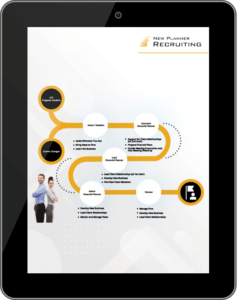 Download your free copy of the New Planner Career Roadmap! In this roadmap, you'll be guided through the details of various stages of your financial planner career, including position descriptions, licensing, skill and experience level requirements, and compensation ranges.
Get the Full Episode Transcript:

Read the Transcript Below:
Welcome to the New Planner Podcast, where it's all about helping you successfully enter the financial planning profession and accelerate your financial planning career. This podcast will help you understand the profession, become familiar with the various career paths available to you, and avoid the mistakes that limit your success. Join your host, Caleb Brown, to explore the human side of creating a successful planning career through interviews, personal experience, and insights from the trenches. Let's get started.
Caleb Brown: Welcome to the 255th episode of the New Planner podcast. This is Caleb Brown, your host. My guest today is Emily Green, who is an associate wealth planner at MY Wealth Planners. Emily joins the show today to talk about her career change from the medical field as a surgical assistant to the financial planning profession. She shared that she was seeking more client interaction and longer-term relationships in her career.
So when she first moved away from the medical field, she tried her hand in entrepreneurship, and after making a few mistakes, thought how beneficial it would've been to know more about the financial side of the business and personal finances. She goes on to share how she found a job listing for an entry-level financial planning role in her hometown that ultimately led her to start in an entry-level position.
Stay tuned to the end to hear about some of the exciting things she's been able to do in her role over the last two years and her plans to further her financial planning career. I hope you enjoy this episode with Emily Green.
Hi, Emily. Welcome to the New Planner podcast.
Emily Green: Hey, Caleb, thanks for having me.
Caleb Brown: Well, thank you for getting on here early morning and mountain time and also maybe even feeling kind of recovering from a cold, I think, is what you said when we were off the air.
Emily Green: Yeah, I think I'm on the up and up here, so we'll see.
Caleb Brown: Thanks again. Really cool story. Just want to explore and learn a little bit more, but career changer, right? So just maybe walk us through just how or when you became aware of financial planning and then sort of your initial steps to making a career pivot.
Emily Green: Sure. So yeah, my background is in medical. I went to school the first time to be a surgeon's assistant, so that was my degree and I worked in hospitals and things like that, initially. And then I spent some time overseas, moved back to the states and was kind of disheartened with some of the medical world and just the lack of patient contact and stuff I had in that role. I really like talking to people, interacting with people. So I tried a few different jobs in the medical world trying to find the right fit, and none of them were really it.
And then there's kind of a transition period where I bought a coffee shop and ran that for a few years. And I had no business background, no experience, no nothing. I was just completely winging it and googling things and trying to figure out how to be a business owner. And it actually went really well.
And that was a steep learning curve, though. And I thought, “Okay, if I had known what I was doing here, I could have done even better. And it probably would've been a little bit less stressful.” 'Cause I ended up then selling after owning it for about three years. And that was great. But that kind of, I would say, pivoted me towards finance.
'Cause I thought, “Okay, there's gotta be, there's a lot more here and I wanna learn about it.” And so then I saw that Daniel Yerger, MY Wealth Planners, was hiring at the time, and it was for, at that point, just an assistant role. And it said no experience required. And I thought, okay, I could get into this and learn a lot.
So I went and interviewed for that job and it was kind of a blend. He was like, “Okay, if you're my assistant for a year. Then you can sit for the 65 after and get licensed and registered and I'll kind of mentor you to be a planner.” And I was like, “Okay, I can be an assistant for a year,” and go from being a business owner to the one who's making the business owner coffee.
So it was a little bit of a, it felt like a step back at times in order to take a step forwards, which I think a lot of people are hesitant to do when they're changing careers 'cause they think, “Oh I've done all these things, I have all this experience. I don't wanna be someone's little assistant,” who, you know, my role was to sit completely silent in meetings and take notes and not say a thing, 'cause I can't give advice. So it was hard in that way, but it was really good because you learn so much doing that. So finding that role specifically helped me pivot into finance, and I think it would've been a lot more difficult without that.
Caleb Brown: Got it. Thanks for sharing a lot to unpack there. And I wanna come back to some of those things. I mean, I'm just thinking, I'm like, I'm surprised—so you didn't want to be yelled at by orthopedic surgeons all day long for the rest of your career? I mean, I totally get it.
But I'm with you. Client contact, it sounds like you really wanted to, I mean, just have more interaction with the patients. I mean, you're a people person, right? And you weren't able to do that. So that's kind of the initial catalyst it sounds like, which got you looking. But I wanna go back to the coffee shop thing.
I mean, you just kind of pivoted from the medical thing right into entrepreneurship, and it sounds like you had, I mean a lot, maybe some mistakes in there, but a lot of success. I mean, maybe just talk a little bit more about that on what you learned and what you learned about yourself, maybe what you were good at and what you weren't good at.
Emily Green: Yeah. Some of it came naturally, all the human aspect and just like the day-to-day management and running of the shop. It's not that hard to make a latte. You can look it up on the internet and figure it out, and so some of that came totally fine to me. I'd worked a lot of odd jobs all through college that were similar-ish.
I'd never actually been a barista, but you know, it all kind of feels the same. But the business owner aspect of trying to figure out, like point of sale systems and managing my books and the taxes and things like that, I didn't understand because I'd never looked into it. So it came down to things like negotiating contracts.
I was trying to renegotiate the lease on the space with the landlord, and I thought, “Wow, I'm in way over my head.” He's asking questions and I wasn't really sure, you know, you're kind of putting up a front and you're answering them, but you're like,
“Ooh, I don't actually know if that was the right, is that what I want in this contract? I wish I had someone here to look this over before I signed this.”
Caleb Brown: Well, now there's ChatGPT. You can just use that, right?
Emily Green: I know. That would be nice. It's completely inaccurate sometimes, but, you know, it boosts your confidence a little bit that, “Okay, someone else looked at this at least.” So a lot of, I think, could have been done differently and better and even like in the purchasing process, right? It was a very quick thing. The only reason I ended up buying that specific coffee shop is my mother-in-law at the time had gone in for a cup of coffee and they said, “Hey, like we're closing tomorrow. Thanks for being a regular customer,” blah, blah, blah. And she said, “What do you mean you're closing tomorrow?”
And they said, “We're retiring. We can't find anyone to buy the business, so we're just gonna close it down. It's done.” And it was the oldest cafe in Longmont. It's been there for over 30 years, and we all really liked it. And so she called me and she said, “Hey, I bet if you made them an offer, they would sell it to you.”
And so I called them and all that was, so it took about a week to, you know, I had to get some financing and figure that out. But it was a very fast, fairly impulsive decision just to try and keep this historic business open. And so I don't think I took as much time as I should have to research what I was doing. I just really wanted to do it. And I figured, “Okay, let's try.”
Caleb Brown: I mean, is that your personality? It's not like just, let’s just get in there and try it. Just go for it. I mean, like, and speak, we would call that quick start. You have a lot of just quick start and just, is that sort of how you see yourself?
Emily Green: Yes, I do. Like when I lived, spent time overseas, before I moved to Colorado, I moved to a country where I didn't speak the language. I didn't have anywhere to live. I didn't really have anything lined up. I just landed at the airport and thought, “Oh, I gotta figure this out.” So that is kind of my personality to just try it.
Caleb Brown: And do you think when your back's against the wall, like, I mean, is that, and maybe this is kind of a loaded question 'cause you, but I mean, are people more successful when their back is against the wall, versus it being a little bit more in a safe environment where it's comfortable?
Emily Green: I think it depends on personality. Overall, yes, there are certain people, and I've done it at times, where your back's against the wall and then you get too stressed out, and so you're not thinking calmly and clearly and you'll make a mistake. But I do think most of the time if you push yourself, you can figure it out. It's amazing, because you have to.
And it's, I think there's something to be said. It boosts your confidence when you're like, “Okay, I don't actually know how to do this, but hold on here. I have resources. I have a brain and a healthy body,” in most cases, at least, I do. And it's like, “Okay, think, what are you, what do you need to do first? You can prioritize things. What do I need to learn about? What are my channels that I can learn from, which are the highest quality? Let's go there.” Like, you can get into that routine and it can apply to any situation that you're in, whether you're in another country or a new job, or you're trying to pivot careers or whatever,
Caleb Brown: Well, we all get comfortable, and I've talked about this before. I mean, it's like it's, you need someone, you don't realize your full potential usually unless you have someone push you to the brink, right? Or throw you in the deep end, whatever it is. So, and let's maybe transition into that. So like, when you joined, so you saw the ad, I mean, Dan, I mean it's in Longmont, so it was a local business. Is that what sort of like, which attracted you to it and then being entry level?
Emily Green: Yeah, definitely that it was local. I've gotten very invested as a coffee shop owner. We were on Main Street with all the other local business owners and at this point, it was post, during and post-COVID. So everyone's in that, hopped on that train of let's shop local, let's shop small, which was great.
And I really liked that Dan and MY Wealth Planners really emphasized their local community and things like that. The entry level, obviously, and also the way that things were structured at his company, that it's fee-only. It wasn't a commission salesy kind of finance firm, which was not what I was looking for. So I liked that part of it.
Caleb Brown: Was that your general impression of financial planning firms is the sales side and products?
Emily Green: Yeah, definitely. I wouldn't say beforehand I had a super high opinion of it, 'cause I didn't really know a lot about it. And so I was a little anxious about jumping into that world. I wanted to make sure that it was how it was being advertised to me. I was a little doubtful at first, but then it turned out to be true. So it was okay.
Caleb Brown: Well, I know as an entry-level position, I know Dan's a good mentor. Talk to us about that. I mean, there's still expectations, though, like, I mean, you had to get up and get to speed pretty quick.
Emily Green: Yes, very quickly. Dan, thankfully, as you said, he must enjoy it.
I don't know how else to explain it, but he, for that whole first year, we spent hours every day. I would have a list of questions at my computer after all the meetings and stuff we'd gone over that day. And he would come and sit out. My desk was the reception, so there's like a chair and a couch out there, and he'd come sit on the couch and he is like, “All right, what do you got?”
And he would answer my questions for hours and he would give me books to read and podcasts to listen to, and just tons and tons of material and he teaches the retirement planning class at CU. So I tagged along with him to school. I wasn't actually enrolled. I didn't get credit for it, but I took his class, sat in the back and had to take all the tests in the midterms and do the final project. He treated me like a student. I just didn't pay for it to get.
Caleb Brown: So it was a full audit then? Full audit. That's great.
Emily Green: Oh yeah. Yeah. He graded me along with everyone else and he was like, “This is how you did in comparison, everyone else in the midterm.” So he was good about giving me a ton of education and sitting in all his meetings with every single one of his clients for the whole year.
That's every quarter you kind of cover everything. And I found just the more I asked, the more we'd get into it, had these very, very long conversations because I would ask one question about something else, and I'll just keep asking them. That's kind of my personality. I will not leave him alone until I've thoroughly exhausted the subject.
And I learned so much that way. I think when you're new somewhere and you're doing something new, that should be like your main focus is asking as many questions as possible from someone who knows what they're doing.
Caleb Brown: And talk more about that. I mean, what were, you said you were in every single client meeting, which is amazing. That's exactly how I got started.
And I feel like that was just on the job, I mean on the job training on steroids, right? It was amazing. So what was your role? What were you doing in there while he was talking with the clients? I mean, he already knew most of these people. I guess if they were, unless it was a prospect meeting.
Emily Green: Yeah. So yeah, so I was quietly taking notes. He had told me, “You can say hi or whatever, be nice, but don't say anything. So you have to be careful with giving advice or answering questions.” So I was primarily quiet the whole time writing down everything that was happening in note-taking for him, which was helpful, 'cause of course we archived the notes. But then also I would make kind of a separate section of questions that I had, things they were talking about in the meeting that maybe I'd never heard of before, I didn't understand, or he would reference something very briefly and I was like, “Oh, I don't know what that is.
I'm gonna ask him afterwards.” So, some of the meeting had spent Googling what he's talking about and saying, “Oh, okay, this is where we're going with this. I don't know what a 1035 exchange is. I gotta remember to ask about that.” And then after the meeting, he was pretty good about as long as there wasn't another meeting, immediately blocking that time to answer all my questions.
He kind of buffered his calendar. So I had time to go through my notes. And then my role was filling out forms and doing documents in the admin side of that, too, which prompted a lot of questions and being the one to call Schwab 'cause that's who we use for our custodial platform. So he was also kind of training on behavioral stuff.
Like this is how you ask the questions and who you need to speak to get the right information, and teaching me how to call and who to call and what books to read so I can find it myself and not just always rely on him for information.
Caleb Brown: So, and maybe talk to us about your schedule. So it was like sort of a typical eight to five workday and then were you going home in the evening and like reading all this and try and like observe more or was it mostly done during the workday?
Emily Green: He told me to just do during the workday and not work overtime, 'cause he's really good about trying to set boundaries. I definitely did bring books home when he wasn't looking and read them and then put them back on his shelf. Because he was trying to be so nice and he was like, “Don't work outside hours.”
And if there was downtime, if there wasn't a lot of meetings scheduled, he encouraged me. But he was like, “Read at your desk,” or, “watch this, webinar,” that he signed me up for or whatever. So any downtime I did have was spent studying at work, but definitely outside of work as well, especially then once I went on to try and get licensed and registered at the end of that year. That also took a lot of time at home.
Caleb Brown: What's been the funnest or most. And or most interesting thing that you have done or experienced over the last two years in the financial planning career?
Emily Green: I really enjoy watching him and planners work with clients they've had for a long time where they have that close relationship and they're actually friends.
He's genuinely friends with a lot of his clients, he's had a long time. And that kind of solidified for me that this is the right industry, this is what I wanna be in. It's not slimy finance, sales pushing products like I was worried it might be. There's certainly, you can do that if you want to, and that's fine.
But what I was looking for was that human contact that I wasn't getting in surgery. Well, they're unconscious and they're under a drape, you don't even see their face. And then I loved that at the coffee shop, that human interaction every day. And I thought it would be very draining and it can be, but it motivated me.
And so seeing that actually is the case, that oftentimes you have long-term clients that you get really good relationships with, it's like, “Okay, this is a good fit. This is worth putting all this time and energy into.”
Caleb Brown: And unlike the medical, which is reactive, this is all, this is proactive or at least good financial planning.
The way I think it should be done is proactive, right? I mean, there's still a lot of people that do it reactively, but, and then you still get the client, you still get the intellectual challenge, right? Like a doctor would, and you still get the client customer-facing, like you would at the coffee shop. So you've just kind of combined the best of both worlds in your prior two stops.
Emily Green: Yeah.
Caleb Brown: Well, what's, I mean, so what are you working on now? I mean, what's your, so you started as a, let's just make sure I have this, like assistant and then you moved up to something else. What did you move up to?
Emily Green: Yeah, so now I'm an associate financial planner there. So I'm licensed and registered and I work with, you know, I have my list of my own clients that are mine, but of course, because I'm an associate, everything is reviewed and kind of Dan looks at it before you do anything or before any trades are placed or anything, since I'm still in that associate role.
So I'm studying and going back to school. Actually, I'm getting a bachelor's now in personal financial planning specifically. And then after that I plan to sit for the CFP, which theoretically will be end of year next year if all the classes are completed on time.
Caleb Brown: Congratulations. I mean, how has that transition been sort of, you've been out there, you've lived life, you've traveled, you've done things. You bought and sold a business and did really well, like, and now you're going back and getting an undergrad degree. I mean, how has that been? How's that transition been?
Emily Green: It feels a lot like going from business owner to Dan's assistant making coffee, and it's like, now I'm in my thirties and I'm in undergrad again and all the kids in my class, it's all online, but there's like the discussion postings you have to, and it's all kids who are like, “Yeah, I'm so excited to learn about leadership skills in this class. I'm gonna learn a lot.” And I'm like, “Oh, okay.” Like I'm sure there's still things that I'm learning in some of these classes, but. It is a little painful at times to go back and be back in undergrad at this age, but I think it's good and I'm learning plenty in the classes. So that's just what you have to do. Take a step back and take a step forward.
Caleb Brown: And why do all this? Why make all these sacrifices? 'Cause this is certainly not the easy road.
Emily Green: No, I like to be very good at what I do. I don't like to kind of just halfway know and guess and feel like, “Ah, this is probably right, or this is close enough.” That doesn't work for me.
So I like to have a lot of education for whatever it is that I do, despite my tendency to be impulsive in my decisions. Then when I make them, I do wanna commit to them very fully and do a good job. And so, as an associate, of course, Dan looks at the things that I do and approves them. So I have that safety net.
It's not like I'm gonna make a mistake that causes client harm. That's not gonna happen. But I wanna get to the point where I can be a planner, like a traditional planner myself one day, and know that I'm doing a good job, even though no one else is double-checking it. That's really important. So if I have to go back to school and spend all this time and money, fine, it'll be worth it in the end.
Caleb Brown: Challenges, I mean, what have, what's been the biggest challenges for you in this transition?
Emily Green: I think the time commitment actually, 'cause I'd gotten very used to, of course, not being in school, not having homework, not studying extra after doing all those long hours. And particularly at my role now, like we still do a lot of outside of work like networking events and additional volunteering things and different, it's not like I'm actually done at five all the time.
I do block off my weekends for my personal life and I just do not work on the weekends unless I really have to. But it’s definitely eating up a lot of my time to start over like this, 'cause you have to put in the work and so I feel like my personal life is getting a lot less attention, definitely, for this period.
Caleb Brown: Well, what's next for you? I mean, well, you get the degree and the CFP, you pass the CFP exam. Do you get promoted or what's the next role or the next level of responsibility look like?
Emily Green: Yeah. So the next role he's, I don't know if Dan's ever talked to you about this. I know you know him, but he's got that whole diamond tier thing, right? In his mind. So you are at the bottom of the diamond, for people who are just listening, and then you work your way up to one of the either sides of the diamond, from either analyst or associate up to planner. And then the top of the diamond is like a lead planner. So theoretically, you get the education you complete, fulfill all the other requirements that there are, and you work your way up.
But you're always kind of leading a team of other staff, of other people and are therefore mentoring the people below you. He structures his company, as he always says, like a teaching hospital. He's like, “I brought you in, I mentored you, but now I want you to do it for somebody else. You have to pay it forward.”
'Cause his whole thing, if you ever follow on LinkedIn or anything, is there's a shortage of people in this industry. “We need more diversity. We need more young people jumping into it.” He's made a joke at the office all the time. He is like, “There's enough middle-aged white guys in finance, like we need some other people in here.” So you know, there's this.
Caleb Brown: I won't take offense to that, Dan, and appreciate that.
Emily Green: Yeah, I know, speaking of himself too, so I don't know if he's allowed to say that more than I am. But you know, there's that requirement then to pay it forward and educate other people. And we have interns, we had an intern this summer, so part, you know, that was kind of a priority.
He is like, “Okay, when you're doing stuff, as long as it's not like school stuff that's irrelevant, bring her in, show her how to do it. It's gonna take twice as long, have her hold the mouse and do the clicking and tell her how to do it.” And that's kind of how it'll probably be, is we'll always have interns and continue to grow and hire on more people and help other people get into the industry that want to.
Caleb Brown: And do you feel like you're, 'cause you're talking about sort of leadership and management when these interns come in, I mean, is that something that comes more naturally to you because you've just done all this other stuff?
Emily Green: I don't know. I suppose? Certain aspects of it do like the teaching part and the encouraging part I do well with. I have trouble with the part if they do something wrong, I hate to tell 'em that.
So it's, I have to almost brace myself and be like, “Oh, actually, this is completely wrong and you have to start over.” I don't like that part of mentorship, but it is an important part of it. So framing it in such a way, like, “Okay, this isn't correct, but we learned a lot. This is actually how you're gonna do it now.” And re-explaining things that they've forgotten or whatever it is that they need. I definitely have that gentler, more supportive approach, but I found that it still works.
Caleb Brown: I mean, maybe some, tough. My approach is tough love, right? I mean, you just, you gotta get this figured out.
Hey, you'd mentioned the diamond team, the Angie Herbert Diamond team stuff. So the Kitces, I don't know if you guys saw this, the Kitces’ team came out with the Triangle team. So this new research thing, this is like more efficient. So still diving into that, but looked like they did some pretty thorough research.
So, we'll link to that in the show notes. This has been great, Emily. Again, Dan's right. We need more people like you. And that's one, again, one of the reasons why I want to have you on the show and man, you're doing really cool stuff and we're glad to have you. Any final tips or comments or anything that you might have for the new planner audience?
Emily Green: I think, I mean, speaking of career changers, 'cause that's what I am, you have to take that step backwards. I know we've talked about that in the show, but you have to be willing to take a pay cut or go back to school or take a job that might feel beneath you. I mean, it's not, there's no hierarchy. It doesn't matter, but it might feel like it. And then be prepared to put in the work for a little while, for a few years, for sure. But it's worth it to do it. It's not a waste of time, even though it feels frustrating. It will then accelerate you forward quite a bit more in this new career that you've chosen, if that's what you've decided to do.
Caleb Brown: Emily, thanks so much for coming on the show.
Emily Green: Yeah, thanks for having me.
Thanks for joining us for this episode of the New Planner Podcast. If you are ready to discover the top career paths for financial planners and see which track is best for you, we created a free guide to help you. Grab your copy of the Financial Planner Career Roadmap at newplannerrecruiting.com/roadmap. There, you'll also find more tools and resources all created to help you build a successful financial planning career. Tune back in next week for another episode, and until then, we are here to help you succeed.
Share the Love:
If you like the New Planner Podcast...
Never miss an episode by subscribing via Apple Podcasts, Spotify, Amazon Music, YouTube Music, or by RSS!



Leave a Reply