Patrick Moore is the Founder and a Wealth Advisor at Ironclad Wealth Management, and he joins the show today to share his financial planning journey. If you're interested in starting your own firm, learning from early entrepreneurial challenges, or building a career grounded in mentorship and growth, this episode is for you!
Listen in as Patrick shares how his father introduced him to the financial services industry through the insurance channel, where the two worked together after Patrick graduated from college. You'll hear how that experience inspired him to pursue more comprehensive financial planning, ultimately leading him to start his own firm. Patrick also reflects on the mistakes he made early on, the lessons learned, and how he successfully grew his business over time.
What You'll Learn In Today's Episode:
- How Patrick navigated his early career and initial challenges. (2:30)
- Why he decided to start his own firm. (6:40)
- How he developed his growth and business strategy. (13:10)
- His approach to marketing and networking. (26:10)
- Advice for aspiring planners. (29:40)
Ideas Worth Sharing:
“I just decided that insurance wasn't quite for me, although it's a part of what I do today, and I wanted to do true financial planning.” - Patrick Moore Share on X “I want to work with the end client. I don't want my advice to be intermediated by anyone in a manner that I don't agree with.” - Patrick Moore Share on X “I like recurring revenue. I like waking up in the morning and knowing how much I can count on and obviously, I think the incentives align with the clients better, as well.” - Patrick Moore Share on XResources In Today's Episode:
- Patrick Moore: LinkedIn
- Finding your Path: The Roadmap from Student to Successful Financial Planner by Caleb Brown
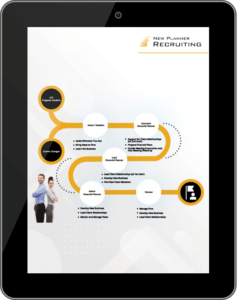 Download your free copy of the New Planner Career Roadmap! In this roadmap, you'll be guided through the details of various stages of your financial planner career, including position descriptions, licensing, skill and experience level requirements, and compensation ranges.
Get the Full Episode Transcript:

Read the Transcript Below:
Welcome to the New Planner Podcast, where it's all about helping you successfully enter the financial planning profession and accelerate your financial planning career. This podcast will help you understand the profession, become familiar with the various career paths available to you, and avoid the mistakes that limit your success. Join your host, Caleb Brown, to explore the human side of creating a successful planning career through interviews, personal experience, and insights from the trenches. Let's get started.
Caleb Brown: Welcome to 253rd episode of the New Planner podcast. This is Caleb Brown, your host. My guest today is Patrick Moore, who is the founder and a wealth advisor at Ironclad Wealth Management. Patrick joins the show today to share his financial planning journey. Patrick shared how his father turned him onto the financial services industry via the insurance channel, how they even worked together for a few years after he graduated college before realizing he wanted to do more in-depth financial planning. And then he goes on to share how he started his own firm, the mistakes he made, and lessons he learned along the way, and how he's been able to grow the firm. I hope you enjoy this episode with Patrick Moore.
Hey, Patrick, welcome to the New Planner podcast.
Patrick Moore: Yeah. Hey Caleb. Thanks for having me.
Caleb Brown: Absolutely. Really looking forward to this. I look forward to every guest that I interview. I mean, it's just a lot of fun. I love doing this.
Patrick Moore: I mean, especially me, but I get it.
Caleb Brown: Yeah. And you were the guy, you were the guy this week, so. Yeah, I mean, you're just down in Atlanta, so not that far from me, heavily involved in FPA and you have a really cool story. So I mean, look, I'm a Texas Tech guy, but now I'm sort of a UGA guy. And you went to Auburn, I'm sure we'll get into that, and we’ll let that slide, but just start us out, like, when did you know you wanted to become a financial planner?
Patrick Moore: I think it was gradual. I actually, so I grew up, my dad owns a few different businesses and one of where he got started is he was a general agent for a life insurance company in Birmingham. And so I kind of grew up in the insurance world, not necessarily the financial planning world. He was securities licensed, but you know, I never really talked about that too much.
It was definitely back in the day where, it was…VAs, mutual funds, it wasn't quite like that, financial planning, bleeding-edge type stuff it would've been back then. And so I grew up, I would say, in an industry that was like tangential to financial planning, at least what I would consider financial planning.
So I went to Auburn, kind of tried to figure out what I was gonna do with my life and got a finance degree, 'cause I figured, okay, I need to have a skill, not just like something generic as like a management degree. So sorry, of the listeners who have a management degree, but that was kind of my own take on this degree.
Caleb Brown: Leisure studies? No, leisure studies?
Patrick Moore: No leisure studies for me. But I was like, okay, I should be marketing, finance, something like analytics type stuff. And so I settled on finance and so that kind of, you know, with the background, kind of naturally led me down the path there and come graduation, had a few offers. I got the classic insurance company offer where they gave me a list and said, “Hey, if you wanna come work for us, we got a hundred names and you can write them down and we can start getting to work, calling them.” And so decided I didn't wanna do that, I didn't wanna do the consulting route that I kind of got offered.
And so I wound up actually working with my dad for the first couple years right out of college and I was kind of doing some like advanced planning insurance work, like case design work, 'cause he was a general agent, so people did his insurance through him. And so I just decided, in the course of doing that, insurance wasn't quite for me.
Although it's a part of what I do today, and I wanted to do true financial planning. So that's kind of a long path. Not a very long path, 'cause I decided probably by the time I was 25 what I wanted to do. But it was gradual. It kind of came from being close to the industry, but not in it and kind of, I'd say, like almost like slowly merging into it right outta college.
Caleb Brown: Gotcha. And based on your LinkedIn profile, was that the retirement advisor at Transition Planning? Is that the role that we're talking about?
Patrick Moore: Yeah, it would've been that, or it probably would've been more like advanced. Is there advanced case design on there?
Caleb Brown: Yeah, that's it. Okay. So you went to work for your dad, got in there for a few years and said, “Look, this is fine, but I want something bigger, better, maybe deeper, more comprehensive,” is what it sounded like.
Patrick Moore: Yeah, and there's actually a moment I remember when I decided it, because with that brokerage agency, for those in the broker dealer world, it's kinda like being in the back office or the IRA or it's kinda like being in the back office, kind of, helping almost develop financial plans as people be like, “Okay, this client presents with X, Y, Z, what would you recommend we do on the insurance side of things?” And I'd design a little plan and try and get thoughtful with it and say, “This is what you're trying to do, this product works, this product doesn't.” But you know, it's that product thing.
It's very product-oriented. And so I was kind of missing almost on that, like that human element, understanding what the client's actually trying to do. I was a step removed. And so I kind of realized over time that I wanted to do that and there was a time where I ran a very simple case for an agent we worked with, and it was, for those who you know are in the entrance world, is about as simple as it gets, right?
It's called a guaranteed universal life. It's just basically a policy that's not gonna build cash value, and it's just as long as it's with a good company, it's like, what's the premium? There's a few bells and whistles, but it's very simple. It's basically like, “I want to give you X dollars a month for the rest of my life.” And when I pass away, you'll get death benefits. So there's not many moving parts in that sale. So I ran a spreadsheet. I was like, “Okay, hey, here's the best company.” Let's say it was 800 bucks and it's a hundred thousand dollars policy. And the guy said, “Well, what about this company? Where it’s like, “Okay, they're like 950 bucks. They're a fine company, but it's about $150 more.” And he said to me, “Well, let's just go with them 'cause I'm already appointed with them.” And keep in mind the appointment process takes five minutes 'cause it's all digital and we have all this information. It's literally, you click something, sends a DocuSign out, and I'm like, “Man, like I can do that. Like I can do better than that.” So I was like, “Okay, I want to work,” and that's a rare case, right? But I was like, “I wanna work with the end client. I don't wanna be, I don't want my advice to be intermediated by anyone, in a manner that I don't agree with.” So that's kind of, and like I said, that's very rare.
It happened once, but I'll never forget it. And so, I'm not against insurance, but there's definitely stuff that happens out there. I think when it's a transact–whether it's insurance or another thing is if it's transactional sale, I think incentives can get clouded a little bit.
And so I wanted to build relationships with clients and so I decided I wanna do financial planning. And so back in 2019, I kind of, I would say my go-live date on being my own planner was Jan. 01 of 2019. Made a lot of mistakes, tripped on myself and most importantly I vaporized a lot of money, but my own money, not my client's money, to be clear. I mean, let me be clear there.
Caleb Brown: Hey, at least it won 2020. It was January 2019.
Patrick Moore: Yeah, I had a full year to like, figure that out before that happened. Bit I've kind been doing financial planning, I'd say, ever since.
Caleb Brown: And when you say become your own planner, you mean start your own firm?
Patrick Moore: Yeah, started my own, so I mentioned my dad was securities licensed, and so I kind of got my six, 65, whatever the other one is, 63, maybe. I've got the licenses, I keep up with them, but I don't remember the numbers. But I kind of was just parked there for a little while and I picked up a couple clients doing very basic investment management. So I had a little bit of revenue and I went back before this…but at the end of–the beginning of 2019, I kind of went from working for him to doing 90%, 95% of what I do was this.
So 2019 would've been the first, like, full year of me doing it. Started slow. I was like 50-50 advisory and insurance that year, and now I'm about 80% advisory and 20% insurance as far as kind of, we'll call it, the business goes.
Caleb Brown: And is that the goal to get it, the insurance side phased out completely?
Patrick Moore: Yeah. The way I kind of would frame it is I want in, not phase out completely, but I want to view them as like bonuses. I don't want to, I like recurring revenue. I like waking up in the morning and knowing how much I can count on. Obviously, I think the incentives align with the clients better as well, but almost every financial plan, not everyone, has some element of insurance in it.
And like where I come from and what I do, I'm good at it, so I like doing it. So it's not something I feel like I need to forfeit or give up or give away and like go fee-only or anything, because I like doing insurance and I'm good at it. But should it be more than 10% to 15% of the overall revenue?
Maybe not, unless it's in like an exceptional year where there's like some large case that is good for a client. But, so I think it's a natural, but it's not, I wouldn't say it's a goal. It's just kinda happened naturally.
Caleb Brown: Okay. So there, so how long were you with your dad's firm before you launched your own?
Patrick Moore: So I graduated and I went to work for him in June of 2015. So that would've been four years, I guess, a little at three and a half years. And I still do some part-time stuff for him right now, like some of that advanced case design stuff. So like I said, that's probably less than 5% of my time.
Caleb Brown: Okay. So he's still in the business then, or call it the insurance side over here.
Okay. Well, if I did, I mean, at 26 years old, you started your own firm. Did I do the math right? 26. Does that sound right?
Patrick Moore: I haven't done the math, but maybe, yeah.
Caleb Brown: I mean, you come outta school at 22, you spent about four years, 26 years old. Okay, so, but you didn't completely; it sounded like you had a little runway. You had a few clients, you had a little gig work with your dad, so it wasn't like, “Hey, I'm making a couple hundred thousand dollars and then I'm going to zero.”
Patrick Moore: No, definitely not. I wasn't making a ton of money working for them as a small family business, but it was definitely a slow study thing. I did not have to, like, save up a bunch of money and kind of draw that down or anything like that.
Caleb Brown: Okay, so mitigating the risk. So I mean, just talk to us about the thought process on, “Am I gonna join a firm? Am I gonna join an XYPN? Am I gonna just do my own thing?” Like, how did you decide all this stuff?
Patrick Moore: I think a lot of it was colored by my relationship with my dad. Us working together has been really good for us.
Like we enjoy working together. I didn't want to necessarily like cut that off completely, sever that completely and like go join a firm just 'cause I think that would've been a big change, a big move. In retrospect, it might've been better for my career to do that, like full transparency, but I've never had to give up that insurance part and it's been good.
So I didn't wanna give that up. And so what that meant is either I formed my own RIA, or not formed my own RIA, but like go out on my own, form my own DBA, tuck in with another RIA, or I just like stuck with that firm that my dad was working with on the broker dealer. They have an RIA, as well, but culturally I wasn't a fit there.
So what I said is, “Okay, dad, I'll still do some part-time work for you, but I'm gonna go do my own thing, go join my own RIA and do that.” So I don't think I looked at XYP, and yet I kind of found somebody else I knew through the insurance world in 2019 and made a change then to another broker-dealer, RIA combo.
But once again, I think I kind of did a little quickly, so I wasn't a great fit there either. And so I made a change. Once again, you mentioned, I didn't start in 2020, but I did change RIAs again January 1st, 2020. So it was just a very quick change, right? Back to back. I didn't have any clients.
Everybody's always like changing RIA sucks and yeah, it's true, but if you don't have any clients, it's not that bad.
Caleb Brown: That's one way to look at it.
Patrick Moore: Like it was like, whatever. So 2020, I would say is when I really started pedal to the metal, hit the gas a little bit, and I've been with that same RIA since, and it's been going well and I kind of do my own thing and do my own planning down here.
But in the process of that, I looked at XYPN and at that time, I'm looking at 2020, insurance made up 40% of my revenue in 2020, 30 to 40%. So goes like, “Okay, well, if I go XYPN, I love their tech stack. I love what they're doing,” but they definitely have that fee-only mentality, which I disagree with.
And also, I had, it was enough of my revenue that I was like, I don't think I can forfeit that for what I viewed in my mind. And, sorry, but for what I viewed as kinda like a marketing thing. And I was like, “I'm not gonna give up that to make that change.” So I found an RIA that worked. I could still have my DBA, or sorry, OBA, doing insurance stuff and been there ever since.
Caleb Brown: How has it been just, well, I mean, tell us more about your firm. I mean, is it just you, or do you have other, like, support people?
Patrick Moore: So it's grown, so it's just me doing the planning. I've got an admin who works with me who actually I met back in the insurance world and then I've got a contracted CIO, outsourced CIO who helped with the investment decisions.
But for the first two years, three years, it was just me. So, like I said, you definitely, and I would say, I learned financial planning basically out of the CFP textbook. Like that was kind of where I learned the nitty-gritty, the details. So there's definitely stuff you learn from experience that I just I didn't know the first couple years, but it's just been kind of an iterative process where every year it grows and keeps changing.
And I think I'll probably be at a point where I need to bring on a junior advisor in about a year and a half, two years, I'll kind of be at that personal capacity level.
Caleb Brown: Where are you right now, number of client or families, or however you measure households?
Patrick Moore: I'm at about 50 to 55.
Caleb Brown: Okay, and what are you thinking you can get up to and serve comfortably?
Patrick Moore: I'm thinking 75. I had it at 60, but I think with where I am now, I can handle more, so I’m thinking 75, 'cause obviously, I haven't been at any other firms to know, but I think I go pretty deep and it's a lot of ongoing service work. I'm not waiting on clients to call me with a question. So I feel like my client-per-advisor ratio will be a little bit lower than the broader industry.
Caleb Brown: And how have you accumulated these clients? I mean, like is there a specific niche or how are you getting these people?
Patrick Moore: So at the start, I had one or 2 401Ks I took over from my dad. Interestingly enough, they really haven't turned into the employees from those 401Ks. So I still have both of those.
And then, so the marketing journey has probably been the thing where I've wasted the most money, but I did seminars back in 2019. I got my first big client from a seminar, and so that paid for itself. But the thing is the seminars were like three to five, three to five grand a pop. So I couldn't afford to do many of, so even though the ROI was pretty decent, they got so expensive, I couldn't really afford to do them.
So come 2020, I started doing webinars. Actually got some pretty good like cost per leads there, but nobody would show. So wasted a bunch of money there. Then I, and actually, so in that process, though, I learned about like niching down, doing some of the research and so I settled on working with business owners and specifically business owners on their taxes.
So just, I think it's 'cause of a product of where I grew up and my own mentality is that, you know, I grew up with my dad who's got a couple businesses and I wanted to kind of work with people who were doing that just 'cause it was my background. And then on the tax side, when it comes to investments, like investments are, they're up, they're down.
If you live and die saying, “Hey, we're gonna just manage investments, I think that you are gonna lose, there'll be a lot more attrition with clients.” And so taxes, even though there's a lot of gray area in taxes, they're very black and white. It's like, “Okay, if this is numbers on your 1040 here, you will owe this much in taxes.”
Like it's something you can plan around. So I went and got my EA a couple of years ago, during that process. And so I've been working with business owners who basically have tax problems, not tax problems, but who wanna save money on taxes for a few years now. But that marketing didn't work, then but in the process I learned what I wanted to do.
So I think that's almost like money well spent. And then I moved to an SEO firm where that didn't really work. And so I've actually been doing SEO on my own and I've just naturally met a couple of CPAs who have referred me business over the last couple years. So most of my business has come from client and CPA referrals, with a smattering of some of those seminar and webinar clients, like we're talking five of those.
So it's mainly been existing client referrals and CPA referrals. And then there's just a couple of those natural ones, right, where you got one or two family members in the mix as well.
Caleb Brown: So you're not actually preparing the returns, you're just doing the planning and the projecting and then working closely with the CPA?
Patrick Moore: That's right. That's right. I don't do, I've got a couple of CPAs I partner with very closely, refer business back and forth. But I'm doing year-end projections, beginning of year projections. I am helping clients, like I'm going as deep as, you know, if they're setting up an S corp from being an LLC, I'm helping 'em get their payroll and bookkeeping set up.
So there's a little bit of work in there, but not anything that I would consider real bookkeeping or real tax preparation.
Caleb Brown: I mean, the beauty about that niche is that's a pretty, there's a lot of small business owners out there, right? There's a lot of financial planners that are going after them. I think there's just so many clients. I mean, everybody, especially here, kind of where I live, everybody's got their own business. So that's a potential client for you. So, okay, so how do you charge, and maybe what's your planning price? It sounds like you said earlier, I have a, and I get this on the recruiting firm.
Every firm I've talked to it's like, “Oh, we're different. Like we go really, really deep in your…” Like, so what does that mean? I mean, what does that mean to you, like your planning process?
Patrick Moore: Well, so in the process of doing all that iterating and learning, I'd say around 2021, when I did that marketing on kind of niching down. I really dialed into that and it's a moving target.
But right now, with where I stand, I charge a monthly retainer fee. And so that's $299 a month up to about $800 a month. I've got only a handful of clients at the top end, 'cause it really just depends on how much time I'm committing to it. Like if it's a business owner going through a sale. I've gotta meet with their CPA and even their tax attorney and corporate attorneys regularly.
They're gonna be at that higher end. 95% of my clients are at that $299 a month level. And then what I tell them is I say, “Okay, well that's gonna get you access to me. We're gonna create a plan. It's gonna be unbiased. I can afford to make the plan without having to pitch you off product, and we're just gonna be on that retainer.” And I've got some clients who just do that.
But then what I tell them is, as part of that plan, there are gonna be insurance recommendations, there are gonna be investment recommendations. If you want me to do those, well, then I'll make an insurance commission and I'll have an AUM fee. And so it's 0.8% on the first 2 million. So I discounted a little bit because I know they're already paying me a retainer fee.
I've debated upping that a little bit and having some sort of offset on my retainer fee, but I'm not there yet. But those are almost optional in a way. I found the clients who I've got the best relationships with and the ones who have the most success are the ones who just do it all with me, ‘cause they have time to go focus on their business. But that's not every client.
So I've kind of met some people where they are and it's purely optional. And almost divorced from the retainer fee in a way, 'cause there's no offsets, nothing like that. Occasionally, I'll do a one-off like planning fee, just like a project fee for a tax analysis or something like that.
But I've almost considered just saying no to those. It's hard to say no to revenue like it is, especially when kind of started it from scratch. But I'm getting to the point where I think I might just say no to that kind of stuff.
Caleb Brown: What's an ideal practice look like? I mean, what are you trying to build?
Patrick Moore: I think an ideal practice is if Caleb comes to me and says, “Hey, I'm a business owner and I've got this business and these are my goals.” You come to me and I can handle anything financial, whether it's me or somebody in my network. Like one of those CPAs. You come to me and you're like, “Hey, Patrick, I need a you or a vetted partner who's gonna help me with payroll, bookkeeping, benefits, my financial plan, my investments.”
M&A, if I need to sell, whether it's a business broker, like a true M&A firm, whether it's setting up an ESOP, I want to have it structured in such a way where we can handle that end-to-end need. And I've got people who I'd say my extended network who can do that right now. But I would want to, I'd need to farm out more of that than I'd want to say that I'm like at that end goal right now, but I think that's the end goal.
Caleb Brown: That's great. Great vision. Yeah, I mean, kind of, it sounds like bringing more of it in-house, maybe not all of it, but one stop shop for the business. Now, I mean, are these business, is there like they have to be a certain age? I mean, is it millennials, or does it matter or certain revenue levels, are you trying to go for younger people?
Patrick Moore: So, revenue levels, I think, are just a function of can they afford the monthly fee? So I don't have an asset minimum. I don't have a minimum related to that, but I've told some people, I'm like, Hey man. Hey man, the reality is my fee is too high relative to your income for it to make sense.
Like, I could help you, but most of my clients I look at and I can return them a multiple of my fee in tax savings. So if I can do that, then I feel like it's a slam dunk. So there's not necessarily a revenue size. It's more of a, how big is the business? Can I justify? Because I do a discovery call and I'll typically ask them for a tax return before they're even a client.
I'm not saying here's everything you need to do. I'm looking at it and saying, here's two or three things I know we could do just based off what we're looking at, and it could save you this much money. So if you wanna sign up, then you know, I'll give you a couple days. I kind of do the, I don't know, like the sit on it method.
Think about it. So I give them a couple days to think about it and if they want to do it in a couple days, I'm very much a low-pressure. Like, if you wanna do it, hey, let's do it type approach.
Caleb Brown: I mean, you mentioned earlier, like, “Hey, I made some mistakes. I lost some money on the marketing stuff.” I mean, like I think we all have, everybody can check that box. When you look back over this, five or so years, I mean, what has gone better than you expected it to?
Patrick Moore: The tax planning? Tax planning, even though I think everybody's moving towards doing it, I think it's still a differentiator if it's done well. I think that's the thing that's brought me the most clients and kept me the most clients I would say, without a doubt.
And then I think being able to build it and do it on my own has made it take a little longer than it would have otherwise. I could have used some more learning and I think that'd be something I'd say to most new planners listening to the podcast would be, I think you could benefit from three to five years at a firm in some sort of junior advisor role to start.
But I also recognize there's a lot of people who are stubborn like me, which might be a defining personality trait, is if somebody tells me something that I need to do and I don't agree with their, there's not a good reason behind it, like, I'm just not gonna, I'm not gonna do it. I'm not gonna agree with them.
And so I don't think that would've worked with, and I know there's a lot of people out that like there, I'm not saying that I'm unique, so I'm saying so I can tell people, “Okay, I think you should take three years at a firm,” but not everybody's gonna listen to that. So if you don't and you're like me, then I would just say, make sure you've got your marketing plan dialed in.
Don't expect running Facebook ads’ gonna turn into a client. Outsource your investment method, 'cause it's a lot different managing your own account versus managing a client's account. And I think those would be the two big things, actually. So as far as the marketing goes, I think when you spend time at a firm, you learn who you wanna work with.
I didn't have that. I took whoever I could work with and then I kind of developed into it. But I think the marketing and I think the investment side, I say, because it let me focus on the taxes, outsourcing that investment work. And the taxes turned into my differentiator. If I thought I could beat the market every year, I wouldn't worry about the taxes.
But I don't think I can. And if anybody who's listening can, gimme a call, we can talk about it. But that was kind of the path I took. And so if that's you, then I'd say go for it. But if I would do things differently, I would take a little bit more of a learning role for a couple years.
Caleb Brown: So here you are doing all this stuff, learning, iterating, making mistakes, getting clients, making money, doing great planning, and then you're getting heavily involved in the financial planning association. So why did you do that? Especially the next gen group. So why did you do that, and how has that helped you?
Patrick Moore: I think two reasons. The first is that I work from home and I work mainly for myself. So I have to see some people and remember how to socialize. So that's like the big one. The second thing, though, is when you do tax planning for small business owners, you're working with people who've got a lot of money, typically.
And I told myself back, I think when I first started, I was like, “Oh, I'm gonna have this amount of,” we'll call it, underprivileged or disadvantaged clients. And running a business from just a truly business perspective, it's not possible to do that with kind of a profitably, which obviously that's not the point there, but like just managing your own time.
So I said, “Okay, well yeah, I'll run my business to be a business and I'll just contribute to nonprofits on the side and kind of do it that way when I get to a certain point.” So I've got certain benchmarks related to that I want to hit. So the financial planning association was just a way to kind of get out and basically just spread the word about the industry.
And I participate on the pro bono stuff as well through the FPA. And so I just wanted to keep spreading the word and just meet some like-minded people. And it's been good. I mean, that's how I met you. So, it's been really nice and enjoyable.
And if you're working on your own, I would, even if you're not, I'd definitely recommend you get out there and get out into the community, most really about networking as a marketing activity. You can also network for yourself a little bit too if it's not business-related. And that's kind of what this is for me.
Caleb Brown: Great stuff, Patrick. Again, appreciate you coming on sharing all this. Any final, I mean, you've already given us a lot takeaways here, but any final thoughts or teachable moments or anything you've learne,d like, man, if I only would've known that, and you kind of touched on maybe it was the marketing stuff.
Patrick Moore: I think it might be the market. Yeah. You said teachable moments. It might. I was, I'm actually doing some new marketing right now and I was talking to one of my friends. We were just going to get dinner or something the other night and we're driving together, and he says, “What are you doing right now?”
I say, “Oh, I'm probably vaporizing some money right now,” 'cause I'm doing this new marketing thing. And so I'm just, I'm hoping it's not, it's a little tongue in cheek, but it's not. So, I would say, really try and have a good pipeline. Have an understanding of that before you jump into it.
But just be honest with yourself and say, “Okay, hey, well, what happens if this doesn't work? What am I gonna pivot to? What am I gonna change and do I have some organic things that are gonna come in without me having to rely on this marketing spend?” Maybe I just haven't found the right marketer in my life.
But I've got a new one I'm working with right now, so hopefully, three months, I can give you an update and say, “Hey, it worked.” But kinda like somebody telling you they're gonna beat the market, somebody tells you they're gonna be able to market for you perfectly. They may, they may not, but you just need to have a plan and be ready to adjust and kind of tweak it depending on the results.
Caleb Brown: Let me ask you this, then I promise we'll close out. Do you ask the clients, I mean, do you ask actively for referrals?
Patrick Moore: I'm not good at that. It’s happened naturally. I've got some clusters of referrals, I would say. I got a business coach I work with and he's always like, “Yeah, you need to ask for second opinions.”
And I give second opinions to people that you work with, friends, family. I've never been good with that. I've heard some stuff. I'm sorry, you know, I've been working from home for so long. I don't see many people in person these days, so it's like kinda like a Zoom sign-off, so I've thought about getting back out there, taking people out to lunch and kind of seeing how that goes, but they just kind of happened naturally without me having to ask. But I should be better.
Caleb Brown: Yeah. Anyone else that could, you know, you make them feel, I mean, a lot of firms make them feel like a firm I used to work with, but fill out a satisfaction survey and they're like, “Yeah, we really impressed. We love you guys.”
Whatever. It's like, “Well, do you know anybody else that might?” I mean, it's a little bit more natural that way, but–
Patrick Moore: Yeah, I haven't done that. I had, and actually, I need to get it restarted. I had a satisfaction survey that people would fill out and they'd push them to a Google review. I kind of just, 'cause I changed some systems.
I haven't been doing it recently, but I need to be better about it. But there's always just been something awkward to me about doing that, and that's just an internal thing. So, but you know, what are they gonna do? Say no? Yes? But that's fine.
Caleb Brown: Well, thanks again, Patrick, for coming on here and talking about your sort of the ups and downs, and really appreciate the transparency and I know our audience will as well.
Patrick Moore: Yeah. No, I appreciate you having me and hope it helped.
Thanks for joining us for this episode of the New Planner Podcast. If you are ready to discover the top career paths for financial planners and see which track is best for you, we created a free guide to help you. Grab your copy of the Financial Planner Career Roadmap at newplannerrecruiting.com/roadmap. There, you'll also find more tools and resources all created to help you build a successful financial planning career. Tune back in next week for another episode, and until then, we are here to help you succeed.
Share the Love:
If you like the New Planner Podcast...
Never miss an episode by subscribing via Apple Podcasts, Spotify, Amazon Music, YouTube Music, or by RSS!



Leave a Reply