
Jeremy Portnoff is the Founder at PortSalus Wealth Management and Sage Vincent is a Client Services Associate, and they join the show today to share how their career journeys brought them to working together at PortSalus. If you're interested in forging your own path in financial planning, finding the right mentorship, or learning how to thrive in a growing firm, this episode is for you!
Listen in as Sage and Jeremy share how their distinct paths led them to financial planning - Jeremy through a traditional degree that lacked mentorship, prompting him to start his own fee-only firm, and Sage from a background in social work that eventually brought her to the CFP program. They discuss how Jeremy developed as a manager and leader, and how Sage has quickly added value and grown within the firm. Stay tuned for insights on growth, collaboration, and building a fulfilling career in financial planning.
What You'll Learn In Today's Episode:
- How Jeremy got started in financial planning. (02:15)
- How Sage transitioned her career into financial planning. (03:35)
- Challenges and successes Jeremy and Sage have faced in their careers. (23:15)
- How Jeremy built his team and the challenges they overcame together. (24:05)
- The importance of mentorship and support in their professional journeys. (35:45)
- Final thoughts and advice for aspiring financial planners. (38:30)
Ideas Worth Sharing:
“The biggest decision in going to a full-time employee. It was tough, but I can't say I regret not doing it sooner.” - Jeremy Portnoff Share on X “I was looking for a place where I could put into practice everything I had spent at that point, you know, two and a half years learning.” - Sage Vincent Share on X “It is fulfilling to be able to help people accomplish their goals and live their dreams.” - Sage Vincent Share on XResources In Today's Episode:
- Sage Vincent: LinkedIn
- Jeremy Portnoff: LinkedIn
- PortSalus
- Dalton Education's CFP Certification Scholarship Application
- Finding your Path: The Roadmap from Student to Successful Financial Planner by Caleb Brown
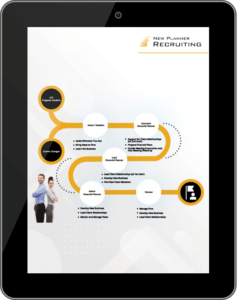 Download your free copy of the New Planner Career Roadmap! In this roadmap, you'll be guided through the details of various stages of your financial planner career, including position descriptions, licensing, skill and experience level requirements, and compensation ranges.
Get the Full Episode Transcript:

Read the Transcript Below:
Welcome to the New Planner Podcast, where it's all about helping you successfully enter the financial planning profession and accelerate your financial planning career. This podcast will help you understand the profession, become familiar with the various career paths available to you, and avoid the mistakes that limit your success. Join your host, Caleb Brown, to explore the human side of creating a successful planning career through interviews, personal experience, and insights from the trenches. Let's get started.
Caleb Brown: Welcome to the 240th episode of the New Planner podcast. This is Caleb Brown, your host. My guests today are Jeremy Portnoff and Sage Vincent. Jeremy is the founder of PortSalus Wealth Management, and Sage is a client service associate. Jeremy and Sage joined the show today to share how their career journeys brought them to working together at PortSalus.
Jeremy shares how he went to school to be a financial planner, but his first role didn't provide the mentorship he wanted, and he left for the fee-only worl, where he ultimately started his own firm. Sage shares how she was preparing a career in social work and went back to school to learn the business side, and then found her way to the CFP program.
Stay tuned to hear how Jeremy grew his skills as a manager and supervisor, and how Sage adds value to the firm and has progressed quickly. I hope you enjoyed this episode with Jeremy Portnoff and Sage Vincent.
Before we get started, a quick thanks to our sponsor, Dalton Education.
Earning a CFP is one of the most powerful ways to launch a career in financial planning. It builds your credibility, boosts your confidence, and shows clients you're ready to make an impact on day one. At Dalton, they believe the CFP earns you a seat at the client table, but what you learn in the education program is what keeps you there. Their CFP FastPass program gets you exam-ready in just six months through a comprehensive instructor-led course.
Stay on track and you'll be on pace to pass the CFP exam in under nine months, start to finish. And to make it even more accessible, they're offering a $3,000 career changer scholarship or 15% off for listeners of this podcast. Check the show notes for the link and details.
Caleb Brown: Hi Jeremy. Hi Sage. Welcome to the New Planner podcast.
Jeremy Portnoff: Yeah, thanks for having us.
Sage Vincent: Good to be here.
Caleb Brown: Thank you guys for making time for me. This is gonna be fun. This is gonna be exciting. I know a lot of your story, but I'm sure I'm gonna learn something and I know our guests are gonna get a lot out of this. So, Jeremy, I wanna start with you. How did you get started in financial planning?
Jeremy Portnoff: I got started in financial planning, I actually studied financial planning in college, and the school that I went to, Cal State Fullerton, my understanding, it was one of the first CFP board-registered programs back in the day. You know, this was the early 2000s, and I actually just kind of stumbled upon it.
I didn't want to go other directions and I had a really good teacher in a class. And actually the one was personal financial planning. And I'm like, “Oh, well, that would be good to learn about how to manage my money.” I didn't know it was about helping other people do that, but it kind of led me down the path and I really liked the courses, had a good teacher, so I just kind of went in that direction.
And so as I was finishing school, you know, it's time to look for a job and a friend said his cousin was in the business and you know, “Go meet him.” Have a quote “interview.” I say that in air quotes 'cause it didn't really feel like an actual interview after the fact. 'cause it was recruiting for product sales, you know, mutual funds, annuity, typical kind of insurance brokerage side of things. But yeah, that's how, that's how I got started.
Caleb Brown: I can relate to that. I mean, he might have been listening to this. I have a similar, I kind of, kind of fell, fell into it, but it's worked out for you and we're gonna come back and pick up on that in just a minute, but I wanna bring Sage in. Sage, how about you?
So you're technically a career changer, so that's right. You're a career changer, so you couple years in another field. So how did financial planning, how did you get interested or become aware of that?
Sage Vincent: Well, in college I studied business and intercultural studies, thinking that I would go more the social work direction, but thought it was important to know how to manage the business side of things.
And so after I graduated, I did go more the social work direction and I worked in an adoption agency and really enjoyed what I was doing. But I heard about the CFP program at Biola after I graduated and I thought, oh, actually, that, “I think that's what I wanna do.” But I had just graduated when I heard about it.
So I continued with my role with the adoption agency and was enjoying what I was doing. But I began, on the side, to work through the CFP education part of the process, through Boston University.
Caleb Brown: As an adoptive and foster care parent, I really appreciate your work and doing that. I mean, we need more people in that area.
I'm glad to have you in financial planning. That's not what I'm saying, but I'm just, I wanted to acknowledge that because it's hard work and it's good work. And so it sounds like you made the decision to not just stop and say, “Okay, I'm gonna pursue a job, but I'm gonna stay here. Kind of keep working, then pursue my coursework, and then I'll start the job search.” Is that what you did?
Sage Vincent: Yes. Well, in my own way, I also stumbled into financial planning, and by the time I heard about it, I was settled and enjoying what I was doing with the adoption agency and just thinking, you know, maybe a few years down the road I'll be ready to make the transition. But when I heard that there was this education component, I figured, well, I might as well. I’m young, I don’t have kids, I have free time in the evenings. Might as well work on that education while I have the time.
Caleb Brown: So you thought, “Hey, I need to get this CFP education.” There's no, I guess what I'm hearing is, I mean, 'cause you, you didn't, it's not, I mean, we've talked about this before on the show, it's not required.
Sage Vincent: Right.
Caleb Brown: Being a CFP is not required to be a financial planner. So a lot of people, there's probably half the people who think it should be the other half, probably like, just like in politics. Right. So you, I mean, what encouraged you to do that versus just saying like, “Well, I'm just gonna go be a planner somewhere without the CFP?”
Sage Vincent: You know, I wish I had a better answer for you other than I really at the time didn't know the way I heard about financial planning as a profession, because I heard about CFP certification, so I just didn't really know there was another path into the profession. So I just started the road and then I realized there's a lot more to it than I thought at the beginning, but in some ways it's a blessing.
I think if I knew maybe how long the road was, I wouldn't have been able to start it when I did. So I'm glad that I took the path that I did, but it is now I know a bit unconventional.
Caleb Brown: There's so many entrance points. I mean, it can be overwhelming for a lot of career changer. Like, I don't even know where to get started, right?
I mean, I'm not even sure what to do. One of the reasons I wrote the book, Finding Your Path, that I've talked about. So Jeremy, let's come back to you. So you're, you're selling products, which it's obviously something changed, 'cause that's not what you're doing now. So maybe just pick back up on your story on you, but hey, you leveraged your personal network, which is a great way to find a fit. How long did you stay in that role before you moved on to something else?
Jeremy Portnoff: It was about two and a half years, if memory serves. And there were really two factors that were happening. One is that no one was doing any actual financial planning.
I mean, I came from this academic background of doing plans in all the areas that we study, right? And nobody was doing any of that. And the only person that even would remotely, that had a CFP was an older person who was never in the office. So there was nobody that could actually help me implement what I learned, and there was that confrontational approach when you would talk to someone about, say, life insurance.
Trying to sell your 22-year-old friend life insurance, like that doesn't, it's not a comfortable conversation, especially when something's digging at you like, “Hmm, I'm not so sure this is the best thing for them.” But the bosses are telling me this is what I need to do. So that whole thing was just very uncomfortable, and the mentorship that I was getting was severely lacking, just severely lacking.
And it just, it didn't sit right. So, I eventually learned about what fee-only was. I brought this to my superior's attention. I was like, “Hey, I wanna charge for plants. I wanna charge for advice and doing these things.”
And they, what they told me is, “No one will pay you.” I thought that was just really odd to be told something like that. I'm like, here, I'm trying to have an idea to develop revenue, and I'm being told no one's gonna do that. No one's gonna pay you. That just, it never sat right with me, so as I learned about fee only, started talking to some people, and learned about NAPFA and it kind of set me on this other path.
And because of the experience that I had had, I decided, and this was 20 years ago. Actually, it's just was my anniversary of that, a couple months ago. 20 years.
Caleb Brown: Congratulations. That's really cool.
Jeremy Portnoff: Yeah. I mean, I was young and I'll say dumb enough at the time to figure, you know what, I'll just do this and see what happens. You know, setting up an RIA, that wasn't a whole lot of information, but at the time it was a matter of do I give up this much revenue to this firm that's not helping me? Or do I spend 3000 bucks on this attorney who's gonna set up a business for me? And that's all it was at the time. And so I figured, you know what, I'm gonna, I'm gonna go for it.
Caleb Brown: So, so you set your own firm up 20 years ago, is that what you just said?
Jeremy Portnoff: Yeah. Yeah. It was in March of 2005.
Caleb Brown: After being in a product sales role for two and a half years. Wow. I mean, there's a lot to unpack there. Just, I mean, did you have any clients or were you just starting from scratch?
Jeremy Portnoff: It was mostly from scratch. There was a couple of people that I had sold some products to that wanted to come on board, but it was basically nothing.
Caleb Brown: So it never entered your mind to go try to get another job at more of a fee-only planning, 'cause you mentioned the NAPFA group, the planning, and then start your own firm later on. You just went right for it.
Jeremy Portnoff: Yeah, I looked into it a little bit, but it just wasn't as prevalent as it is now. Knowing what I know now, I could have done more research and found a role, but I really, I had such a bad experience and even when I worked in retail in college, I had situations where the authority figures were not doing what they were supposed to be doing.
So I guess I'll throw the word arrogance in there, which I was arrogant enough because I was young, where I thought, you know what? I'll figure this out myself. And I was kind of raised that way anyways, like a long line of business owners in my family. So it was like, I'll figure it out.
You know, if I stumble, whatever, I'll learn, you know? So, yeah, I just went for it. But, wasn't an easy path by any stretch.
Caleb Brown: And I wanna come back to that too and continue on. But I wanna bring Sage in, like, you know, Sage, you joined Jeremy's firm as an employee. Did it ever cross your mind just like, “Hey, I don't wanna work for somebody else. I'm just gonna do it all on my own,” and I just plow ahead on setting your own RIA up.
Sage Vincent: No, and especially. I mean, when I was working on the education and the exam, I had never met a financial planner in person before. So when I met with Jeremy, yeah, it did not cross my mind to just start my own, start my own firm.
No, I knew I needed somewhere to apply the things that I had learned from the books.
Caleb Brown: Well, what's curious to me is, this is interesting, so you just said, “I'd never talked to a financial…” But you plowed into the education component. And I'm just trying to marry those two, like, just not reaching, I mean, I guess you were confident like, “Hey, this is what I wanna do.” Versus, I need to go talk to a handful of planners, see what they're doing, and then I'll do the education component. That's actually quite interesting.
Sage Vincent: I mean, at the time it was 2021, so people were still not even fully meeting in person, and so it was just overwhelming trying to find someone. I looked for different, maybe mentorship opportunities online, but everything was virtual and so I just figured I'll start with what I can do, which is study.
Caleb Brown: Let's go, I wanna ask you what you're looking for in the firm in a minute, but the education component, you're working full-time, I think you said you did not have kids at that point. I mean, how did you balance a full-time job and also going through the CFP coursework?
Sage Vincent: Well, I would work, you know, standard 40-hour work week. And then when I got home in the evenings, I would just spend an hour or two working through the materials and Saturday morning would study and just slowly chipped away at it using evenings and free time. And I think a lot of it is just the stage of life I was in. I just had that time, so I figured I might as well fill it with something that will be beneficial.
Caleb Brown: What, what was the most interesting class, and then also then on the other side, the most difficult?
Sage Vincent: The most interesting was estate planning. I did not know you could do so many things to proactively prepare. And I remember telling my husband like, “I learned about a GRAT today.” He was like, “What?” So that was just like learning a new language. So that was interesting. The most difficult was the tax planning. I just had to read that a lot of times.
Caleb Brown: Okay. Got it. Got it. And then talk to us about CFP. So did you take the exam, or where are we on the exam cycle?
Sage Vincent: Yes. I took the exam in November of ‘23 and did not pass, and then took it again in July of 2024. Passed. And then I felt like at that point I had enough confidence to start applying for jobs and transition fully out of working with the adoption agency.
Caleb Brown: That's amazing. What was the difference? What do you think got you over the hump? I mean, you failed and then you came right back. You skipped the March cycle and you went one additional cycle. What did you do differently to get you the result that you wanted?
Sage Vincent: Well, the first time through the program I was using was helpful, but it was fully asynchronous and fully virtual. And as I'd mentioned at that point, that had been my entire experience. So after I didn't pass, I took a few months off, which I think was really good because I had just canceled my whole life to prepare for that the first time.
So I took a few months off and then in the spring I actually did the Danko education course and that was just made a big difference for me because there was a week where, you know, you're talking with real people and it's live. And that review style just really connected with me more. And I think overall I focused more on what concepts am I not understanding as opposed to just, “Am I clocking study time?”
The first time, I was much more like, “I need to study this many hours, this many minutes a day.” Whereas the second time, I really just focused on maybe I'm studying less, but I'm understanding the concepts better.
Caleb Brown: Well, congratulations. That's a tough exam. I know that made you, that made you feel a lot better.
And I mean, just, there's some people that call me like, “Look, I've taken it once and I've failed and I can't get back up on the horse. Like I don't.” And I mean, it's a mental thing for sure. Okay, Jeremy, back to you. So you have your own firm. You've two years, two and a half years of product sales, have your own firm, not a lot of clients. So what did it look like? How big a struggle was it for you?
Jeremy Portnoff: It was a very, very big struggle 'cause I just, I didn't know what to do. I didn't really know how to get business and I just read everything I could. I went to a few local NAPFA study groups and just learned what I could. And I started just getting myself out there.
And I actually had somebody who asked me what I was doing to get business, and, well, I told them basically nothing, you know, and they said, “Well, you can't, can't sit around waiting for the phone to ring.” And I'm a bit of a contrarian, so if someone tells me I can't do something, then I'm gonna push forward with that very thing.
So it was kind of like, “Oh, really? Well, watch me.” And so I basically put myself out there on every website, membership organization, and everything that I could possibly do or afford if there was a cost, and just started, and the phone rang. The phone started ringing. I mean, it really did in those days, at least.
Caleb Brown: Just from the website listings?
Jeremy Portnoff: Website listing. I had built my own website, and like looking back, I mean, it was garbage, but I mean, that was okay then. NAPFA listing, NAPFA was a huge, huge, I wouldn't have survived without NAPFA, just other websites. And I also tried to differentiate myself early on in having the CFP. I started doing other credential programs too, 'cause my attitude was, well, I think I was like 26 at the time.
Who's gonna take advice from me? Like I need to have something that documents in some kind of official way that somebody has vouched for me, that I know what I'm doing. So I started doing educational programs and getting the letters after the name. And then, yeah, all these website listings and things and yeah, the phone did just start to ring.
Caleb Brown: Okay. So then you started bringing in clients and was it, has it just been you by yourself for the entire time until we hired Sage?
Jeremy Portnoff: No, I was by myself for a long time, so this is, let's call it 2005 to around 2016 is when I first started using some, let's call it fractional help. I had a good paraplanner at the time that was part-time. She did a great job, but there were some limitations there. I tried having an assistant, a virtual assistant. That didn't work, but the paraplanner was going okay. Part of it was not because of me, like I was too busy. I didn't know how to set things up properly, to have like workflows and things going smoothly.
But it was around the time that I was considering making a change. I might be mixing some memories here, but there was a point where I had moved from New Jersey to California, and I was looking to possibly sell a portion of the business, and I got in contact with these guys, you know, running a small firm, and they eventually encouraged me to join them.
So it was somewhere around that time where the paraplanner just kind of up and said, “Oh, I'm not gonna be working anymore.” I kind of was, left me in a scramble because I had become reliant upon her. And so I was like, “Uh-oh, what am I gonna do?” And I was not gonna move forward with this firm. And we ended up having some additional discussions.
And long story short, I ended up tucking my RIA in with this other firm and they were gonna provide me some of that support that I was looking for. So there was this fractional support, and then I joined this firm. So that was 2019-ish, I wanna say. So about six years ago. And great people. I had a good experience. I've been kind of lonely all those years working by myself. So it was nice to have some people to interact with, you know? But ultimately, it wasn't a good fit, unfortunately, from a business perspective. So I ended up relaunching the RIA again, we're coming up on two years now.
So I started up again with some fractional support. And kind of similar, it was like, it was okay, but not great, and it just wasn't quite what I needed.
Caleb Brown: And would you just, so the audience, when you say factional support, you're talking about you're kind of renting a paraplanner that's renting themselves out to lots of other firms. Is that what you mean by that?
Jeremy Portnoff: Sort of, you know, without naming names and whatnot, it was an organization that had employees to provide the services for you.
Caleb Brown: Got it. Okay. Understood.
Jeremy Portnoff: And there were some limits on the services. Yeah, so like the notion of paraplanning, it was, we never quite got there on the paraplanning side, but it was like administrative support, paperwork and helping structure things in the business and whatnot.
But there were definitely some limitations and things left to be desired. My view on it, and this is just my own, I know it works for other people, and I'm sure there's other services out there that do a great job. For me, I found that I needed somebody who had buy-in with the practice as their only focus.
So having a split focus if you're providing paraplanning support, but you're also trying to develop your own business. There's, I had someone like that and it just, it didn't work. They weren't doing the things they were supposed to. So I just, yeah. It wasn't working for me. I needed–
Caleb Brown: That's what a lot of XYPN members do when they're first starting out.
They, to get more income they’re paraplanning and doing things for other people, and it's worked out for a lot of them to get some runway. So when did you decide, “Okay, no more fractional stuff, I need a full-time in-person. I need a Sage Vincent on my team.”
Jeremy Portnoff: Yeah. There was something happening with the virtual assistant organization, and it was around that time, I'm like, it's just not working. I need to find someone that is full-time. I need to take that step. The coaching program that I was in really was instrumental in giving me the confidence that I needed to make that leap. I mean, you know, frankly, it was about money.
I mean, frankly, it's just, you know, it's a big change in cost. Even from a part-time paraplanner, it's still a big jump in dollars. Now, part of my thought process there was okay, it might cost twice as much, but it's four times as much hours that you can use, right? So, that was a big part of that, that decision.
Caleb Brown: Gotcha. Let me go to Sage. So what, Sage, when you were looking for your job, what were you looking for?
Sage Vincent: I was looking for a place where I could put into practice everything I had spent at that point, you know, two and a half years learning. And I thought that a smaller firm or RIA would, I think, help me put those things into practice faster. So, I thought maybe looking at a smaller firm would be the best fit for me.
Caleb Brown: And how did you, because that's a lot of career changers struggle with that. What channel do I go in? Do I go wirehouse, insurance, RIA? So it sounds like you were able to get some. Did they teach you that in the CFP course?
How did you know that the RIA, the small RIA, was gonna be the best fit?
Sage Vincent: Actually, I'd done the amplified planning externship and they had a lot of good interviews from people that talked about the pros and cons of both. And so I spent a lot of time thinking about that, which is gonna be the best fit for me.
But I decided at the end of the day, while there are benefits to both, the more, I didn't know it was just going to be Jeremy, a solo RIA, but I figured that more one-on-one support and attention would help me pick up speed faster in the long run than perhaps the larger firms, so.
Caleb Brown: So the, you know, one of the benefits and my story is very similar to yours, like if you're with a sole practitioner, I mean, you don't have to share them with anybody else.
I mean, they're to kind of give all the mentoring and all their extra energy to you. And it seems like that's been working and you've kind of cashed in on that. Is that fair to say?
Sage Vincent: Yes. I think especially because I had spent two to three years just learning on my own. I was looking for somewhere where I could hit the ground running fast.
And so I have been able to learn a lot from Jeremy in a short amount of time, and I think I, obviously, I don't have anything to compare it to, but what I would imagine, maybe a bit quicker than had I started in a larger practice.
Caleb Brown: And by the time this airs, you're gonna be there about a year. So what have you been spending most of your time doing and learning?
Sage Vincent: Well, first I just had to learn the very simple things, like how do you actually help a client open an IRA, and how do you actually process a Roth conversion? But then also, how do you evaluate and make those decisions? So, Jeremy has been really great in helping me learn those things, or at least see them in action.
So from the beginning, he's been including me in client meetings, even just to observe and be involved. So I really feel like I've gotten to learn really what it means to be a financial planner. So I've been very appreciative that he's been so generous in letting me see behind the curtain, so to speak, on what it looks like to interact with clients and help them make good decisions, and how to execute them.
Caleb Brown: What's been the hardest part of your job thus far?
Sage Vincent: The hardest part is probably knowing when your clients could be making better decisions, but for some reason they just, they don't want to. That's hard to see, which I had anticipated being the case, but it's harder when it's not just reading the case study in the book, but this is a real person in front of you and you're really looking at their livelihood. So I think that's, for me, emotionally challenging. And then practically just keeping up with all the different kinds of paperwork and keeping all those details straight.
Caleb Brown: It's a lot, isn't it?
Sage Vincent: Yeah. And you don't learn that in the education. Those are things you just have to learn on the job.
Caleb Brown: And what, I mean, the funnest part. I mean, do you wanna still do this? I mean, are you, or is it like, “Ah, I gave this a shot for a year and I don't know.” I'm kind of putting you on the spot here. I mean, like, is it been what you thought it was gonna be and rewarding and fulfilling?
Sage Vincent: It is, and I was concerned about that. I mean, coming from working in adoption to financial planning, I was a little concerned, is it maybe not going to be as fulfilling? But I think what drew me to the profession is knowing that everybody has hopes and dreams for their life, and a lot of times it's money and finances that are holding them back.
And so I think it is very fulfilling to be able to help people accomplish their goals and live their dreams. And I know that that sounds maybe a little bit cheesy, but money holds so many people back from what they really want from life. And so it is fulfilling to be able to just be a small part of helping people really step into the life that they want.
Caleb Brown: I mean, that's, if kinda look, like social workers, teachers. I mean, they make really good financial planners, right? I mean, if you like, look, peel it back and like that's, they're kind of already doing that. Thanks for walking us through that. Jeremy, what were you looking for from the employer's perspective?
Like on your kind of first, I'm gonna call big, full-time, you know, now you've got a lot more risk, right? Than there's the fractional person that's like, “Okay, I'm done with you guys.” Or, “I'm moving on.” What were you looking for in a new hire and the role that you wanted them in?
Jeremy Portnoff: I think to a large degree, looking for somebody who, you know, willing to learn, that has a little bit of that self-starter, but not with completely where they're gonna want to go on their own, right? And that's a big decision from my seat is putting in the time, energy, and the cost into training and mentoring someone and then a couple years down the line, worry that they might go off on their own, which, you know, is always that risk there.
But you don't want, from my perspective, somebody who's completely independent, 'cause then they're definitely gonna go that way. I mean, I had some candidates that I decided not even to interview, 'cause I could tell from the resume they're gonna do their own thing at some point.
You know what I mean? But you still want somebody who's gonna want to grow and help grow the organization, help make the changes that need to be made so that there's still that component there where you benefit from that self-drive. I don't think I'm a micromanager. I try not to be, at least maybe on most things.
I want someone who can work independently, but obviously, somebody who doesn't have the experience needs training too. So there's kind of trying to find a balance there. But I was actually more open to someone like Sage because there was no experience. To me, that was a positive because I thought, I don't want her role to be defined by how she learned how to do that at someone else's firm, which may not be my way.
Not that my way is the best way. Of course, there's plenty of things that we can improve upon always, but it was that, you know, freedom of mind of like, “Well, I don't know how this is supposed to be done, so let's just take it with fresh eyes, fresh thoughts, and do what seems to make sense.”
'Cause that's exactly what I did. I was on my own. I didn't have any of that. I just had to figure it out. So that was actually kind of important to me. And I did have some really good candidates that had some experience and I thought, “Okay, well, day one, they're gonna already know how to do an IRA application.” They're already gonna know how to do this or that, or whatever.
And I weighed that a lot and ultimately decided that, you know, someone like Sage, but of course, her specifically being the preferred candidate that did not have that influence.
Caleb Brown: Good point. And I think that opens up a lot more talent pool to you, because most of your colleagues and the ones listening to this are like, “Jeremy, you know, the right moves to go to the higher the experienced person, bro, what are you doing?”
I mean, that's what most people default to. Yeah. So I just, I mean, again, putting you on the spot here. I mean, you're a year in like, how has the fit been? I mean, why is she still there and why is it still working?
Jeremy Portnoff: I think things have gone very well, all things considered. And what I mean by that is, let me drop back for a second, because I think from her perspective as someone looking for a place to go, there are obvious pros and cons to a big or medium-sized firm versus sole practitioner. These firms that have experience in hiring someone in training, they have that all documented.
I don't have that. So when she came on board, I was very honest and I'll use the word vulnerable, where I said, “Look, this is new to me, so we're gonna embark on this journey together.” I don't know, like, are there certain right things or wrong things? We're just gonna have to figure this out together.
So trying to figure out what I needed and the help that I needed, there was no structure to it. It was just starting from the basics. Okay, well, I need to get some activities off of my plate. I need to free up my time so I can work on the business. And it was, from day one, well, what are the things that we need to do?
And it's okay, we need to learn how to use the CRM system and stuff like that. So, The fit part. That's right. So I remember the Kolby thing was really interesting 'cause there were some things in there that were, let's say, potential consumer and I don't remember exactly, Sage, maybe you remember, but I think one of them was like the quick starter.
Caleb Brown: Quick start.
Jeremy Portnoff: Yeah. She's more a quick starter, whereas I will just overthink some things and that has really helped me because I feel it when it's happening. Well, you know, maybe we're building a workflow or something and I'm like, “Well, let's do this.”
Caleb Brown: And she's chuckling right now. You guys can't see.
Jeremy Portnoff: Yeah, we've had many of these conversations and it's like, I'll say, “Well, let's do this thing this way.” And then she's, “Well, what about if you know this or that?” And then I start my overthinking. I'm like, “Well, it could be this.” But then there's this situation and I sense it happening where, because I know she's a quick starter and I know that, she's like, “Let's just do this.”
It’s changed the way that I think about some of these things where I'm like, okay, she's gonna be the one that's doing it. I probably should default to her. I'm totally overthinking this. I need to make a decision, and that has helped me move forward on some things when I'm clearly overthinking. So even things like that, where there might have been a possible concern of it not fitting, has actually worked really well for me.
Caleb Brown: You kind of touched on this a little bit, and, and maybe this is part of your answer, but how have you had to step up your game as a leader and a manager? Now that you, I mean, you, you have a full-time in-house employee. I mean, that's different than all the fractional sort of VA, like outsource stuff. Talk to us about that.
Jeremy Portnoff: Well, yeah, there's a lot of unknown there where, you know, again, I've never been in this position before, so I don't know if there's a right or wrong way to do this. I just figured she wants to learn the business. I need someone that's gonna help me so that we can grow, but if I'm being just very vulnerable, there's this almost constant worry from my standpoint.
Am I doing the right thing? Am I teaching her in the right way so that she's gonna be able to grow and fulfill what she's trying to accomplish in this profession and going to want to continue working with me, right? Because that fear is, I think it's always there for any firm owner. That you're gonna have a great employee and then they're going to, for whatever reason, leave. And so there's that constant pressure of, I've gotta make sure I'm doing what I can to support her, make her feel that she's doing a good job, that she's properly supported, so that she's finding value and the fulfillment and whatnot.
So that's kind of a constant thing for me, which kind of keeps me on my toes and I do worry about it from time to time, even just in the personal life lately, there's been a lot of just crazy things that have been going on, without getting into it, I've been able to rely on her for some things where I probably, earlier than maybe I would have, but I was like, “Hey, I'm in this situation. I'm gonna have to leave this meeting early.” Like, “Hey, do you wanna finish up the meeting and go for it?” And so we've had moments like that and it's worked out really well.
So kind of giving her a little bit of that runway to try something, to learn and grow and, you know, when things are maybe not ideal or something didn't go an ideal way or whatnot. I think we have a really good rapport. We're able to talk about it. I'm able to give her feedback, put in, you know, the mentoring to say, “Well, this is how I would've done this,” or, “This is how we need to fix this,” or whatever it is.
And she's very receptive to those things, absorbs and then implements. So all those things have gone really well, but I think it's been a journey for both of us.
Caleb Brown: Sage, why do you think it's been a good fit?
Sage Vincent: Well, I think I've been able to learn even more than I thought that I was going to be.
Like Jeremy mentioned, a lot of what we're doing is establishing processes and workflows, and it's fun and interesting to be involved in the development of that. And I think in that way, I am a builder and a creator in that sense. And so I think it has been honestly a good fit that I've been able to be here for some of that process and be involved in the creation of those processes.
And then there's also just, I mean like Jeremy mentioned, I definitely am a quick starter. I mean, that's how I got myself into this situation of being on the CFP road without really knowing where I was going. Those are all tied together. So I think in that sense, we do balance each other out, and there are times where I need to slow down and look at something a little bit more closely, and Jeremy’s able to catch those and help me grow and learn where I need to slow down and where I can continue to run fast.
Caleb Brown: It's a good values match, right? And you guys have found a way to use your cognitive strengths, which is what Kolby measures, to complement each other. Some firm owners would look at this as a negative.
Like, “Oh, they're not wired like me. We're gonna butt heads.” And that certainly can happen, but think you guys have found a way to make this work and really just a cool story. Jeremy, we'll start with you. I mean, just as we're winding down, I mean, and then Sage will come to you. Any final tips or thoughts or anything else that you'd like to share before we, with the audience, before we close out?
Jeremy Portnoff: The biggest decision in going to a full-time employee, it was tough, but I can't say I regret not doing it sooner because the things that we do lead us to making the decisions that we ultimately need to make. So maybe I had to go through the things that I went through to get to this point but, for me, it's just been a complete game changer and we're progressing at a really nice pace. Setting up all the systems that need to be set up processes, where I know when we look back on this, like a year from now, we're gonna have like a well-oiled machine. Things are gonna be going really well from a business perspective, her career path growing.
I mean, every couple of weeks, we kind of add something new. Like we're about to go through our next surge season, where we're gonna be updating plans. So now there's gonna be a big shift from her doing a lot of administrative and like paraplanning work to starting to do financial planner work and so I hope that that is making a difference in her career path, progressing at a nice clip.
But just the whole decision to go this path has been an absolute game changer for me in many different ways and I'll never look back.
Caleb Brown: That's awesome. Sage, what about you? Any final tips or, or thoughts or words of wisdom for the new planner audience?
Sage Vincent: Well, it's crazy. I remember listening to your podcast and so many other podcasts a year and a half ago, having no idea where I would be now.
So it's really a full circle moment. So I think my biggest piece of advice or takeaway is not to be scared to ask what may seem like silly questions. Sometimes, putting together the book knowledge, the head knowledge, and the in-practice experience, there are questions that I feel like I should know the answer to this, but I don't.
And think I could have in some ways grown faster if I'd been willing to put myself out there and ask the question. So I think that would be my biggest takeaway. And especially if you were fortunate enough to end up with a boss who is engaged and involved like Jeremy has been. He's just provided a really comfortable environment and said from the beginning, I'd rather you ask if you don't know something. And so I've been so thankful for that. I would say to anybody listening, don't be afraid to ask those silly questions.
Caleb Brown: Well said. Guys, thanks so much for coming on the show.
Jeremy Portnoff: Absolutely.
Thanks for joining us for this episode of the New Planner Podcast. If you are ready to discover the top career paths for financial planners and see which track is best for you, we created a free guide to help you. Grab your copy of the Financial Planner Career Roadmap at newplannerrecruiting.com/roadmap. There, you'll also find more tools and resources all created to help you build a successful financial planning career. Tune back in next week for another episode, and until then, we are here to help you succeed.
Share the Love:
If you like the New Planner Podcast...
Never miss an episode by subscribing via Apple Podcasts, Spotify, Amazon Music, YouTube Music, or by RSS!



Leave a Reply