What does it really take to leave a stable, high-level career and start over in financial planning? In this episode, Lisa Schaefer shares her journey from working in public policy to becoming a financial advisor. You’ll learn how mentorship played a critical role in her transition, why starting with the Series 65 helped her test the waters, and how she navigated the uncertainty of breaking into a completely new industry.
Listen in as Lisa opens up about the realities of taking a pay cut, working in a high-pressure, commission-based environment, and ultimately finding the right firm fit that prioritized mentorship and long-term growth. You'll hear about the pivotal moments that helped her make the leap and get practical insights for anyone considering a career change into financial planning.
What You'll Learn In Today's Episode:
- Why Lisa wanted to make a bigger impact beyond public policy. (1:30)
- How mentorship helped guide her career transition. (3:00)
- Why starting with the Series 65 was a smart first step. (4:20)
- How she balanced full-time work while studying for exams. (7:52)
- The challenges of commission-based compensation and pay cuts. (12:35)
- How she evaluated whether her first firm was the right fit. (15:30)
- Why mentorship and support became her top priority. (20:45)
- How joining the right firm accelerated her growth and confidence. (23:00)
Ideas Worth Sharing:
“You have to be honest with yourself about how serious you are about doing this… It wasn't without sacrifice, but as you said, it's all self-study, so you can really drag it out as long as you want to.” - Lisa Schaefer Share on X “It can be terrifying to go from that sense of safety and stability to something else.” - Lisa Schaefer Share on X “I like being on a team, and I like having that sounding board… Getting that sense of additional perspective and guidance—things you haven't thought about or considered—is really beneficial.” - Lisa Schaefer Share on XResources In Today's Episode:
- Lisa Schaefer: LinkedIn
- New Planner Recruiting - Financial Planner Career Roadmap
- Finding your Path: The Roadmap from Student to Successful Financial Planner by Caleb Brown
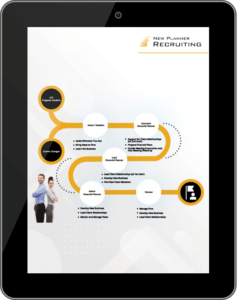 Download your free copy of the New Planner Career Roadmap! In this roadmap, you'll be guided through the details of various stages of your financial planner career, including position descriptions, licensing, skill and experience level requirements, and compensation ranges.
Get the Full Episode Transcript:

Read the Transcript Below:
Welcome to the New Planner Podcast, where it's all about helping you successfully enter the financial planning profession and accelerate your financial planning career. This podcast will help you understand the profession, become familiar with the various career paths available to you, and avoid the mistakes that limit your success. Join your host, Caleb Brown, to explore the human side of creating a successful planning career through interviews, personal experience, and insights from the trenches. Let's get started.
Caleb Brown: Welcome to the 273rd episode of the New Planner Podcast. This is Caleb Brown, your host. My guest today is Lisa Schaefer, who is a financial advisor at KFA Private Wealth Group. Lisa joins the show today to share her career transition from working in public policy to financial planning. Lisa shares how she was looking for a job that would allow her to make a bigger impact, so she moved to a few different roles and eventually to financial planning. She shares how, in that transition, she reached out to a mentor who directed her to the Series 65, which helped her land her entry-level job and jumpstart her financial planning career, even though the firm wasn't a long-term fit. She goes on to share how she did end up finding a fit, why she joined the firm, what she does every day, and how she's overcome some challenges along the way. Also, stay tuned to the end to hear how she navigated taking a pay cut to get started in financial planning. I hope you enjoy this episode with Lisa Schaefer.
Hi, Lisa. Welcome to the New Planner Podcast.
Lisa Schaefer: Thank you so much for having me. It's good to see you.
Caleb Brown: Yeah, this is going to be so fun. Thank you for joining us. I just want to start with how you got interested in, or became aware of, the financial planning profession and the CFP certification.
Lisa Schaefer: It was something that I had contemplated for a number of years. I was working in the policy and regulatory space in financial regulation, capital markets, and that type of thing. So, working on policy issues like retirement security and expanding access to investments for retail investors, I felt that I was pretty familiar with the idea of investing and different investment philosophies, but I started to think about what it would look like to make a bigger impact in terms of financial literacy and retirement security. And so, I had a mentor of mine who was a financial planner, and so I started to reach out to her to see what that would look like.
Caleb Brown: Awesome. I'm glad that they were there to help you. So, government and policy, is that where you said you got your start?
Lisa Schaefer: Yeah, I had worked in the policy and regulatory space for about 10 years before making a shift. So, it was more of a mid-career thing for me.
Caleb Brown: Okay. Gotcha. So, you talked to the mentor, and then what did you do after that?
Lisa Schaefer: She was really great because she was able to give me a perspective on what it was like to be a career changer. She had also transitioned from corporate finance into financial planning, so she was able to share more about her experience and then just encouraged me to giving me different avenues to sort of "try it before I bought" the full-blown career change. What she recommended to me, because I had been toying with the idea of, "Should I go back to school and do the CFP certificate program?" or, "What would be ideal to kind of start to peel this back and see if it's a good fit?" And so she recommended to me to do the series 65 exam, which I wasn't aware of at the time. And so that ended up being kind of the right next step because it was a lighter lift than doing the full CFP program, and could give me access to being able to start working in the field or something like that.
So I think that was a really helpful conversation. It was kind of a seminal point at the, you know, pivot point, if you will, of thinking about making a shift into actually doing so.
Caleb Brown: Okay. So, you really didn't, at that point, have an idea of what channel or entry point you wanted to come into the profession through. She mentioned the 65, and that's sort of it. You didn't know you wanted to do the RIA, I guess is what I'm asking?
Lisa Schaefer: Yeah, this was early on in the shift. I was really just getting to know the landscape and really not having a good sense of the different avenues or the different firm types. I was really lucky to have her insight and wisdom because, with the 65, as you know, I could sponsor myself. I did it on my own volition. It gave me an opportunity to see if, intellectually, I enjoyed the coursework, which obviously I did, and then gave me an opportunity to start to talk to firms about what joining would look like in terms of joining. So, it ended up being the right catalyst at that time.
Caleb Brown: And you did that while still working your other job, is that right?
Lisa Schaefer: Yeah, I was still working in my older field. And I felt like there was enough overlap, but it was still a new venture as well.
Caleb Brown: Okay, gotcha. So, after the 65, how did you find your first position? Did you just start reaching out to firms, or how did you get it? Because you had one other job before KFA, right?
Lisa Schaefer: Yeah, that's right. I had started to reach out to mentors for informational interviews. I felt like there were a lot of people who were really open to having conversations, having coffee, and sharing their journey. So, that was a really good opportunity to get to know, like you said, different firm types and different avenues. I started shopping my resume. I used the CFP Board recruitment site and I reached out to New Planner Recruiting, which was helpful. It was kind of an "all of the above" approach in terms of just trying to figure out what the right next step would be. And you're right, I ended up being recruited by another firm for that first step into becoming a full financial advisor. So that was a really good opportunity as well.
Caleb Brown: I want to come back to that for a minute, but I just remembered something else I want to ask. If you remember, how long did it take for you to study for the Series 65?
Lisa Schaefer: That's a good question. If I recall correctly, you know, I kind of did it part-time as I could kind of, you know, if I hook and by crook, kind of fit it into my schedule. But I think I did the whole thing in like three to four months.
And then it was interesting because I thought that would be the only next step, and it was great because you don't have to be sponsored by a firm and that type of thing. So there were no barriers to entry. But then I ended up having to come back and do a lot of other licensing exams for the type of firm that ended up hiring me initially.
Caleb Brown: Right, and keep going with that. Because I guess maybe they had a broker-dealer affiliation or something? You gotta go get the Series 7 and all that stuff?
Lisa Schaefer: They did, yeah. So, I still needed the 65, but then I ended up doing the SIE, the Life and Health Insurance exam, the 7, and I think the 66 to kind of complete and round out the experience. That took a little bit more time because, like I said, I was still working during that, and studying in the evenings and part-time hours. So it was a good experience, but it did feel a little bit duplicative. I think if I had a crystal ball and knew the different types of firms and what I needed to join each one, I would've been a little bit more discerning. But I think it was a really great opportunity for me to just get to know the entire landscape and really develop the confidence that I had to take the leap into the field.
Caleb Brown: I mean, talk about, if you would, just balancing your time and staying structured and disciplined on working a full-time, you know, demanding sort of high, I mean, I'm just looking at your, I mean like high level, highly compensated probably job and then trying to carve out time to do all this other stuff. I mean, how did you do that?
Lisa Schaefer: It was tough. It's really one of those things where you have to be honest with yourself about how serious you are about doing this and what your own limitations are just in terms of schedule and energy and things like that. It wasn't without sacrifice, but as you said, it's all self-study, so you can really drag it out as long as you want to, or you can be kind of "self-punishing" and just go for it. So for me it was really about having structure, like you said, like a structured schedule. Each week I would carve out, certain times. I would go to certain places that, you know, all I was gonna do there was like really focus and kind of get it done.
That was helpful. I think staying connected to my network too, because sometimes it can feel like grueling, like maybe it's not worth it when you're kind of in the trenches. And so I think having the perspective of, eventually this is going to lead to a very gratifying field and transition into a new field was helpful for me in kind of staying the course.
Caleb Brown: Gotcha. All right, so you got recruited and you joined this other firm there in the DC area. What was your role and what did you do there?
Lisa Schaefer: I was hired as a financial advisor, and so I was immediately thrust into the typical marketing, trying to find your own clients, and foster your own niche, and bring on your own client base. I was also able to work with their investment management division to help with trading and rebalancing portfolios that the firm managed, that type of thing, as well as getting exposure to their financial planning center. I worked directly under their CFP who all the firm's clients go through. And so I got a lot of really great exposure to eMoney and developing actually the financial plan. That was a really great learning tool for me because I got to see not only the clients that I was directly bringing on to the firm, but also how other planners, you know, brought on and serviced their clients. I got to know a lot more about the technology suite and the tools people use to show the impact they're making and that kind of "advisor's alpha," if you will. It was a really great experience because I got to know a lot more planning styles than just what I had learned through in the exam world. You don't really learn all of that. And so it was that kind of softer side of planning that I really got to see, and I think that was beneficial.
Caleb Brown: And then was this, so it sounds like it was kind of a hybrid role, like you kind of were trying to build your own book, doing some things, and you were kind of working for the firm. How was your compensation structured?
Lisa Schaefer: That's a great question. It was, like you said, it was hybrid. I definitely had an incentive to go out and service my own clients, so that was highly variable. I had a stipend to kind of ground and put a floor on my compensation to give me a little bit of confidence do it, and then the idea was that that would, that base was a declining base, and over time it would, you know, be reduced. And my success as an advisor was incumbent on me bringing on new clients. Some people really thrive in that structure, but for me, it was challenging because there was no predictability. That was really the first time. I had ever worked in a sales or commission environment previously, so I hadn't had exposure to that previously. It was my first time navigating it.
Caleb Brown: Yeah, I mean here you are working like corporate America, government sort of policy stuff. Well, I mean up until recently, maybe pretty, pretty safe up until then. And then here you go over here into like trying to get your own clients on like 100%. I know you had the stipend for the other stuff, but 100% commission or variable on this other stuff. I mean, that is a massive shift, Lisa. I mean, and that scares a lot of people out of just taking the plunge. So can you just—well, I mean, and the other component too here is, I mean, I'm looking at your Director of Financial Services and Tax Policy, the role you had prior to this. So I'm assuming there was a pay cut there. So how did you navigate those two items?
Lisa Schaefer: It was tough. It was a significant pay cut. I went from having a relatively stable W-2 income, salary, bonus structure, that type of thing to really, not fully, but it was certainly like an "eat what you kill" environment. And over time that can really work for the right type of person. I'm driven, I'm ambitious, but you know, I don't want to lie awake at night wondering how I'm going to "bring home the bacon," so to speak. So it was tough. I mean, I think that that was one of the things I started to consider whether or not that was the right long-term fit for me. Because I wasn't really sure that I would get through that kind of in-between period where you know your base is declining and you're not sure, really, you can do all the right things to put yourself in a position for success, but it's kind of just a little bit of luck, I think, to get through that. So that's when I really started to think, "Okay, is this going to be the right long-term fit for me?" Because it can be terrifying to go from that sense of safety and stability to something else.
Caleb Brown: You were there, it looks like, about a year and a half. So I mean, you must have had some success bringing in some clients and generating some revenue, or you would've left a lot sooner.
Lisa Schaefer: Yeah, the firm provided some support and I think that it was one of those things that, in that year-and-a-half timeframe, I really started to feel like I was making progress. You learn a lot about yourself and you learn a lot from other advisors who've done well in that environment. Like I said, it's not for everybody. And so I think that I was starting to see seeds that I had planted starting to materialize. And I started to get the confidence that maybe this could work, but ultimately I just wasn't sure. And I saw other people who left after that kind of two-year pivot point where it really started to get real in terms of compensation. And so that's when I started to look at, "Maybe this isn't the right long-term fit." And what would it look like if I made a move? So that's where your wisdom and insight into the planning industry, and knowing different firm types and different cultures, I mean, culture is really important to me as well. That's where that insight really came in as an invaluable resource for me.
Caleb Brown: I appreciate that. Yeah. Did you—and maybe just stay on that if you would, so you were, you weren't turned off by the business, which you could have been, right? Like, "Oh, is this what this really is? I'm out of here." And I do see that, and it's unfortunate, but you stuck with it. And then talk to us about the transition to your current firm. So what role were you hired into? And then maybe just walk us through the progression over the last approximate year of your tenure there.
Lisa Schaefer: It was a great opportunity for me because I felt like when I started talking to you and I started interviewing with different firms that are more in the RIA space, fee-based, what I really loved about that and what really inspired me to take that step is I felt like not only was that compensation structure a lot more predictable and stable, but I felt that when you're doing the CFP program, which I was at that time—I had been enrolled in the educational program—I felt that there was this sense from the CFP Board and from a lot of people who do well in this industry that it is an apprenticeship model and that you should have a lot of hands-on training. Yes, you should get exposure to different advisors and different advisory styles, but at the end of the day, it can be extremely beneficial to have someone kind of take you under their wings and show you the ropes, and not just on a marketing and sales side, but also on a client service side.
And so that was what I think, for me, it was more than compensation, it was more than anything. That was what I was really looking for was that sense of mentorship and support. And so when I started talking to you, I mean, you were able to really kind of put that into language that I didn't have at the time and was trying to articulate about what I felt was missing. And so that ended up being the critical ingredient. When I was interviewing for firms, that's really what I was interested in learning is more about their leadership style, their mentorship style, and if that's something that they had the capacity and inclination for.
So when I found, when you helped me connect to KFA, my current firm, that was really the key point that made me really feel like it was the right fit, the right next step. So I was hired on as a servicing advisor. I still am in that role today and I get to work with two very well-regarded and successful advisors who've kind of "done it." They started early in their careers in the field and built their own books and have done really well with that. And now they're in a different point in their careers and they have the leadership capacity to kind of nurture new talent and growth. And that's what I benefit from. So it's been a really good opportunity. I think that the past—I haven't even been there a year yet—at this point in time for my career, it's really, I feel like I've had a lot of investment into my professional development. I put a lot of sweat equity into doing continued studies and I completed the CFP program over this time as well. And so together, I think it's made me a much better advisor. It's made me a lot more excited and inspired by the next kind of step into continuing to take on clients and doing well with that. But I also feel much more supported in terms of doing that as well. So it was the right opportunity for me. And I feel like it's just been like an acceleration, like you light a match under someone's potential by helping them along the way. And so it's been a really good fit.
Caleb Brown: And I mean, and it sounds based on what you're saying that your role is, I mean, a service role, mostly helping those senior advisors who already have all the clients and taking care of them. I didn't hear anything in there about you having to get your own clients and build your own book. Are you doing any of that right now?
Lisa Schaefer: There's always a potential for that, but I'm not doing a lot of that right now. I did bring on some existing clients and then some new clients as well. I think that because I had that experience and that desire, that's always been welcomed and accessible, but primarily I am helping service the existing firm clients. And I think that that's been really great because you're already walking into well-established, rooted, trusted relationships and helping that. And so you already have that sense of "know, like, and trust" factor that you built. And then you can see how expanding that and going out and taking on new clients as well, you can see that kind of evolution. So it's a little bit of both, but it's 98% servicing existing firm clients, which has been good for me.
Caleb Brown: And as I've said many times on this podcast, and others have said it way before me, if you're a Certified Financial Planner and you're just out in the community and people ask you what you do for a living, you tell them. That's actually a really good way to get clients, just telling people about what you do, and they see you out and just kind of see how you operate, and once they see enough, it just kind of snowballs. So, a lot of people, especially my students at UGA and other students I talk to, think about marketing and sales and they get very, they get sweaty palms and sweaty foreheads and they get really nervous. Like, "No, that's—I think you're thinking of something different." Well, I'm glad that it's been a good fit. You mentioned several times, "Hey, they're investing in me." Can you give us an example of like what, maybe one that just pops to, comes to mind, like, what does that look like, all this investing and sort of helping and pouring into you?
Lisa Schaefer: That's a good question. I think it's about, for me, I like being on a team and I like having that sounding board like, "Hey, I have this case. Here's the direction in which I'm going with it. What do you think?" And so giving that sense of like additional perspective and guidance, things you haven't thought about or considered, is, for me, really beneficial. And then the other thing is also just saying, "Hey, let me spend some time with you to show you how I think about it," and it could be anything from portfolio and investment strategy to tax planning. Our firm does a lot of tax planning and that wasn't something I had exposure to previously, so I think it's just they spend a lot of time in those sidebar conversations to give you context and additional ideas to go that extra mile.
And so for me, what I could have learned on my own, it just would've taken me a lot longer. It would've taken me years. But now I feel like there's that sense of acceleration because you're already learning from people who've figured that out over, you know, it's taken them 15, 20 years to develop that expertise. So it's those small mentorship conversations. They do a little bit more structured, you know, different educational training. Like they have a weekly case study where one of the senior planners on the team kind of brings together all the advisors and they'll talk about a case or they'll talk about maybe tax law changes or something like that. "Hey, here's some planning ideas and opportunities." So they do have a little bit of structure, but I personally have benefited from the unstructured sidebar conversations with advisors or, hey, they're always really open to taking a second look at a case, and giving you their take, which I think has been really helpful.
Caleb Brown: I mean, what I'm hearing in kind of a common theme is the people that you're sort of working with and working under, they're willing to invest the additional time. Like, "Let's do a pre-brief before we go into this meeting with the Browns. Let's do a debrief after." And I think that's sort of the key. Like, "Yeah, Lisa come in, we'll spend two hours and we'll talk about these ISO, incentive stock option, strategies and AMT preference." Whereas other people are like, on the different side, "I'm too busy to do that. I don't want to do that." So that's kind of what I'm hearing from you, is that fair to say?
Lisa Schaefer: Yeah, that is exactly what my experience was at different firms with different advisors having different approaches. So here, the leadership team has the capacity and inclination for nurturing that talent. And it shows in, like you said, those daily pre- and debriefs. That's been really helpful.
Caleb Brown: Hey, you mentioned earlier that you were in the CFP program, and you passed the exam, didn't you, recently? Is that right?
Lisa Schaefer: I did, yes, in November. I'm so grateful to have it behind me.
Caleb Brown: Congratulations. That thing is a tough exam. Maybe just talk to us of some highs and lows while you were studying or while you were in the testing center.
Lisa Schaefer: That's a great question. I'm glad I did it. I think it was definitely worth the investment, but I will say when I was going through the program itself, I did the Dalton program, and I thought it was a lot more detail-oriented than I had anticipated when I initially signed up. So, it was all self-study, the program that I personally did. So having a really structured and disciplined schedule around that was helpful to just kind of get through it. I think there were times when I felt a little discouraged because I felt like it was taking me longer to do it than I wanted. I wanted to sit for the exam in July, for instance, and ended up doing so in November and those types of things.
I mean, for me, what was helpful was having mentors to connect to during that period of just like, "Hey, how are things going?" Checking in, "Hey, this is taking longer than I thought. I'm tired." That type of thing. "I'm tired of—the only thing I do is work and study." But one of my outside mentors, this gentleman Gary, who was also a career changer, was really helpful in terms of providing perspective, giving me that long-term view about, "Yeah, I know, but you know, it's only a couple more months and you can do this." So I think at the points where it was difficult, discouraging, or just kind of grueling, to have people to connect with that can give you that bigger perspective, that, for me, was instrumental. The Dalton program really worked well. The review class was helpful and like I said, I mean, I think it made me a much better advisor by doing the program. But I'm also very grateful to have it behind me.
Caleb Brown: Lisa, this has been so fun. I'm so glad that we got to chat a little bit. As we close out here, any final comments or words of wisdom that you'd like to leave the audience with?
Lisa Schaefer: Yeah, I think the best thing is to connect with people who have been through something similar. I have a wonderful mentor who was also a career changer himself later, mid-career type of point in his professional journey, and I think having people like that to sound out, to learn from their experience and to help encourage you as you go can be invaluable. So that's the biggest thing for me. And also working with someone like yourself to find a good firm that's really going to invest in your growth and development, I think, can be invaluable as well. So thank you so much for having me always. I really appreciate it.
Caleb Brown: Thanks for coming on, Lisa.
Lisa Schaefer: Thank you.
Thanks for joining us for this episode of the New Planner Podcast. If you are ready to discover the top career paths for financial planners and see which track is best for you, we created a free guide to help you. Grab your copy of the Financial Planner Career Roadmap at newplannerrecruiting.com/roadmap. There, you'll also find more tools and resources all created to help you build a successful financial planning career. Tune back in next week for another episode, and until then, we are here to help you succeed.
Share the Love:
If you like the New Planner Podcast...
Never miss an episode by subscribing via Apple Podcasts, Spotify, Amazon Music, YouTube Music, or by RSS!



Leave a Reply