How do you build confidence and a successful advisory business when you’re just starting in financial planning? In this episode, financial planner Landon Warmund shares his journey into the profession, from growing up with a father who was a financial planner to developing his own path in the industry. You’ll learn how an early curiosity about money, a chance discovery of a CFP program in college, and a willingness to put in the reps helped Landon begin building his own client base shortly after graduation.
Listen in to hear how he found traction by focusing on a niche serving teachers, nonprofit employees, and clients navigating specific retirement plans, as well as the challenges he faced during his first few years in the business. Landon also opens up about how long it took to feel confident in client conversations, why professional communities played such a pivotal role in his growth, and why helping clients achieve loan forgiveness has become one of the most rewarding parts of his work.
What You'll Learn In Today's Episode:
- How financial planning became an option for Landon. (2:00)
- Why he decided to build his own business. (6:45)
- How he established his independence from his father’s business. (7:30)
- Why he provides a high level of service to all of his clients. (10:30)
- The importance of finding your strengths and focusing on those. (15:00)
- Landon’s favorite part of the job. (22:30)
Ideas Worth Sharing:
“There are very few people that find financial planning right when they’re getting into school.” - Landon Warmund Share on X “When you’re having those first conversations as a new financial planner, you’re not going to be good at it. And that’s perfectly fine.” - Landon Warmund Share on X “When you’re a new advisor coming into this industry, you need to remember that you have a lot of knowledge. And although the confidence might not be there, that’s okay—it comes with time.” - Landon Warmund Share on XResources In Today's Episode:
- Landon Warmund: LinkedIn
- Reliant Financial Services
- New Planner Recruiting - Financial Planner Career Roadmap
- Finding your Path: The Roadmap from Student to Successful Financial Planner by Caleb Brown
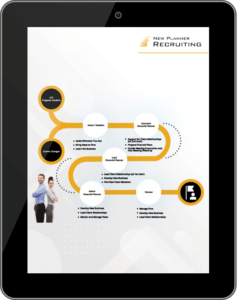 Download your free copy of the New Planner Career Roadmap! In this roadmap, you'll be guided through the details of various stages of your financial planner career, including position descriptions, licensing, skill and experience level requirements, and compensation ranges.
Get the Full Episode Transcript:

Read the Transcript Below:
Welcome to the New Planner Podcast, where it's all about helping you successfully enter the financial planning profession and accelerate your financial planning career. This podcast will help you understand the profession, become familiar with the various career paths available to you, and avoid the mistakes that limit your success. Join your host, Caleb Brown, to explore the human side of creating a successful planning career through interviews, personal experience, and insights from the trenches. Let's get started.
Caleb Brown: Welcome to the 272nd episode of the New Planner Podcast. This is Caleb Brown, your host. My guest today is Landon Warmund. He was a financial planner for Reliant Financial Services. Landon joins the show today to share how he transitioned into the business. Landon shares how his father was a financial planner, but he wanted to carve his own path.
He remembers being interested in money and financial concepts early on, and even went to a college that had a financial planning program, even though he didn't realize it at the time. He shares how he switched majors and then ended up joining his father's firm, building his own book and the struggles and challenges he faced his first few years in the profession.
Stay tuned to the end to hear about his unique niche, how he was able to scale working with those specific clients, and his plans going forward. I hope you enjoy this episode with Landon Warmund.
Caleb Brown: Hi, Landon. Welcome to the New Planner Podcast.
Landon Warmund: Hey, Caleb. Thanks for having me.
Caleb Brown: Hey, thank you for making time for us and coming on the show. Super excited to talk with you. Really cool story. We've gotten to know each other just from, I think the NextGen leadership stuff and just FPA connections and so on. So good to finally have some time with you. I just, I mean, just start off, how did financial planning become an option for you for a career? Let's start there.
Landon Warmund: Yeah, absolutely. So probably me coming into the industry and really being interested in financial planning, it started at a pretty early age. So I kind of had the nice, fortunate thing with our family where my father is also a financial advisor, and he does a great job of making sure that when I was going through the process of deciding what my future career was going to be, he didn't want to voice his opinions, but he also wanted to make sure that I had access to resources so that I could explore within finance.
So like growing up, I was always interested in money. I mean, I remember at a young age, I would bring my sister into my room and ask her what she wanted to buy from my belongings so I could like save more money. And so like I was always just really intrigued with money. When I was in, I think high school, I asked my dad to open me up my first stock account. So kind of through this whole process, it was just naturally that I was gravitating really towards just finance and money.
And then, when we started doing the college visit process, and I looked at two schools: Kansas State University and UMKC locally. And I went on K-State's campus and at the time I had no clue that they had a Personal Financial Planning program. My father didn't know either. And so I ended up going with K-State and was going for a degree in just general finance.
And as I was going through that process, I made it very clear to my academic advisor that I wanted to get my degree in finance and that I eventually wanted to sit for my CFP exam. And they just kind of shook their head and said, "Okay." And by the end of my freshman year, they said, "Oh, hey, by the way, there's this degree. It's across the street, over in the Human Ecology Building, and it's actually for Personal Financial Planning. It'll allow you to be eligible to sit for your CFP exam."
And so then I immediately went across the road and went into the Human Ecology Building. And I don't know if Ann Coulson, but she was kind of in charge at the time, and met with her and she pretty much threw out a roadmap of everything that I was going to be doing for the next three or so years with the financial planning program. And I called my parents afterwards and told them I switched my major. And they were extremely shocked because they didn't think I would change my major, but I'm like, "No, no, no, listen, this is what I wanted to do in the first place. We just didn't know it existed."
So that was kind of the start of me getting into the industry. Graduated December of 2018, sat for the CFP exam shortly after that, and kind of where I'm at now. So I'm an independent advisor and so I've kind of built my own book of business and I'm about seven years in now, and we really focus on working with nonprofit and school district employees in the states of Kansas and Missouri.
Caleb Brown: Wow, that's a cool niche. I want to come back and explore that. But a couple things you said earlier, it didn't sound like you got a lot of pressure from your dad to say, "Hey, come do what I'm doing. It's great. I want you to take over my business." It didn't sound like that's what happened.
Landon Warmund: No, absolutely not. And as I was kind of exploring this process, he did a great job of, you know, we would go out to lunch over the summer and we would meet with some of his friends in the industry just so I could see the other aspects of financial planning and kind of explore around to really make sure that being an advisor was the exact thing that I wanted to be.
So, I think he allowed me to meet with some wholesalers, some people on the insurance side, really just trying to get me like a good idea of what the whole industry looked like. But really, no. I mean, he, I think if you ask him, he would've said, "Don't be an advisor. It's tough," especially starting off as kind of self-employed and independent, but it was the best decision I ever could have made.
Caleb Brown: Really cool. And something you said, I mean tongue-in-cheek concern, but like, man, you didn't know K-State had the financial planning program. You kind of fell into it like a lot of us did and like, I wish that would stop becoming sort of the narrative and the norm and be kind of an outlier, right? And I just, I don't know what we've gotta do. I know it was in a different program and maybe you hadn't made the decision then to do financial planning, but I just hear this so often: "Hey, I showed up, didn't even know it was an option, and it was like one of the best programs out there."
Landon Warmund: Yeah, it's, I wish it was a little bit different, but every single time I go back and speak with students, I always say, "By show of hands, who is–if this was your first degree that you decided to major in, raise your hand." It is shocking how few hands actually go up. There's very few people that find financial planning right when they're starting to get into school their freshman year.
Caleb Brown: Okay. And so just to come back to your story. Your role, I mean, you didn't join your dad and like help him with his business. You had to get your own clients and sort of no salary and build your book. Is that kind of the direction you went?
Landon Warmund: Yeah, so technically right now I'm still completely 1099, so my clients are really what I'm responsible for, and that's it. So at our company, we are all under the same company name, but we're all independent advisors and most of us serve the same demographic of school district employees and nonprofit employees. So yeah, from day one, I was pretty much in charge of building my own practice and my own book of business.
Caleb Brown: And I mean, that is a scary prospect for a lot of people. Like how did you, I mean, how did you arrive at that? And then also how did you get over the, maybe any fears you had to get some of these clients to work with you? Because I mean, like coming out of school at 22, it's hard to go–harder to go to someone and say, "Look, I have all this life experience and you need to use me because I can walk you through the ups and downs," and they're twice your age.
Landon Warmund: Yeah, I think that's, I mean, that's a really big loaded question because there's a lot of things that I'm really passionate about on this one. You won't believe how many times that I would meet with a potential client and they would ask me, "Is this what your dad does?" And it got to the point where I would come back and say, "Actually, no, my father and I, we have very different investment philosophies and here's why. Both of them are okay." And it allowed me the opportunity to really establish myself and my independence there.
But the thing is, when you're having those first conversations, you're not gonna be good at it. And that's perfectly fine. These financial planning programs that students are going through today provide you with so much knowledge and so much expertise that a lot of older advisors that don't have their CFP designation, they don't have that, even with years and years of experience in the industry. And so when you're a new advisor coming into this industry, you need to make sure that you understand that you have a lot of knowledge, and confidence might not be there, and that's okay. It comes with time and you just have to put in those reps to get there. But that will come with time. It's just about actually going out there, meeting with people, and actually showing them your voice and your character, and just having those conversations.
Caleb Brown: Love it. I wanna come back to–I mean, because what I heard, I mean, you said school district, government, nonprofit. I mean, I'm not hearing billionaires with tech stock options like everybody else is going after, right? So how did you guys arrive at this niche, which I think is great by the way.
Landon Warmund: Yeah, this is something that our company has had pretty much since our inception. So, my father and some of the other advisors, one of their biggest clients at the time was one of the teacher unions and whenever they were transitioning companies and starting our current company now, one thing that they did was they met with the teacher union and told them, "Hey, just a heads up, here's everything that's happening." And they will tell the story to this day, but the teacher union said, "Okay, well we're gonna have a meeting. We'll call you back in here in a second." And shortly after that, they called them back in and said, "Okay, well what's your company name? We would like to continue to work with you."
And so that was kind of the start of the company as it is now and continuing to focus on working with school district employees on that side of things. And it's really K through 12 for the most part, but ever since the inception it was really school district employee focused, between Kansas and Missouri.
Caleb Brown: And not just teachers, right? I mean everybody that works in the administration and all the other stuff.
Landon Warmund: Yeah. I think one of the biggest things that I'm very strong and opinionated about, and I know a lot of people in our industry would probably disagree with this, I always say that regardless of your net worth, your income, how many assets that you have, I think you're entitled to some level of service when it comes to financial planning, even if that's a 30-minute conversation on an annual basis.
And so oftentimes when we're working with clients, it might be their first time that they're ever speaking with an advisor, and a 30-minute conversation to help them get a retirement plan in place and actually answer just some of those very minor questions to get them started in their career is invaluable to them. And so even though these aren't clients that might have a tremendous amount of financial assets, at least not immediately, I think it's our duty and obligation to make sure that they're being looked out for and making sure that they're actually meeting with a competent advisor that has a tremendous level of experience in this, where they're getting some good advice.
Caleb Brown: And then how do you get these people as clients? How do you get introduced? You just visit the schools and the government buildings and events or how, what are you doing on the business development side?
Landon Warmund: Yeah, so the K through 12 marketplace, when it comes to serving them, it's very interesting. So there are multi-provider plans and then there's single-provider plans with their 403(b) and 457. So for some of the school districts we work with, we are the single provider, and some districts that we work with, we're a multi-provider. And so depending on what that structure looks like, each district will have different rules and kind of things that you have to stick to in terms of working with their district.
Most of them are pretty open to us coming in and being able to provide that education. And a lot of it is doing kind of webinars or in-person events where we're going over typically the biggest things that we have questions about, which is the pension system, understanding your retirement savings options, and student loan forgiveness. So that's a lot of the education that we're typically providing when it comes to finding new clients.
Caleb Brown: And I mean, I gotta ask, because ever since COVID, our phone's been ringing off the hook for career changers and people trying to find jobs. I mean, that's our recruiting business. A lot of them are teachers; they're bailing on teaching. I mean, is that part of your service to sort of help them find other career options?
Landon Warmund: Yeah, so typically each year we probably have a handful of clients that are exploring other career opportunities. And so normally when we have those conversations, it's about, "Okay, well, look at the pension system and what guaranteed income you'd be giving up to go private sector." And of course, going to the private sector is not a bad thing. And at the end of the day, not every decision that we make has to be a smart financial decision, especially if that brings happiness and joy to your life that you're not receiving in the classroom.
Because, like a lot of people say, teaching is not the same as it was before COVID; it's just completely different. And people are not staying in the classrooms as long as they used to. And so a lot of times those conversations are really structured about fulfillment, happiness, making sure that they're getting what they want to out of their workday, but also a little bit of the financial side, of course, because that's typically what we help them with and helping them just kind of navigate that option and figure that out.
Caleb Brown: How has the experience of your career the last seven years differed than when you were a student, sort of bright-eyed, sitting there at Kansas State, like, "Man, I'm envisioning this is what it's gonna look like," and then now that you're in it, was there any big deviations?
Landon Warmund: I would say probably getting started, I didn't think it was going to be as hard as it actually was. I know a lot of people, I mean, going through school I listened to, I think some of the big podcasts that I listened to were Hannah Moore's podcast, Kitces' podcast, Brad Johnson out of Topeka had a good podcast at the time.
So, I would listen to them and the big number that you heard was three years. If you can make it in this industry and build a practice for three years, typically you're in a good spot. Honestly, four to five years is what it took for me to actually start feeling a lot more comfortable. And maybe that had to deal with a little bit of kind of where we were in the country with kind of coming through COVID and inflation and all that. But I don't think I expected it to be as difficult first getting started, but maybe that's why we see kind of a little bit of a drop-off with people staying in this industry kind of in that four-to-five-year mark.
Caleb Brown: Well, admittedly that's a tough time to start any business, during coronavirus. I mean, like, come on. So you stuck it out. Now that you're already starting, you've made it. What's been the biggest challenge? Has it been getting the clients, has it been getting the clients to do what you want them to, has it been something completely different?
Landon Warmund: Yeah. So, up until now I've worn pretty much all the hats in the company. So for myself, personally, I mean, I'm the marketing cap, I'm the new business cap, the client service associate cap, so all these different things. At this point right now, what I'm really struggling with is trying to get back to doing the things that really bring me the most happiness, and that's meeting with clients and actually doing presentations and being in front of large audiences. Those are my favorite things.
And so heading into next year, one of my big goals is to actually hire a client service associate. So we're in the process of that. But I always tell people, if I could get to the point where I'm not living in my DocuSign account and processing paperwork, it's gonna be a really, really good day. Because I'm ready to kind of get back to the main reasons that I was really passionate about getting into this profession. But that's where I'm kind of stuck as of right now, is making that next step to kind of scale things a little bit larger.
Caleb Brown: And I told you this at the events, but I've heard you give a couple talks and that's, I'm glad you are good at that. I mean, you should be giving presentations, so I'm glad that you're in tune to sort of what's going on. And but that's every entrepreneur's problem, right? I mean, like you get away from what you're good at or what you enjoy because you got all this other stuff going on.
I alluded to some of the FPA meetings, and I think it was a CFP Board Connections conference where we connected as well. But here you are, a young guy building your own business, you got nobody supporting you. I mean, you're having to build this, why get involved and spend all this time with FPA and do all this stuff, which other people could say, "Hey, that's taking away, Landon. Why are you doing that?"
Landon Warmund: Yeah, I think it's really easy for me to kind of gravitate into FPA mainly just because, well, one of the reasons why I got into this industry is because I have a giving heart, and the reason I work with educators is because they really and truly do need the help. And oftentimes they cannot afford to get that kind of help.
And so when I saw that there were all sorts of young advisors and other planners trying to get into this industry, it was an easy medium for me to slip right into in terms of being able to help people that were just in the spot that I was in. Especially since, like in my first year, I had no idea what I was doing. I was trying to figure out my client processes, how to actually conduct a simple client meeting. All I really had was FPA, and my first thing that I went to was a NextGen gathering that at that time, I think it was in New Orleans back in 2019. I came out of that conference and it was probably the most impactful thing that I've done in my career. So having that kind of impact for me personally, it was an easy decision for me to start to give back to other people just so that we can continue kind of that ball rolling forward with just giving back to the next people in mind.
Caleb Brown: Amazing. You mentioned that other teachers couldn't, or employees couldn't, school district employees couldn't get access to people because they may not want to afford it. Talk to us about your fee model. How can they afford to work with you?
Landon Warmund: Yeah. So, one thing that I really try to do is to make sure that, regardless of kind of where they're at, there's an option for them. So I have three different options that clients can choose from: there is an AUM model, there is an hourly model, and then there is a flat financial plan.
So, for example, the flat financial plan would be a one-year engagement where I'm compensated upfront just a full flat fee to really build a financial plan, and then past that they're kind of in charge of more of the implementation side. At that point, they can kind of choose if they would like to move forward with me in any other of the different compensation models, either hourly or AUM if they have assets that they want help with.
And then my hourly model, I would say, is mostly for my clients that I'm advising around student loans. So those people, typically, we do one-hour Zoom sessions where we're going through their whole student loan situation and figuring out kind of what the right options are for them in terms of getting past those student loans, if that's Public Service Loan Forgiveness (PSLF), Teacher Loan Forgiveness, IDR forgiveness, kind of you name it. We're pretty much putting a clear actionable plan together so they know those next options moving forward. And then you have kind of that traditional AUM model.
Caleb Brown: Gotcha. And I noticed that you're a CSLP, so can you just tell people who maybe aren't familiar, like, what that designation is, what it's all about, how difficult it is, and if they might wanna pursue it?
Landon Warmund: Yep. Yeah, so the CSLP, it's the Certified Student Loan Professional. And the first thing that I will say with this is I've had a lot of people that have come up to me and said, "I'm looking to get this designation, what do you think about it? It seems like it's something that really interests me." If you are not really practicing student loan planning on a weekly basis, it's a very hard thing to keep up with, especially in the environment that we're in with student loans changing pretty much every week or every month.
You need to make sure that if you're going to be working at a firm, it is a firm that aligns with people that are also going to have student loan debt and are going to need that help. But the CSLP designation, it's a wonderful designation. It has given me the knowledge that I needed to really start advising clients around student loans. But on the other side of that, when it comes to student loans, there are a lot of different processes and there's a lot of keeping up with the news so that you're up to date with what's going on.
And so I'd say the content, like everything else, that's one part of it, but really starting to practice it, that's where you get another level of knowledge. So I would say that CSLP designation, it's a phenomenal designation for anybody that thinks that they're gonna be working with, let's say, one to three student loan borrowers on a weekly basis.
Caleb Brown: Yeah. Gotcha. Well, awesome stuff. I mean, this is really cool. I mean, tell me, can you maybe just walk us through the process? I mean, it looks like you have a fee model that kind of is flexible for different types of validator, delegator, do-it-yourselfer type, which is good, and I'm seeing a lot more of that. But maybe like, what's the meeting? I mean, how many times do you meet with these people? What's the expectation and process?
Landon Warmund: Yeah. More around the student loan planning?
Caleb Brown: Yeah, I mean, we could start there, but even like the AUM client or even the flat financial plan.
Landon Warmund: Yeah, so with the flat financial plan, and I would have to kind of refer back to my service offering, but I believe it's about four to five appointments during the year. And it's really about that financial plan creation process: so getting from Point A to Point B with building out that financial plan, presenting it, and then there is a little time at the end for some implementation and some follow-up calls too to kind of help guide them through that process.
As of right now, typically our fees are based on just overall complexity, but normally it's averaging out to about $3,200 for that fee. And then for the student loan planning, typically that's about a rough flat fee of about $450. Then the AUM, depending on if we have a relationship with the school district, it can kind of depend. I really wish it was a little bit more cut and dry, but on the school district side, it can be anywhere from 65 basis points to about 1%.
Caleb Brown: Awesome. And outside of meeting with the clients. because I know a lot of people select that, what's been the most fun part of the job for you?
Landon Warmund: I would say getting the loans forgiven.
Caleb Brown: Hey, there you go.
Landon Warmund: Nothing is better than getting a call from a client on the weekend that says, "This is one of the best days of my life. My student loan balance shows zero. I never thought I was gonna be able to get past this. I can retire now." Nothing is better than that kind of call.
Caleb Brown: That is really fulfilling and rewarding. And then, oh man, that's so cool.
Landon Warmund: Yeah. It's such a blast and it's such fulfilling work. Just being able to help them with such a complex topic that–within our industry, everybody has their different specialties and things that they're really good at. Most advisors have just a little bit of knowledge around student loans, and oftentimes we get a lot of referrals from other advisors for student loan planning, and it's a pretty common thing. So being able to be one of those handful of people that is really good at providing this kind of planning, it's a really fun thing to do.
Caleb Brown: Way to carve out a niche. And also I think, go from what I talk, blue oceans, blue ocean. Like there's, like I mentioned earlier, financial planners, at least the ones that I know, aren't lined up to deal with school district and government employees. Okay, they're all chasing the big whales.
Landon Warmund: Yeah. And don't get me wrong, I definitely have more clients than the average advisor, but I'm trying to scale my practice in a way where we can continue to help them at least at a minimum level of help where they're still getting some advice and some help with kind of what they need with their financial planning. So I would much rather hire a younger advisor to help my smaller clients rather than turn a client away that really and truly needs good financial help, but they just don't know where to turn to.
Caleb Brown: I mean, what's your capacity? Like how many people can you realistically work with?
Landon Warmund: Yeah. So, typically, and this is something that I'm gonna really be working on next year, is client segmentation. On the hourly side, when it comes to the student loan borrowers, I'm typically helping about two to three student loan borrowers a week with the hourly model. Probably my AUM model, it could be a little different, mainly just because sometimes you'll have just like a retirement plan client or then you'll have like a full financial planning client where you are including a full financial plan and a little bit more help and assistance with that client.
But I would say probably full financial planning clients, I'm probably around 50 or so. And then on the retirement planning side, it's probably about 250, 300 individuals that I'm currently working with. And those are the ones that I'm going back to the kind of my mindset of: if we can help them just at least a minimum level and answer those handful of financial questions a year and not have a formalized financial plan that, unfortunately, they probably wouldn't be able to pay for in the first place, that's a huge win.
And just kind of on that, when I first got into this industry, our CFP Board-registered programs preached that you need a financial plan. And I would completely agree, but one thing that you find with the people that I'm serving is just because they need a financial plan doesn't mean they can afford a financial plan. So it's about trying to figure out how you can meet them where they're at and at least help them at a minimum level that's at least getting them to that next financial goal.
Caleb Brown: That's a great goal. Fabulous. Well, we've already shared a lot and we really appreciate the time and just the advice and the wisdom and just walking through your story. Really cool, interesting story. Anything else, any final tips or anything you'd like to share before we end out?
Landon Warmund: Yeah, I would just say if you're a young advisor listening to this or trying to enter into the profession, don't be discouraged about kind of the complexity here. It's a very complex industry and I went into this industry a very different way than most other advisors are going to be coming into this industry. There's a spot for everybody. You have to stick with it and make sure that you're really building a support system. That's really why I got involved with FPA, is because I needed that support system and wanted to give back and help. So just make sure that you're taking that extra step to do that.
Caleb Brown: Landon, thanks so much for coming on the show.
Landon Warmund: Yep. Thanks for having me, Caleb.
Thanks for joining us for this episode of the New Planner Podcast. If you are ready to discover the top career paths for financial planners and see which track is best for you, we created a free guide to help you. Grab your copy of the Financial Planner Career Roadmap at newplannerrecruiting.com/roadmap. There, you'll also find more tools and resources all created to help you build a successful financial planning career. Tune back in next week for another episode, and until then, we are here to help you succeed.
Share the Love:
If you like the New Planner Podcast...
Never miss an episode by subscribing via Apple Podcasts, Spotify, Amazon Music, YouTube Music, or by RSS!



Leave a Reply