What would make someone walk away from a 21-year engineering career and a good salary to start a financial planning business from scratch? In this episode, Aubrey Williams of Open Path Financial shares the personal and professional journey that led him to leave engineering and pursue financial planning full-time. You’ll learn how his role gradually shifted from technical work to management and financial decision-making, sparking an interest in personal finance that would ultimately change his career path.
Listen in as Aubrey explains how a difficult life transition pushed him to educate himself about money, which eventually led him to help others in similar situations. He walks through the steps he took to launch his firm—including starting as a financial coach while still working full-time, building a client base from scratch, and finding his niche within communities of engineers and DIY investors. He also shares how speaking at events, creating content, and embracing an advice-only hourly model helped him grow his practice to $20K per month in revenue, and why combining the emotional side of money with clear financial guidance can truly change people’s lives.
What You'll Learn In Today's Episode:
- Why Aubrey left a good paying job to start a financial plannning firm. (2:20)
- How the pandemic forced a re-evaluation for him. (5:30)
- What made him finally give up his engineering career. (10:28)
- The power of networking and in-person events. (15:20)
- The importance of finding balance with work. (21:00)
- Aubrey’s fee model. (24:45)
- Why financial advisory is about so much more than money. (31:00)
Ideas Worth Sharing:
“A lot of what I do is trying to help an earlier version of me, whether that’s people interested in the profession or the version of me that needed a financial planner.” - Aubrey Williams Share on X “With financial planning, you get to see people’s lives change in a matter of weeks or months, and that is so rewarding.” - Aubrey Williams Share on X “It doesn’t have to be perfect if you’re putting something like short-form videos out, but if you don’t make them, you’ll never get better at it.” - Aubrey Williams Share on XResources In Today's Episode:
- Aubrey Williams: LinkedIn
- Open Path Financial
- New Planner Recruiting - Financial Planner Career Roadmap
- Finding your Path: The Roadmap from Student to Successful Financial Planner by Caleb Brown
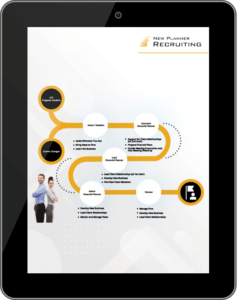 Download your free copy of the New Planner Career Roadmap! In this roadmap, you'll be guided through the details of various stages of your financial planner career, including position descriptions, licensing, skill and experience level requirements, and compensation ranges.
Get the Full Episode Transcript:

Read the Transcript Below:
Welcome to the New Planner Podcast, where it's all about helping you successfully enter the financial planning profession and accelerate your financial planning career. This podcast will help you understand the profession, become familiar with the various career paths available to you, and avoid the mistakes that limit your success. Join your host, Caleb Brown, to explore the human side of creating a successful planning career through interviews, personal experience, and insights from the trenches. Let's get started.
Caleb Brown: Welcome to the 271st episode of the New Planner Podcast. This is Caleb Brown, your host. My guest today is Aubrey Williams, who is a financial advisor at Open Path Financial. Aubrey joins the show today to share his transition from engineering to financial planning. Aubrey walks us through how, as his career progressed as an engineer, it gravitated more towards the managerial and financial work, which is where he learned he had a passion for financial planning.
He goes on to share that after going through a divorce, he started educating himself on improving his financial situation and began sharing that advice with others who are in similar situations. Stay tuned to the end to hear how he started his own firm from scratch, how he secured new clients, his revenue model, and his value proposition. I hope you enjoy this episode with Aubrey Williams.
Hi Aubrey, welcome to the New Planner Podcast.
Aubrey Williams: Hi, Caleb. Thank you.
Caleb Brown: Yeah, appreciate you getting on here.
Aubrey Williams: Glad to be here and glad to share my story. A lot of what I do is trying to help an earlier version of me, whether that's people who are interested in the profession or the earlier version of me that needed a financial planner. So maybe I do a little bit of both here today. Again, thank you for the invitation.
Caleb Brown: Well, that’s great because I have people from an engineering background that call me all the time wanting to get into the financial planning profession. So let's just get right to it. Why did you leave? I mean, I’ve shared it, my parents were engineers. Why leave a rewarding, interesting technical job that pays well? Why leave that and start your own financial planning firm?
Aubrey Williams: Yeah, I worked, it ended up being 21 years for Lockheed and Raytheon. During that time, I started out as a mechanical engineer and then eventually became a program manager. I used to joke that it was like "going to the dark side" instead of being a "real" engineer, I was one of those folks telling them what to do and thinking they knew better. But as much as I could, I saw my job as helping the engineers I was leading do the best work of their lives and keeping as much of that management junk out of their way as possible.
But that "management junk" ended up being sort of all the other parts of running a company, like finances, audit, and quality inspection, and production operations. And so in addition to the engineering, I got exposed to finance. Now, this was corporate finance, but it’s not totally different from personal finance. I was spending a lot of my day in spreadsheets.
And so when I went through a divorce, which was a very challenging financial thing to go through, I had to get my own financial ship patched up. I first looked to financial advisors, I didn’t really know what I was looking for, who to find. I found a couple, but they weren’t real helpful with cash flow, which is what I really needed help with.
So I set about educating myself, and that was through the FI, Financial Independence community, and from the general personal finance and financial advice world. And over the years, my coworkers, these engineers that I was working alongside, they would ask me, "How are you doing this? How do you know what a mega backdoor Roth is, and why aren't you spending your HSA every year? Why do you just keep saving it?" And so I'd get all excited and tell 'em, and I heard from a couple, "I have this financial advisor, he doesn't know this stuff. I want you to be my financial advisor."
And I'd laugh, like "Yeah, right. Yeah, right." But I heard it enough times and it sort of planted a seed in my head. “Well, maybe…” And around 2019, this was just before COVID, I actually started doing that for money. Being a financial coach, not a financial advisor, not a CFP, but just helping people and charging an hourly rate to talk to 'em about money. And I did that alongside my corporate job and my work knew about it. I had a conflict of interest disclosure. I wasn't allowed to market to people at work.
Caleb Brown: I'm sure the lawyers got involved. Got it. Yeah.
Aubrey Williams: Yeah. And I had, yeah, I proactively did that 'cause I didn't want anyone to think I was doing anything improper. But when COVID happened, like a lot of people, it forced a reevaluation, or at least I took that, and I said, "Well, with these financial coaching clients, I have to stop short of actually giving them specific financial advice. Do this, not that." I can talk around it and say, "Well, in this situation, these are the things you might consider." And I kept thinking, "Okay, then who is this person gonna go to? They've already paid me money. Now they're gonna have to pay someone else and get possibly different advice." That didn't sit well with me, so I thought, "Okay..."
Caleb Brown: Kinda start over. Right. Start over with the story and learn that relationship.
Aubrey Williams: Yeah, exactly. So I started thinking, "Well, what would it take for me to do this?" And I'd already, I'd always been entrepreneurially minded. I would sell things door-to-door as a kid. I had started a couple of side businesses that didn't work out.
Caleb Brown: Wait a minute. Hold on a second. I wanna stop you. You're an engineer and you went door-to-door selling things. Isn't that, was that when–
Aubrey Williams: I was a little kid. When I was like eight years old, I'd sell pot holders that I made and greeting cards and all sorts of stuff. So while I was an engineer, I did start a couple of businesses. One was making wetsuits for infants and toddlers and that came out of, when I had my kids, I live in Santa Barbara, California, and the Pacific Ocean is cold, and you put a little kid in there, they're turning blue within a minute or two. And I went looking for wetsuits and none of them were very good for infants and toddlers and like a typical engineer, I thought, "Well, I can do better."
Caleb Brown: Better mousetrap. Right.
Aubrey Williams: Exactly. And I took it pretty far, but it came to the point of, "Okay, now I need to order 10,000 units and go to China and make a big investment in inventory." And I'm a cleared employee at a defense contractor. Those things don't, it's not impossible, but it started getting in the "harder" pile.
And so I didn't go forward with that, but I had at least a little knowledge of what it took to start a business. I definitely didn't know it all. But so over the years that seed, that desire of wanting to run my own business, wanting to help people with money, and that one-on-one connection just showed itself to be so rewarding. And in these big companies, even though they're amazing, sometimes it's hard to see the effect that one is having, that I was having. Things take 10 years to go from concept to prototype and stuff like that. And there's good reasons. You definitely want it to work and you wanna make sure in every possible way that you've designed it correctly.
But with financial planning, I was getting to see people's lives change in a matter of weeks or months. And that was so rewarding. So, there was probably a couple of years where I could have left. Financially, I had money saved up sufficient that I had some runway. I had gotten the Series 65, so I was in a position to form an RIA, and there was a lot of fear and I'm sure this affects a lot of folks. Going from what I was making, which was $240k a year, to who knows how much, but you know, not much.
I think the first quarter, it was something like $7k in revenue once I formed the RIA, and I knew that, I expected it, I had seen the revenue trajectory of single-person RIAs over the first five or six years that $20k is totally normal for the first year and then $50k and it goes up. But I'm not gonna replace $240k in the first year. But that was still really hard to swallow.
But I set the date. That's one of the things that helped me do it is in the fall of 2024, I said, "Okay, next March I'm gonna do it. I'm gonna leave the corporate job." And I was ready to put in my resignation in the third week of March, and then a layoff was announced in the first week of March, so I got a little extra money and health insurance extended. And that made it easier.
Caleb Brown: You took a package?
Aubrey Williams: I took the package.
Caleb Brown: Good. Alright.
Aubrey Williams: Yeah, but I was ready to do it. I timed it to coincide when I would receive the annual bonus. I said, "Well, if I'm gonna leave, might as well time it well." But the thing that I didn't expect was how much more energy I would have for the financial planning business. It really made a difference. I almost, I didn't want to imagine that it would be so much better, but I've been doing not exactly the same thing, but I've been working in corporate for 20 years, and to be deciding what I do each day, deciding who I talk to, like yourself, like Cody who's a, Cody Garrett, who's a mutual friend of ours, that was such a departure from the very regimented, scheduled org structure of corporate, and it just gave me tremendous energy and I didn't expect it. I thought, "Ah, maybe it'll be better, maybe it'll be nicer," but I didn't want to put on rose-colored glasses and promise myself that it was all gonna be unicorns and rainbows. Didn't wanna set myself up, but it has been very, very positive since I've left and been full-time at the RIA.
Caleb Brown: And how long has that, how long has that been? You've been full-time at the RIA?
Aubrey Williams: That was March of this year. March of 2025. So coming up on nine months.
Caleb Brown: Let me just go back to something. Thanks for sharing that. Let me go back to something you said earlier. I mean, congratulations on the, I think you said $7,000 the first quarter. I mean, that's... is that what you said, $7k in revenue the first quarter, or was the–
Aubrey Williams: Yeah. Yeah. Seven. $7k.
Caleb Brown: Hey, could've been, it could've been zero. We've had people on the podcast that got zero for the first year. So I want to emphasize, because this is the hang-up, and I talk about this until I'm blue in the face, like career changers are like, "Caleb, I can't give up the big salary." Well, you just did.
Aubrey Williams: Yep.
Caleb Brown: You did that.
Aubrey Williams: I did.
Caleb Brown: I just want other people to hear that, so that's why I'm pausing there. So, alright, so you got over the hump and obviously you've done some planning, the timing worked out, you got some additional bonuses and benefits from your corporate job, which is, I mean, that's what you're gonna do for other people, right? So it makes sense. You give yourself planning.
Aubrey Williams: Exactly. That's the advice I would've given myself.
Caleb Brown: It sounds like you already had some people that were, you were kind of doing this quasi-financial coaching, then you kind of got licensed and then–
Aubrey Williams: Yes.
Caleb Brown: So, were you able to bring some clients over initially and get some people onboarded pretty quickly?
Aubrey Williams: I think there was one financial coaching client, and it was one of the engineers who had said that phrase to me, "I want you to be my financial planner." But for the most part, no. It was not bringing folks over from the financial coaching. I did get some referrals, or someone I had done coaching for referred a friend of hers. And after that, no, it was new people coming in the door pretty much.
And it still did make a difference that I had been running that financial coaching business because I had become familiar with some of the tools like Calendly or a CRM that keeps track of who you've emailed with. I wasn't starting everything from ground zero. I had a webpage.
Caleb Brown: But no significant client pipeline.
Aubrey Williams: No.
Caleb Brown: So how did you build that then? Are you, I mean, it's kind of, it's still in progress, but what are you doing to build that?
Aubrey Williams: Yeah. I didn't, I can't say I had a master plan, but this is what ended up happening. I went to in-person events and, for a lot of financial planners, that might mean going to conferences where other financial planners were, but I took a different approach. I went to events where the clients that I wanted to work with were. And that was, at that time, I was focused on the neurodiverse community, and I still am to some extent, meaning folks with ADHD, autism spectrum disorder. And the unique challenges that come up very consistently with money and with financial planning for those folks.
And then the other group was the financial independence community. And so I went to Camp FI, which is a weekend gathering of usually between 50 to 75 people. And I was invited to be a speaker there, but I made it real clear I was as much a participant as I was a speaker or anything else. And I felt that was really important 'cause I didn't want to be someone coming in marketing or trying to sell people anything. I was there figuring out my own career change, working towards financial independence, and just like someone who might start a coffee shop or a bakery or a yoga studio, the thing I happened to be doing was financial planning, and I had all my own fears like many people who go through these changes.
So I was a participant first, but that public speaking opportunity, which then went on YouTube, that got a lot of attention. I was talking about planning for the end of your life, your eighties, nineties, and beyond, hopefully. And that's something I saw as sort of a blind spot of the financial independence community. Everyone's planning for climbing Mount Kilimanjaro and having their big, amazing life once they leave the corporate job, and yet you can do some pretty amazing things in your eighties and nineties if you plan and prepare for them.
So that was the talk and it got a lot of attention. And so I kept doing that. I went to other gatherings in the FI community like Economy, and then I started doing short-form videos on Facebook, on YouTube, just to talk about neurodiversity, financial planning, financial independence. That seemed to connect with people, 'cause I was saying something a little different. I don't think anything about my videos was particularly great. The production values weren't fantastic or anything, but I did get them out there. And that's the thing I tell other people, not just in financial planning, but starting a business. It doesn't have to be perfect if you're putting out something like short-form videos, almost no one will see those first videos anyway. But if you don't make them, you'll never get better at it.
And so the first step is just to have something to say, 30 to 60 seconds. Say it, make a video, get it out there, and then after you do 10 of them, five or 10 of 'em, it'll be better. It still won't be good. But having those out there got me public speaking opportunities and interviews and podcasts, and then that brought in people who are interested in working with me. So now the pipeline is very full and I've brought on two contract employees who are part-time, and as you and I talked about, I'm thinking about expanding that to more hours of part-time, more responsibilities, and then eventually a full-time person or two. But you know, the timeline for that, I'm not sure, but that's part of what I wanted to learn about from you and other interviews that you've given of how to go about that as a firm owner.
Caleb Brown: Yeah, I appreciate that. Couple things. One, you made a good point about just getting it out there. These advisors that spend all this time on the right microphone and the right lighting, just, I mean, go back and look at, I mean, if you need some confidence or some encouragement, right? Just go look at my YouTube videos and look at the very personal, they were terrible, and some of my listeners probably still think they're terrible. But I mean, it's just getting it out there and just going forward and not sitting there worrying about it and just trying to, even if, like, if I can just help one person. Congrats on like, you've got a couple employees. I mean, you're only nine months into this thing. I mean, this is great. Have you–
Aubrey Williams: Yeah.
Caleb Brown: Because a lot of my career, a lot of the career changers are like, "Okay, Caleb, I was making this and now I'm... you convinced me to take a step back." Or "I heard Aubrey..." Like, when can I get back to my big salary? So what's your projection on when are you gonna be able to get back to the $240k, $250k? Or, I mean, have you planned all that out?
Aubrey Williams: Yeah, self-employment revenue is different than salary, but in July I had a $22k revenue month. August was $19k and then September was $26k. So it went up quickly and I'm now at this point where I'm at capacity, and a lot of that's just my own perfectionism or inefficiency. I think my capacity could be higher, but in terms of revenue, I'm there, if we're just talking revenue.
Caleb Brown: Aubrey, that's amazing. I really appreciate you sharing that and just being transparent. I mean, that is really, I mean, how does that make you feel to have left the big, sort of "safe" job (safe quote-unquote, air quotes)?
Aubrey Williams: It was, yeah.
Caleb Brown: And then like, now you're creating it. You are in control of your income and, I mean, and you're doing it. I mean, $20 grand. I know that's your revenue, maybe not what you're paying yourself, but still, you're gonna, it doesn't matter. You're building on top of that. You had nothing 10 months ago.
Aubrey Williams: Yeah. It's a combination of thrilling and terrifying.
Caleb Brown: Welcome to entrepreneurship.
Aubrey Williams: Exactly. And I would take it every time, but I don't want to discount that. It's like, "Oh gosh, a few months ago I was terrified no one would ever wanna work with me." And that was palpable. I've got two teenage kids, college is coming up, this is some real stuff. And then folks do wanna work with me. And now I have to manage, "Oh gosh, I just signed up eight people to do comprehensive plans. How am I gonna do that?" Yeah.
Caleb Brown: Get to work.
Aubrey Williams: Exactly. Get to work. And so it's been intense. Again, I'm very, very grateful for everything, for everyone who's helped me and that I've been able to help. But when–and I think it does happen, sometimes it takes longer, sometimes it happens more quickly, but folks will get busy and then it's a matter of being, I'd say, being careful about the commitments that you take on and not being afraid to say, "I can't start working with you until three weeks from now," or "at the end of January." And that was hard. I think it's still hard for me because I'm still very much in that mindset of "Is this going to work?" and yet it is, and so now I need to manage my workload. Because I take the commitment so seriously, that I'm helping people steer the ship of their life. They might be leaving a job like I am, and it's like, "Okay, can I leave my job in April? Yes or no?" So it is a lot of responsibility.
Caleb Brown: Well, it's great confidence too. I mean, in your sort of entrepreneur journey to be able to tell someone no or "not yet, you're gonna have to wait." In my experience over my, I mean, unless someone has a massive pressing need, which most people don't, they can wait three weeks or so. I mean three months.
Aubrey Williams: Yeah.
Caleb Brown: So I just, I mean, I want to commend you for being able to do that. Sometimes people go their whole entrepreneurial journey and can never do that 'cause they don't have the confidence, like, "I don't wanna turn away the revenue." Then they're bringing 'em on and not doing a good job and they lose them. It's like, "That was right. You just really shot yourself." But as we're winding down, I did wanna just get, I mean, you're talking about some of the revenue. That's amazing. What is the fee model? So a client signs up, how are you generating this? What are they paying?
Aubrey Williams: Yeah. So, I'm advice-only. I don't manage assets, and my whole practice is based on the hourly model. And my hourly rate is $385. I started at $350 and a couple months in I increased it to $385. And for comprehensive financial plans, which is the most common way most people start with a financial advisor, is some sort of plan. I give the clients a quote based on complexity, and so the very simplest would be like an early career person with a 401(k) and some bank accounts, that might be 10 hours. So, 10 times my hourly rate, $385. For someone who's near retirement or near financial independence, again, depending on complexity, maybe somewhere between 20 and 30 hours. Thirty would definitely be on the more complex end if there's a lot of real estate or international this-or-that involved.
And then some have ended up with very high net worth or complex business structures have ended up at 40 or more hours, but that's very uncommon, at least so far. So that's the range. Typical financial plans are in the $7k to $9k range, and that takes between eight to 10 weeks from start to finish, four to six meetings. But then I also work with people straight hourly. If they want to meet for an hour, I even had one person who had a very specific question, 0.4 hours, and I sent 'em an invoice the next Monday. They paid. That's it. I haven't talked to 'em since.
And other folks, they like to talk to me monthly. They're very much do-it-yourselfers, and so we might talk roughly once a month and they bring a bunch of questions and we go over it and update plans that we've made, eMoney or Projection Lab or Income Lab. And I think a lot of folks find that an easier way to get started, especially if they're do-it-yourselfers, 'cause there isn't that big decision or commitment. They can sort of tiptoe in. But I found a lot of folks who start hourly then want to do a comprehensive plan a couple of months or weeks down the road. And I was surprised at that. I didn't expect that.
Caleb Brown: I really think the flexibility and the pricing is really cool. And again, good way to set that up 'cause you, it sounds like to me, you're able to work with delegators, do-it-yourselfers, and validators. And most firms aren't set up that way. Like, I know when I got started, we would've loved to have a guy like you that we could have sent all our engineering people that we got as prospects that we did not wanna work with, because we wanted people that just wanted to delegate it, and not even mess with it. So, well, that's amazing. Aubrey, I'm glad you're having such success in just a short time. I mean, and just maybe talk about, I know you mentioned hiring maybe a couple people, but what's next for you? The next phase or what are you thinking about doing next or where to take this?
Aubrey Williams: I think in the client space that I'm serving, as you said, there's a lot of engineers, do-it-yourselfers, or folks that think like that, where they want to understand it as well as the person who they're paying. I think that community, there's a lot of opportunity there. And so the financial independence community, which I'm a part of, I think it has a special concentration of folks like that and I would like to help, whether it's working with me or for me. Or if I'm mentoring other financial planners to bring some of what I do or help others develop in their capacity to serve these clients.
So within my own firm, yeah, I do plan on adding a paraplanner, assistant advisor, something along those lines as an employee. But I also hold a monthly "Ask Me Anything" on the third Monday of every month. It's an hour. Anyone can join. And I have a lot of folks who are career changers who want to ask, "What's it like? How did you do it? Was it terrifying?" Yes.
Caleb Brown: Is there a link we can include in the show notes for that?
Aubrey Williams: I'll send it. I'll send it to you. Yep.
Caleb Brown: That's amazing. Thank you for donating the time and giving back like that.
Aubrey Williams: I was offering sort of unlimited mentoring, and then I love talking to people. I love helping people. And once the word got out, my calendar sort of got full. So the one hour a month, that was–
Caleb Brown: Yeah. You got all these clients to take care of, all this revenue, man.
Aubrey Williams: Exactly. That's great. Exactly. So yeah, I'd say it is a combination of growing my own business and impact, and then helping others, helping other people become advisors. If what I do resonates with them or the way I do it, then I wanna share what I've learned. Not that I know it all, but maybe a few steps ahead of them.
Caleb Brown: Sure. Well, you've already shared a lot with us. We appreciate it. Any final words of wisdom that you wanna leave the audience with before we close out?
Aubrey Williams: A lot of the folks I work with are stuck in some way. I can relate because I was in that position. I could have probably left the job that I left four or five years earlier, and I had heard this, "Oh, I wish I had done it sooner. I wish I had done it sooner." So I've been bringing the financial and the analytical answers to this, showing people with models and historical analysis and Monte Carlo and all the rest. But there is a big emotional component and that I'm learning about too, because I think it's at least as powerful as the analytical, if not more.
So, I would just invite people to pay as much attention to the feelings that come up as they do the numbers when they're making decisions like this, because I think if I had gotten in touch with that sooner and sort of come to terms with the fears I had, being honest with myself, 'cause I probably could have done it sooner. So that's what I would wanna leave people with is that this work, it's about more than just money. It's about our life path, our feelings, the people we surround ourselves with, and yeah, money's part of that, the analysis is part of it, but there's more going on than that, and that deserves attention too.
Caleb Brown: Aubrey, thanks so much for joining the show.
Aubrey Williams: Absolutely. Thank you, Caleb. Thanks for having this show. Appreciate it.
Thanks for joining us for this episode of the New Planner Podcast. If you are ready to discover the top career paths for financial planners and see which track is best for you, we created a free guide to help you. Grab your copy of the Financial Planner Career Roadmap at newplannerrecruiting.com/roadmap. There, you'll also find more tools and resources all created to help you build a successful financial planning career. Tune back in next week for another episode, and until then, we are here to help you succeed.
Share the Love:
If you like the New Planner Podcast...
Never miss an episode by subscribing via Apple Podcasts, Spotify, Amazon Music, YouTube Music, or by RSS!



Leave a Reply