Matt Higbie is the Managing Director of Birchwood Capital, and he joins the show today to talk about his transition from investment banking to financial planning. If you're interested in what it takes to pivot into financial planning from a high-demand field, navigate a major pay cut, or build your skills in a fully virtual advisory model, this episode is for you!
Listen in as Matt shares how he began his career in investment banking before realizing he wanted a more client-centered path, ultimately leveraging his network to secure his first financial planning role—even while taking a significant pay cut to make the transition. You'll hear what his early responsibilities looked like, how he learned the business, and the benefits and drawbacks of developing as an advisor entirely in a virtual environment. Matt also opens up about the challenges he’s faced over the past year and how he’s preparing himself for continued growth and long-term success.
What You'll Learn In Today's Episode:
- How Matt’s background led him from investment banking into financial planning. (2:43)
- Why he ultimately decided to leave a hedge fund career. (7:10)
- The challenges of transitioning to a lower-paying (but less stressful) career. (14:45)
- How Matt adapted to developing as an advisor in a fully virtual environment. (16:05)
- What his role and responsibilities look like today at Birchwood Capital. (17:55)
- Advice for career changers. (19:10)
Ideas Worth Sharing:
“There's a lot that led to my decision, but ultimately, to be successful as a hedge fund analyst and portfolio manager—where you're picking stocks and putting up performance year after year—it just requires a lot.” - Matt Higbie Share on X “It's definitely not the same money I was making. But in my mind, this was a long-term bet.” - Matt Higbie Share on X “I'm hoping this was the last career move I ever have to make.” - Matt Higbie Share on XResources In Today's Episode:
- Matt Higbie: LinkedIn
- Financial Planning Association
- Amplified Planning
- Kitces.com
- New Planner Recruiting - Financial Planner Career Roadmap
- Finding your Path: The Roadmap from Student to Successful Financial Planner by Caleb Brown
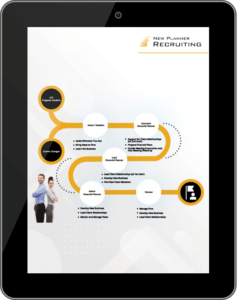 Download your free copy of the New Planner Career Roadmap! In this roadmap, you'll be guided through the details of various stages of your financial planner career, including position descriptions, licensing, skill and experience level requirements, and compensation ranges.
Get the Full Episode Transcript:

Read the Transcript Below:
Welcome to the New Planner Podcast, where it's all about helping you successfully enter the financial planning profession and accelerate your financial planning career. This podcast will help you understand the profession, become familiar with the various career paths available to you, and avoid the mistakes that limit your success. Join your host, Caleb Brown, to explore the human side of creating a successful planning career through interviews, personal experience, and insights from the trenches. Let's get started.
Caleb Brown: Welcome to the 267th episode of the New Planner Podcast. This is Caleb Brown, your host. My guest today is Matt Higbie, who is the managing director of Birchwood Capital. Matt joins the show today to talk about his transition from investment banking to financial planning. Matt talks about how he got started in investment banking and what made him want to transition to financial planning.
He shares how he leveraged his connections to secure his first role, what his role entailed, and how he navigated taking a substantial reduction in compensation to make the pivot. He goes on to share how he had been able to learn the business and the pros and cons of learning to be an advisor in a completely virtual environment.
Stay tuned to the end to hear some challenges he has faced in the last year and how he's preparing himself for continued success. I hope you enjoy this episode with Matt Higbie.
Hi, Matt. Welcome to the New Planner Podcast.
Matt Higbie: Hey, Caleb. Thanks for having me.
Caleb Brown: Yeah, we tried this. So, this is take two, right?
We tried this and I really appreciate you trying to get back on here and looking forward to chatting with you and I just want to hear on how you got started in financial planning and then we'll work into kind of your current role.
Matt Higbie: Yeah, I appreciate your patience, Caleb, 'cause we tried last time and my incompetence with technology sadly showed its ugly head again.
So, appreciate you bearing with me and giving me another chance here. But yeah, I'm excited to be here and this podcast and the previous episodes you've done with others were helpful to me as I was searching and trying to decide what to do and whether planning made sense. And so it's a real treat for me to be back here, and talking with you after all the episodes I've listened to.
So, yeah, I'm relatively new to the profession. I just started in January, so almost what, 10, 9, 10 months here? Yeah. Took kind of a roundabout way to getting here, but really excited about where I'm at and what I'm doing. And yeah, I forget what your question was, but happy to talk about it.
Caleb Brown: Well, you're technically a career changer, right? I mean, CFA, which we'll get to, but you came from the, if I remember right, the institutional sort of analyst money management side. Is that right? So maybe just maybe start there. How did you get involved with that? And then we can talk about the pivot to actual planning.
Matt Higbie: Yeah, so the first job I actually had right out of school was investment banking.
And so that was doing merger and acquisition advisory for community banks and loved the work and the people, but really didn't like the hours at all and decided I needed something more sustainable. And so that led the pivot to the investing roles that I did for the 10 years after that, and that was still within banks.
So, focusing on the financial sector, but as an investor in the public markets, so trading bank stocks in a long, short capacity. Love that. Really had a lot of fun, met a lot of smart people. Learned a ton about investing in general, and obviously in that specific strategy, but started towards the tail end thinking about what I might wanna do differently, and just through some conversations I had with different people, starting with our next door neighbor in Plano where we moved after eight years living in Dallas, the last two years in Texas, we lived in Plano and our next door neighbor had started his own RIA a few years prior.
And so I just asked him a million questions about how he did it, what he was doing, what he liked about it, what he didn't like about it. So that was kind of my first exposure to what it actually looked like day to day be doing that line of work. And so that was super helpful to me. And my neighbor, Damon, was very generous with his time and really pointed me on the path to, “Huh, what would this look like if I wanted to get into it?”
And so that kind of started a networking circuit of reaching out to different friends and family that were in the profession. And then things that my last job, my final hedge fund role kind of wound down in September of last year, and really freed me up to start looking at what I wanted to do.
And so I took the CFP. Thankfully, like you said, I had the CFA, so the CFP was able to fast-track the coursework and get to the exam, which I took last November. My good friend Michael Kitces’ advice, and I'm joking, he is not a good friend, but I feel like he is, 'cause I've read so much of his writings and consumed so much of his content that he feels like a friend.
But he had recommended on one blog post a long time ago, going to an FPA event, which I did in Atlanta last fall. Met some really nice people who put me in touch with more nice people and again, just, yeah, I was amazed at how giving and generous the people in the profession were as far as giving me opportunities to ask them questions and learn about what they do, and so ultimately got connected with a guy named Steven who lives in San Diego, who I am now working with my current role.
Yeah, he was. He had run his own shop for the first five years of Birch Wood's existence and decided he was looking to hire someone and I was looking for something that was fully remote. And so the stars aligned and like I said, I'm coming up on the end of my first year here, but I'm loving it. And yeah, so far so good.
Caleb Brown: Wow. Thanks for sharing that. That's quite the journey. A lot to unpack there. And Plano, Texas. I didn't know that. Great place to live. I lived there for a few years, so.
Matt Higbie: Oh man. Yeah, we loved DFW. We thought it would be a short-term thing, 'cause we, my wife and I are both from New York, but ended up staying for 10 years and yeah, loved our time out there.
Caleb Brown: I mean, is it being from New York? I mean, is that kind of what, just New York going to Wall Street doing the investment banking thing, is that kind of, was that the allure of the, how you got started?
Matt Higbie: Yeah. My dad worked in banking his whole career, in the last 10 years or so in investment banking.
And so that kind of exposed me to what it looked like. Yeah, gave me the initial interest in that line of work. And so that was when it came time to choose colleges, something I was focused on was a good business school 'cause I thought I would wanna do finance. And so was fortunate enough to get into UNC Chapel Hill and got into the business school and studied finance, and then yeah, got that first investment banking role out of undergrad through on-campus recruiting at Carolina.
Caleb Brown: Got it. And you spent most of the career in what I'm gonna call an ancillary role or area to financial planning, like CFP work.
Matt Higbie: Yep.
Caleb Brown: You mentioned a hedge fund, some trading, some, I mean, so you had all this money management stuff, and I just wanna come back and maybe I just missed it, but what–
Matt Higbie: Yeah.
Caleb Brown: What made, why didn't you just stay there at the hedge fund? I mean, you're making all this money. I mean, very, you know, you tell people you're a hedge fund here, that's like really cool. You tell people you're a financial planner, like, “Oh yeah, okay, you're gonna try to sell me something.” You know that, like, why did you, I guess I'm getting at, it's like, why do all this?
Matt Higbie: Yeah, what really led to my decision, I mean, there's a lot that led to it, but ultimately was just the stress of the intensity of the environment where it's to be successful as a hedge fund analyst and portfolio manager, where you're picking stocks and putting up performance year after year, it just requires a lot.
And so I said at the beginning, I started in investment banking, which was like 80 to 90 hours a week. And then I moved into a hedge fund role, which was like 60 to 70 hours a week and started thinking about what I wanted to do long term, especially as we were starting to think about having kids.
And then I was thinking, “Man, why not get closer to 50 or 40 hours a week?” And so that. The main driving factor on top of being a, I think of myself as a people person and just enjoy building relationships and getting to know people and having that be a core part of my role as my job was something that was interesting and that was definitely not the case when I'm picking stocks and running money.
So something more relational with better hours was really the starting point of, okay, this checks both of those boxes and still uses some of my investment expertise and just interest in analysis in general. So yeah, those were some of the factors that led to the move.
Caleb Brown: Love it. Yep. Great. And we're glad to have you. That's amazing. We want more people like you. So if you're out there listening, if Matt can do it, you can do it, right?
Matt Higbie: Yes, absolutely.
Caleb Brown: And maybe, I think, so then you moved to Atlanta. You moved to Atlanta for the last job, was that right?
Matt Higbie: Yeah, so I moved during the last job. So I had three different hedge fund roles. The first one is about six years at a firm based in Dallas called Carlson. And then it was about two years at a firm based in Chicago called Citadel, who I worked for remotely, 'cause I joined during COVID when everyone was remote.
We started thinking about having kids. And since the time we had been in Texas, my in-laws had moved down here to Georgia. My parents had moved to San Diego and we were thinking it would be nice to have family close by. And so, chose Georgia for a few reasons, but yeah, the last hedge fund role I had was at a firm called Balyasny. So it was a fully remote role that allowed me to start in Texas and move to Georgia.
And so while we–I was still doing that role when we moved, but the move to Georgia was driven by wanting to be close to family, and so far it's been really sweet.
Caleb Brown: That's great. Okay. Then you joined or you went to the Financial Planning Association of Georgia's meeting in Atlanta and that's
Matt Higbie: In October.
Caleb Brown: How you got connected
Matt Higbie: Yep. Exactly. Sorry. So Balyasny restructured and basically let me go in September, which opened me up to look at other stuff and that FPA meeting I mentioned was in October, so a few weeks later, I had read that Kitces’ article, suggesting that was a nice way to meet people. So I went there and, at the same time, was studying for the CFP, and I took the exam in November.
And so I'm networking, interviewing, applying for jobs, took the exam. Also helped, one other resource I wanted to plug for anyone else out there that's a career changer, is amplified planning was a way to get exposure to the profession and see what it looked like with actual clients doing actual planning.
And so that was something that opened my eyes as well to, “Okay, this is something I can do and feel confident in.” So was, yeah, like I said, applying and interviewing and got connected through a personal relationship to Steven, who I now work with and joined him in January.
Caleb Brown: And talk to us about that. And amplified planning is a great, we've had Hannah Moore on the show every year since she's been doing this, I think, since 2020. Great program that we'll, again, highlight in the show notes, but talk to us a little bit more about you got connected with this person. What type of firm is it? Why was it a fit and how did you get, and what did you start off doing?
Matt Higbie: Yeah, so initially, an uncle of mine, my uncle Mike, who lives in San Diego, connected me with Steven, who he knew personally through a family friend relationship.
And Steven had, he's about two years younger than me, but had started Birchwood as a solo RIA in 2020 and started it as a flat fee pricing structure with passive investment philosophy and comprehensive planning. And I was, as somebody who was new to the profession and still learning all the different business models, I was looking at his website thinking, man, if I was going to start my own thing from scratch, which I'm glad I did not, but if I was going to, I was thinking this is exactly how I would do it.
And so I just felt like between the pricing, the investment philosophy, the service mentality and just the entrepreneurial aspect of calling all the shots yourself and things like that, I thought, “Man, this is really cool.” And so initially got connected with Steven last summer and he was generous with his time to answer my questions and tell me how he started it and what it's been like and that led to a follow-up conversation in the fall where I had actually reached back out to him to say, “Hey, do you know anybody at this?” I forget which firm it was, but some firm in San Diego had posted a fully remote role. And so I reached back out to Steven to say, “Hey, if you know anyone at this place, that would be great. I'd appreciate an intro.”
And he said, “I don't know anybody there, but I'm actually probably looking to hire somebody myself.” And so that led to–yeah, more formal discussions, which ended up obviously working out very well. But yeah, that was the connection to Steven and my attraction to Birchwood.
Caleb Brown: I wanna come back to the role in just a minute, but a couple things there. One, you said, sounds like a really cool business, right? I mean, a little different than passive investment. So here I am. I mean, I am looking at you like CFA, let's get in there and like look at everything, all the book to price value, PE ratio, all this stuff.
And you've been in hedge funds, you've been in investment banks, you've been in like, passive is, I mean, that's not what they teach there. So, how did you reconcile this?
Matt Higbie: Yeah, so on a personal basis, my portfolio had always been invested passively in an S&P 500 fund. And so I had seen the power of it personally, based on the advice I got from my first hedge fund boss who had also personally invested passively for most of his whole career.
Yeah, so I had seen it work firsthand. The data, in my opinion, backs it up pretty strongly, as far as long-only investing mutual funds don't really outperform their benchmarks over longer periods of time, and so I think the data bears it out. My personal experience supported it. And the conversations I had with friends and family over the years who had come to me to say, “Hey, I have some money. How should I invest it?” I would always tell them, “Buy this ETF and don't ever sell it. If it goes down, buy more.” And so we can talk about that as much as you want. But that was really the background of my thought process on why it aligned with what I was thinking.
Caleb Brown: Sure. Got it. And everybody knows that people coming from this institutional side, the hedge fund manager, like, I mean, it's buku bucks, right? I mean, that's why people getting you work the 90 hours, but they also pay you a lot. So, the investment, how did you get the numbers to work, joining a small RIA that probably couldn't pay you as much as you were making?
Matt Higbie: No, it's definitely not the same money I was making, but in my mind, this was a long-term bet and in my mind it made sense because sure, years one through, I don't have an exact number, but based on some different scenarios, I was modeling out years one through 3, 4, 5, maybe even as long as one through 10.
It's a foregone opportunity and that I'm gonna be making a lot less money, but there's a decent likelihood that years 10 through however long the Lord gives me the opportunity to do this end up being somewhat close, if I'm able to have the success that I'm hoping to have. And so to me, it was worth it to take the hit upfront and through the first few years to see the long-term payoff. And so that was how I made sense of it.
Caleb Brown: The long game. And I want to emphasize this point because this is where a lot of the career changers that are trying to break in the business, and they call me and other people, like this is where they get hung up. And this is where they have a lot of challenges because, I mean, for whatever reason, everybody's got their own personal circumstance.
They just can't, they can't do what you just said. Like I've been making the big money and I want to change careers, but I still gotta make the big money and what I try to explain to them is like it doesn't really work that way, at least starting out. Now, a lot of these people, the career changers, I explain to them like, you can make actually a lot more than you're making now, if money's the primary thing or one of the primary thing, if you just stay in this for a little while, but to your point, you're gonna have to take a step back for a few years.
Matt Higbie: And the way, another thing I should mention, Caleb, as a way that I was able to make sense of it and sort of make the numbers work is it's harder to quantify, but the value, the dollar value and intangible value of my time and the flexibility in my schedule to have with young kids at home to be able to help my wife is something that was much harder to do in my previous roles, is now much easier and that doesn't have a dollar sign on it, but I think that's incredibly valuable, at least in my current stage of life.
And so the long term payoff and the short term benefits of flexibility and just less hours required for the job were reasons that I took the plunge.
Caleb Brown: Talk to us a little bit more about when you showed up, 'cause you don't, I mean, you passed the CFP, I think, or you were working on that.
Really, no experience at all. I mean, even though you've got all these credentials and all this other experience, I mean, nothing in personal financial planning other than the investing and the stuff you've done for yourself.
Matt Higbie: Right.
Caleb Brown: How did you, I mean, what was your role? What were you doing and how did you get up to speed?
Matt Higbie: Yeah, so it's been a process and Steven has been very patient with me as I've been asking him tons and tons of questions, and it's been interesting because we're fully remote and so it would be, it would definitely be better if we could sit together all day. So I fully acknowledge that's a shortcoming of the current situation, but we do have a recurring Zoom call every day at noon my time, nine his time, where we talk, and it's usually, sometimes it's 30 minutes to an hour. A lot of times it's 1, 2, 3 hours where I'm just asking him about situations, asking him about different techniques, different planning questions, and so he's been very, very generous to train me and answer all my questions.
And some of it's just been learning by doing. And so a client will come in and say, “Hey, let's talk about Roth conversion,” or, “Hey, I need to update my trust document.” Or, “Hey, I have this investing question on this concentrated position,” or whatever it is. And so Steven and I will talk through that together.
And then on top of that, I think I have been able to leverage, to your point, the background and the expertise I have in investing. So I put together a video in the spring to address some of what we expected were gonna be common questions from clients around the market. And that was around the time of the tariffs and things going crazy.
So I was able to try and provide a level-headed view of, “Hey, here's how I think about this. Here's what we recommend.” And so trying to use the experience that I had on the investing side to help clients sort of from day one, but then also leveraging Steven's expertise on all the other areas to try and get up the learning curve on tax planning and estate planning and insurance assessments and all these other things that to your point, I am less, not even less experienced. I had no experience.
Caleb Brown: And then what is, what do they have you doing? I mean, are you meeting with the clients? Are you helping behind the scenes? Talk to us about the role.
Matt Higbie: Yeah, it's some of both. I am doing, definitely helping behind the scenes, especially with trading and portfolio management, but also just administrative stuff, paperwork, Schwab forms, processing different documents.
So lots of behind-the-scenes, excuse me, back office type work, 'cause for a long time it was just Steven and I and we have actually just hired our director of operations, Linda, as of a month ago. So she has worked in this much longer than either Steven or I have, and has lots of experience on the back office stuff.
So she is definitely upping our game on some of the logistical paperwork-type things. But, so yeah, it's been a lot of background stuff. I have been meeting with clients both during the sort of interview and prospecting process and trying to pitch, help Steven pitch our firm and our offering. And then, yeah, once they join, I haven't yet met all the clients, but there's been a few client meetings that I've joined and we're hoping to kind of increase that over time as we try and do everything as a team here and kind of bring everything we have to bear.
Caleb Brown: If someone reaches out to you after this podcast, which is very likely to happen 'cause it happens a lot with the other guests, and they say, “Matt, should I get my CFA or CFP?” What's your answer?
Matt Higbie: To work in planning.
Caleb Brown: Yes.
Matt Higbie: I would say the CFP is more valuable for planning. I'm glad I have the CFA and it made a ton of sense in my prior role rather than getting an MBA 'cause it provides very specific expertise in investing and it's something that continues to help me in my role today with our clients here at Birchwood.
But yeah, if I was gonna pick one, like if one of my kids came up to me and said, “Hey dad, I wanna be a planner. What should I do?” I would definitely start them with the CFP and say, “Start here because this is gonna help you add more value for clients.”
Caleb Brown: And I like how you said start here. I mean, you could always get other investment-heavy related certifications and education on top of that.
Matt Higbie: Oh, definitely. Absolutely. I've also been working through, it's a new program that just came out this year, but the TPCP, so the Tax Planning Certified Professional, I think it might be. But that's obviously focused going into tax planning above and beyond what's in the CFP curriculum, and so that's something I'm in the process of getting as well, which has been very helpful for speeding up the learning curve on a lot of tax planning topics.
Caleb Brown: You were real honest about, “Hey, it's probably not ideal. I'm kind of newer, I would, if we were sitting together, it'd be a little easier. But we have these Zoom calls.” I mean, what are some of the other challenges or hurdles that you've had to overcome in this last, I mean, I mean, kinda like your, it's a new career for you really. I mean, like, this last year.
Matt Higbie: Yeah. I think the hardest thing, and part of the reason I was hesitant to get into this line of work, at least in a role similar to mine now, is just the whole aspect around sales and selling yourself and your services and your firm. And so that's something that has been a messy process where I've had conversations with friends and family or even people that have reached out and I've butchered the messaging and not done a good job of communicating what I do and how I can help.
And so that has been something that's an ongoing process. But I will say it has gotten easier with time, where even if I've been doing this less than a year, just one or two situations where clients have come on and I've been able to do something that helps them. Okay, that makes it much easier to then pitch myself and my firm to future prospects, 'cause I can just say, “Hey look, here's what we do, here's how we help people. If that sounds good to you, I'd love to talk more. If not, I wish you all the best and I'm happy to help you find someone who's a good fit.” So the sales aspect of this role has definitely been a challenge and something I'm still studying and trying to improve for sure.
Caleb Brown: Well, and we've shared this a lot on other episodes. I mean, that just comes with time. I mean, you just need a lot of reps, right? I mean, there's still, I mean, lots of people still, I mean, been doing this 20, 30 years, still work on their elevator pitch or whatever it is, and they're really good at adapting and adjusting based on who they’re interacting with, so. Man, awesome stuff, man. I mean, congrats on making the transition and I mean this is a risky move for you, and everything we've heard sounds like you'd not really have any regrets. And you're glad you took the plunge?
Matt Higbie: Oh, definitely. No regrets. If anything, it's been even better, more fun, more fulfilling than I expected. So yeah, I appreciate it and I feel very fortunate and blessed to have the situation I have, 'cause it's really been awesome.
Caleb Brown: What's your goal? I mean, are you trying to work up to a lead planner role or an owner or, I mean, you said that the owner's a couple years younger than you, so maybe not a succession plan, but maybe a partnership opportunity or something.
Matt Higbie: That's how I'm thinking about it is, I've said this to Steven many times and to others as well as I'm hoping this was the last career move I ever have to make. Maybe that's ambitious and unrealistic, but I really like Steven. I like Birchwood. I like what we have going on, so I'm hoping to be here for the rest of my career.
And yeah, hopefully over time, able to take less of Steven's time with asking him questions about different situations and work towards more of a partnership where I have clients and relationships that I'm solely responsible for, that I don't need to bug him with. So that's at least my initial thinking on what this looks like down the road, but we'll see.
Caleb Brown: And bringing in your own clients, too, right? As your career progresses.
Matt Higbie: That's right. That's right. We've had, fortunately, some early wins where different friends and family have actually reached out and ended up coming on board. So they stuck through my very bad sales pitch and ended up joining despite me. But yeah, to your point, we've had some early wins and hopefully over time that increases as well.
Caleb Brown: Well, any other final comments or anything you wanna share before we close out?
Matt Higbie: I would encourage anyone who's interested, like I was a few years ago, to really reach out to people because everyone I've spoken with in this line of work has been generous enough to give me a phone call, if not a lunch, and if not a referral to someone else to talk to.
So please reach out to me. If nobody else will answer, I would love to be a resource for any career changers, as far as someone who can point them in the right direction. And yeah, like I said, if it hasn't become clear already, I love it and I would strongly recommend it to anyone who thinks they might be interested in this line of work.
Caleb Brown: Matt, thanks so much for coming on the show.
Matt Higbie: Yeah, thanks, Caleb. Thanks for having me.
Thanks for joining us for this episode of the New Planner Podcast. If you are ready to discover the top career paths for financial planners and see which track is best for you, we created a free guide to help you. Grab your copy of the Financial Planner Career Roadmap at newplannerrecruiting.com/roadmap. There, you'll also find more tools and resources all created to help you build a successful financial planning career. Tune back in next week for another episode, and until then, we are here to help you succeed.
Share the Love:
If you like the New Planner Podcast...
Never miss an episode by subscribing via Apple Podcasts, Spotify, Amazon Music, YouTube Music, or by RSS!



Leave a Reply