Robert Jeter is the owner of Back Bay Financial Planning & Investments, and he joins the show today to talk about his career journey to becoming a financial planner and firm owner. If you're interested in understanding how to navigate career decisions, grow within a firm, or eventually make the leap to starting your own, this episode is for you.
Listen in as Robert shares how he first became interested in financial planning while in college, what he hoped to find in his first job, and how he convinced his parents that the profession was far different from the stockbroker stereotype. He also talks about beginning his career in a specific channel, finding early success, leveraging mentors, and ultimately working his way up to partner in an existing firm before deciding to leave and launch his own. You'll hear how he now gives back to the profession and practical tips for new planners entering the field.
What You'll Learn In Today's Episode:
- How Robert first discovered financial planning and began his career path. (0:30)
- How he developed the confidence he needed early on in his career. (7:00)
- The early challenges and successes that shaped his professional growth. (12:55)
- Why Robert decided to transition to a new firm. (13:25)
- How he became an equity partner and ultimately chose to start his own firm. (18:20)
- How he navigated leaving a partnership, launching a new practice, and rebuilding from the ground up. (20:20)
- What he envisions for his future career. (29:35)
Ideas Worth Sharing:
“I think just because my mom was a math teacher and had beat so much math into me, I kind of leaned into finance.” - Robert Jeter Share on X “I was never really an academic superstar. It felt like a pretty pragmatic course to take.” - Robert Jeter Share on X “It's just been an amazing journey, and the people that I've been able to help is really just something that's pretty fulfilling.” - Robert Jeter Share on XResources In Today's Episode:
- Robert Jeter: LinkedIn
- Investment Adviser Public Disclosure
- XYPN
- NAPFA
- Finding your Path: The Roadmap from Student to Successful Financial Planner by Caleb Brown
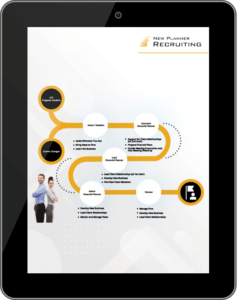 Download your free copy of the New Planner Career Roadmap! In this roadmap, you'll be guided through the details of various stages of your financial planner career, including position descriptions, licensing, skill and experience level requirements, and compensation ranges.
Get the Full Episode Transcript:

Read the Transcript Below:
Welcome to the New Planner Podcast, where it's all about helping you successfully enter the financial planning profession and accelerate your financial planning career. This podcast will help you understand the profession, become familiar with the various career paths available to you, and avoid the mistakes that limit your success. Join your host, Caleb Brown, to explore the human side of creating a successful planning career through interviews, personal experience, and insights from the trenches. Let's get started.
Caleb Brown: Welcome to 266th episode of the New Planner Podcast. This is Caleb Brown, your host. My guest today is Robert Jeter, who is the owner of Back Bay Financial Planning and Investments. Robert joins the show today to talk about his career journey to becoming a financial planner and firm owner. He shares what got him interested in the career while he was in college, what he was looking for in his first job, and how he even had to convince his parents that a financial planner was a viable career path and different than just a stockbroker.
He goes on to share what channel he started in and how he had early success, how he leveraged mentors and worked his way up to a partner in an existing firm, why he ended up leaving that partnership and starting his own firm, plus how he gives back to the profession and tips for new planners. I hope you enjoy this episode with Robert Jeter.
Hey, Robert. Welcome to the New Planner podcast.
Robert Jeter: Thanks for having me.
Caleb Brown: Hey, this is gonna be so fun. I know we connected earlier to talk about some CFP board stuff, but just if you would just start with how you got interested in or you became aware of the financial planning profession.
Robert Jeter: I tell everybody there's a little bit of serendipity and now that I'm an adjunct faculty, it's even more kind of full circle or serendipity.
But I think it was my junior senior year at Salisbury University doing my undergrad, and I had always taken a tilt towards finance, I think, just 'cause my mom was a math teacher and had beat so much math into me, I kind of leaned into to finance at least as far as my interest, and I took a flyer on a retirement planning course and there was an adjunct faculty there.
And just the way that they were talking about their day-to-day and the things that they kind of got to do, I thought to myself, said, “This sounds like a great job.” Really kind of from there, I tell people that was my sort of day one, eureka moment at totally random, but that got me as far as looking for jobs and opportunities, into financial planning.
Caleb Brown: So you just happened to see the retirement planning class and just signed up for it?
Robert Jeter: Yeah, it was part of the business school. I just needed some additional credits to graduate from the business school and yeah, retirement planning, I think at the time, and I don't know if we'll get to it, but I was never really an academic superstar, felt like a pretty pragmatic course to take, and learning some things and yeah, just took a flyer on it.
Caleb Brown: It's interesting to hear you say that, 'cause I think now sometimes it's like, “Retirement planning? Like why would I take that? I'm 20 years old, I'm never gonna retire,” right?
Robert Jeter: A hundred percent. And like I said, it was probably one of a host of other courses and, for contrast, I'll tell you my senior year. I think one of the few classes I did take was scuba diving. So that just shows you how random my academic career ended up being.
Caleb Brown: So, but you got something from that adjunct, got you excited and they were talking about, which is amazing, and it's kind of come full circle, which we'll get to in a moment, but then continue on the journey. So you completed your degree or whatever, then you started trying to find jobs in the financial planning space?
Robert Jeter: A hundred percent. So, and it's funny because I told my parents about it. My dad is was a retired airline pilot. My mom, as I said, was a math teacher and has always been a teacher. And when I told them, “Hey, I wanted to go into financial planning or be a financial advisor.” They basically said, “Absolutely not.”
And at that point, most people's exposure to the industry was kind of just these commission based role, like stockbroker-type roles. And that's what people knew it as. And I knew it was a little bit different because of this adjunct faculty and we did talk a little bit more about planning and how you integrate kind of retirement planning into it.
So I went looking for financial planning jobs that landed me with a number of different opportunities. I did take my first job at an insurance broker-dealer, kinda talked it through with my parents, which I think at that point, I said, “There's virtually no salary. You can make as much as what you want,” which of course is kind of how it always gets couched, right? Like, “You're gonna be on commission right from graduating school and who is exactly gonna trust you with any kind of money?” I ended up actually having some pretty good success there.
I got licensed, spent about three and a half years. I actually got really, really fortunate and I think, again, I look back on my entire career and, as they say, it's better to be lucky than good, but I fell into a group who was primarily working with teachers. So we already had contracts with a lot of different school systems and yeah, I didn't have to cold call my family or anything like that, I guess is where I'm going. And we kind of had a known market or a known specialty. So we would go out to these schools and talk to teachers about their retirement plans.
And I think the biggest thing I got from my entry level position, one is, like I said, it was full commission. So you're kind of sprung right into ownership and having to rely on yourself. And we could talk more about that and the profession, but I got just a ton of reps, I mean, we were trying to work with and sign up for retirement plans, like 120, 150 teachers a year.
So the amount of people I was sitting down with was just a ton. I mean, it was two or 300 people a year and I think that was really just foundational for me. The dichotomies in life get really funny, 'cause when I was in college, man, I was terrified of public speaking. I mean, I was terrified.
I would skip class if we had to public speak. And now here I am on a podcast and I tell you most of my business development today is from public speaking. And I tell people if I had a secondary job title, it would be like professional public speaker. So, but I think you get some of that from those first formative years of, well, if you want to have clients like, you better get ready to start using your mouth a little bit and talking to people about what you do and all of those sorts of things. So that was kind of my first foray into the industry after finding out about it through the retirement planning course.
Caleb Brown: So, here you are. I mean, young guy. You've told your parents like, “Oh, it's planning, you can get a salary.” Then you end up taking a no-salary job to get your foot in the door. And kudos for them for kind of quasi-signing off on this and letting you go forward.
But how did you develop the confidence and the skills to go out and talk to all these teachers? I mean, did you just do your own research on the 403Bs and the TRS plans? I mean, just like, 'cause you didn't really have any training or experience at that point.
Robert Jeter: No, the one thing I will say, and when I started, I mean we had, and I look back at my manager at the time, he came to my wedding years later, even after I had left, and I look at some of those guys who ran those branches and man, they were just absolutely amazing in terms of just being coaches and being motivators, and because it's tough. I think anytime you start in a professional career, it's hard and there's just, I mean, we all have imposter syndrome like all through life, but man, it is so acute in those early stages, and so I think having great managers was a huge help.
But at the same time too, and this is kind of funny and I have mixed feelings about it now, we did some just amazing sales training, and it would be kind of everybody who had started in the first two years, and I say sales training, but you know, you're not gonna learn all the nuances, the different codes in the internal, sections in the Internal Revenue Code about retirement plans in your first year. You're just not. I mean, there's the CFP curriculum and the rest, but that's like drinking from a fire hose. So they gave you some tools that you could sit down with a teacher and explain like, “Hey, this is the calculation for your pension. This is kind of how things work.” And really, it was just kind of a very basic entry-level way of talking to people, and like I said, was I offering financial plans? No. Was I really kind of doing product sales? Yes. But at some level, it was a very, it was kind of entry-level financial planning.
And I look back at those trainings today still, when I talk to younger people and when I manage people at my next firm, and I would just use some of those as tools just because role playing and talking with people like, it's really hard to just do that and rely on kind of your natural people skills without any of those kind of reps.
So I think it was twofold. I think one, we had some just really great sales training, which I had never done before, and I still don't consider myself a very good salesperson, but also just great support system and being with a bunch of young folks who were really kind, we're all in the same spot.
I mean, everybody was kind of grinding and out and embracing the suck a little bit together. So it was just a really good environment, I feel like to build some of those skills I really had none of prior to.
Caleb Brown: Yeah, I kind of feel like the teachers, that's a good place to start. I mean, a lot of those people were brand new teachers, probably too.
Not everybody was super experienced and kind of similar age and stage and that lowers the stakes and takes the pressure off maybe a little bit. It's like you're sitting across from someone who looks like you. And is that kind of what you found?
Robert Jeter: A hundred percent. And that's the other thing too, and I'll never sit here and say people don't need a financial plan and there aren't other areas to help…
But the reality is, we were there to just kind of sign them up for their 403Bs. And again, this is not a commentary on the 403B market. It is what it is and the rules are what they are. But that was just kind of our very narrow focus, and so it kind of made it easy to have this system, so to speak, and know who you're going for, what you're doing. And it was kind of rinse and repeat for me for three and a half years. And by the end of that I thought I knew everything about financial planning, because at that point, I probably sat down with almost a thousand people.
And I'll tell you, it's funny. I remember to this very day, I can tell you what school I was at. First person I ever sat down with, man, I was so nervous. And I think this guy was probably a little bit older than me. I mean, he was a younger teacher, he didn't sign up for his 403B and every year, and even as I got more of the teachers in that building, he would never sign up with me.
And I always think back to that. I'm like, man, he could probably read it on me. I was so nervous, and it was probably such a terrible pitch. This guy just couldn't sign up with me just at a principle. So it's just, I kind of look back at that. And look, for people starting out in the industry, you'll go through that.
Like, there will be those times where you'll miss, or somebody won't join up, and that's okay. That's a learning experience. And now I just, I laugh at it. I mean, it's hilarious to me. But I could tell you exactly where I was and who it was. It was, it's funny.
Caleb Brown: So, you were there three and a half years and then you approximately, and then you left and went somewhere else. So talk, walk us through that.
Robert Jeter: Yeah, so I think that, and this is kind of in the age where, look, podcasts are starting to come out, blogs, especially in finance and financial planning, are really kind of starting to pick up steam and you're reading all this stuff and I'm thinking to myself, I'm like, okay, like.
I'm not, you know, I'm learning a lot and I'm doing a lot, and I kind of actually have this business going and like, man, this is pretty great and I'm starting to really make some real money. But then you kind of start to ask yourself like, “Hold on. Like I'm sort of living in this bubble and there's quite a bit I don't know.” And people are doing all these financial planning and I'm reading stuff about markets and products.
You kind of start asking yourself like, “Okay, is this really where I wanna build my career?” And like, is this, and again, I still, some of my best friends and people I still talk to that are really great colleagues, are still there. Guys, I started with and like I said, were at my wedding and all the rest.
And I respect all of them as practitioners. And I think this gets to kind of what model you wanna be. But I started looking around at this time too. My girlfriend, who's now my wife, kind of deciding where I wanted to be. I mean, look, in my free time I'm usually fishing or hunting or surfing or outside.
And that time I was working outside of Baltimore and living in Annapolis, Maryland. I wanted to move to the eastern shore, which now is a little bit more of a rural area, but we have the ocean here, we have the Chesapeake Bay, and it's really kind of a sportsman's paradise. So, and I had actually been getting some clients out in this area.
So I was kind of looking, and this is where I went to college. So I was looking around at different planners and I was kind of sending a lot of cold emails out. I'm looking at the IAPD, the database. Like, I'm like, who can I just, and I'm sending a lot of cold emails and there was a gentleman who actually had run an internship.
He turned me down for a financial planning internship, not because I was a terrible student, but he just didn't have any room. But my roommate in college had done an internship with him, so I kind of had a connection. He said, “Yeah.” He said, “Man, I'm actually at a stage. I'm kind of thinking about some growth.”
He was a sort of a solo practitioner. This is an independent broker-dealer he was at. We sat down. I mean, we were very like-minded in sort of how he had actually started in the school system and we were just connecting on a lot of different levels. He was looking to take his practice to the next level and needed some young talent to do it.
That run went on about nine years from there. So again, it was just, and it is another thing I tell people is really from kind of a cold email.
Caleb Brown: Well, and hey, I mean, nice job. You followed up. Like some people, “Hey, he rejected me for the internship. I'm not gonna reach back out.” And you said, “No, I'm going to.” And it turned out to almost a 10-year engagement. Wow.
Robert Jeter: Yeah. And I'm sure we'll get to my current pursuit. Yeah. I was there, I think it was about nine and a half years. That was April of 2016. And I was there until July of 2025.
Caleb Brown: And what role did you start in and then what role did you end out?
Robert Jeter: I think technically I came on as a financial advisor, though admittedly, most of my business at my first firm was a lot of proprietary products. So it was insurance, annuities, and that's not stuff that you can necessarily move with you. Now, of course, I didn't know that at the time. I didn't even know what a non-compete was, really, and so I'm, as I'm leaving, I'm sort of figuring all this stuff out.
And I had a few, I had a little bit of advisory money, stuff that I could move with me, and it was a few million dollars. So this gentleman, he had agreed to pay me a salary and I forget at the time, maybe it was 40 or $50,000, to sort of help start me out and sort of subsidize my growth.
But I started helping with some of his clients. So half of me almost wants to call it in what we might talk about today as like a paraplanner type role. But I also kind of had some of my–
Caleb Brown: Kinda a hybrid role. It sounds like hybrid.
Robert Jeter: Exactly. Exactly. He had shown me the respect of somebody who had gone through three and a half years of producing and kind of being out on my own.
But at the same time, he was a CFP. I didn't have my CFP at that point. You kind of start to realize all the stuff you don't know, and I'm like, “Wow. He's doing this and making retirement projections.” And at the time, he had these clients that had $500,000 and $700,000 and I'm thinking, “Man, this is like, we just went from little league to the major league.”
So I was like, so it was, that was really overwhelming for me. So, it was kind of a position where I think he was giving me just a lot of respect for the experience that I did have. But at the same time, we sort of structured it that I had more of a salary and I guess you could say formal role in being there and helping with the actual business.
Caleb Brown: Okay. And then it, I mean, obviously worked pretty well 'cause you were there, like you said, about nine and a half years. So what happened that caused you to look for something else and ultimately leave?
Robert Jeter: Yeah, I'll start, but just by saying over the nine and a half years, I mean, I was able to grow.
We happen to live in an area that is seeing just an absolute tidal wave of high-net-worth retirees here, and people retire to the eastern shore of Delaware and Maryland, and there's more business here than we can handle. So if you're listening to this and want to start a practice, I'll tell you, I got the geographic pin on the map for you. But so, I was kind of finding different ways to go develop some business and started having some success and working with some of his smaller clients. I joined him; he had about 80 million and maybe, I don't know, 90 to a hundred clients. And by the time that I left, we were at about, I think 350, 360 million and about 400 clients, nine years later.
Caleb Brown: Yeah.
Robert Jeter: Which was a really good run. And I had gotten my CFP over that time, I think four years in, he and I, he made me an official equity partner, the firm. This is at the time…leaves, the ensemble practice was becoming popular. So we were really kind of trying to build this bigger firm that looked a little bit more like an ensemble and we ended up having, I wanna say, six full-time staff.
And we'd usually keep two to four student interns. So we had a pretty big operation and, which was great, and we were just having a ton of success. So, people, somehow, I still think people today look at me, they're like, “So what's wrong with you? Like, why would you bail out? Like you're an equity partner, you guys are growing, adding so much money a year.” We were in the top, I don't know, 5% or something of the broker-dealer rankings and so it was just a lot of success, which is amazing. And the amount I learned and the opportunity that I was given was just something I'll forever be grateful for. But you know, in that time too, I got married now, I now have a three and a 1-year-old. And at this point, personally, I mean I was helping with some of his clients. I think I was managing maybe somewhere between 150, 160 of those relationships.
I'm also managing kind of the practice day to day, the staff, it was a lot, man. It was a lot to bite off. My wife is a super successful commercial real estate broker. So she's self-employed in her own right, and it was just demanding on both of us. And I think I felt like something had to give a little bit.
And my partner, my former partner, to his credit, is just one of the most ambitious people I've ever met and still loves growing people, loves growing the business. I thought for me, I wanted to maybe keep a slightly smaller practice or just be a little bit more deliberate as far as the growth and who I was working with.
I felt personally like I couldn't necessarily keep up with all the client relationships, all the personal stuff I had going on, and I think you just get to a point where you know stuff is slipping and it's just not a good feeling. So he and I really took probably six or seven months to kind of work out, you know, what that might look like if I stayed.
And eventually, we decided parting ways would be the better decision. And it took us quite a while to unwind our equity partnership, which led me to where I'm at today. So, on July, I think it was seventh, so not quite July 4th. That would've been too cool to launch my RIA on Independence day. But pretty close to it of this year. July 7th, I launched my own RIA.
Caleb Brown: So instead of joining another firm, you felt like this was the best route to go, I guess, 'cause like you said earlier, you're trying to stay small and keep things more manageable and this is what you ended out on the, starting your own firm.
Robert Jeter: Yeah. I think, over time, you come up with what your kind of belief system is. And I think in terms of, as a practitioner, philosophically, how you feel about various planning, items and risks and I mean, some of this stuff, it does get subjective, the types of clients you wanna work with and all of these sorts of things, and how you manage investments and what the best philosophy is there. And there's no wrong answer, 'cause the future’s uncertain, right? And so for me, and this is just some of the stuff I had really come to believe and we built the previous firm on, I still believe is very true to this day.
And I think back to the first time I had my first interview with my former partner, I mean, we just connected on so many things and I was like, man, it was almost like meeting somebody else that you didn't know before and you guys just have the same religion, and so a lot of that stuff was true to me.
And I kind of thought, I was like, and I had looked and talked to people about tucking into other firms. It felt like that would almost be trying to learn a new religion. Not saying I couldn't have made it fit, but I felt like I had enough experience and kind of running our larger practice that it would be pretty manageable for me to do this of my size and to run it kind of my own way.
But it's one of those things in the future. I'm not holding onto it 'cause I need control or something like that. I just felt like in order to make the transition easy on myself and my clients, having a little bit more control at this stage was the right path.
Caleb Brown: Even though the spouse is successful. I mean, was that kind of a scary time? I mean, you got an eight-month-old and you got a two-and-a-half-year-old and you're sort of walking away from probably a pretty lucrative, nice financial situation to, “Well, I don't know how it's gonna look. I don't know if it's gonna work.” How did you navigate that?
Robert Jeter: And I, I don't say this stuff to scare people, but I think anytime you're taking a risk professionally, your body knows it's a risk and there's sleepless nights and it gets the adrenaline running. And look, I've always been an athlete. I get up at 3:45 every morning and go run and work out and so I had those things in my life and I think that kept me kind of grounded and I tell everybody, I'm like, man, and I'm not just saying this, but like for me, physical fitness, my wife, being into it as well, like really just helped us kind of be grounded and keep moving forward. It's easy to kind of get complacent when things get tough and you just gotta keep pushing yourself.
But she was incredibly supportive, I think. It's kind of funny 'cause my wife, when she started in commercial real estate, by the way, if she listens to this, and I hope she does, she graduated from South Carolina with a fashion merchandising degree, so now she's this big time commercial real estate broker.
So don't ever feel like you're pinned to your education either. For the longest time, she kind of started out like I did and she kind of had a little salaried job and would do stuff and property management and she would produce on the side and now her partner was like, “We gotta get her producing,” and kind of wants to take her off the small side. And she was very apprehensive about it and I think now she looks back on it, would probably laugh about it.
But you kind of have that sense of security and now you just kind of get used to a little bit of the risk-taking, like that kind of becomes, your risk tolerance definitely moves up and I think that happens with time, but I can't sit here and lie to you. I mean, look, even approaching my partner and telling him I wanted to do this. I mean, we had stuff in our partnership agreement that technically would prohibit me from just bailing out and ripping clients out, and we didn't necessarily have a plan for it.
Like, I literally went into this and said, “I'm the second generation. I'm gonna take this thing over.” And you go in with all those intentions. So you don't know how that's gonna work out. I mean, there's people on the other side of the table. My partner was 20 years older than me. I mean, he's probably looking at me like, “Are you kidding me? We've invested so much time and you're gonna take over my business.” And here I am saying I want to go do my own thing. So those are just really hard conversations and my wife, to her credit, is just such a great business person and support person. She and I would talk this stuff through and think about it from different angles and thankfully, my partner was just a great guy and totally understood.
He had actually done it pretty early on in his career. So he got it. I think you just have to prepare yourself financially. You gotta talk through what it looks like. I think just the time and effort and support that she gave me really helped me be able to talk to clients, approach them with a well thought out plan and kind of set it up as best for success as we possibly could.
Caleb Brown: I mean, how's it go–I mean, were you able to bring on, bring over some of the clients, I guess, that you had maybe brought to the other firm, or how did that work? So you're not starting from zero or ground zero?
Robert Jeter: No. I mean, technically, I guess you could say I could have. I always think that clients can go where they want. I mean, I tell them, I think it's an honor to be able to work for them while they choose to have us. But I said, “Look, if you guys wake up and feel like you want to go to the Charles Schwab branch down the street, like, glad we had you while we had you and you're not going to offend me.”
But, so I kind of felt, I was like, look, if they don't want to come, then they don't have to come, it's their money. But my partner and I had to work out what our equity was worth, and kind of go through all that. So we were able to figure that out and once we kind of got that done, it was time for me to call the clients and tell them, and I'm thankful sitting here today.
I'd say if none of them came, I might not be doing a podcast, but every single client came with me. I've even had a few new clients in the first three months, which has just been unbelievable. I think my new client service associate, who also jumped with me or has started with me, is just like, “What is going on?” I think we're both kind of asking that question. So I've been incredibly lucky in that regard. And look, I think it all stems from you just try and do the right thing by people. You be transparent, you be honest. And I hate to say it, I don't wanna sound like I'm on some pedestal, but I can be hard to come by, especially in financial services. Everybody feels like, I go back to what my parents said to me at the very beginning, like it can have the reputation of like this sleazy industry, of like sales and products, and it's almost like when you go into a car dealership, like you almost expect to get fleeced. And I think to some level people sit down in a financial advisor's office and feel that way.
Caleb Brown: Do you think we can change that in our careers, in our lifetimes? I hope we could. I don't know. What do you think?
Robert Jeter: I definitely think we can, and there's a lot of business, as you know, and you teach it, there's a lot of different business models that are still out there.
But I think the biggest advantage that everybody has is we live in an age of information. It's easy to go on Reddit and see what other people have experienced when they walked into a financial advisor's office. And it's very easy to tell which one was a bad meeting and which one was an amazing meeting, and just the feedback people can get.
That can be good and bad, of course, 'cause people can come in with some preconceived notions. But I think it also shows the great experiences that people have, and it also shows you where firms and different business models don't look so good. And so I think it's gonna kind of change itself to a degree. Like some of those relationships that maybe aren't best for the client or aren't as transparent, we'll probably go the way of the dinosaur, hopefully sooner rather than later.
Caleb Brown: So here you go. You've got your new business, you've got small kids, got a wife that's high powered real estate person, and then you've also signed up to be an adjunct faculty member back at your alma mater. So what's wrong with you? Why did you do that? You've got a lot of balls to juggle here.
Robert Jeter: Yeah. I look back and I kind of ask myself, I'm like, “Did I bite off more than I could chew?” I did finally–one of my, got asked by my HOA to be on the board, and I said, “I just can't do it.”
I finally said no to something. I look at my professional journey and I look at what this career has given me and not only over the last, I guess it's been sort of, what are we at 14 years? Yeah, 14 years. It's just pretty unbelievable. I mean, I look at what it gives my family today, me in terms of flexibility and compensation and all that.
And it's just been an amazing journey and the people that I've been able to help is really just something that's pretty fulfilling. I mean, it's not always about the next dollar. I think at some level, and I'm only 37 now, but you'll look back and it's not always about how much money, it's about what you're able to do and what your legacy is.
And look, I try not to be too sentimental or philosophical or anything like that. I'm just really passionate about kind of spreading the word. It was a no-brainer for me to hop on here and tell people about my journey. I feel like I was just a ping pong ball bouncing around and kind of got these random opportunities and maybe made the most of it.
But I think today too, it's so funny, I'm part of XYPN, I'm part of the fee-only network and all that, all NAPFA and all that good stuff. And I had actually, when I first left the insurance broker-dealer, looked at doing this, you know, instead of maybe joining my partner. And look, it was a great 10 years I had with my partner, but I kind of wonder if I had done it earlier, where I would've been. I mean, that was really at the very beginning at kind of this.
XYPN had just started and could have been an even bigger opportunity for me. And I still think that opportunity's there for young people. And I think the ways to get started in this business are just so much more broad and structured than they are today. It's not one of 10 firms that you have to go in and start producing it.
I don't think I had any offer or even interviewed for any position that wasn't a hundred percent commission. I mean, not even close. It was all kind of the same thing. It was, “We'll get you licensed.” And I think the thing that sort of separated it for me is they kind of had this target market, which at the time I thought this kind of sounds like shooting fish in a barrel, at least the way they're telling me.
And it kind of was, which is why I ended up joining that firm. But I think these opportunities are just absolutely amazing. I mean, I'm like, if I had this stuff when I was young, like, and my world would be completely different in so many different ways, and it wouldn't have taken me five years to get my CFP and I wouldn't have, I don't wanna say not given financial advice for the first half of my career, but kind of been winging it or just doing sort of the sales pitch method that I was doing.
Caleb Brown: You’ve already given us a lot, Robert. Appreciate you walking us through the journey. One final closing thought or takeaway for the new planner audience?
Robert Jeter: It's hard for me, especially, I don't wanna sound hypocritical to tell people that joining and going kind of the straight, I call it producing.
I hate that word, but I don't really know what other euphemisms our industry uses. If you're going in and expected to start, building a practice right away. I don't wanna say it's wrong. I don't think it is. I came up that way. I think there's real questions about what you do with clients and who's watching over you and so forth and so on.
But the career in any professional career is, it can be tough to start in. I mean, you gotta build trust, you gotta build experience. And I think, and a lot of, I think your guys' data and some of the surveys I've seen with the CFP board put this out and when you can get through the first three to five years, I tell people the first two to three years, man, just, you're friends with salaries are gonna be making more than you, and that's okay. This career is like a parabolic curve and you just gotta make it through those first few years. And if you're somebody that's grinding out, man, that's okay. I've been there. And it's that iceberg illusion to a T. Nobody, all they can see now is this guy has an RIA, and I want to get there.
And you will. But you just gotta build that iceberg underneath the surface first, and you'll be here in no time.
Caleb Brown: Robert, thanks so much for coming on the show.
Robert Jeter: You got it, man.
Thanks for joining us for this episode of the New Planner Podcast. If you are ready to discover the top career paths for financial planners and see which track is best for you, we created a free guide to help you. Grab your copy of the Financial Planner Career Roadmap at newplannerrecruiting.com/roadmap. There, you'll also find more tools and resources all created to help you build a successful financial planning career. Tune back in next week for another episode, and until then, we are here to help you succeed.
Share the Love:
If you like the New Planner Podcast...
Never miss an episode by subscribing via Apple Podcasts, Spotify, Amazon Music, YouTube Music, or by RSS!



Leave a Reply