Vincent Clark is a Senior Wealth Advisor at Elwood & Goetz Wealth Advisory Group, and he joins the show today to share how his career trajectory brought him from an information systems major to financial planning. If you're interested in redefining your career path, moving from technical roles into client-facing planning, or learning what it takes to evolve into a mentor for newer planners, this episode is for you!
Listen in as Vincent shares how he first chose his career path based on income potential—but soon discovered a deeper purpose after helping a star athlete's family member navigate complex financial decisions. You'll hear how he started his career at a large firm, later pursuing a client-facing position, and ultimately found the right fit at his current firm. Vincent also reflects on his transition into a leadership role, where he now mentors younger planners and helps guide the next generation of professionals.
What You'll Learn In Today's Episode:
- How Vincent got started and what initially motivated his career choice. (2:10)
- How he transitioned into financial planning. (5:40)
- Why he moved to the RIA channel and how he built his experience. (7:40)
- How Vincent navigated challenges and opportunities during career transitions. (10:50)
- How he developed as a mentor and began leading client meetings. (17:20)
- Advice for young financial planners. (24:30)
- Vincent's perspective on diversity and inclusion in the financial planning profession. (24:50)
Ideas Worth Sharing:
“I wasn't really interested in having a career at the time. I was more so trying to find the thing that would allow me to make the most money without having to go back to school.” - Vincent Clark Share on X “That was kind of my initial drive: I want to understand investment principles. I want to understand tax stuff, state planning, all these things, because it may matter for our day to day.” - Vincent Clark Share on X “I knew going into that first job, I probably won't be here forever. But I just want to learn as much as I can.” - Vincent Clark Share on XResources In Today's Episode:
- Vincent Clark: LinkedIn
- Ted Radio Hour
- Finding your Path: The Roadmap from Student to Successful Financial Planner by Caleb Brown
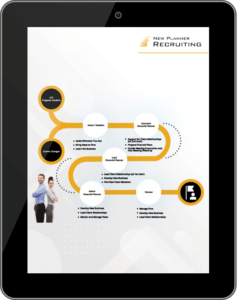 Download your free copy of the New Planner Career Roadmap! In this roadmap, you'll be guided through the details of various stages of your financial planner career, including position descriptions, licensing, skill and experience level requirements, and compensation ranges.
Get the Full Episode Transcript:

Read the Transcript Below:
Welcome to the New Planner Podcast, where it's all about helping you successfully enter the financial planning profession and accelerate your financial planning career. This podcast will help you understand the profession, become familiar with the various career paths available to you, and avoid the mistakes that limit your success. Join your host, Caleb Brown, to explore the human side of creating a successful planning career through interviews, personal experience, and insights from the trenches. Let's get started.
Caleb Brown: Welcome to the 256th episode of the New Planner podcast. This is Caleb Brown, your host. My guest today is Vincent Clark, who is a senior wealth advisor at Elwood & Goetz Wealth Advisory Group. Vincent joins the show today to share how his career trajectory brought him from an information systems major to a financial planning career.
He shared how he initially chose his path based purely on the perceived income potential, but realized he was much more interested in financial planning due to trying to help a star athlete family member navigate various financial decisions. He goes on to share how he started a large firm before seeking out and securing a client-facing role, and ultimately ending up at the firm he has been with the last several years. Stay tuned to the end to hear how he navigated the transition to a role where he is now mentoring younger planners. I hope you enjoy this episode with Vincent Clark.
Hi, Vincent. Welcome to the New Planner podcast.
Vincent Clark: Oh, thanks for having me, Caleb.
Caleb Brown: I've been, you're hard to track down. I've been trying to get you on here for a while, and you kept ghosting me, so, or pushing me off.
Vincent Clark: It was more like, I remember the invite from a while ago. I was like, “Ah, I'm pretty introverted and shy. Like, this isn't my thing.” But I never responded to it. And, I'm sorry about that. But I should have said, “Hey, this isn't my thing.” But happy to be on.
Caleb Brown: Look, I asked you to come on and tell your story 'cause it's a cool story and hopefully it'll help others and that's what this whole podcast is about. So, and I know some of the story 'cause we work together, but you went to school to be a financial planner, right? So start there.
Vincent Clark: Yeah. Okay. So going back to Georgia, University of Georgia, I actually started off in like the information systems, Terry School, trying to kind of figure out what it was I wanted to do.
I wasn't really interested in having a career at the time. I was more so like trying to find the thing that would allow me to make the most money without having to go back to school, like grad school or whatever, whatever. I did an internship, I think with ADP or something and it was so boring and I was like, “I cannot do this forever.”
I was like, “I gotta figure out what it is I really, really wanna do.” And at the time my brother was becoming a really big deal in the track world, track and field. And so he was running for USA in the Junior Olympics, so he's all the way, I think that year they ran in Ukraine, maybe, I feel like it was Ukraine that year.
And I was like, yo, my brother's like, he went from like being good locally to great locally to like on the national spotlight. And I was like, “Oh goodness. Okay.””
Caleb Brown: Wow.
Vincent Clark: And as exciting as that is, I was like, okay, now we've got all these like top athletic directors and coaches coming to our house to have conversations with my little brother, right?
And I was like, “If this guy gets a shoe contract, what in the world are we gonna do about it?” And I know him. I love him to death. He would, he is not, and was not the best with just money management and all that stuff and sounds like, “Somebody's gotta figure this out.”
Me being big brother, I was like, at least if I can sit at a table and have a conversation and just understand what's going on and I can use this degree at UGA to help those conversations, that'll be well worth anything. So that was kind of my initial drive was I wanna understand investment principles.
I wanna understand tax stuff, estate planning, all these things, because it may matter for our day-to-day. And then the career path at the time was still kind of, it wasn't as fleshed out as it is today, right? There were a lot of like insurance brokers that would come to career, kinda not career day, but they'd have a career day at UGA or something like that and you go to all the different booths and it was like a lot of insurance folks at that time.
So I was like, “I don't know if I'll actually get a job in this field, but at least I'll learn some stuff,” right? So that's essentially what I'm trying to say is that was where all that kind of derived from, is just wanting to understand this stuff for him, just to make sure, if something worked out, right? That lottery ticket comes in, that true contract comes in, we don't blow it.
Caleb Brown: Can we, is he still running? Can we link to him in the show notes?
Vincent Clark: He's not running now. He took it as far as he could go with it. He got his, he went to University of Florida, full ride. Didn't have to pay for college. He ran with the best of the best. He anchored some relays, all American his freshman year. He actually ran in the Olympic trials.
Caleb Brown: That's incredible.
Vincent Clark: He, again, took it as far as he could and some injuries popped up.
Caleb Brown: Yeah.
Vincent Clark: Foot stress fractures, none of that stuff is really good for running track, but he had a great career, so, yeah. Not running professionally now, but, yeah, he had a really good ride.
Caleb Brown: So here's my, here's what we all wanna know. What happened to you? Why didn't you get some? Where are the wheels, man? Come on.
Vincent Clark: Yeah. Yeah. So with my interest in the program and, of course, you know this UGA's just got a phenomenal program.
I learned so much and I was like, “I really, really like what we're learning, what we're doing. Let's see if I can turn this into a real career.” And at the time, there were some RIAs, both in Atlanta. I did some internships and just really enjoyed the, even in my internship experience. I didn't get to sit in a lot of meetings, but got to help with some prep, got to learn some things, and I was like, “Okay, this is a really, really cool field. I really feel like I'm helping people. I'm learning a lot myself.” I was like, “Oh, this is like the best of both worlds.” And so yeah, I graduated, started out at a really large institution.
They had a kind of national presence. At the time I was a little jealous. I wanted to go to a smaller RIA and kind of like, kind of start a little, I don't wanna say easier, but less being thrown into the fire. Let me put it like that. And the firm I worked with, learned a whole lot, but it was really, really fast-paced really quickly. And that was a good thing because I was able to soak up so much information early on.
Caleb Brown: Well, it wasn't boring, like your first internship.
Vincent Clark: It was not boring at all. Yeah. Not in the slightest. I mean, we were working really hard, but I learned so much and I was like–
Caleb Brown: What type of firm that, I mean, it was a big, like you were a planning center. You did like planning for executives or something like that?
Vincent Clark: Yeah, exactly. So you know, we're working with Fortune 500 CEOs, C-suite execs, so we're not talking like mom and pop, one, 2 million wealthy. We're in like the 50 million, a hundred million range. And as great, again, I learned so much and that was great, but I didn't feel like I could relate to some of these families or people in the same way.
So I was kind of missing a little bit of that feeling, like the work I was doing was really impactful. And because we were so busy, we didn't get a ton of time to participate in a lot of meetings. We tried to make some time for it when it allowed, but it was really hard too. So first couple years outta college and that first job, it was a lot of just prep, prep, prep. You're doing everything. Net worths, asset allocations, insurance, the whole nine. But I was, again, just missing that relational piece.
Caleb Brown: So you would do the plan and hand it off to another hand advisor,
Vincent Clark: Hand it off, right. Exactly. Exactly. And so ended up pivoting to an RIA and–
Caleb Brown: Did you leave or did they recruit you?
Vincent Clark: It was a little bit of both. Okay. Like they were looking for an associate planner, if you will.
Caleb Brown: Yeah.
Vincent Clark: If I go back a little bit, I always try to start jobs with the end in mind. Like, why am I there? What am I there to like, not say get out of it, right? Obviously, I'm there to do a job, but for the most part, I just try to lead with, during my time here, what skills am I trying to acquire?
And then how can I best use that in whatever the new role may be? So I knew going into that first job, I was like, “Y'all probably won't be here forever. But I just wanna learn as much as I can. I wanna get my CFP and after a couple years we'll kind of see where, what happens.” If you end up enjoying the job more than you are in the first three months, right? Sure, we'll stay, but if not, then we'll kind of open it up and see what else is out there.
Caleb Brown: Well, it sounds like you weren't putting too much pressure on yourself to get the exact perfect fit, which is, can be a pitfall. Sometimes people do that and they end up just missing a massive opportunity.
Vincent Clark: Right. Yeah, no, I went into it with an open mind and one of the, I mean, even one of the advisors there, I mean, he was pretty straightforward. He was like, “Man, I mean, you do two years here, you can go wherever you want to.” And I didn't say that in the interview, right?
I didn't necessarily, “Oh, I'm leaving in two years.” But in the back of my head, I was like, “I'm kind of in the same boat. I just want to learn as much as I can. And then see where it takes me.” So transition to an RIA after those years, they were looking for a planner, and what was great about that experience is I was in every meeting.
So I really got to develop rapport with clients. I got to not just do the meeting materials, but then try to figure out how to articulate what it is that is in those materials to those clients, which is a whole nother, the whole nother skill, there's that, the science of–
Caleb Brown: And arguably the harder part.
Vincent Clark: The harder part, right? Exactly. Exactly. We get so in the weeds where we're super technical, we're spitting out jargon. And the clients don't care about 90% of that. They just want to, they want the bottom line. And so I learned how to, A, I watched them do it, right?
I watched those advisors who were wonderful advisors in their own right. And then I kind of learned my own skill. So yeah, that was a great, I was there for about five years and then went through a large transition there. The company kind of split up, so I got to see a different side of the business as well, right? Not everything is peachy and clean all the time. There's some things that come up outside of, I'm gonna say, outside of business, you know what I mean? Sometimes, it's a natural part of business planning or having a firm with multiple people. Sometimes you just wanna go separate ways. And so seeing that was good for me.
Caleb Brown: One of the advisors left. I mean, it's just kind of a tumultuous period. Is that, am I remembering right? And then is that what caused you to leave?
Vincent Clark: It wasn't that it was necessarily tumultuous. I mean, it was a fairly amicable split and I went with a certain side and that was fine for a while, and then they got bought out, right? Then they kind of sold. At that time, there was a lot of M&A going on. So then I was like, “Oh, do I wanna do this again?” We kind of just went through a transition and then now, instead of being like a smaller, RIA outfit, we were then joining a larger, back to that multi-state national footprint.
I was like, “I don't know if I want to go back and join a big firm again.” There's just a lot more hurdles, more steps you have to go through.
Caleb Brown: And the culture shifts.
Vincent Clark: Culture is different.
Caleb Brown: Yeah.
Vincent Clark: It's I think I wanna make another pivot and that's kind of what landed me where I am now. It's been a bit of a journey there. There's never just a career that goes straight up into the right, kinda like a market, right? Like your career–
Caleb Brown: Well, that's what we all want, but it doesn't work that way, right?
Vincent Clark: We all want that to happen, right? But there's often all of these like pivots and turns and dips and highs and lows, but eventually you get to where you need to be.
Caleb Brown: I think it's Carl Richards has that sketch that like what entrepreneurs want their career to look like and it's a nice little smooth, and then he flips the page and it's just a bunch of scribble scrabble everywhere, bouncing around and going like–that is so true, right?
Vincent Clark: Exactly.
Caleb Brown: Highest to highs, lowest to lows in the matter of just a few moments. Okay, so talk to, so you left, but you ended up, they sold a big firm. I think you were there for a little while, then you left and joined your current firm, Elwood & Goetz. So talk to us about that transition and, I mean, here you are, you've got some experience and sort of where you started at E&G and how you've worked your way up.
Vincent Clark: Yeah, so when I was there, it was interesting because I felt like I had a ton of experience, or not a ton of experience, but five years of experience. I was, again, open to the transition initially. As you're trying to get acclimated, you start, again, meeting a lot of the other planners who were there and I try not to compare myself to other people, but I was like, “Man, I feel like I'm missing something. I feel like I have all this technical knowledge and I do have some good rapport-building skills, but you know, I don't know if I can lead a meeting, even with all of the knowledge I think I have.” And so as I'm meeting with other people kind of in that same cohort, they were all like very polished and I was like, “Man, this is crazy.”
I'm feeling insecure again, and all those feelings of, do you know what you think, are kind of coming back up and I'll never forget this. I had just finished my, I think, second interview with E&G and there was this big kind of summit, where they get everybody together in one location and you do this exercise, you meet people of course, but then you also are doing a lot of team building type things.
And there was this one advisor that took an interest in my career. She was like, “You got your CFP, you are an enrolled agent.” She was like, “You know way more than you think you do.” And so I really, and at the time I was like, “Wow, why is she like singling me out?” I appreciated it, but I was like, I don't know, I don't know what she sees, but she's like, “No, you know so much and like most of the advisors here, they're extremely talented, but they don't really know tax like that. You know tax. So you know strategies, there's so much in your brain. I can't wait to work with you.” And something I'll never forget, we were doing some team bonding. One of those little powwows
Caleb Brown: So this is why you were gonna, the interview process or after you’re already hired?
Vincent Clark: Yeah, so I'm kind of in the interview process, kind of waiting to hear back on some things with E&G, but I'm still of course like doing my job with the other firm and everything.
But we're having this powwow at one of the bars, and again, everybody's like just meeting people. I was like, I don't, if there's something here, I'll discover it this weekend and maybe I'll stay, but if not, and things work out, I'll probably transition. But she was a couple drinks in, right?
And she is still doing more of the, “Hey, you, you're incredible. You can be a partner here in,” dah, dah, dah, dah, dah. And again, I haven't worked a ton with her yet. I guess she just, she's like, “You can lead meetings, you can da, da, da. It'll take no time.” And I didn't know I needed to hear that and I didn't end up staying there, but it gave me so much confidence to make this pivot into the role I have now, because I did know more than I thought I did. I just didn't have the confidence, right? And I didn't have a lot of the repetition with leading meetings. So as I'm coming here now, I'm transitioning to Elwood & Goetz and it's more of a lead advisor for certain households under a certain AUM threshold.
And I'm freaking out like entirely, man, because I'm like, man, like, wow. I was so, I'm scared of saying the wrong thing. I know my stuff, but it's a different, you have to wear a different hat when you lead meetings versus when you are like a support advisor. It's a completely different skill. So, it wasn't–
Caleb Brown: We'll talk more about that. Talk more about that. Okay. What's the difference?
Vincent Clark: Whew. The difference is, again, it's more of what I was kind of saying with when you're in the weeds with the materials, you got all this technical stuff, and when you make that transition to now, you're again articulating how this matters in a meeting or how it matters to a client situation. All that jargon lingo, none of that crap matters. It's about understanding like A, how you can best relay this information, and B, how they want to hear it, 'cause certain clients, and that it takes some time understanding how certain things resonate with certain clients. Some clients are much more numbers-based.
They want to see very specific things. Some clients are more general. If you land on more personal and you fine tune it to their personal, whatever it is, it resonates a bit more. So all of that took skill, it took a really like understanding
Caleb Brown: Well, and just time, too.
Vincent Clark: And it took time. It took a lot of time. And so that was a bit of a transition. And then, you know, that's even a few years into it, I'm still not perfect, right? There are some meetings that, come out of it, I'm like, “Ah, I probably could have said this a little bit differently. Maybe if I had taken this approach, maybe it would've led to a better outcome in this conversation.” But yeah, I feel like I'm miles ahead of where I was when I first–
Caleb Brown: Well, that's what professionals do, right? They look at their performance and say, “How could I improve?” I mean, if you don't do that's probably a problem.
Vincent Clark: Right. And I'm my own worst critic. So even before we go into these debriefing sessions, I've already analyzed, like, you know, how terrible I was, right? So, but no, I think that transition was necessary to come here, or just move into a role that's outside of your comfort zone. So what I would say is, for any young advisors, like don't get comfortable, right? Challenge yourself, right?
Of course, you want to be, you want to get into a routine, you don't want to take on too much, right? But the minute you feel like you're kind of plateauing a bit is probably when you either need to not change roles or change firms necessarily, but maybe take on a little bit more responsibility so that you're not just kind of remaining stagnant.
Caleb Brown: So when you showed up, did they just hand you a bunch of clients? I mean, what was your, at Elwood & Goetz?
Vincent Clark: Yeah, so I think they were kind of restructuring some teams. And so one of the advisors was, I believe at the time, pivoting into more of a compliance role, still having an advisory presence in certain relationships.
But it did free up a bit of capacity for another advisor to kind of coming in and just some lead, maintain some relationships and then to take on some newer clients who were coming in. So yeah, essentially I went from previous job, probably supporting maybe, let's call it 60 to 70 relationships, to then leading 60 to 70, so.
Caleb Brown: Total flip-flop there, wasn't it?
Vincent Clark: It was kinda like night and day difference in responsibilities. But, and another thing too that came about that transition was now I had a planner beside me that I had to kind of help mentor and coach and provide guidance to. So that was another kind of like just, it was weird at the time.
I'm like, “I'm the one that needs the help, and I need guidance 'cause I don't know everything.” And, but somebody else needed me too. And that's been a whole nother experience, which has been phenomenal. The planners I've been able to work with have all been great for like different reasons.
Caleb Brown: What's the hardest part about being a mentor to an associate planner?
Vincent Clark: Hardest part is there's never enough time in the day to like, for me, sometimes I carve out enough time to do more of the, like those mentorship. You have to dedicate specific time to it. So I've gotten better about like, “Hey, let's hour, two hours a week. Let's go over our clients, but also let's talk about and discuss the things that are important to you. What things are struggling with? What do you want to do more in meetings?” You have to be intentional about that time. And that wasn't something that I super prioritized early on in that transition, unfortunately.
I mean, we still made it work, but that's something I'm trying to be extra cautious about just like, “Hey, make sure we're getting that time and we're debriefing. We're talking about the things that are important to you.”
Caleb Brown: And is that still how you're structured? You still have about 70 clients and an associate planner, or has it changed?
Vincent Clark: It's about the same. Our team dynamics, we have more associate planners that are helping on relationships. So instead of just having kind one dedicated associate planner, now there's a couple. So, there are different styles, different personalities, different things to be mindful of.
People are motivated for different reasons or wanna work with certain clients for different reasons. So there's much more to think about and consider, which is all good, right? You want to have different experiences to pull from, especially if you're an associate planner and you get to work with different advisors.
'Cause you can kind of take the best of everybody and come up with your own best practices or best way of relaying some information. I feel like a lot of the time where in my first couple years I was only working with one person, so I only got to see one side of doing things and all advisors I've worked under in the past few years that it hasn't been a problem.
But then I would jump into a meeting with somebody else, I'd like, “Oh, okay.” I picked up something else because that's a different way of saying it and that resonates a little bit more, right? So yeah. So things are about a little different but largely the same. Yeah. Still managing, I think we're up to maybe 80-ish, somewhere in there. And continuing to add. So it's gonna get busier and there'll probably more associates that I have a chance to work with over the next few years, which is fun for me. I like the collaborative process that we built out here, and just being able to work with different advisors and different associates has been really cool.
Caleb Brown: Well, we've gotten to work together on a few of the clients I brought to the firm. I don't know about you. It may not be you, but it's been fun for me.
Vincent Clark: No, Caleb, I have absolutely, we did that one. I think we did a prospect meeting about this time last year, and you did those questions more of the personal, like, “If money wasn't a problem…”
Caleb Brown: Oh, the kinder questions.
Vincent Clark: The kinder questions. Yeah. I do that every time now. And see that. And that's something
Caleb Brown: Nice.
Vincent Clark: Yeah. If we weren't in that meeting together or we hadn't had the chance to work, I might not have added that to my repertoire for a meeting, right? My arsenal, so.
Caleb Brown: I guess we got the client, then. We got the client?
Vincent Clark: We got the client. Right. We did. But yeah. And I feel like I spend more time on those questions in prospect meetings than I do on the actual things we have to talk about, or like the actual numbers, right? So, thank you.
Caleb Brown: I appreciate that. I appreciate that. Hey, I wanna ask you a couple more questions. One a little more serious. Look, it's been well documented that the majority of people in the financial planning profession look like me. Right? How do we get more women in minorities interested in this and into the business successfully?
Vincent Clark: Man, that's a great question. I'll just share something that was pivotal in how I got here. And maybe that'll lead us to the solution. So if I go back 10 years ago and in the program looking for a job at this point. I think this was the first year that our program had its own career fair. So, UGA had the big one at the classic center and most of the, again, the companies there, insurance, there are some financial firms, but they aren't your typical RIAs, right?
And then a lot of those were dominated by like Terry, those executive, either it's accounting, so it was hard kind of finding prospective employers there, right? But I don't know, it just, that year, thank God that was the first year that we actually had one for financial planning and consumer economics, right? So smaller scale, it was, instead of competing with thousands of people for a job, now we're just kind of competing against each other, maybe a couple hundred, right? And so at the career fair, and I kind of used that first, going to the classic center to practice.
I knew there wasn't a lot that I'd be interested in there in there, but I was kind of working on my spiel and so fast forward to a couple weeks later, to the one we had at the Tate Center, walking around different booths. It helped that I had internship on my resume, all these things. And it's something I'll always be grateful to Joe for. He was like, “Vincent, let me walk you around.” So he introduced me to some people.
Caleb Brown: Joe, this is Joe. One of the professors.
Vincent Clark: Yeah, professor and my current advisor, boss, right? Took me around, introduced me to a couple of people.
Talk me up in a way that I can't talk myself up. Joe's really good about that. And there was this recruiter at one of the desks and she was a black woman and we had a great conversation and I had good conversations that day with multiple employers, but you can tell when somebody takes an interest in you and wants to know more.
And I just remember, “Oh man, that was a really good conversation. I hope something comes from it.” And so I do what I usually do, send some thank you emails, didn't get responses from really anybody except for her. I was like, “Okay.” So, and my whole thing back then was I just needed an, I just need an interview, right? I just need an opportunity at an interview. I feel like our program is so strong. The VITA program, the ASPIRE Clinic, all that stuff kind of speaks for itself, but I just needed an opportunity to kind of tell somebody everything that we worked on there.
So I got interview with the company. I felt like I crushed it. Ended up getting a job. Everything is great. So then as I'm there, I learned that because our office was so homogenous, right? It's kind of that thing you're talking about where, there's not, there weren't that many women advisors. I believe I was probably one of two minority advisors and she was like, “We need to show people that we can.” It's not a popular topic these days, right? Having more of a diverse firm or workplace. But that was something I was really passionate to her and I sent her this really, really, really long thank you email when I transitioned from that company because I do not know where my career would be if she didn't have that personal interest in trying to get more minorities, more women into that office. So I'm getting emotional, so.
Caleb Brown: Thank you for sharing that, Vincent.
Vincent Clark: But one of the things that she, while I was there too, she would also do some recruiting for some of the historically black colleges and universities in Atlanta.
So we did a few, we set up a booth and we just tried to get the word out about like financial planning because it just wasn't a popular, at the time, it wasn't a popular major. It wasn't a popular career path, like if you're in college, you know finance is a popular thing, or corporate finance, accounting, business management, marketing. Financial planning wasn't like something that was on people's minds, so she, again, we set up different booths.
We tried to get resumes so that we can get people interested in our internship program. So that was one of the ways that we helped to do that at the time. I would say that is probably the easiest way to do that now, is to have a presence at these career fairs, these colleges outside of your large institutions, right? Outside of your UGAs, your Clemsons, you go to more niche career fairs, and that's kind of how you do that. If that's something that a company is interested in doing,
Caleb Brown: That makes sense. Appreciate you sharing that. As we're winding down here. I mean, a final, final question. Any, I mean, you've already given us a lot to think about and really appreciate, again, you sharing all this. Any final words of advice or words of wisdom that you wanna leave the new planner audience with?
Vincent Clark: I think I got two things. So I would say if there is any, if there are any young planners that are kind of struggling with imposter syndrome, there was one thing that was especially helpful for me early on in my career.
I listened to a lot of like TED Radio Hour. I used to have an hour and 30-minute commute for the most part in the mornings to go–yeah, it was awful. But, so I listened to a lot of TED Radio Hour and there was this one about imposter syndrome specifically and the things that she was kind of dealing with.
And it's pretty popular now. I'm sure most people have listened to it, but she talked about power posing in the mirror that helped. And then, she said something that just always, always, always, always stuck with me. And it was, people always say the fake it until you make it, right? And hers was, “Fake it until you become it.” And I always had that in the back of my head. Not that I was trying to fake anything or be something that I wasn't, but a lot of the times, when that self-doubt creeps in, that's just, and you as a good planner, you're gonna do everything you can to make sure that you're not completely caught flatfooted, right? You're gonna do all the research, you're gonna understand everything you can about that client. You're going to know what their ticks are. You're gonna do all those things. But again, that self-doubt still comes in. You're not gonna fake it, but all that stuff is within you already.
And the more you practice, the more repetitions you get at leading the advisory meetings, the more you step into who you are supposed to be. And I've seen that kind of play out for me over this last decade. So that'd be my one. And then my two is, and this is gonna be very unpopular, but don't be afraid to work outside of normal business hours.
This is a very archaic way of thinking, I know, but I feel like a lot of my technical skills were developed after the hours of five o'clock and sometimes on a Saturday at three. And of course, you don't want that to be something that is a constant in your life, right? But there's no shortcut. Put the time in, it's gonna pay off because people notice, and yourself, you become more confident the more you know.
Caleb Brown: Vincent, thanks so much for coming on the show and sharing all this.
Vincent Clark: Yeah, of course. Thank you for having me.
Thanks for joining us for this episode of the New Planner Podcast. If you are ready to discover the top career paths for financial planners and see which track is best for you, we created a free guide to help you. Grab your copy of the Financial Planner Career Roadmap at newplannerrecruiting.com/roadmap. There, you'll also find more tools and resources all created to help you build a successful financial planning career. Tune back in next week for another episode, and until then, we are here to help you succeed.
Share the Love:
If you like the New Planner Podcast...
Never miss an episode by subscribing via Apple Podcasts, Spotify, Amazon Music, YouTube Music, or by RSS!



Leave a Reply