Daniel Stefanski is an Associate Wealth Planner at MY Wealth Planners, and he joins the show today to share how he accidentally discovered financial planning and how his career has progressed so far. If you're interested in breaking into financial planning, navigating a career transition, or learning how to strategically pursue opportunities that align with your values, this episode is for you!
Listen in as Daniel shares how he initially dismissed financial planning as just investment sales but discovered his passion for it after landing a co-op position with a financial planning firm during COVID-19. He explains what he learned through that experience, why he decided to move on, and how he strategically targeted the RIA channel—even relocating across the country and accepting a pay cut to pursue the right opportunity. You'll hear about the mentorship and growth he’s experienced at his current firm, the lessons that have shaped his career path, and more.
What You'll Learn In Today's Episode:
- How Daniel discovered financial planning by accident. (0:30)
- What it was like navigating financial planning during COVID-19. (4:30)
- How he faced challenges and achieved growth early in his career. (8:10)
- How Daniel transitioned to a new firm. (10:50)
- Why he made the move to Colorado. (16:10)
- How mentorship and development at MY Wealth Planners shaped his career. (18:50)
- How Daniel balances technical knowledge with business development. (20:40)
- Advice for new planners. (25:50)
Ideas Worth Sharing:
“I thought financial planning really meant investment management, and that the two terms were synonymous.” - Daniel Stefanski Share on X “It's a mix between working with people and having real conversations, but also getting to nerd out on some of the numbers and the finances.” - Daniel Stefanski Share on X “I'd say I've gotten very comfortable with the unknown.” - Daniel Stefanski Share on XResources In Today's Episode:
- Daniel Stefanski: LinkedIn
- Finding your Path: The Roadmap from Student to Successful Financial Planner by Caleb Brown
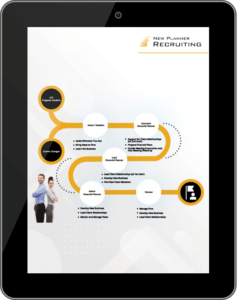 Download your free copy of the New Planner Career Roadmap! In this roadmap, you'll be guided through the details of various stages of your financial planner career, including position descriptions, licensing, skill and experience level requirements, and compensation ranges.
Get the Full Episode Transcript:

Read the Transcript Below:
Welcome to the New Planner Podcast, where it's all about helping you successfully enter the financial planning profession and accelerate your financial planning career. This podcast will help you understand the profession, become familiar with the various career paths available to you, and avoid the mistakes that limit your success. Join your host, Caleb Brown, to explore the human side of creating a successful planning career through interviews, personal experience, and insights from the trenches. Let's get started.
Caleb Brown: Welcome to the 254th episode of the New Planner podcast. This is Caleb Brown, your host. My guest today is Daniel Stefanski. He was an associate wealth planner at MY Wealth Planners. Daniel joins the show today to share how he accidentally discovered financial planning and how his career has progressed thus far.
He shared how he was initially turned off by financial planning, thinking it was only investment sales, but his college required a co-op and he ended up with a financial planning firm during COVID and throughout the rest of his undergrad career. He goes on to share what he learned, why he left, and what his thought process was going into his job search, how he targeted the RIA channel, moved across the country and even took a pay cut for the right fit. Stay tuned to the end to hear how his current firm has mentored him and helped facilitate his growth. I hope you enjoy this episode with Daniel Stefanski.
Hey Daniel, welcome to the New Planner podcast.
Daniel Stefanski: Hey, Caleb. Thanks for having me.
Caleb Brown: Absolutely. Looking forward to chatting and catching up with you. Just start, if you would, just how you got started in the business and how you became interested in financial planning.
Daniel Stefanski: Sure. Yeah, so kind of by accident, I'd say. Back when I was in college, I thought financial planning really meant investment management and that the two terms were synonymous, right?
So any financial planning job, my thought process was, okay, that's gonna be a job where I'm looking at multiple monitors and charts all day, and I'm sitting in a windowless room for 14 hours, essentially.
Caleb Brown: Hedge fund manager. Like a hedge fund. Hedge fund, right?
Daniel Stefanski: That's more or less what I had thought before I kind of understood what financial planning was as an industry by itself.
So while I was in school, I did what's called a co-op program at St. Joe's University, where I went to school out in Philadelphia. It's essentially a professional development program that undergrads can take where they're able to take all of their classes, but also work year round and essentially alternate between professional work experiences while also getting your coursework done in the four year time commitment.
And that's kind of how I found financial planning. I was interviewing my freshman year for a couple of different co-op positions. Most of them, as a finance major, were just general finance, right? So, “Hey, you'll be doing this model in Excel and this will be a lot of the work,” or whatever the case may be.
And a lot of those jobs and interviews really didn't resonate with me. I left kind of thinking, “Okay, that's a great experience and I'm sure I'll learn something.” But I wasn't drawn to it. lo and behold, my last interview was with a financial planning firm out in Philadelphia, and everything they were saying really resonated with me.
They said it's a mix between working with people and having real conversations, but also getting to nerd out on some of the numbers and the finances a little bit. And I said, “Okay, well, I'd love to do it.” And the co-op was essentially supposed to take place my sophomore year, but this was around COVID.
So my second interview with the firm, actually in person, got canceled, and they did it via Zoom and said, “Hey, we're actually going to start transitioning all of our business online for the foreseeable future. Would you like to actually start working earlier than you originally were supposed to?” So as a freshman in college, I said, “I'd love to.” I got my insurance licenses in series 65, and then I was off and running as a freshman in college.
Caleb Brown: Wow. That is awesome and COVID was obviously a bad time, but the timing helped you get started a little earlier.
Daniel Stefanski: 100%. I think COVID, where a lot of people was at a time where there was a lot of confusion and wasted opportunity and wasted time. But for me it was really an opportunity to start working and I had nothing else to do, so it was great for me.
Caleb Brown: So, and maybe just walk us through for those that aren't, I think more people are familiar with like an traditional internship. So you're working at, it's virtual now 'cause it's during COVID, you're helping this firm. Is that like an eight-to-five deal through the day and then you take the classes at night? I mean, just walk us through that.
Daniel Stefanski: Sure. So there's two co-op terms that I was supposed to take in my four years as an undergrad, the first of which is your fall semester of sophomore year. So essentially, right, you have five classes you're responsible for that semester. I took them all the summer of my freshman year. So that summer I took my sophomore year curriculum.
So when I went as a sophomore, I essentially had already taken those classes and that semester I was able to work essentially nine to five. I'd commute to the office or I'd work via Zoom from my apartment. And then I also did a full year, or two semesters, my junior year. And I front-loaded some of those classes my sophomore summer and also would take some night classes to make up the difference.
But it essentially left me in a position where I could have an uninterrupted schedule from nine to five during those co-op terms.
Caleb Brown: That's amazing. I mean, that's a lot on the plate, though. I mean, kind of working full time and going to, I mean, a lot of people do that, but they're usually working adults and they've got, they're going back to school for something and it's a different situation.
So, sounds like a really cool setup. And maybe just talk about how, what your role was and what you were doing for these people.
Daniel Stefanski: So I'd say it was a mixture of two things. First, it was essentially just learning the business, right? So, what is insurance? What are investments? What is a retirement plan?
And starting to just learn those basics. And the other side of it was all sales, right? It was, “Hey, we want you to go out and start having productive conversations with people either in your community or through lead generation and start having conversations and trying to bring people in to have conversations with you, but also with the firm.”
So those first couple years, it was essentially a lot of emphasis on building my own book and then having others do some of those more complex and higher-level meetings for me.
Caleb Brown: And did you know that going into it? Or was that something they just sprung on you after you got there? Like, “Oh yeah, by the way, we really need you to start getting out there and getting clients and selling stuff.”
Daniel Stefanski: Sure. So I know a lot of firms, right? It's a little bit of a bait and switch where you get the job and then the first thing they say is, “So tell me about your family. What do they do for work?” It wasn't necessarily like that. I did know going into it that a considerable amount of the earnings that I would make would be through any clients that I was able to bring on.
Given that I was in college, I felt I was in a position where even if I never brought on anybody, even if I just learned the business and learned how things work and made $0, it was still a really good use of my time as an undergrad.
Caleb Brown: Wow, awesome mindset. I think you established that it worked out for you, but I wanna go back to something. Here you are, 18, 19 years old. And they're saying you need to go, like, how did that make you feel? Like, “Oh, I gotta go out there and like talk to people and try to get 'em to do stuff that, and I don't really have a lot of experience. I have no experience, and I'm just now learning.” How did that make you feel?
Daniel Stefanski: It was tough, especially at first, right? There were people that would have conversations with me and just point-blank say, “How old are you? You look like you're younger than my son or daughter.” And most of the time I actually was. There was a lot of imposter syndrome at first, right? These are people that are in their peak earning years and I'm having conversations with them around their finances and they're considerably more quote unquote successful than I am.
And it definitely took, I'd say, a few years before I really got comfortable saying, “Hey, I've worked with hundreds of families or seen hundreds of different clients in cases. You may have more experience in your work or your profession, but this is where I spend the majority of my time on a day-to-day.”
And it did take a while to get that experience and understand that I probably was competent enough to have those conversations with them. But it was a lot of trial by error, too, right? Like, there were a lot of rejections in those early years, me stumbling over my words or not knowing something super in depth and saying a lot of, “I don't know the answer to that. I'm happy to get you the answer, but at this point in time, I don't actually know.” And that was a tough place to be and I think I'm happy to now start being on the other side of that.
Caleb Brown: Why did you stick with it? All those rejections? Why didn't you just fold it and say, “Look, I'm gonna go do something else, like all my other people are doing, and get a salary job,” or whatever? “This is gonna be a lot easier.”
Daniel Stefanski: I'd say I was really just more fortunate than I probably deserved, Caleb. I was still in college, so my mindset was I can just stick with this until I graduate. And if at worst I make no money, at least I've built the scar tissue to be able to handle the rejections and have those conversations with people.
But I'll be very honest, if I was maybe 23 years old when I had first started and I had all those rejections and felt like I wasn't making any money and I needed to pay my rent, I probably wouldn't have stuck with it as long as I did.
Caleb Brown: Yeah. Wow. Okay. So at the end of the, you were there your whole college career, about four years. Is that right?
Daniel Stefanski: Correct. And then I was there about six months after I'd graduated from college as well.
Caleb Brown: Okay. And then maybe talk to us about that. So maybe you already answered this. Why didn't you stay?
Daniel Stefanski: So there was a lot of emphasis early on right around sales, but there was also a considerable amount of effort put into just my education and development.
And I really valued that. And I wanted to get better as an advisor and learn not only how to have productive conversations, but I wanted the technical knowledge. And I'd say over the years I was there, when I was a, I'd say probably a senior, some of the management started to turn over in the firm and I had started to notice that there was a considerable amount of more time and effort put on the sales conversation as opposed to on the financial planning.
And there was essentially a conversation that was had sometime around my senior year or right after I'd graduated, where a fellow advisor had asked a manager a question around deferred compensation and the manager essentially said, “You know what? Screw the deferred compensation. I wouldn't focus on it too much. I can't sell anything on it, and it really only takes away from me being able to make a sale elsewhere. So why don't you just worry about figuring out how to have that conversation?”
And it was 1099, so I didn't have a salary, but that day I essentially felt as if I was fired because I would never bring somebody into that world knowing that was how they would treat clients and the way they were approaching planning.
And it was, at that moment, I decided that I'd open up my natural market and say, “Okay, what opportunities are out there for me? Because I don't see myself staying here any longer.”
Caleb Brown: Sounds like you were, I mean, from what I heard, trying to be loyal, but they sort of doubled down on the, we're not really going the financial planning route. We're going down more the product sale or doubling down the product sales route. So is that the catalyst that kind of forced you to start looking?
Daniel Stefanski: 100%. They were in RIA, they were independent, but it felt like they were masquerading more as a team that wanted to make more sales as opposed to financial planning.
Caleb Brown: So talk about your search then. So now you're opening it up and what did you do next?
Daniel Stefanski: So, thankfully, I had enough understanding of the industry. I knew I didn't want to go to an insurance firm or just a broker-dealer. I knew I wanted to be with an independent RIA, where for a decent amount of time, the emphasis would simply be on learning the craft of financial planning, right?
It's just as much technical as it is art, and I wanted somebody who recognized that and was willing to put me under their wing essentially and let me understand the industry in whole and also how I fit in that industry. So I started looking at independent RIA firms and going down that route.
And that's actually how we had gotten in touch as well is during that time in my life, I reached out to you and we started to have conversation there too.
Caleb Brown: Yeah. It's really good that you had a sense of the channels. I, and that's one of the reasons why we have the podcast and we put all the stuff out on the website, in the book. There's so much confusion on the channels and the licensing out there, right? It sounds like, I mean, the job seekers that have a clear perspective of what channel they think they're out there, where they think they just do better. They get to where they want to go a lot quicker.
So you narrowed it down to RIA sort of mentorship and then started talking to me, started talking to other firms, and then what happened? Were you able to get some prospects?
Daniel Stefanski: I was. So this was also around the time there was a little bit of an in-between where I was still technically with my last firm, but I wasn't really very active.
I wasn't prospecting and trying to bring clients on. During that period of time, I actually got my enrolled agent designation, which is a tax credential...Thank you. Gives me some representation before the IRS and I kind of leveraged that in some of the conversations I was having since I–
Caleb Brown: Wait a minute. I'm sorry to cut you. You got that while you were still in school?
Daniel Stefanski: I took one of the parts while I was still in school and I studied for it while I was in school and then took the remaining two parts afterward.
Caleb Brown: Okay. Great work. Alright, keep going.
Daniel Stefanski: Thank you. And yeah, so, so that kind of leveraged that from some of my interviews and conversations with firms.
There were a few different associate financial planning and associate wealth planning positions that I was applying to. And I knew I was young enough at the time that if this position was to take me out of my home state of New Jersey at the time, I was very open to leaving because I knew probably what I was looking for was not casting the widest of nets and it might require me to move.
So I kind of opened my search up to the whole country and said I'm willing to move somewhere for a few years and really dive into what I consider to be a good position. And I kind of put that as my north star over a location or over the pay or prestige of the firm.
Caleb Brown: You mean you didn't wanna stick around with mom and dad any longer?
Daniel Stefanski: I love my parents and if they're listening, “I would love to hang out with you some more.” But they also, I'll give them a lot of credit, were very encouraging in that regard and said, “Hey, look, if you really believe that an opportunity that's not in New Jersey is the best place for you to be, we're gonna 100% support you in that endeavor.”
Caleb Brown: And I'm saying that a little tongue in cheek because the trend, I mean, especially the Gen Z, and it could be just the financial and that's probably a lot of, like, they go, they move back to the family. My generation's like, “We already spent enough time with those people. We're done with them.” So it's just been an interesting sort of cycle on sort of what, how that's going.
But to have a new college grad say I'll go anywhere in the country, is kind of rare these days. It's like, “Nah, I really wanna be close to family.” And COVID had a lot to do with that. And I get that. I totally get it. So you, I mean, look and look, Philly's a great market. I mean, there's tons of firms there. So you're saying, “I'll go anywhere.” And then how did you find your current firm?
Daniel Stefanski: So when I was in this process, it's not just like leaving a current job, going to a new job, especially at my old firm, because I did have some clients and some of them were people I was close to and I really cared about. So I wanted to get a really good understanding of what is the best way to leave your current firm, go to a new firm, especially when you're more or less starting your career.
So I'd read some blogs, articles, and a couple of books on essentially what that looks like in getting a lay of the land. And one of the books that I read really resonated with me. And in the process of interviewing, I realized that the person interviewing me for one of the firms wrote the book that I had read, and that was, Dan Yerger, my current boss here, Dr. Dan and I had read that book and then interviewed with the firm here out in Colorado.
Caleb Brown: Getting your foot in the door. We've talked. Yeah. We had him on. We had him on. Is that what you're talking about? Getting In?
Daniel Stefanski: Yes. That's the book.
Caleb Brown: How to get your foot in the door. Yeah. We'll link to it again.
Daniel Stefanski: It's a great book for any early, or starting your career planner, looking to kind of just understand where they fit in the industry and what to look for. It was really helpful in me kind of getting an understanding of where I fit and what I wanted.
Caleb Brown: So you had a handful of employers. Daniel was one of them. You noticed he read the book and then why did you end up going with their firm?
Daniel Stefanski: I'd say it kind of aligned with what I was looking for, right? There was a significant emphasis on mentorship and teaching. The way Dan had described it earlier on in my career was, we want to run like a teaching hospital where we're able to work with clients and you're able to observe and watch and learn, ask a lot of questions, and really dive into the financial planning as both an art and a technical skill and it actually required me to take a step back almost and become a paraplanner for eight months.
And I said, “Look, I'll learn more here as a paraplanner than I may somewhere else as an associate wealth planner.” I'm willing to take the quote, unquote pay bump or a step back in my career for a little bit because it might mean long-term. I'm able to take considerably more out of it than the slight increase in pay I'd get somewhere else.
Caleb Brown: Okay, I just wanna make sure I've got this right. So you left your comfortable sort of home base area. You took a step back and pay and roll, and then you moved, 'cause it's not a virtual, you moved to Colorado.
Why did you do, I mean, no one does this. Like, why did you do this? I mean, you already kind of answered it, but I'm just, I'm making a big deal about this because people don't do stuff like this. I mean, just, can you give us a little bit more color on this?
Daniel Stefanski: I'd say I've gotten very comfortable with the unknown, right? So I said, “Look, I'd accepted this job in November of 2023, and I wasn't going to start until June of 2024.” So I had a little bit of time to kind of put all my ducks in a row and really figure out where I was gonna move, what that would look like. And I became very comfortable in this space, of I don't know anything about Longmont, Colorado.
I know nobody there, no social network or anything, but I had enough confidence that I could figure it out. So I kind of dove in headfirst to that and I said, “Look, if it doesn't work out, at the end of the day, what is the genuine worst case scenario, right? Let's say I moved out here, I'm here for four months. I'm really starting to realize I made a huge mistake. I can probably get out of my lease and that might cost me one to $2,000, and my parents said I can move back home.” At the end of the day, as a 23-year-old, that's not that bad.
Caleb Brown: Not a lot of downside there, really.
Daniel Stefanski: And I think that was really it. I think a lot of people just don't think about what is genuinely the worst thing that will happen.
And that was the worst. And I said, “That's not that bad.” And thankfully enough, I'm still here. It hasn't gone poorly. I've built a social network and a professional network and I'd say things have went pretty well and I just have been very comfortable in a space of, I don't know what it's gonna look like, but I'll figure it out.
Caleb Brown: And talk to us about how Daniel and the other team members, how they, I mean, I'm not gonna say if, 'cause if it wouldn't, you wouldn't be there, but how they've delivered on this teaching hospital and this mentorship and the apprenticeship, how have they delivered on that?
Daniel Stefanski: Well, I'd say it starts with the top, with just Dr. Dan, right? First and foremost, he is intentional about giving me and our other associate, Emily, a considerable amount of his day or week just to simply sit with us and ask a ton of questions. And from anybody that knows Dan, he loves to teach and is really great at doing so. There was a great amount of time those first couple of months where I'd sit in all of his client meetings and I essentially would have a page of notes with just questions.
Not only technical questions, “But why did you ask this question this way? Why did you phrase this as a yes or no question, as opposed to an open-ended question?” Or, “Why didn't you bring this up in this particular context?” And really just getting an understanding for not only the technical, but the artistic side of the conversation you have with families.
And I did that pretty much for about eight months. I sat in every single meeting, took notes for every single meeting, and Dan also gives me a lot of leeway with preparation for client meetings, right? Obviously, he's overseeing all of my work and taking the time to dot the I's, cross the T's for me, but giving me the freedom and flexibility to try things out on my own.
Say, “Hey, I built this plan,” or, “I did it this way. How do you think this works in the plan?” Or, “Did I do it wrong?” And kind of being very patient and graceful with me in that process and allowing me to really dive into the work and not one have to go all in on sales from the beginning. Also, not just do all the technical work and never speak in a client meeting and never have any input or say in how that conversation goes.
Caleb Brown: That's awesome. And he's also a, I mean, just a very strong advocate for the profession. I mean, I know him and we had him on the show, like I said, for the profession, also the next gen. He's always out there advocating, which I really appreciate and I told him as such. So any hurdles or struggles or, I mean, any sort of gotcha moments like, “Oh man, I really messed that up.”
Or any surprises that you'd like to share, you can share that maybe will help some of the other new planners getting started?
Daniel Stefanski: Well, when you start in this career, there's two things you have to get really good at, right? And some firms emphasize one over the other or the other over the other one.
It's the technical knowledge, right? It's just simply knowing your stuff. And it's also client acquisition, business development, and being able to have productive conversations with people, recognizing a need in the community or online and being able to fill that space. The technical knowledge is the technical knowledge, whether you take your CFP, do the bookwork, take other credentials and designations, it's drinking through a fire hose in the first few years.
It's really difficult to grasp all the comprehensive knowledge that really goes into a financial planning conversation. So I'd say for any new planner, that's simply, you're going to cut your teeth, you're going to fumble over your words, you're going to mess up, and you're not going to know the answer to everything a client says, whether you're a year in or 15 years in.
That's just the reality of the conversation. But I think just mastering and doing your best trying to understand the technical knowledge, will be challenging in the first few years. In addition to that, on the business development front, sales is hard. There's a reason, especially at a lot of sales-oriented firms, most people, I think it's 90% give or take, fail, and it's hard.
It takes a lot of time and effort and I think recognizing that beside maybe your family and those that love you, building a reputation as someone who does good work, who does great work, and does what they say they'll do, shows up on time, looks people in the eye, shakes their hands, speaks clearly.
Developing that reputation takes time and you won't get clients overnight, but you have to be very consistent with doing the ordinary things in extraordinary amount of time in that regard. And I think those two things will be challenging for any new planner, simply because that's the reality of the industry.
Caleb Brown: Well, it's just a lot to learn. And then there's no real, I mean, again, formal training, but you're not in a sales position, though, right now. Are you getting clients? Is that part of your role?
Daniel Stefanski: Dan has an interesting perspective on this. I think a lot of associates don't have, right? So I think a lot of associates, it's truly just doing the technical work, right?
And the analogy Dan likes to use is that is doing a lot of arm workouts, right? We're not doing any legs, essentially. And he says, “Well, I want to train their legs right now because in the future they will have to use them as opposed to maybe other associate planning positions where it's simply using your arms and then one day you're promoted to a position where you are required to do business development, and then that's the first time you do legs.”
Caleb Brown: A little top-heavy.
Daniel Stefanski: Right, right, right. So while it's not, my day-to-day is not going to people's doors and trying to do business development, it is a part of my week.
Because the reality is in this industry, if you want to be the best advisor you can, the person who has the technical knowledge really can only go so far. It does take a considerable amount of business development to drive new revenue and continue bringing in new clientele, and it's mastering both of those skills.
So, on a daily basis, I'm doing financial plans. I'm having planned conversations with Dan and the team about building these plans, but I'm also fielding new consultations as they come in with Dan by my side and doing my best to develop a reputation within the community and give back, whether through the Longmont Chamber of Commerce or other avenues that I want to give back to.
Caleb Brown: I've seen you out there on LinkedIn putting out some stuff and some, maybe some articles or some blogs or something. So good work. Yeah. Great. Daniel, this has been awesome. I mean, great story. A lot of success. Glad to have you in the profession and glad you're doing well. Any final closing thoughts you wanna leave the audience with?
Daniel Stefanski: Thanks, Caleb. I'd say for final closing thoughts, I think it's important just to understand if you're a new planner, what you feel comfortable with, right? There will be some people who say, I don't want to do any business development. I really just wanna focus on the technical aspect of the job, and there's other people who might be really comfortable in sales, but not feel very comfortable with the technical work.
I think first and foremost, you have to learn the technical. I think it's really hard to do business development and feel good about it and sleep well at night if you really don't know what you're talking about. So I think for any new planner out there, getting in a position where you can just really grind on the technical aspect of the job, first and foremost, is gonna be crucial, but then also understand that at a certain point, probably a little sooner than you would like to, you want to start developing the skills and mindset that business development is something you'll want to pursue, and just having that in the back of your head as you start to master the technical aspect of the job as well.
Caleb Brown: Daniel, thanks again for coming on.
Daniel Stefanski: Hey, well, thanks for having me, Caleb.
Thanks for joining us for this episode of the New Planner Podcast. If you are ready to discover the top career paths for financial planners and see which track is best for you, we created a free guide to help you. Grab your copy of the Financial Planner Career Roadmap at newplannerrecruiting.com/roadmap. There, you'll also find more tools and resources all created to help you build a successful financial planning career. Tune back in next week for another episode, and until then, we are here to help you succeed.
Share the Love:
If you like the New Planner Podcast...
Never miss an episode by subscribing via Apple Podcasts, Spotify, Amazon Music, YouTube Music, or by RSS!



Leave a Reply