What does it take to build a long-term career in financial planning without following the traditional path of becoming a lead advisor with your own book of business? Sarah Mouser, a financial planning specialist at Merit Financial Advisors, shares how she went from an accounting major and internship to building financial planning teams, developing next-generation advisors and taking on increasingly strategic leadership roles. She discusses the value of mentorship, why internships can shape a career, the different pathways available to planners and advisors, and how she built her confidence and expertise over more than two decades in the profession.
Sarah also explains how technology is changing the way new planners develop their skills, why the traditional six- to eight-year development runway could become shorter, and what she looks for when hiring emerging talent. You’ll learn how she approaches professional designations, why interpersonal skills and curiosity can matter more than a candidate’s GPA, how to think about finding your own lane in financial planning, and why firms need to rethink how they use technology to support both clients and the next generation of advisors.
What You'll Learn In Today's Episode:
- How Sarah discovered financial planning at Virginia Tech. (1:30)
- Why mentorship and internships can shape an early career. (2:55)
- The different career pathways available to planners and advisors. (6:00)
- How Sarah developed and led a centralised planning team. (7:15)
- Why advisor development requires both experience and EQ. (9:10)
- How technology is accelerating the development of new planners. (10:45)
- The importance of culture and finding the right fit. (17:15)
- Why Sarah chose specialisations and professional designations. (19:25)
- What Sarah looks for when hiring emerging talent. (22:00)
- How firms can use technology to support next-gen advisors. (25:55)
Ideas Worth Sharing:
“Find an opportunity where you can truly be mentored. You can start from the bottom, and you can learn this industry from the ground up.” - Sarah Mouser Share on X “Financial planning is just as much the analysis and the advice we produce for clients as it is how you effectively deliver it so that it resonates.” - Sarah Mouser Share on X “Technology can support the delivery of advice, but the relationships that we have with clients is what makes that advice even more valuable.” - Sarah Mouser Share on XResources In Today's Episode:
- Sarah Mouser: LinkedIn
- Finding your Path: The Roadmap from Student to Successful Financial Planner by Caleb Brown
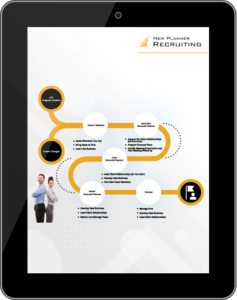 Download your free copy of the New Planner Career Roadmap!(opens in new tab) In this roadmap, you'll be guided through the details of various stages of your financial planner career, including position descriptions, licensing, skill and experience level requirements, and compensation ranges.
Get the Full Episode Transcript:

Read the Transcript Below:
Welcome to the New Planner Podcast, where it's all about helping you successfully enter the financial planning profession and accelerate your financial planning career. This podcast will help you understand the profession, become familiar with the various career paths available to you, and avoid the mistakes that limit your success. Join your host, Caleb Brown, to explore the human side of creating a successful planning career through interviews, personal experience, and insights from the trenches. Let's get started.
Caleb Brown: Welcome to the New Planner Podcast. This is Caleb Brown, your host. I'm joined today by Sarah Mouser, a financial planning specialist at Merit Financial Advisors. She joins the show to talk about how she entered the profession, worked her way up in various roles in various firms, how she built her confidence as a newer advisor, what advice she has for job seekers, and her thoughts on accumulating professional designations, plus some tips for newer planners at the end.
I hope you enjoy this episode with Sarah Mouser. Hi, Sarah. Welcome to the New Planner Podcast.
Sarah Mouser: Hi, Caleb. It's wonderful to be here with you today.
Caleb Brown: This is gonna be a lot of fun. We were just catching up before we came on air. We've got a lot of ground to cover, so I wanna get there, but maybe if you would, just set the table on how you became interested in financial planning and how you got started.
Sarah Mouser: It started for me in college. My dad was a banker, and I started at Virginia Tech as an accounting major in the Pamplin College of Business at Virginia Tech, and the first two years of the curriculum in that program really follows a traditional business school format, and then the next two years you break away.
It was at the very beginning of my junior year that I stumbled upon the wealth management financial planning degree program at Virginia Tech. At the time, it was a very different program than it is today. It was tucked under the liberal arts school. I graduated in 2003, so at the time, it wasn't even in the business school at Virginia Tech.
It's gone through multiple evolutions since then. Yeah, but I remember my friends thought I was crazy when I left the Pamplin College of Business to go to a liberal arts major, but I always loved numbers. I always loved math. I always loved the puzzle of finance, and the degree program at Virginia Tech married my desire to really wanna be in front of people, make an impact, and also blend my love for business at the same time.
So I graduated 23 years ago now, and I've been in the industry ever since.
Caleb Brown: I mean, I feel like we've, I just don't feel like it's been that long. I mean—and maybe that's 'cause I'm getting older. So okay, so you came out of Virginia Tech. And what, how did you get started? Where did—did you do an internship or something, or did you start right out of school in a firm?
Sarah Mouser: I did. I started in, I had an internship. My parents lived right outside Charlottesville, Virginia, and so I got an internship. I had a couple different options. Dr. Ruth Litton that ran the program at the time, she's since retired.
She ran that program. She's an institution at Virginia Tech. But I remember I had an offer in an insurance type of opportunity, and she said, "If you can find something where you can really be mentored with a real firm, that's a better option for you." And so I was with an Ameriprise practice, and I interned there for the summer.
And I like to say that's what helped me get my role when I graduated college. I think that internship led me to having some experience with an Ameriprise advisor in Richmond. I worked for him for eight years. I started from the ground up. I remember Dr. Litton said to us, "Find an opportunity where you can truly be mentored. You can start from the bottom, and you can learn this industry from the ground up." And so that's where I started. I was filling out applications. I was scheduling meetings. The industry and technology has evolved so much in 23 years. You have to think back to what it was maybe then. So yeah, a lot of just advisor support.
Then I got licensed. I was doing some of the trading. I got my CFP, and eight years into the industry, I was in an associate advisor role. I was doing all the planning, I was doing all the trading. I was sitting in front of some of our smaller-level clients, running some of those meetings on my own and delivering advice on my own.
And so that's where I started. I started with an Ameriprise firm, great advisor. I still talk to him today. He's an amazing mentor in my life, Leonard Levitch, and so I'm gonna give him a little shout-out. Yeah. And I relocated then to Northern Virginia from Richmond. Was still on that path to becoming a business development advisor.
I always loved the planning side more than investments, though. That was always a pull for me, and I loved the mentorship that you could bring to the team members around you, and also really the mentorship that we do with clients. That's a big piece of it. I was given the opportunity to work with a firm.
I was with Cassaday & Company for 11 years. I was given the opportunity to build their planning platform, really a centralized platform from the ground up. And that's what I did. I was there for 11 years, and that's where I moved more into the strategic side of running a platform, recruiting, hiring, retention of talent, growing not just subject matter experts, but playing a role in their future advisory development, what the client experience was, all of that.
That's where I focused 11 years.
Caleb Brown: Wow. There's a lot to explore and unpack there. Thanks for sharing that. You said something earlier and I was just thinking like, do you remember when we had to email back and forth like 20 times to get a time scheduled for a meeting? Yes. And now you just use a tool and it's like done in 20 seconds?
I love it.
Sarah Mouser: I do. Yeah, I do.
Caleb Brown: Yeah. Well, so okay, two pretty long stints. Eight years with the Ameriprise firm, 11 years with the RIA Cassaday. Well, maybe let's back up for a minute. Your definition, planner versus advisor?
Sarah Mouser: There's a lot of overlap. They're one and the same. When I came out of school, there weren't as many pathways, truly defined pathways in the industry that has developed over the last two decades, where you kind of come out and you say, "I'm gonna be an advisor. I'm gonna have a book of business." There are now multiple pathways. You can find success in becoming a business development advisor.
With the challenges in our industry of keeping and retaining next-gen talent, there is gonna be a great wealth transfer, not just with clients, but also within our profession. And so service advisors, not necessarily wanting to really develop business on your own—that can be a piece of it, but also supporting client relationships that already exist.
There's also a real opportunity for deep subject matter expertise to support growing firms, to play almost that secondary advisory chair for advisors, because what clients want now more than anything is a financial planning advice experience versus just focus solely on who's gonna give me the best returns.
And so there's now multiple pathways in that industry. And so I see a difference between true planners and advisors, but there's definitely a lot of overlap there. It's really just where you want to sort of take that fork in the road.
Caleb Brown: It sounded like when you got to the RIA that you were at for 11 years, it was more. Did you get kind of out of the client day-to-day into more of the management and the strategy side? Is that what you said?
Sarah Mouser: Yeah, definitely got there. So when I started, I was doing a lot of the client involvement at a high level as that subject matter expert planner because it was a really small team of just two or three of us.
And so over time, as Cassaday & Company grew, there was a need to expand the department and expand the expertise that we had. That lended itself to some of those defined paths. As they saw their way through really what they wanted to be when they grew up, a real deep subject matter expertise, also those that really had a desire to play a role in advisor development.
And so as I built that team, I moved more and more away from the one delivering that advice at a high level alongside advisors, and I became the one mentoring that young talent to do what I was doing. And as the team grew, as the firm grew, there was more and more of a need to really build my strategic chops in thinking through what did a budget look like for our financial planning centralized team playing a role in the business.
Looking at the lens of having metrics in place through processes to be able to really understand capacity that was needed, and in the future needed to kind of stay ahead of the curve in terms of hiring needs. So I really started to build my strategic chops as a leader really toward, I'd say, the real third chunk of my last few years at Cassaday.
Caleb Brown: And talk more about it, if you would, on developing the advisors. I mean, what were you doing specifically? I mean, what did that look like?
Sarah Mouser: What it was then is also very different than what it's evolved into, and I'd love to talk a little bit about this. It was really the reps. It was how do you do complex planning alongside me so that I can kind of show you how I process advice so that you can develop your way of thinking, how to deliver advice to clients?
Also, the exposure—sitting alongside advisors, being in meetings, hearing how they deliver advice, what resonates. Financial planning is just as much the analysis and the advice we produce for clients as it is how you effectively deliver it so that it resonates, and how you coach clients so that they end up with the best outcome.
And so it used to just traditionally be reps, experience, reps, experience, and that takes time. I always used to say it could take anywhere. When I would have someone out of school—I had a lot of success hiring young talent right out of school. I had that opportunity. It is an amazing way to find talent in this industry through these degree programs that are now much more prevalent across the country.
But it used to just be, I used to say at the very first interview, "It's about a six- to eight-year process to really get enough reps under your belt to really have the experience." It is not a cliff where all of a sudden you're ready and you jump. It is a runway, but it's about six to eight years to really being independent, to build your EQ side, not just your expertise chops within this industry.
We are starting to see that change, Caleb. What technology is able to do, even as I look over the last 12 to 18 months, is really incredible. When it comes to developing talent, a lot of times it's just finding the capacity to do it. Advisors wanna train talent. If you have someone in my position who also can be—not have a book of business, but be focused also strategically on the development of talent—it is still also a capacity challenge.
How do you find the time to really develop talent? It is, yes, the experience and the reps, but technology, specifically financial planning technology, is starting to develop in a way where it's not just now a means for analysis and delivery of advice. With the use of agents inside these tools, helping the advisor determine what rationale could be appropriate for this situation, and then of course the advisor or the planner has to put that human element to it because we know the clients best.
Also, technology is starting to support the EQ side of delivery of our business—how to communicate with clients so that they implement the advice that we give to them. We get past some of those roadblocks that might exist. How do you be an effective coach? Technology like that is now starting to embed itself into financial planning technology.
And so using technology in a way that it can supplement what we are doing in terms of developing advisor talent is really unbelievable, and we are seeing fast change and really unbelievable change within the space.
Caleb Brown: That's amazing. Yeah, it's really cool stuff. And is that—are you seeing that six to eight-year timeframe go down based on this?
Sarah Mouser: Yeah, and it could be even faster. To have technology be able to help make the advisor or the planner more client-ready faster by being able to supplement is really amazing. And everyone is different. Everyone is gonna progress in different ways, but I certainly see that maybe like eight-year timeframe could certainly be accelerated because we're using both the reps paired with the technology to help make the young planner or the young advisors more client-ready and get more reps even faster than the traditional models used to allow.
Caleb Brown: Okay, so you had a good run at the RIA, then you left. Why'd you leave, and then where'd you go?
Sarah Mouser: I was ready for a new challenge. I have become someone who just also loves to be a builder at the same time. I love the aspect of platform development, and after 11 years, it was hard to leave the team I had built, Caleb.
And I'm sure that some of them will listen to this. I've always invested really with my whole heart in those that I have mentored along the way, and a lot of them, I'm so fortunate, still see me as a mentor today, where I'll always wanna buy them a cup of coffee or always wanna see how they're doing and help to coach them through their careers, even though it might not be under my direct purview.
But I was ready for something different, and I was approached by an opportunity to do what I had done at Cassaday: build a financial planning platform from the ground up, and that was really appealing to me. Very quickly, I was with that firm for a short period of time because I was lucky enough just in April to be introduced to Kaelen Mayhugh, who is the president of Merit Financial Advisors.
And that is an opportunity I absolutely could not turn down, and we can talk a little bit about why, because it's allowing me to think even more technology-forward and where we can take the platform that we have to support our advisors and give our clients the best advice we can to a whole new level.
But yeah, I was ready for a new challenge in my career.
Caleb Brown: So you didn't wanna start your own firm, you wanted to stay in. I just find that interesting. Did you ever think about that?
Sarah Mouser: I did. I did think about it. I thought about maybe going into the consulting side of it.
With all the relationships I have with our technology partners—I hate to say vendors, they really are partners for us—I've developed a lot of relationships over the years with my focus in financial planning and fintech. Some we used, some we didn't, but I had relationships with them.
And many of them said to me, because I have the ability to sort of understand the need for processes, for a firm to support someone at my level, it has to be at a particular size too at the same time. I'm not necessarily producing direct revenue. I have a pretty high-level role that's on the strategic side, and a lot of times when there's new technology coming into a firm or there's new processes being built, advisors may go to conferences or events.
This is what I'm hearing from our partners. They would go to events, get really excited about the new technology, bring it back to their team, but if no one was owning that implementation, the success of that is either much more drawn out or maybe dies on the vine, and that's a friction point between technology partners and advisors.
And so, so many of them said to me, "You are so great on the process development side. Come work for us," or, "You should go into consulting and support advisors through this piece of it." So I thought about it. I thought about what a business of my own could be.
I definitely knew, Caleb, that my path was not gonna be traditional through the rest of my career of having a book of business. Could I do it and do I think I'd be really successful? Absolutely. I have that unique ability to be really analytical with all my designations that I've gathered over the years, but also be able to deliver advice in a way that clients can understand what we're asking them to do for the best outcomes.
So I had thought about it, but a book of business of my own was just not something that I have a big pull towards. I feel like I have a different purpose in this industry. I chose a different lane that I really love.
Caleb Brown: Yeah, it sounds like you could've done anything and gone anywhere. And maybe just talk about how did you end up and what was so good about Merit that got you over there?
Sarah Mouser: Merit has seen tremendous growth over the years. Tremendous growth, but it is also a firm culturally that's very thoughtful about how they're growing and very thoughtful about the firms that we choose to partner with. I mean, on paper they're acquisitions, but they really are partnerships. We wanna partner with firms that wanna continue to grow, and those cultural fits are really important.
Merit always says—and this is very true now that I'm on the other side of it—we say no a lot more than we say yes with the firms that become a part of Merit because culture is one of those things that we throw around, but what really is culture? How do you build a culture? How do you keep a culture?
I think that's a part of why Merit's been able to keep their culture. We're really selective as to the type of firms that culturally we wanna partner with. We want them to want the best for their teams. We want the partnership, if they become part of Merit, to benefit not just their clients—'cause it's all about clients—but do they want expanded resources for their team in becoming part of Merit?
Do those firm owners wanna equitize the next generation? That is very important. Merit has also, as I sort of mentioned, one of the things that we say is we wanna be the firm of the future, and I very much think that we are one of the firms of the future, and we're continuing to head that way.
From a standpoint of the technology, the investment in technology, the understanding of what young advisors today are looking for within a firm, what motivates them, what will keep them to continue to be successful, how a firm can support their growth—not just their development, but the growth of their book of business—working to help institutionalize the development of prospective clients.
Merit's vision and what we are doing in this industry is special, and I'm just so happy to be a part of it.
Caleb Brown: Really cool. Glad you found a good fit. Now, you kind of alluded to something, and I wanted to bring this up. You've accumulated all these designations. I mean, you're almost giving Kitces a run for his money. So just talk to us about what all do you have and why did you get all this stuff?
Sarah Mouser: That's a really good question. Of course, I started with my CFP—gold standard in this industry. I always want all of my planners to have their CFPs as well.
It really started because certain areas of planning where I started to develop a real knowledge and expertise in, I thought, "Let me get the designation to match that." Some people might go for a designation and say, "This will help me become an expert in this area." As I started to develop real expertise in areas of planning, I sought after the designation to help support the expertise that I knew that I had.
I have a designation in estate planning. I have a designation in tax planning. I always had a real interest in education planning. I put myself through school, and so I have a couple education planning designations. I also, while I don't have a designation for this, I have a real pull towards aging care as well in this industry.
As planners, I always say when we find areas of expertise or niches, a lot of times it's because there's something deeper that's meaningful to us as planners. I saw cognitive decline, I saw dementia within my family as a young child, and that sort of carried with me.
I served on the board of a nonprofit here in Fairfax, Virginia, for nine years, that was a day center focused on our participants that had Alzheimer's or cognitive decline. And while I don't have a designation in that, I have a real specialty in terms of aging planning.
And recently, even in terms of working more with women and women who may be sort of in a second chapter of their lives if they're going through a divorce, I also just recently became a CDFA. While not yet added, I've started to expand my focus on exit planning as I'm determining if there may be a designation there.
But at some point, Caleb, I have to stop, and I have to say, "Look, those underneath of me can also seek those designations as well," because when I started at Merit, one of the jokes was, "Any more initials, Sarah, and it's not gonna fit on your business card."
Caleb Brown: Nice.
Sarah Mouser: But I am giving Michael a run for his money, hopefully.
Caleb Brown: Yes, I love it. You've mentioned several times helping develop talent, and you did a lot of hiring back in some of your other firms. What were you looking for in new talent? What was a characteristic that would blow you away and make the candidate memorable or that you would offer a job to?
Sarah Mouser: Yeah, I love this question, and throughout my career, I have always had a real pull towards giving opportunity to next-gen talent, developing that talent, and giving them a defined path forward. So what I would look for is—I always make hiring decisions, this sounds crazy, but I make hiring decisions from what my gut is telling me.
I will look at a resume, I will read a resume, but really, what is the experience I have? As I go back and I speak at the university degree programs, I always say to students, "Afterwards, I want you to do a really brave thing. Come up and shake my hand, ask me some questions, talk to me about what I do, and ask me if you can buy me a cup of coffee."
I will say to you, "I will buy you a cup of coffee," but it's all about that. Who is that talent that had those innate skills that would've at least been harder for me to develop? Their interpersonal skills—making eye contact, having some of that maybe early on EQ that I could continue to develop to be really effective planners in terms of supporting the delivery of advice with advisors or future planners themselves.
There's a story that I'll share. A couple years ago, I ended up hiring a graduate from Virginia Tech's program, and she'll know exactly who she is when she hears this. But she didn't think she was gonna relocate to the DC area when she graduated. She thought she was gonna go somewhere else, but she was, at the time, Virginia Tech's president of their FPA student chapter.
And not necessarily thinking she wanted to land in the DC area after graduation, she said, "Can you mentor me? I'm worried about my GPA. My GPA's not that high. Should I be worried about that?" And I said to her, "I don't know about other potential employers, but I am not looking at your GPA. You are the FPA student chapter president. Your presence is phenomenal. You are easy to talk to. You ask questions, so I know you'd be a great sponge. I'm not at all worried about your GPA."
And she ended up deciding to relocate after school to the DC area, and I snatched her. But those are just really some of the things that I look for. Do you shake my hand? Do you make eye contact? Do you ask questions? One of the biggest red flags for me in interviews is I purposely say, "What questions do you have for me?" And if they don't have any, that's a big red flag.
I want them to be curious. I want them to be a good sponge. I want them to sort of honestly know a little bit about the firm that they're coming into, 'cause it shows me that they put effort into that before coming in. So that's really what I look for, and that's even been more accelerated with technology advancements because technology can support the delivery of advice, but the relationships that we have with clients is what makes that advice even more valuable.
And so developing planner talent and advisor talent, I am looking for those innate relationship skills at a foundational level that can be built upon.
Caleb Brown: Sarah, thanks so much for walking us through all this. Really quite extraordinary. As we wind down here, any final tips or thoughts that you wanna leave the audience with?
Sarah Mouser: Yeah, there's a couple things, and I'll share a couple things that I have also learned over some of the events I've been to.
I was fortunate enough to be in an event where there was a panel of next-gen students looking for internships and looking for their first jobs out of school, and they were being asked, "What are they looking for? What's important to them? What are they hearing? What are they seeing?"
And one of the things that stood out is as advisors and as those making hiring decisions, when we're looking to hire young talent, we're sort of looking at it with the expectation that they're gonna know more about AI, about technology than we do. And one of the resonating things that I heard one of these students say—goodness, she may be one that I hire—she said, "We're learning along the way just as much as you are. This is all new to all of us. It's evolving so quickly that we're also learning. We're not coming out as AI experts, as using AI for everything. We're learning along the way just as you are."
And that was something that really resonated with me, and it resonated with a lot of others that were in that audience listening to this group of really talented young students. They were from the FinServ Foundation.
The other thing, and I will say this to maybe firm owners or leaders within firms listening, is to really open the possibilities of the technology available to us on the financial planning side. I think of, as we talk about Michael Kitces, I think of his technology map. I remember years ago you could actually read the icons. Now there is so much technology at our disposal, and there are some of those platforms that are really investing a lot into the advancements the technology has to offer: the use of agents within tools, the use of scanning in meeting notes, balance sheets, random things in Excel that clients produce, to be able to scan those things in and eliminate a lot of the data entry that used to just be time-consuming.
And as I was building platforms at prior firms, more growth, more clients, more advisors meant more people to help support the time it took to do planning. Technology is really starting to come a long way, and I would really challenge those listening that it can be scary and daunting to think about assessing your technology stack and making changes, but there is also a big cost to not doing that because technology is really advancing in a way that can help us not just support the delivery of advice for clients in a really meaningful way, but to support the development of next-gen talent that is learning behind them.
Caleb Brown: Sarah, thanks so much for coming on the show. Really appreciate it.
Sarah Mouser: Caleb, thank you so much. It was an absolute pleasure.
Thanks for joining us for this episode of the New Planner Podcast. If you are ready to discover the top career paths for financial planners and see which track is best for you, we created a free guide to help you. Grab your copy of the Financial Planner Career Roadmap at newplannerrecruiting.com/roadmap. There, you'll also find more tools and resources all created to help you build a successful financial planning career. Tune back in next week for another episode, and until then, we are here to help you succeed.
Share the Love:
If you like the New Planner Podcast...
Never miss an episode by subscribing via Apple Podcasts, Spotify, Amazon Music, YouTube Music, or by RSS!



Leave a Reply