What does it really take to grow through every stage of a financial planning career—from intern to advisor, from small firm to large firm, and back again? In this episode, Brooke Jackson, an advisor at Painted Porch Advisors, shares her 11-year journey in the profession and the lessons learned through every transition.
Brooke walks through how she discovered financial planning at Texas Tech, what drew her into the profession, and how early mentorship shaped her foundation. She also shares what it was like transitioning between very different firm environments, how her responsibilities evolved from analyst work to advising clients directly, and what ultimately led her to her current role. This episode is a practical and honest look at career growth, adaptability, and finding the right environment to thrive in financial planning.
What You'll Learn In Today's Episode:
- How Brooke discovered financial planning after initially being undecided in college. (3:50)
- Why solving “puzzle-like” problems drew her into the profession. (5:00)
- How Opportunity Days helped her interview and connect with firms. (6:15)
- What she learned from working closely with a single mentor in a small firm. (10:00)
- Why moving to a larger firm created structure and peer learning opportunities. (13:15)
- The difference between the planner versus the advisor role. (19:30)
- Why being reliable will always be more important than being the smartest person in the room. (23:45)
Ideas Worth Sharing:
“Be that person that people can count on.” - Brooke Jackson Share on X “Don’t worry about being the smartest person. Just try to be reliable.” - Brooke Jackson Share on X “Finding a place where you really align with their values and mission can make the world of difference.” - Brooke Jackson Share on XResources In Today's Episode:
- Brooke Jackson: LinkedIn
- Find your right path in financial planning
- New Planner Recruiting - Financial Planner Career Roadmap
- Finding your Path: The Roadmap from Student to Successful Financial Planner by Caleb Brown
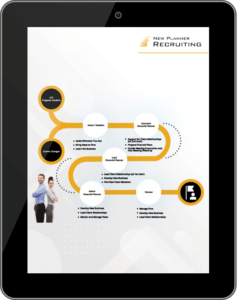 Download your free copy of the New Planner Career Roadmap! In this roadmap, you'll be guided through the details of various stages of your financial planner career, including position descriptions, licensing, skill and experience level requirements, and compensation ranges.
Get the Full Episode Transcript:

Read the Transcript Below:
Welcome to the New Planner Podcast, where it's all about helping you successfully enter the financial planning profession and accelerate your financial planning career. This podcast will help you understand the profession, become familiar with the various career paths available to you, and avoid the mistakes that limit your success. Join your host, Caleb Brown, to explore the human side of creating a successful planning career through interviews, personal experience, and insights from the trenches. Let's get started.
Caleb Brown: Welcome to the New Planner Podcast. This is Caleb Brown, your host. I'm joined today by Brooke Jackson, an advisor at Painted Porch Advisors. Brooke joins the show today to share how she entered the financial planning profession and her career progression over the last 11 years, plus how she went from a small firm to a large firm, back to a small firm, and managed the transition successfully. I hope you enjoy this episode with Brooke Jackson.
Hi, Brooke. Welcome to the New Planner Podcast.
Brooke Jackson: Thanks. It's great to be here. I'm excited.
Caleb Brown: Always fun to talk to a fellow Texan and Texas Tech Red Raider, right? Did I get both of those right?
Brooke Jackson: I know. Yes. We tend to stay connected. It's a big state.
Caleb Brown: Can't get rid of us. We're everywhere. Hey, well, thank you again for, again, donating the time and coming on and trying to help the profession and the next generation of financial planners. And I want you just to start, if you would, with what you're... you're an advisor at your current firm. What does that mean? What are you spending most of your day doing right now?
Brooke Jackson: Sure. So I always say I get to do all the fun stuff because I get to do all the analytical kind of background work at my current firm, but also, really meeting with clients on a daily basis and helping them solve their problems and seeing what's top of mind for them. I've only been at this firm for a few months, so still a little bit in training mode, so just learning all the systems and how everything works as well.
Caleb Brown: Thanks for sharing that. And again, I wish, like every other profession, like someone says they're an advisor, everybody knows what that means. And like in our profession, it's like a different—
Brooke Jackson: Right. It could mean a number of different things.
Caleb Brown: So you've been there four months.
Brooke Jackson: Yes.
Caleb Brown: What, I mean, just how's it going? I mean, the first couple months, I mean, talk to us about that.
Brooke Jackson: Yeah. It is going great. I got really lucky and blessed that I've come to a place where it's been so extremely supportive, and despite it being a small firm, it's been extremely organized. I was worried about, I'm fully working from home now, so I was a little bit worried about being a new employee in that environment, but they really have it structured in a way that makes everyone feel very welcome and included.
There was also a lot of similarities between how they do things here and how we did things at my last firm, so that helped a lot with the transition because it's like, "Oh, yeah. Okay, we did it kind of the same way," and so it was really easy to transition into some similar types of work as well.
Caleb Brown: And maybe it's helpful. Let's just go back to the beginning because we talked a little bit about where you are now. I mean, how did you get here? So we were talking about the Texas Tech stuff earlier. So you came out of the—did you go to Tech to go to the financial planning major, or did you, like me, find it when you were already there?
Brooke Jackson: I found it when I was there. I went in undecided. A little bit of decision fatigue. I didn't want to make the wrong decision and declare a major and waste a bunch of money on college. So I had that fear, and really discovered the program. My advisor at the time recommended it to me. I think, like a lot of us, I always said, "I love math. I want to help people. I want to do something impactful." And he was like, "Hey, Texas Tech has a top program for personal financial planning. You ought to try it out."
And I took a class and fell in love with the subject matter and all the people in the industry that I've met along the way that encouraged me to continue on along that path. So that's how I found it. So just like you, I was lucky that I was at a school already that had a great program for it.
Caleb Brown: So you didn't know anything about financial planning before that? Never heard of it as a career option, or no family members were advisors or anything like that?
Brooke Jackson: No, I really did not know that it existed as a job. I'm from small-town Texas, and not surrounded by a lot of wealth. Just really hadn't encountered the career path before.
Caleb Brown: You said you went to one of the classes and fell in love. Why did you fall in love with it?
Brooke Jackson: I've always liked solving puzzles, and it felt a little bit like that to me. There were so many different elements to it, and when you can see it all come together and how everything relates to one another, that was really satisfying to me to learn about. And I also felt even if I didn't follow the career path, that it would be personally beneficial to me and my family. So that really got me too.
Caleb Brown: Totally relate to that. I mean, what a great fallback major in education, right? Even if you don't do that. I've shared this before, but I was really trying to become a PGA Tour professional, and I go, "Even if I make it on tour, I need to know how to do this for myself," or any advisors that I hire, be able to make sure they're not screwing me over.
So needless to say, the golf thing did not work out, but the other stuff did. Talk to us about after graduation. So you stayed three or four years or whatever it was, and then how did you start identifying firms and trying to figure out what firm you wanted to join when you were going to start your career?
Brooke Jackson: Yeah. So I participated in Texas Tech's Opportunity Days, which is a career fair for those of you that don't know. So it gave us an amazing opportunity to interview dozens of firms, like, all within a couple-day span. I really didn't have a preference on location since I knew I wasn't going back home. So I was really open and really was seeking a firm where I felt like I related to the people there, connected with their value system, just felt like it was a good place to be, and really was looking for good experience where I could really dive in and learn as much as possible with a lot of mentorship.
So I interviewed with... I worked for Jason Magiera, who you know, so shout out to Jason. Yeah, interned with him, really connected just right off the bat. I still consider him an amazing mentor to me to this day.
Caleb Brown: Very likable guy.
Brooke Jackson: Yeah. Very down to earth. So he really drew me in, made me feel really comfortable, and I could tell right off the bat that he would be a great mentor. So we interviewed. He flew me to Houston while I was still interviewing. I got to shadow him for a day. So he really went above and beyond to make sure that I knew what I was getting into before accepting a position. So yeah, ended up coming to Houston, interned there, and then he offered me a full-time position right out of school. So I was there for four years.
Caleb Brown: Well, wait a minute. Can I just, I'm gonna go back to something. He flew you down to interview for an internship?
Brooke Jackson: Yes. Yeah.
Caleb Brown: Wow.
Brooke Jackson: So we had interviewed once at—
Caleb Brown: I didn't realize that.
Brooke Jackson: Yeah. We had interviewed at Opportunity Days once. We liked each other.
Caleb Brown: How did that make you feel? I mean, here you are, like, in your early 20s. I mean, I don't hear of that happening very often at all, flying. I mean, I get it for the full-time job, permanent jobs, understand that, but for an internship position, that's pretty awesome.
Brooke Jackson: Yeah. He really did not have to do that at all. I think he knew that I had only been to Houston maybe a couple times in my life before that, and that I was from a small town, so he wanted to provide that experience. To me, that just is a testament to how genuine of a person that he is and how supportive he is, but he did not have to do that at all.
I was still interviewing other firms at the time, and that really helped with my decision-making of like, "Hey, this proves his character." Exactly. It worked. It worked.
Caleb Brown: Okay. So you ended up joining his firm for an intern and then a full-time gig.
Brooke Jackson: Full-time. Yeah. It was a great experience. I think the timing was amazing because he was currently going through a transition, transitioning a book of business from the advisor that had been there before. I think she was 78 years old at the time, and he was purchasing her business from her. So I got to enter their firm right in the midst of that transition, so really got to see the ins and outs, the nuts and bolts.
I mean, he showed me the numbers. He showed me everything, and it was an amazing experience. Really got to see day to day what he did, and since it was really just us, like there were other advisors in our office, but it was very siloed, so I got to see the ins and outs of the full practice. So operationally, advisory planning, really we both did everything. So it was an amazing experience to really see what actually goes into what we do on a day-to-day basis.
Caleb Brown: And this was like, I mean, it was just kind of you and him. It was a small firm, wasn't it? I mean, maybe talk about your experience there. I mean, just the mentoring and just being able to sit next to someone like that. I mean, what did that do for the building blocks of your career?
Brooke Jackson: Yeah, it was, I don't know another place where you could get something like that other than working with really just one other person. We had some reception, operational support, especially at first, that helped with some of those things. And then, like I said, we did have a couple other advisors, but didn't really work with them. There wasn't much overlap there, but we were under that RIA umbrella. And then we were a hybrid firm as well, so we worked with LPL as our broker-dealer.
And yeah, like I said, he would pull up a chair next to him and say, "We're gonna do a day together." And so I got to see every single action item, and I think what helped me the most is the thought process that goes into everything. Like, okay, this client emailed me the question. Here's exactly what I'm gonna do to figure out the answer, and how I'm going to respond, and how I know that this client will probably be thinking one way, so I'm gonna explain it in this way. So it really opened my eyes to how to communicate with people, how to think about things that are just "figure it out." It really taught me critical thinking.
Caleb Brown: And then what happened next? I mean, you were there, what, three, three or four years or something, and then what happened after that?
Brooke Jackson: Yeah, about four years if you count the internship. About four years. Like I said, great experience. It was really, I had a lot of loyalty there. It was hard to walk away. But really, my career path there, I felt, was fixed on, you know, he was really looking for someone that could take over his business one day, which was an incredible opportunity. I just didn't know that it was right for me. I just wasn't sure if I wanted to be a business owner and take on really that level of responsibility and step into that role down the line.
So I was looking for just a different type of experience, wanted to see what a larger firm was like, work with a different client set. I was just really looking... I was so early in my career, I wanted something different to experience to see where do I really belong. So I found a larger firm in Houston, Lenskold Wealth, and I ended up being there for six years. And that was, I have just been so lucky to have really wonderful mentors along the way and the experience that goes with that.
Caleb Brown: Well, how was the transition going from a small couple-person firm to a large firm? I mean, was there any gotchas or sort of OMG-type moments that you had when you showed up?
Brooke Jackson: I think when I showed up, I was just so excited.
Caleb Brown: Yeah.
Brooke Jackson: I think I was surprised by just the level of organization that goes from... and the structure that goes from just working with one person or two people to working with a 50-person firm, where they have training materials. They have things written out for you. They have a team. So I really enjoyed working with peers because I didn't have that opportunity before. So working with people that were in a similar level to me that I could relate to, that we could rely on each other for questions and support and training. Yeah, I think nothing was surprising because it's kind of all the things that you think would be the case. But it was a nice change.
Caleb Brown: Well, and you worked, I mean, you were there, what, about six, a little over six years. You worked your way up, which is, again, a very good tenure. Some of the firm owners listening to this are probably like, "No, that six years, that's not very long." I mean, these days that's really good, right? I mean, and you had multiple positions. So can you walk us through the career progression at that last firm?
Brooke Jackson: Sure. So I joined as a financial planner, and at the time they had a financial planning team that supported all the advisors in the firm, and really they were looking for someone that could be on that team longer term and provide some leadership. I think they had people that were there that were great trainers, but kind of transitioning in and out or moving up to advisor. And so they really needed some longer-term leadership and mentorship on that team.
So I kind of joined with that in mind as a kind of a long-term plan, but joined as a financial planner, and then transitioned to managing the financial planning team for the firm. So I absolutely loved doing that. It gave me the opportunity to train and mentor people and really develop. I've got to give credit to what they already had in place because they had a lot of structure and a lot of training in place, but I really enjoyed continuing that and working with the team and supporting that.
Caleb Brown: How was that transition going from sort of practitioner to, I mean, they talk about this in the book The E-Myth Revisited, right? Sort of the technician, then to the manager role. I mean, and it sounded like it was a good fit for you. You said you enjoyed it. I mean, is there anything to learn from that experience there on going from doing the planning to now managing the planners?
Brooke Jackson: Yes. It was a huge challenge. You just really don't know, I think, until you're in that position, like how many things pop up along the way. Like how many personnel issues, it's just normal things. It's young people going throughout their career, and there's challenges that pop up along the way. So there's a lot of problem-solving and helping people grow and learn from things.
So it was a totally different kind of challenge, right, than when you're independently working and trying to figure out this problem, to where these people's careers are kind of dependent on how much they learn from this situation. So it was a big responsibility, but really enjoyed just working with the team. All wonderful people.
It was a challenge to transition from financial planner into that manager role, I think, because I had worked with the team as a peer, and we were on an equal level, and most of the people on the team were actually older than me. So it was a bit of a jump of, "Okay, now I'm your manager and you report to me." I think the dynamic worked great, but it's a bit of a balance, for sure.
Caleb Brown: And then your final role, because there was, I think there was another step. What was the last role you had there?
Brooke Jackson: Yes. Yes. So in the past couple years when I transitioned, the whole firm kind of did a restructuring to where we got away from having a financial planning team that supported all advisors. So we transitioned into more of a team structure to where each team had a couple lead advisors, a planner, associate analyst, whatever you wanna call them, that supported that team, and a client service associate as well.
So the structure transformed, and at that point I was already technically an advisor to, I don't know, maybe 30 clients. I had taken on that role while I was a manager as well. So really just transitioned full-time into that advisory role and joined one of the teams there. And so each of our planners, analysts were split up amongst the teams. I was an advisor there for two years. Yeah.
Caleb Brown: Okay, got it. So the 30 clients, did you get those clients or bring those in, like family and friends or other clients, or did they give them to you?
Brooke Jackson: Yeah, they gave them to me. They were existing clients of the firm, long-term clients. The firm went through a few transitions where maybe an advisor left or just clients that needed that role filled. And so it was organic along the way, maybe clients that I had previously done financial planning work for when I was there, like I mentioned, for six years. So we connected on a close level with some of those clients, and it just naturally made sense for me to be in that advisory role for them.
Caleb Brown: Can you talk about just the difference in your mind, because again, there’s different opinions out there, but the difference between the planning versus the advising, or the planner versus the advisor role? We have a lot of people, just a lot of people are just massively confused that are trying, and with good reason, getting in this business, very confused by that.
Brooke Jackson: Yeah. It is confusing. And I think each firm defines it in a different way, but to me, it's really that extra layer of accountability. So the advisor is really responsible for that relationship, coordinating with all the people that are involved along the way to make sure everything is followed through with. An advisor typically has more experience, so they can make some of those tough decisions or recommendations for clients that just maybe those in that planner role wouldn't have that level of experience yet. But then I view the planner as really the person that's doing more of the analytical support work and still in learning mode.
Caleb Brown: So it seems like it was a pretty good experience, pretty good fit. You learned a lot. You built, you grew, and then, but you left four months ago. So what happened there? What caused you to leave?
Brooke Jackson: Yeah, and I wasn't looking to leave. I was very happy there. Really planned to play out my career there. As I described, I met some amazing people there and loved working with the clients. It was really about all the positive things about Painted Porch, which is where I am now.
So the founder and CEO, Brian Lloyd of Painted Porch, he reached out to me on LinkedIn. And as we get so many messages on there from different firms, and I had never even interviewed with anyone else in my six years at Lenskold. But his message was just good enough to where I was like, "You know what? I would love to have a conversation." And it just, it sounded too good to be true. I wanted to chat with him, and I even told him upfront, "Hey, I'm not looking to make a move, but you caught my attention, and I really wanna stay connected and learn more about what you're all about."
And as I continued conversations with him and the rest of the team, I just really fell in love with the place and the people there. And it was like a dream position to me that I didn't know even existed. I think I really connected with their values, their mission, and while connecting with people along the way, really felt like everybody there was aligned in that, and everybody practiced what they preached and continued to prove themselves along the way, so it didn't feel like just talk.
And they were very diligent in their interview process. I had to do a whole presentation to them on a technical topic. So that's always really good to see from a firm as well, as you know from what you do day to day.
Caleb Brown: That's right.
Brooke Jackson: I love that they put in that level of work to vet candidates because it shows that they already have a great team there and are really careful about who they bring in.
Caleb Brown: Gotcha. So it sounds like the role was pretty much the same thing you're doing, it's just there were these other things. And then I guess the way you said it earlier made me think it was initially a challenge, like going fully virtual. That was a challenge for you. Can you talk about that for a little bit?
Brooke Jackson: Yeah, and I was excited about that opportunity because I live in Houston and the commute was wearing me down a little bit. So I was like, "Sure, working from home, that sounds great," but I was worried about the training and being a new employee in that environment. But yeah, that's eliminated now. They really held my hand and walked with me along that challenge.
Caleb Brown: That's amazing, Brooke. I'm glad you've got a good fit, and really appreciate you walking us through all this. Is there any, I mean, you shared a lot, and we appreciate that. Any final tips or thoughts before we close out on just what people can be working on or thinking about in terms of trying to become a successful... or get in the business or become a successful planner?
Brooke Jackson: Yeah, I would say I've encountered people that try to be the smartest person in the room. Especially out of school, you're trying to prove yourself. You kind of know in your heart that you don't know anything and that these people are smarter than you, but trying to fit into that role and really prove your knowledge.
I would say what's more important and what will take you farther along early on in your career is just be reliable. So be that person that people can count on. Advisors, I think, love that. So if you're working under someone and they know that no matter what, you're not gonna drop the ball on what they've given you, and that you're going to ask questions. If you need help, you'll reach out for help, and that you're gonna be resourceful and just not let anything slip through the cracks. So I think don't worry about being the smartest person, just try to be reliable—my biggest piece of advice.
Challenge yourself. So if something feels uncomfortable, it's probably good for you to try to do that. Oh, I know I definitely struggled with that, just being scared of going outside your comfort zone, but that's how you learn and grow and get better.
Yeah, and then asking for feedback can be great. I think so many people are hesitant to give feedback because they don't want someone to get their feelings hurt or whatever it may be. But if you ask, seek a mentor that you know and trust and ask them for feedback along the way, and that can open the door to a lot of learning experiences.
Caleb Brown: I never had those mentors. They were not worried about hurting anybody's feelings.
Brooke Jackson: That's great.
Caleb Brown: But I get what you're saying. I totally appreciate that. All good stuff. Any final comments or anything else that you wanna share before we close? This has been a lot of fun. I'm glad we got to catch up before we close out.
Brooke Jackson: No, I think also finding a place where you really align with their values and mission and just being surrounded by people that you enjoy working with can make the world of difference. So don't get so fixated on the day-to-day work that you're doing because sometimes, more importantly, it can be the people that you're doing it with.
Caleb Brown: Love it. Thanks so much for coming on the show, Brooke.
Brooke Jackson: Yes. Thank you.
Thanks for joining us for this episode of the New Planner Podcast. If you are ready to discover the top career paths for financial planners and see which track is best for you, we created a free guide to help you. Grab your copy of the Financial Planner Career Roadmap at newplannerrecruiting.com/roadmap. There, you'll also find more tools and resources all created to help you build a successful financial planning career. Tune back in next week for another episode, and until then, we are here to help you succeed.
Share the Love:
If you like the New Planner Podcast...
Never miss an episode by subscribing via Apple Podcasts, Spotify, Amazon Music, YouTube Music, or by RSS!



Leave a Reply