
Could your strengths lie outside the traditional advisor path? My guest today is Brian Abatemarco, who navigated his career from financial planning into sales, and ultimately into the world of AI startups. From managing clients early in his career to discovering a passion for business development, Brian shares how leaning into your natural strengths can completely reshape your trajectory.
Listen in to learn how AI is actually being used inside advisory firms today (and why it’s not replacing advisors anytime soon), how automation can transform client service and operations, and what it really looks like to take a risk on something new. If you’ve ever questioned whether you’re on the “right” path or wondered how to pivot without starting over, this episode offers a practical and honest look at building a career that works for you.
What You'll Learn In Today's Episode:
- How Brian discovered financial planning. (2:25)
- What it’s like working in a small firm vs. a larger organization. (4:20)
- How sales skills are developed in advisory firms. (6:00)
- Why Brian transitioned from planning to sales. (8:45)
- The career growth opportunities in sales roles. (10:20)
- Why building your own client book matters. (14:00)
- What led Brian to take a risk and join an AI startup. (18:00)
- How AI tools are improving advisor workflows and efficiency. (20:00)
- Why aligning your career with your strengths is critical. (24:00)
Ideas Worth Sharing:
“If you can bring in business and you can develop business, you're never going to be out of a job.” - Brian Abatemarco Share on X “People are always looking for advisors—especially with their CFP—to manage clients. The demand is so prevalent there, and there's just not that many advisors with CFPs.” - Brian Abatemarco Share on X “People think that we are trying to replace financial advisors with AI. I think that is the best way to go broke if you're trying to start a company because it's just not going to work. People enjoy interaction with other people.” -… Share on XResources In Today's Episode:
- Brian Abatemarco: LinkedIn
- New Planner Recruiting - Financial Planner Career Roadmap
- Finding your Path: The Roadmap from Student to Successful Financial Planner by Caleb Brown
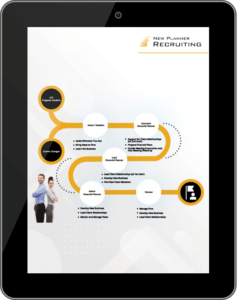 Download your free copy of the New Planner Career Roadmap! In this roadmap, you'll be guided through the details of various stages of your financial planner career, including position descriptions, licensing, skill and experience level requirements, and compensation ranges.
Get the Full Episode Transcript:

Read the Transcript Below:
Welcome to the New Planner Podcast, where it's all about helping you successfully enter the financial planning profession and accelerate your financial planning career. This podcast will help you understand the profession, become familiar with the various career paths available to you, and avoid the mistakes that limit your success. Join your host, Caleb Brown, to explore the human side of creating a successful planning career through interviews, personal experience, and insights from the trenches. Let's get started.
Caleb Brown: Welcome to the 277th episode of the New Planner Podcast. This is Caleb Brown, your host. My guest today is Brian Abatemarco, who is on the founding team of Nexhelm AI. Brian joins the show today to share his financial planning journey and his role in an AI startup. Brian shares how a couple of years after graduating from the Virginia Tech CFP program, he joined a duly registered firm where he had a small book of clients he was managing and how he was naturally drawn to the sales side of the role, ended up leaving the position, and taking on a more focused sales role.
Brian goes on to share how, even though he worked his way up in sales, he wanted to try something new and was recruited directly by the founder to his current firm. Stay tuned to hear how his AI solution works and tips for new planners. I hope you enjoy this episode with Brian Abatemarco.
Hey, Brian, welcome to the New Planner Podcast.
Brian Abatemarco: Thanks, Caleb. Thanks for having me on.
Caleb Brown: Hey, I know we were just reminiscing a little bit before we got on the air, but like, when? When did we actually meet? Because it's been a while.
Brian Abatemarco: Yeah, it is been a while. We met when I was a student at Virginia Tech and you had done a presentation.
Caleb Brown: Way back.
Brian Abatemarco: Yeah, way back. Must have been like 2012 at this point, 2013. Yeah. You did a presentation and I was like,t“here's something I like about this guy. I don't know what it is.
Caleb Brown: I'm glad I didn't run you off, steer you in other direction, and you actually joined the profession. So, in all seriousness, it's good to catch up, be with you again. Thanks for donating the time to come on and talk about your career. Just start with how you got interested in financial planning and maybe why you went to Virginia Tech. Because I can't remember all that. If you went there to get the financial planning degree or you fell into it like a lot of us did once you got there.
Brian Abatemarco: Yeah, great question. So yeah, so I was in the finance program at Virginia Tech, and I remember I had a class with Dr. Clark and he was one of the professors there. And it was him and another professor, his wife at the time, Dr. Linton. And he ushered me into the program. Very fortunate to go in there. I mean, it was such a great experience just being in that program at Virginia Tech. Not only could you sit for the CFP exam right upon graduation, but it also exposed you to so many good industry speakers; people would come and do presentations just like you did. And then also what I really loved was going to those conferences like the FPA conference. We did Schwab IMPACT. So you just get great exposure to the industry by being in that program. So, yeah.
Caleb Brown: Okay. So you were in the finance, you wanted to become a financial planner before you got there, is that what you said?
Brian Abatemarco: No, I was just in the finance program and was in a fraternity and just joined up at the CFP track.
Caleb Brown: Because you had Clark's class and you moved. You kind of moved over to the CFP track. Okay, got it.
Brian Abatemarco: Yep.
Caleb Brown: Got it. Awesome stuff. Alright, so then you worked your way through the program and you got out and talk to us about maybe how you got your first job and then where you ended up.
Brian Abatemarco: Sure, yeah. So really, really interesting firm. I moved to Charlotte right after I graduated, so I was in Charlotte, North Carolina. And I got a job with a firm that was a tax and accounting firm mostly, but they had a wealth management arm at their company.
Caleb Brown: Mm-hmm.
Brian Abatemarco: And so, very small practice, but it was within a larger company, the company's name was GreerWalker—great firm down in the Charlotte, North Carolina area. And yeah, really interesting. I did a lot of planning, was involved in some of the meetings early on, which was really awesome. You're a year out of college and you're talking to clients. That's hard to do and yeah, it was a great experience. So, that was my first, I think I was there for two years. So, yeah, that was the great first job.
Caleb Brown: So what caused you to leave after the two years?
Brian Abatemarco: So then I moved back up to the Washington D.C. area. That's where I'm originally from. That's where my family and friends were all up there. I joined up with a firm that was a duly registered firm.
Caleb Brown: Mm-hmm.
Brian Abatemarco: SEIA, Signature Estate and Investment Advisors and really, more of like a brokerage and sort of sales outfit there. And was working under sort of an associate advisor under one of the head brokers or the head guys over at that company. Fantastic experience. And I learned a lot about some of the sales aspects of the business and really just kind of how to carry yourself and present to clients just in that initial business development part of the journey. So, yeah.
Caleb Brown: Oh, okay. So that was your role. You were an associate advisor, but you had some business development requirements?
Brian Abatemarco: Well, not yet. I would shadow the head advisor and he was really good at sales, so he kind of taught me some of the ins and the outs of like, you know, “This is how you want to present. You want to be very careful not to say X, Y, and Z. You want to mention this stuff about the company.” So, really great experience there. And then that sort of led me into where I was at for most of my career, which was Mercer Advisors, the mega RIA. And there I did sales. So, at that company I was in sales. They were one of the few firms at the time, at least Mercer Advisors was, that separated their sales and service. So they had advisors that were taking business, but then they had what were called Regional Vice Presidents that were selling clients and passing them to advisors. So really, really great experience there too. Got to learn a lot about the sales process and actually do the selling in that role. I was mentoring under another really good salesperson there. So it was just a lot of really good experiences early on in my career that kind of shaped who I am today. So yeah.
Caleb Brown: I want to come back to the Mercer thing. So we had Keith Wayne on, I think that was episode 250, and we'll link to that, talking about sort of how he worked in the internal plan production and there were other people out there selling. Let's go back to the SEIA firm. So what were you doing? I mean, you were an associate planner, and again, I wish everybody's title was the same, but it's not. So what were you spending most of your time doing?
Brian Abatemarco: Okay, so there I had a small book of clients that I was managing, but most of my work was in the operations of his book, his larger book of clients, right? So, opening accounts, just the entire operations experience of a company.
Caleb Brown: Okay. Got it. So, but you were also learning some business development skills and presentation skills from observation from the senior planner.
Brian Abatemarco: Yep. Through osmosis. Just learning a lot of really good stuff. Yeah.
Caleb Brown: Okay. And then you were there, what was it, a couple years and then you made the transition to Mercer. So what made that happen?
Brian Abatemarco: Yeah, so I was there for two years. And then, I really wanted to be out and about. I know it sounds odd, but at the time I was thinking to myself, I feel like I could be—I didn't know yet—but I feel like I could be good at sales, right? I could be good at that initial onboarding process. And so I wanted to find a job that was like, okay, I would be out and about meeting face-to-face with new clients, interacting with new prospective clients of these firms or of Mercer. And sure enough, literally just found the exact. It's like I manifested it, right? But I found the exact thing I was looking for, and I was under a senior sales guy. So I was basically following him around and sort of just doing a lot of the processing of the paperwork, like relaying information from the meeting to the client service team. So, just amazing experiences at both of those firms.
Caleb Brown: I want to unpack that a little bit. I mean, we get a lot of firm owners out there like, "Oh, these younger people don't ever want to sell or bring in business or do anything and I can't have 'em as a successor." And here you are like, "Hey, I wanted to do this. They were trying to have me do the paperwork and all this other stuff and the planning. I wanted to do the sales.” And I mean, it looked like you were still in kind of your mid-twenties, just a couple years in the business and you moved into this role. I guess what I'm saying is a lot of your peers probably when they were at Virginia Tech, a lot like mine in Texas, were like, "Man, that makes me nervous. I don't want to have to get clients. I’m nervous about that." But you somehow took a different path. So maybe just unpack that a little bit.
Brian Abatemarco: Yeah, that's a great observation that you have there, because I noticed that too, right? Everyone has strengths and weaknesses. And I think you just have to be very honest with yourself: okay, what are my strengths? What are my weaknesses? And I personally thought one of my strengths was being able to present well, being able to communicate well, and listen to the clients, listen to what they're asking for and what they need. And so, yeah, I just said, look, I might as well give this a shot. And also, what I did understand, what I knew was that the rainmakers of the firm are usually the higher paid folks at the firm. Right? If you can bring in business and you can develop business, you're never going to be out of a job. That was sort of my thinking. I don't know how true that is to this day.
Caleb Brown: AI can't take your job, right? We're gonna get to that in a minute. Right? But AI can't take your job.
Brian Abatemarco: Right. So, yes, that was my thinking. And I'm really glad that I did it because honestly, what it gave me was the skill and the sales acumen to be able to do that. Because gosh, I've seen some people in this industry where they are the smartest people ever, right? They've got so many designations. They've got tons of letters after their last name, but they just can't communicate with a client and the sales skills are just not there. And it's a shame; it's a big shame in the industry because I feel like there's a lost opportunity there. So, yeah, I was excited to do it. Yeah.
Caleb Brown: Yeah. That's amazing. So you worked your way, 'cause you were at Mercer for about what, five and a half years? Maybe talk about your career. You worked up the career ladder there on the sales side. Just talk about that.
Brian Abatemarco: Yep. I climbed the theoretical corporate ladder. Yeah. And then I was fortunate enough to be the head salesperson, doing these meetings on my own. And when you're at that stage, it's just very exciting because you are the face of the company. You're the first person that the client interacts with and you were able to really get a good sense for the people that you're working with, what they really need, and whether what we provide is a good thing for them, something they want, or something they don't see as having value. So, yes, I basically worked my way through the ranks there and became a Regional Vice President. And so there were two areas that I worked in. One was taking leads and working with clients in the branches—of course you're aware of the Schwab Referral Network, the TD Ameritrade, and the Fidelity Referral Network. So I worked those for a little while, and then I went over to the direct marketing side of the business, which was mostly taking leads that came in organically from the website. People would go to the website, they'd say, "Hey, I'd like to have a conversation." So it was great. I got to see multiple different sophistication levels of some of these clients, so very interesting.
Caleb Brown: Got it. Okay. And then, I mean, maybe just talk about like, were you required to bring in a number of clients or accounts or assets or something? Just talk a little bit maybe about the metrics.
Brian Abatemarco: So they had metrics for us. It was mostly based on your territory and then just different goals for the year. So the previous year, if you brought in 30 million, they'd want you to do 40 million the next year. And then if you did 40 million, they want you to do 50. So, classic sales, right? Everyone in the sales chain is all incentivized by what the person below them does, right? So, the production, but it was great. And I always said this: when I was at Mercer, all of the other sales guys and I had so much fun together because everyone's the same, basically. We're all performers, we all have that personality type where you're just outgoing, a lot of people who played sports and stuff like that. And so it's just a fun atmosphere to be in that environment.
Caleb Brown: So you had a good run, looks like you had a lot of success there. And then you left. You left all that for the gig that you're at now, so tell us more about that.
Brian Abatemarco: So, yeah, so I actually had a year stint that I did at Creative Planning, and that was where I was an advisor. So basically my thought process—I had a lot of different thoughts along this career path that you're seeing here. And so I wanted to build a book of business. The thing about sales is it's fun and you are able to make some good money, but what happens is you just don't have anything to show for it. You don't have any client relationships that you own. So I was thinking I wanted to target something more long term, and I went into being an advisor. So I was an advisor at Creative Planning for a year. Fantastic experience. Loved my time there. What Peter Mallouk has built at Creative Planning is truly unbelievable. From everything from the culture of the firm to just the infrastructure. I mean, it's just remarkable. So, yeah. So I was managing a book of business just shy of 50 million there. And then I was basically at the point where I said, "Look, I want to take a risk here. I want to go in a different path. I want to take a risk" And so that's where, you know, I was networking. I found my current founder, the company that I'm working for, which is an AI platform for financial advisors. And I've always had these entrepreneurial thoughts and ideas, just of like different tools that could work for advisors. And I was thinking to myself, "If not now, then when?" I wanted to really explore that. And to be honest with you, I have my CFP; my thought was like, I can always go back into the industry. There's always—people are always looking for advisors, especially with their CFP, to manage clients. The demand is so prevalent there and there's just not that many advisors with CFPs, right? So, I went into this AI company and that's where I am now. So, yeah.
Caleb Brown: I mean, it's kind of like what a lot of entrepreneurs come to the conclusion of: if it doesn't work, what's the worst thing? Okay, I have to go hat in hand, tail between the legs, go back and ask for a job. And that's not so bad. Right? I mean, and I think that pushes a lot of people over the edge once they kind of lay out sor of the—okay, so I want to talk more about the current role, but I'm curious. So here you are, high performer at Mercer. You then decide I want to build a business. Did you go to them and say, "Hey guys, I want to stop the sales side, put me in an advisor role?" I mean, did you have to leave the firm?
Brian Abatemarco: So, we considered that, although the thing was they wanted me to start over, like career track number one, like be a financial planner, which I understand. Their thing was like, "Well, you don't have a ton of experience doing planning and sitting with clients." And I was like, I just can't be just a financial planner, like take that far of a step back. So, yeah, so I just started looking and came across Creative Planning and again, great experience at Creative. I mean, I can't say enough good things about the company and the people there, so, yeah.
Caleb Brown: Got it. So your current firm now—talk to us more about what the product is and what your role is.
Brian Abatemarco: Yeah, so at the current firm, I am basically our Chief Product Officer slash Head of Sales. At these startups, you end up doing multiple different things. You can say you have one title, but you really have like four or five. So I really head up a lot of the product development and then also most of the sales, because our sales are selling other RIA firms, other advisors. My whole pitch is like, "Look, I've been in your seat for over a decade and I understand what your problems are. I understand what you're looking for. And so, here's what we've built and here's all the advantages." So, yeah.
Caleb Brown: And what's the tool? What does it do?
Brian Abatemarco: Yeah, so basically it's an AI platform. It allows folks to link up their current software tools. So you link up your tools and you can perform tasks in those tools just by prompting the system. So for instance, you could say, "Hey, I want you to update this CRM contact," "I want you to update this address in CRM," enter, and it would just go ahead and do it in the actual CRM. Right? And then there's tons of other use cases as well. What I think personally is a game changer is, you know, if you've ever tried to schedule meetings with a client, right?
Caleb Brown: Mm-hmm.
Brian Abatemarco: Clients ask for, "Hey, can you send me three or four times that work for you?" You can literally prompt our model and say, "Hey, find me three times on my calendar and send an email to this client," and it'll literally go and look on my calendar, find three times, put it in an email, and I just have to look at the email once through and then click approve and send, and it sends out automatically.
Caleb Brown: Amazing.
Brian Abatemarco: Yeah, so it is like the cutting-edge tech out there, right? It's very, very cutting edge. And then, of course, we do most other large-form workflows. So if you're onboarding a client, you might have like 10 to 15 different steps. We can automate basically 80 to 90% of those. One of the things that we cannot do is send documents out through Schwab or out through Fidelity, but everything else—all the tools you use in your business—we can automate tasks in those tools. So yeah, it's really interesting.
Caleb Brown: I think everybody—there's, it's a crowded space, right? It wasn't just two years ago; now I feel like everybody's got something. I know, was it Altruist just came out with their—
Brian Abatemarco: Yeah.
Caleb Brown: —Hazel? Or they've had it for a while and they updated it or something?
Brian Abatemarco: Yep.
Caleb Brown: I mean, is this AI, I mean is this gonna replace financial planners?
Brian Abatemarco: Yeah, so I get this question a lot. I don't think there's a shot in hell that it replaces financial planners. People always think that you say you're doing an AI company for financial advisors, people think that you are trying to replace financial advisors. I think that is the best way to go broke if you're trying to start a company because it's just not gonna work. People enjoy interaction with other people. No one's gonna listen to—I mean, maybe the fringes of the market, like maybe the smaller end of the market folks might follow the advice of an AI—but most of what we're doing is enhancing the advisor experience. So we are making it extremely simple and easy to use our product so that all you have to worry about is just meeting with your clients. You're not doing all this operations work. From when I was an advisor, one of the biggest things that I came across was like, I had maybe 50 to 60 clients and you'd have maybe one or two tasks per client. I was always afraid that I was gonna drop the ball somewhere.
Caleb Brown: Yeah.
Brian Abatemarco: And I'm like, gosh, a lot of times I don't have a way to track my tasks from start to completion. I have to go and search: "Where are we at with this transfer?" "Where are we at with this?" And so I wanted to build something that tracked everything and kept everything in one place. And so that's another benefit of our product. Yeah, so.
Caleb Brown: Really cool. I mean, people ask me that all the time too, and my answer has been—and it could change going forward—but it's just gonna help you work with more clients. Kind of just what you said. It's gonna help you work with more clients, not drop the ball, and provide better service. And I think again, to people doing real financial planning—you kind of said this earlier too—it's just not even close, at least where we are right now.
Brian Abatemarco: Yeah, for sure.
Caleb Brown: You're not an advisor. I mean, you didn't really leave the—you left the advisor seat, you didn't leave the business though. Is that kind of the way you classify it?
Brian Abatemarco: Exactly. And that was by design. Like, I wanted to stay in and I want to stay in wealth management. That is my—I love the industry, right? I love markets and I love helping clients and helping people. So I wanted to stay in wealth management, but you know, I thought, you see people sort of do these transitions all the time. Like the previous Mercer CEO—not that I'm comparing myself to any CEO out there—but he was at, I think he was at Redtail or Black Diamond before becoming the CEO of Mercer. People do these sort of transitions all the time. And so, I just figured like, hey, life is short, man. Life is short. If you have any aspirations of doing something and you're not currently doing it, give it a try. So that was my thought. Yeah.
Caleb Brown: And you just gave us a good one, but any other sort of nuggets or final tips as we close out here, just on maybe somebody out there, a budding sort of sales or entrepreneur type path? What would you tell 'em?
Brian Abatemarco: Yeah, I mean, I do genuinely feel that, you know, look at your strengths and weaknesses. Be brutally honest with yourself as to what you're good at and just create the life that you are destined to have, create the life that you're good at and you're predisposed to be good at. For me, it took some trial and error, right? I've job-hopped a lot. That’s what people would say, probably, if they saw my resume, but what I think of it as is like, I'm just trying to create the life that I want and the life that I think I'm supposed to be living. So that is my two cents.
Caleb Brown: Brian, this has been so fun to catch up with you. I just—I can't believe it was just—it seems like yesterday you were sitting there in one of those classes and here you are doing really big cool things. So thanks so much for coming on the show.
Brian Abatemarco: Thank you, Caleb. Thanks so much.
Thanks for joining us for this episode of the New Planner Podcast. If you are ready to discover the top career paths for financial planners and see which track is best for you, we created a free guide to help you. Grab your copy of the Financial Planner Career Roadmap at newplannerrecruiting.com/roadmap. There, you'll also find more tools and resources all created to help you build a successful financial planning career. Tune back in next week for another episode, and until then, we are here to help you succeed.
Share the Love:
If you like the New Planner Podcast...
Never miss an episode by subscribing via Apple Podcasts, Spotify, Amazon Music, YouTube Music, or by RSS!



Leave a Reply