What if the key to standing out in your career is starting before you feel ready? In this episode, Cassidy Vines, a financial planning student at Temple University and winner of the 2025 New Planner Recruiting Tuition Scholarship, shares how she took the initiative early to build real-world experience before graduating. You’ll learn how she discovered financial planning, why she made the switch from marketing, and how she turned curiosity into a clear career path.
Listen in as Cassidy shares how she secured multiple internships (including through cold outreach), how hands-on experience accelerated her learning, and what she’s looking for in a future employer. From leveraging part-time jobs into transferable skills to building confidence in interviews, this conversation is packed with practical insights for anyone looking to break into financial planning and stand out while doing it.
What You'll Learn In Today's Episode:
- How Cassidy discovered financial planning in college. (2:00)
- The role student organizations played in her career path. (4:45)
- What financial planning classes taught her. (5:30)
- Why she pursued internships alongside study. (7:40)
- How she secured her first internship. (9:40)
- How part-time jobs built transferable skills. (12:05)
- What Cassidy's looking for in a future employer. (17:00)
- How she positions herself to add value early. (19:35)
- Advice for succeeding in interviews. (24:20)
Ideas Worth Sharing:
“There is a whole industry of people who are helping manage people's lives in terms of their finances, and I think I'd like to offer some service in that industry, too.” - Cassidy Vines Share on X “My biggest tip is honestly to be confident and to be yourself.” - Cassidy Vines Share on X “You know yourself better than anyone else—or the interviewer—knows you. Let that show through your interviews.” - Cassidy Vines Share on XResources In Today's Episode:
- Cassidy Vines: LinkedIn
- New Planner Recruiting - Financial Planner Career Roadmap
- Finding your Path: The Roadmap from Student to Successful Financial Planner by Caleb Brown
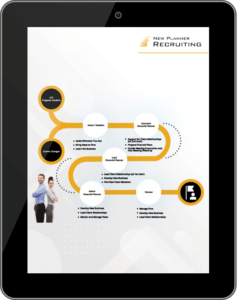 Download your free copy of the New Planner Career Roadmap! In this roadmap, you'll be guided through the details of various stages of your financial planner career, including position descriptions, licensing, skill and experience level requirements, and compensation ranges.
Get the Full Episode Transcript:

Read the Transcript Below:
Welcome to the New Planner Podcast, where it's all about helping you successfully enter the financial planning profession and accelerate your financial planning career. This podcast will help you understand the profession, become familiar with the various career paths available to you, and avoid the mistakes that limit your success. Join your host, Caleb Brown, to explore the human side of creating a successful planning career through interviews, personal experience, and insights from the trenches. Let's get started.
Caleb Brown: Welcome to the 276th episode of the New Planner Podcast. This is Caleb Brown, your host. My guest today is Cassidy Vines, who is a wealth planning intern and current financial planning student at Temple University. Cassidy joins the show today as the recent winner of the 2025 New Planner Recruiting tuition scholarship.
Cassidy shares how she got interested in financial planning in high school and found the Financial Planning Association when she arrived at Temple. Cassidy goes on to share the classes she has taken, the initiative she took to land her current internship, and how her food industry job experience has helped her in financial planning.
Stay tuned to the end to hear what her plans are to get more internships and what she's looking for in a full-time position post-graduation. I hope you enjoy this episode with Cassidy.
Hi, Cassidy. Welcome to the New Planner Podcast.
Cassidy Vines: Hi, Caleb. Thanks so much for having me.
Caleb Brown: This is going to be a lot of fun. And again, congratulations on winning the 2025 New Planner Recruiting CFP tuition reimbursement scholarship. It was a very competitive scholarship. You came out on top. We were happy to award that to you. And also, I'm just excited to learn more about you, that was a little bit more "between the lines" versus what you put on the application.
So maybe if you would just start with how you even got interested or how you even learned about financial planning, and then maybe why you went to Temple and then why you majored in financial planning.
Cassidy Vines: Yeah, absolutely. Well, I'm honored to be on here and just to share a little bit more about my story.
So, I'm currently a junior at Temple, so I guess I'll start a couple of years back in high school. My school, we had some dual enrollment business courses that we were able to take, and I remember just taking some regular business management courses and running a coffee shop along with our school. And so I kind of got to see all the ins and outs of marketing, of finance, of just business management.
And so it was from there that I knew, "Okay, I think I would like to go into business in college." And so, entering college freshman year going to Temple, right, I wasn't really sure of my major. But to be completely honest, I didn't want to put "undecided" on my applications, so I entered, started essentially as a marketing major.
I kind of was doing marketing and sales throughout my freshman year, and although it was coming naturally, I wasn't necessarily enjoying myself. And so, that sophomore year and the end of my freshman year, I really took a step back and started to think about, "What have been my natural interests? Is there a career field in this?"
And then I also took time in prayer as well. I started to think about my childhood and how, even as a kid, I was always budgeting my things, putting them into like, "Okay, I'm going to get this for my birthday; I'd like this pair of shoes," etc. as a kid. But at the time, I didn't know there was a career field in terms of money management, wealth management, financial coaching, all of the things.
And so once I came back my sophomore year, I went to some of the finance organization things and then I also found the Financial Planning Association at my school, and that's when I feel like, you know, snap, everything clicked. I was like, "Wow. There is a whole industry of people who are helping manage people's lives in terms of their finances." And I think I'd like to offer some service in that industry, too.
And even more importantly, financial literacy as well. I think that sometimes there are people who desire the tools but don't know where to start, and the tools are actually more accessible than they seem. So that's kind of how I got into financial planning. Why I chose Temple was also due to the Fox School of Business. Every time me and my parents visited, we absolutely loved it. We felt that I would be poured into and that this would be a good environment for me to learn in. So that's ultimately why I chose this university, and I haven't regretted it one bit.
Caleb Brown: Awesome story. So, let’s go back to you. You really weren't aware that there was a financial planning major until you just happened upon the Financial Planning Association, the student group. Is that what you said?
Cassidy Vines: Absolutely. So, every fall semester, Temple has an SPO Fair, which stands for Student Professional Organizations. And at Temple, we have two technically finance organizations. We have a Finance Association, and then we also have a Financial Planning Association, which is completely different. And so I kind of dabbled in both until I really wanted to go into financial planning, just more of that client-facing route.
Caleb Brown: Love it. It's great. Okay, so you got in there and then you changed your major to financial planning from marketing. Is that what happened?
Cassidy Vines: Yes, absolutely.
Caleb Brown: And then just walk us through maybe some of the courses that you've taken and just what you're enjoying, and maybe what you're not enjoying so much in the coursework.
Cassidy Vines: Yeah. Well, this year as a junior has been the first year that I've really started to get into my core financial planning courses. I really enjoyed my insurance course that I took. That was a virtual class about once a week, but getting to go through case studies and learning about different types of insurance and also retirement plans was something that really stuck with me.
Primarily because when I think about my parents and other family members, I'm trying to help them with their retirement and just looking at the numbers and crunching that. So there's a personal vested interest for me. This semester, I am also taking a tax and estate planning course, which I absolutely love, especially since there were many tax changes that happened last year due to…so I feel like I'm getting to learn about taxes at a very pivotal time, which is just going to continue to shape how financial planning is going to run within the next couple of years.
We're about to start learning more about trust and estate planning as well, so I think that that's going to be extremely interesting, just seeing how generational transfer works. In terms of classes that I may not necessarily enjoy...I don't know if there's any I don't enjoy. I like what I'm learning, so it's more interesting to me. Yeah.
Caleb Brown: Yeah. You picked the right major and you're obviously very excited and enthusiastic about this. And I mean, anybody that says they love insurance, tax, and estate...I mean, okay in my book. I mean, when I was a student, I was on the opposite side of that coin. I was like, "Oh, yeah, insurance was good, but not so much for tax and estate."
Cassidy Vines: Mm-hmm.
Caleb Brown: Okay. So talk to me, now you're an intern now, right? So how did that happen? Was that required, or is that something you just did on your own?
Cassidy Vines: No, so not required. I do believe Temple has programs where you can get credits for internships, but that wasn't necessarily my intention. For a majority of college, I primarily worked in different restaurants like Cheesecake Factory, Silver Diner, Ruth's Chris. But then, sophomore to junior year, I'm like, "Okay, I need to do more financial planning internships."
And so how I kind of looked at college ever since a freshman, because I'm a bit goal oriented. So I looked at it as: okay, freshman year internship, sophomore year internship, junior year internship, and then a job. And so that is how I thought about my college career and how I wanted to spend my summers.
My freshman year, I did have a sales internship at the time, 'cause that's when I was still doing marketing and things like that. And so that was, boom, internship. Sophomore year, the past summer, I interned at a firm called Corient and I was like, "Okay, boom, internship." And that is where I'm also currently interning and will be returning this summer.
And in the fall of last, well, 2025, this past fall, I interned at Zenith Wealth Partners, which is another great firm here in Philadelphia. And so how I view my internships, especially when doing them during the school semester in tandem with classes, is that I think of it as "double the learning." I'm getting information in my classes, I’m applying it in my classes, but then I'm also applying it to the projects that I'm working on at my part-time internship, and vice-versa.
I believe that there are things that I'm learning in the office that help to expedite and help me to better contextualize what I'm learning in the classroom because I'm actually seeing it happen live and in person. And so I really value having internships. I think that anyone who's able to in college should do them for sure, or even if they have opportunities to shadow at firms for a week, and it might not be a full internship. I just think being able to have that hands-on experience, I know for myself, is something that has definitely been really influential as I'm studying financial planning and just continuing to solidify it as something I want to go into.
Caleb Brown: It helps you absorb the concepts, right? You're learning and then seeing it in action. You're taking classes in the morning and you go do your internships and you're like, "Oh yeah, we just learned about that." At least for me, that's kind of the way that I learned worked. I mean, very impressive. How did you get these internships? Walk us through that, if you would.
Cassidy Vines: I'll talk about the two financial planning ones. For Corient, I was going to the different career fairs that our school has, and I was looking for their table because someone who worked at the company had reached out to me via LinkedIn. At the time, I hadn't really heard much about them, so I was doing my due diligence, talking to my program head, Cindy, and just asking her some questions. I'm like, "Okay, well, they're going to be at our career fair, so let me go talk to them as well."
I looked for them the whole career fair, could not find them. And then this one man asked me, "Oh, what are you looking for?" And so I told him, and that was the company. I was like, "Wow, look at that." Mind you, it's almost the end of the career fair at this point and everyone's about to go home. So we just start talking at that point, getting to know each other, talking about what I'm studying, and they encouraged me to apply. I went through the interview process and after a couple of weeks of interviewing and everything, landed that summer internship.
And so for Zenith, Zenith was a bit different because that was my first time trying to navigate having an internship while also doing school. And so I actually found them on my own just through research on social media and on Google, seeing what firms the Financial Planning Association had connections with. I simply ended up cold-emailing them, essentially reaching out in an email, saying, "Hi, I noticed that in the past you all have had internships available. Is that something you still offer?" I offered to send my resume, and after that, we had a couple of meetings and that was secured.
Caleb Brown: And maybe this goes back to your goal—why are you doing all this? Why do you need all these internships, and/or why don't you just wait around for your program director to get you one? Why are you doing all this?
Cassidy Vines: Caleb, I think that's a really great question. Something that I had heard someone say who was in financial planning was that "Gen Z, sometimes we can lack resilience and we need to be a bit more resilient." I think about that in my day-to-day, and I also think about that in how I'm looking for internships and places to learn.
Ultimately, I want to set myself up to learn as much as I can, but to be completely transparent, I'd also be remiss if I didn't say: I have bills. So, if I'm going to work part-time—because I used to work in restaurants—then I thought to myself, "Well, why not at least work in the field that I'm looking to go into?" So I felt like it was getting two birds with one stone as well.
Caleb Brown: Talk to us about the restaurant for a minute, I mean, your restaurant working. Has anything been able to transfer over into sort of the internships and sort of the work in financial planning, and if so, what has transferred over? What base did you build in the restaurant work to help you in these internships?
Cassidy Vines: That's a really great question. I'd say two things in particular. So I was a food runner, and that has a large portion of attention to detail because you have to ensure that all of the plates look exactly how they're supposed to look and include everything.
We don't really have the time to necessarily say, “Oh, I forgot to put this lemon on the plate or this sauce,” and then you're running back and forth giving the customer what they should have already had, right? And I think about that with financial planning too. And we're preparing things for people's taxes or looking at their balance sheets.
Those are numbers that have to be on point. We really can't afford to make mistakes with handling people's money. But I would also say just the connections with others, learning how to connect with people dissimilar to me. And in no way have I mastered that or I'm perfect and I definitely still learning.
But the restaurant industry helped with that extremely, 'cause you're, a lot of the time, in high pressure situations. In the financial planning industry, I think is a bit more relaxed, you know, where it's not like pedal to the metal, gotta get this food out right away, you know? But I think the restaurant industry definitely showed me how to be confident in myself even more, and just how to navigate relationships with many different types of people. And I think that's important for this industry too.
Caleb Brown: Well, I mean, it's a people business, both of them, and it's a service, right? Those points were really well said. Really cool. Okay, so junior year, so you've got another two semesters?
Cassidy Vines: Two semesters. Yeah.
Caleb Brown: So what's your game plan for the rest of your college career and beyond?
Cassidy Vines: Yeah, absolutely. So, of course, finish out this semester and the summer internship again. And then next senior year, well—LOL next senior year—next semester will be my senior year, which is kind of crazy to me.
I think it went by extremely fast. You hear your parents and other people say, “Oh, college is gonna go by so fast.” And now that I'm in it. I understand what they're talking about. So, senior year, essentially I'm gonna finish out my CFP credits, if I recall—well, not credits—the classes, the coursework that I need. If I'm recalling correctly, I believe I only need to take wealth management, which is Cindy's class.
I'm extremely excited for that. And then just a couple of other business electives and some gen-eds to make my schedule a little lighter. I know we're talking about financial planning, but next semester I plan to take a pottery class and I’m looking forward to that, just for something light and fun.
And then in my second semester, I will only have the capstone left, so I plan to continue interning or working full-time while also taking that capstone that is required for my major. But post-graduation, I look forward to hopefully getting started in an associate planner role. I look forward to being "poured into" by people I'm working with and learning from them.
I'd also really like—and this isn't necessarily an idea that I have fully fleshed out—but I’d like to meet other people who have a passion for this as well and go into schools, whether it's local neighborhoods or communities, to see if there's an opportunity to help teach middle schoolers or high schoolers a bit more about just personal finance, financial literacy and the financial planning profession, if that's not currently available in their areas. Because I know for me, even though I was going to school and taking, you know, some business courses, I still didn't learn about financial planning until my sophomore year of college.
So I'm 18, 19 at that point. And I think about what the financial planning industry looks like, how the faces of it are changing, and how many more people might be interested in the profession if they knew about it. Because I think for myself, if I knew about it in high school, I do think I still would've been interested and I'd like to bring that opportunity to other people as well.
Caleb Brown: Thanks for doing that. That's really admirable. I think in Texas, it was called Junior Achievement, and I'm not sure what it's called in Philadelphia, Pennsylvania, or New Jersey, or even here in Georgia, but there are programs like that. In the show notes, we'll make sure to link, put your information and maybe get you connected with somebody that does that in your area, because they're always looking for volunteers and people that are passionate about that. That's really cool that you wanna do that. And also it sounds like you've got some pretty good clarity on, I mean, you said associate planner, then you said something else you said, “I want to be poured into.” So, maybe expand on that. What does that mean? Go a little deeper for us.
Cassidy Vines: Okay, so what does "poured into" mean? I value environments where I know that I am learning. And what I mean by that is learning in a way where I'm being healthily challenged. I'm given projects where I may not know how to do everything, but I can ask questions and do research to figure out how to complete the project, an environment where maybe those who are in the next steps above me, right, just in terms of their work position, if they're mentors of mine, may be saying, “Hey, there's this book that I think you should read. Have you checked out this article?” Them giving me different types of items that can help me advance as I'm pursuing the profession as well.
That’s something I'm looking for. And not just necessarily, and I don't, I haven't experienced this at any place that I've worked so far, but I do know, you know, we are in the United States, we are a very individualistic and capitalist centered country to be completely blunt. Sometimes it can be easy for people to just treat others as if their work force is to produce, produce, produce, and push out work, work and spreadsheet, spreadsheet. And that's not the type of work that I'm looking to do. I'm looking to work alongside people who have a personal interest in their client's success, and they wanna teach me how to do that as well, whether that has to do with what the client's portfolios look like: impact investing, service and faith-based investing.
Or you know, just, okay, we wanna make this part of their life easier for their retirement, and I'm gonna teach you how to do that. I'm gonna teach you how to think about forming their financial plan holistically, and not only step by step, we have X, Y, and Z. How does this come into the full client's picture? So, I'd like to be somewhere where they're teaching me all of those things, the ins and outs, the personal, as well as the business.
Caleb Brown: I mean, it sounds like to me you're willing to learn from the ground up and the basics as long as you're being challenged, and you've got these other things being poured into, I get that—no one really wants just a laundry list of tasks that they're just doing over and over again. It’s like, “Okay, I got this.” But maybe let's flip it around a little bit. How, in your mind, in your words, how are you, when you're talking to these firm owners trying to get hired, what kind of value proposition do you have? How do you see yourself adding value with maybe not having a CFP or not having an experience or not having a lot of clients? How can you add value to a firm?
Cassidy Vines: Right. I'm gonna say three things and then I'll expand on each of them. I think all three of these things are really important for coming out of college and then going into an industry that is a people business. So I would say I have a willingness to learn, kindness, and then also, three, I would say the technical skills that I currently do possess due to just, you know, doing internships throughout the semester and throughout the summer.
So one, willingness to learn. I think that it's extremely important to be teachable, especially when entering that entry-level position. Wherever I would be, I'd be seeking to learn from people and not to be scared to ask questions because I'm there to learn. And I think that that is just really important when being an associate planner, when being in any type of entry-level position showing that you know, “Okay, I do not know everything, but I'm here for you to teach me,” you know?
I would also say kindness and just being personable. That's very important. Being able to have conversations with people and being able to be myself in the office. I think that that's important for the workplace environment and then also for working with clients. And I think it helps to show clients as well that you genuinely care about them and aren't just their financial advisor only handling their money, but you care about their life as well. And I think that that's something I could bring to the table.
And then lastly, due to just having summer internships and the internships that I've been doing during the semester, I do believe that that helps me to be put in a bit of an advantageous position to say the least, understanding some of the softwares that may be used in the industry. And by no means being an expert at them, still learning, but at least having some general knowledge. And so if I was thinking about it from a business owner standpoint, I might think, oh, this might save us on labor 'cause she already knows how to do some of this, you know? So, yeah.
Caleb Brown: Thanks for sharing all that. Really well said. I mean, I'm just looking, I mean, you already have, if I've done the numbers right, about 15 months of experience just in the internships. I mean, here you are just a junior, so you're only gonna build on that. So, I mean, you could eventually end out your college career with quite a few years of experience through internships, right?
So it's maybe some part-time deal, you know, that type of thing. But still, that puts you way ahead of the game versus somebody you know like, “Hey, I didn't do any internships,” or, “I did one for one month,” and that's still great. But you coming out with, you know, two, two and a half years, or just even if you don't do anything else, a year and a half of experience, I feel like puts you in a pretty solid place to add some value.
Cassidy Vines: Yeah, absolutely. And to anyone listening, I don't wanna discourage anybody who maybe hasn't had a bunch of internships, 'cause there are so many opportunities to continue to learn and get active. Like, part of the reason I've been fortunate to have so many internships is simply how my schedule has happened.
I've made sure that I had Tuesday and Thursday classes, so I could work Monday, Wednesday, and Friday. But as you know, me and Caleb talked about earlier, part of that was out of necessity because I needed to work in order to pay for things. But even if a person's not able necessarily to work or have part-time internships, there are always so many opportunities to get involved on campus and your local financial club or finance association, whatever there may be at your school or, I know some of my professors have even encouraged me and fellow classmates to join like our Philly FPA chapter as volunteers or as students and reach out to people there. So there are a number of ways to get involved to meet other people in the industry.
And internships, you know, those have just been the way that I've chosen.
Caleb Brown: Well, thanks for sharing that, that's helpful. Do you wanna stay after graduation? Do you wanna stay in the Philadelphia area?
Cassidy Vines: I go back and forth. I'm open to it for sure. I'm not closed off to it.
Caleb Brown: Look, you're going to do great. This is amazing. I wish we could talk all day long. This is so fun and just, again, makes me feel so good about the next generation of financial planners, 'cause we have, you're gonna be, have a lot of success out there. Are you okay with it, if we put your…and stuff to have people, you're probably gonna get some people that reach out to you about this and I hope you're open to opportunities and connecting with them, so.
Cassidy Vines: No, I'm absolutely open because there are some people you've had on your podcast that I've reached out to on LinkedIn as well.
Caleb Brown: Paying it forward—this is great. I mean, this has been so fun, and again, we were happy to award you the scholarship. Any final just tips or thoughts or anything before we close out?
Cassidy Vines: Final tips or thoughts. Yeah, can I give a tip for interviews?
Caleb Brown: Absolutely.
Cassidy Vines: Awesome. So for anyone who's a student, and you may be starting the interview process, I've had students ask me like, “Oh, well, what's your tip for me to ace this interview?”
And I say this, not to be cliche or anything like that, but my biggest tip is honestly to be confident and to be yourself. There have been a number of interviews where they turned into conversations for me just because the conversation, the questions rather, that the interviewer was asking me, I turned it back on them and asked them the same question and now we're having a conversation as opposed to two of us being extremely stoic, this question answer format, and that's okay too. But I do believe just being confident and showing up as myself in these interviews in an industry that is very personable is extremely helpful. And so I just wanna encourage anyone who, you know, maybe you are scared of the interview process, maybe you're not really sure what to say, be confident. You know yourself better than anyone else, or the interviewer knows you, and let that show through your interviews and I think you'll be good.
Caleb Brown: Good reminder that you're both not playing Texas, hold them, right? Like you actually need to interact.
Cassidy Vines: Yeah. Absolutely.
Caleb Brown: Okay. Cassidy, been a lot of fun. Thanks so much for coming on the show and just look forward to watching you have massive success.
Cassidy Vines: Thank you, Caleb.
Thanks for joining us for this episode of the New Planner Podcast. If you are ready to discover the top career paths for financial planners and see which track is best for you, we created a free guide to help you. Grab your copy of the Financial Planner Career Roadmap at newplannerrecruiting.com/roadmap. There, you'll also find more tools and resources all created to help you build a successful financial planning career. Tune back in next week for another episode, and until then, we are here to help you succeed.
Share the Love:
If you like the New Planner Podcast...
Never miss an episode by subscribing via Apple Podcasts, Spotify, Amazon Music, YouTube Music, or by RSS!



Leave a Reply