What happens when your career doesn’t go according to plan? Today, James Conole and Erin Varghese join the show to share their very different paths into the financial planning profession. They talk about career setbacks, getting fired, starting over, and ultimately finding the right firm and culture to grow their careers.
Listen in to learn how Erin transitioned from banking into financial planning, why starting at a small RIA can accelerate your learning, and how James went from being fired to starting his own firm from scratch. You'll also hear what it takes to build a strong company culture, attract top talent, and embrace imposter syndrome to become a better advisor.
What You'll Learn In Today's Episode:
- Why financial planning is about more than just numbers. (2:00)
- How James got interested in financial planning. (3:35)
- How Erin struggled to break into the industry after college. (7:00)
- Why starting at a small RIA can accelerate your career growth. (9:30)
- Why culture and people matter more than AUM growth. (17:25)
- How content marketing helps attract both clients and employees. (20:35)
- How Erin and James have been able to keep a great culture within the firm. (29:30)
- Why their team is so committed to the development of their advisors. (34:00)
Ideas Worth Sharing:
“Money goes so much deeper than just the dollars and cents, and financial decisions are deeply emotional.” - Erin Varghese Share on X “Embrace the imposter syndrome and use it to fuel a relentless pursuit of being excellent.” - James Conole Share on X “If you get the right people in the door, everything else becomes way easier.” - James Conole Share on XResources In Today's Episode:
- James Conole: LinkedIn
- Erin Varghese: LinkedIn
- Michael Kitces: LinkedIn
- Root Master Plan
- Root State of the Union (2025)
- Root Ready Show
- Root Financial
- New Planner Recruiting - Financial Planner Career Roadmap
- Finding your Path: The Roadmap from Student to Successful Financial Planner by Caleb Brown
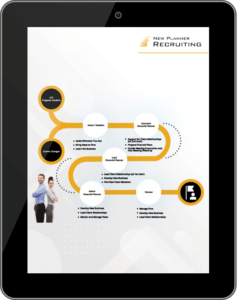 Download your free copy of the New Planner Career Roadmap! In this roadmap, you'll be guided through the details of various stages of your financial planner career, including position descriptions, licensing, skill and experience level requirements, and compensation ranges.
Get the Full Episode Transcript:

Read the Transcript Below:
Welcome to the New Planner Podcast, where it's all about helping you successfully enter the financial planning profession and accelerate your financial planning career. This podcast will help you understand the profession, become familiar with the various career paths available to you, and avoid the mistakes that limit your success. Join your host, Caleb Brown, to explore the human side of creating a successful planning career through interviews, personal experience, and insights from the trenches. Let's get started.
Caleb Brown: Welcome to the 274th episode of the New Planner Podcast. This is Caleb Brown, your host. My guests today are James Conole and Erin Varghese. James is the founder of Root Financial and Erin is a lead financial advisor at Root. James and Erin joined the show today to share how they both got into the financial planning profession.
Erin shares how she got started in the bank channel, but knew it wasn't what she wanted to do and looked to transition into financial planning. She shared how she was fired during COVID, found a new role, but ultimately ended up at Root. James shares how he became interested in financial planning and how he was at a firm for seven years before personal financial issues led him to being fired, then trying to figure out his next move, and then ultimately deciding to start his own firm. Stay tuned to the end to hear how James was able to set his vision, create a solid culture, and attract great talent, and why he doesn't think he's an entrepreneur. I hope you enjoy this episode with James and Erin.
Hey, James. Hey, Erin. Welcome to the New Planner Podcast.
Erin Varghese: Thanks for having us.
James Conole: Thank you, Caleb. Good to be here.
Caleb Brown: This is gonna be so fun. James, we go back a little ways, and Erin, I'm just meeting you, so I'm looking forward to learning more about your story. And if you're okay with it, why don't we just start with you? Can you just give us kind of a brief summary of how you got interested in financial planning and how you got into the business?
Erin Varghese: Yeah, sure. So, entered into the profession, just kind of started back in college, started working at a bank in school. I was putting myself through school and knew I needed to have something professional on my resume. Probably wasn't going to have time for internships in between working and school. So during that time, working at a bank, I just learned to love talking with people about money. I knew long-term I didn't want to be constrained by banking products and services, and it was also a very salesy type position.
So I was just kind of looking outward. What else is available? In school, I was also the president of the Financial Management Association, and we brought in professionals from the area just to talk about all areas of finance. And I will never forget the day that this financial planner came in and she was talking about her experience with a client where she wanted to buy a vacation home, but through deeper conversation discovered that she was burnt out, she was tired, she didn't need a vacation home, she just needed a vacation.
And from that point on, I was blinders on, knew that money just goes so much deeper than just the dollars and cents and financial decisions are deeply emotional. And so again, blinders on, just to be where I am today was just full focus into planning. So that's how I got here.
Caleb Brown: Awesome. Alright, I didn't want to come back to that 'cause I know there was a couple stops on the way that we want to explore. James, what about you? How did financial planning even pop up on your landscape?
James Conole: It started as an internship in college and even the reason it started in an internship is when I was younger, I remember just kind of my parents' journey to trying to get finances in order, and a big part of that was Dave Ramsey's “Total Money Makeover” book and then going through his Financial Peace University, and I had no idea what either of those things were at the time, but definitely felt like, okay, things seem more in control and more, just overall confidence in the family after that.
So I think that planted the seeds for understanding that financial planning actually had very real-life implications and that you could feel a tangible difference when things were done well versus just not having a plan and not really knowing what to do. So that planted the seeds and then I interned for a couple firms. I interned for a firm who happened to be the Dave Ramsey Endorsed Local Provider where I grew up during college, and then I interned for a major wirehouse.
And I felt the difference between those two things, of doing financial advising in a wirehouse setting and what that felt like. Like what walking into the office felt like; it kind of just felt kind of gross and everyone hated to be there and no one really loved what they were doing, but it's like, "We can make a ton of money." So that's what was driving people to show up, whereas doing it for whatever reason you want to do it, you can do it. But doing what I felt like was for the right reason, really caring about the people that you serve, that felt really good and felt like something that would be a total joy to do for the rest of my career.
So I started as an intern at this firm, joined the firm right out of college, spent my first seven or so years there, got fired from there, and then started Root after that. So that's the high-level fly-by, but it's the best industry in the world.
Caleb Brown: There's a lot there to unpack, right? Well, I asked for a summary, so I want to come back to that. Okay. Erin, so your first job out of...did you stay with the bank or how did you get your first job and where did you go right out of school?
Erin Varghese: Yeah. So coming out of school, I worked at a bank branch and the branch was closing the week that I had my final finals. So it was pretty good timing to go elsewhere. It felt a little bit like a Catch-22. I talked to everybody under the sun from broker-dealers to wirehouses, RIAs, other big banks. And in talking to most of them, it felt like you needed experience and licensing to get the job. And so a lot of doors were closed, but you can't get the job without the experience and the licensing.
So coming out of school, I interviewed, again, every type of firm that you could possibly look at, but I was very particular about the type of firm I wanted to avoid through that experience because I just found that many of them tend to prey on young people that are kind of desperate to get into the industry 'cause they're looking for your contacts. Most interviews ended with, "Okay, great, if you want to move forward, we need a list of your 50 friends and family." And that just felt really icky to me. It wasn't the kind of space that I wanted to be in, and I knew that there must be something better out there, someone who's actually doing it right.
Ultimately, I ended up at E*TRADE. I knew it wasn't where I wanted to be long term, but they were willing to sponsor me for my licenses. So that's where I started and kind of took it from there. Got my feet wet a little bit.
Caleb Brown: And maybe just describe the role that you had at E*TRADE.
Erin Varghese: So my role at E*TRADE ended up being cut short a little bit, so a little bit of a roadblock to start off my time in the industry. The role was intended to be, it's called a financial consultant. But really you were calling people all day on the retail side, trying to get them into the managed side of things. So when you come to a broker-dealer and you don't have licensing, they give you a timeframe to get those done.
I joined in December of 2019. We all know what happened early 2020. COVID hit. So during that time I was going through the licensing process, the testing centers were closing, and I actually ended up losing my job at E*TRADE. I haven't really talked very publicly about this, just 'cause it wasn't a very fun time. But, looking back, the exams were relatively easy, but I think the pressure of losing your job if you don't pass the exams ultimately got to me. And so I missed my last exam by one question and lost my job in the middle of COVID. So it was a rough time, but you know, one door closes, a lot more open, so it ultimately ended up being a really wonderful thing. But just being there for a couple of months, I realized very quickly I was gonna get my licenses and get out anyways.
Caleb Brown: And then were you able to find another firm to hire you during COVID, which is, I mean, a great achievement just in its own right?
Erin Varghese: Yeah, it was tough because people had openings, but I don't think a lot of people were legitimately hiring, and so it was several months until I actually found somewhere. But again, I kind of went back to ground zero: where do I want to be? What type of firm do I want to be at?
And I remembered some of the best advice that I think I've gotten in my career. It was actually from a customer at the bank I worked at who was an advisor himself, and he said, "Go to a small RIA. You might be doing administrative work, but you're gonna learn the business from the bottom up. You'll have direct relationships with the clients and there's usually some ability to move upwards at some point in the future." So I did just that. And that's how I found my previous firm and I was there for almost five years.
Caleb Brown: Got it. I want to come back to that, but let's go back to James for a minute. So James, you were at a firm for seven, like an RIA firm. I think that's what you said. RIA firm for seven years. Is that what you said?
James Conole: It was hybrid, but yeah. It started as—dually registered two years after that, but yeah.
Caleb Brown: So you had obviously worked your way up, but then you were fired. I mean, maybe can you share anything about that? I mean, that seems kind of out of the blue.
James Conole: Yeah, I mean, it's kind of a wild story, a very fun story, but I essentially got caught up in what turned out to be a Ponzi scheme. And I think the boss panicked and thought, "Geez, if you're in this, I'm just gonna cut ties and protect the firm." You know what, it's one of those things where there's gonna be my version of the story and his version of the story. No need to share mine if he's not here to share his, but it was one of those things where I got caught up in something, investing my personal money with this person I've known forever, and it turned out to be a total fraud and took all my money and others, and it's just like, geez.
All right, well, boats are burned, I'm fired. I don't really feel like going to a—it was the moment where in retrospect, you sit down, sometimes it feels like for the first time, and think, "Do I actually really enjoy this or have I just been in this and I feel like I'm somewhat good at it?" So, I'm six years in, seven years in, I feel like I am starting to come into my own and I'm just gonna keep doing this for my career because it's comfortable. Or do I want to keep doing this because I actually love it?
And so one of the biggest benefits was just having some space of not feeling like I'm working all the time to think through. Do I actually want to do this? Because if not, now's the time to go do something else. And in that moment it was, number one, yes, like this is absolutely what I want to keep doing, but number two, I don't want to do it for another firm that does some things right, but things, like I just wouldn't do those if I was running something. I would want to build something that from the ground up more embodied the way I think things should be done with the type of people I'd want to do it with for the types of clients I'd want to do it for.
So that became an almost all-consuming passion. Two days after being fired, it was like, man, I'm gonna go do something. Whereas before, I never had any intent to start something or build something. So it was that moment where the, you know,I talk to advisors not all the time, but somewhat frequently, who say "I want to go start my own thing. I want to do my own thing." And I think, man, thank goodness I just got fired. Because it's so hard to leave something and launch something when you already have a paycheck, when you already have something that feels comfortable. The best benefit for me was just that I didn't have to make the decision. It was made for me, but then it was just heads down and all in from that moment on.
Caleb Brown: And it's kind of like what Erin was just sharing. I mean, kind of like one door's closed, another one opens. You're right. A lot of people, unless they're forced into a decision like that, would probably just stay where it's comfortable. So, okay, so you ran into sort of an issue there. You started your own firm, so like zero clients, zero...I mean, are we talking from scratch here? Zero. No revenue, nothing. Just starting cold.
James Conole: Yeah. Yeah, I was fired in August and none of my former clients knew I was leaving, so it was just like one day I was gone and my old boss didn't know what I was doing and wasn't telling. So there was zero context for clients, so "where did James just go?" So it took the three months, four months, whatever it takes to, I joined XYPN at the time and get the registration going, file the stuff with the State of California, get your technology, all that stuff set up.
And it was mid-November, so three and a half months, I think, after leaving my old firm, that Root launched. And a couple people reached out on LinkedIn like, "Hey, where did you go? Like, we were working with you today and then the next day you're just gone. We didn't really get a full... you're just gone like you left, you wanted to change careers?" And I said, "No, I didn't want to change careers. I got let go, but I'm gonna be starting this new firm."
Caleb Brown: Yeah.
James Conole: So, handful of people, I think... so, yes. Technically it started at zero, but I would say within the first 12 months, maybe like, I don't know, a handful of clients with 2 to 3 million in AUM total trickled in that I had previously worked with. So, yes. Day one zero, but a little small amount that came in, I would say, the first 12 months from previous relationships.
Caleb Brown: I really appreciate the transparency and that's quite the bounce back and the confidence on having sort of that personal issue happen and it's like, "Hey, I'm just gonna go start my own firm." I mean, that quickly. I guess what I heard was, because some people think there's born entrepreneurs versus accidental entrepreneurs, probably like yours truly. Is that kind of the camp that you feel like you're in, sort of the accidental entrepreneur, or was it really there and you just didn't know it?
James Conole: I guess I have a different take on entrepreneur. Like, I don't think I'm an entrepreneur. To me, an entrepreneur treats business as a means to an end like, "This is the thing I'm gonna go in, transform, flip it, because that's the fun part to me." For me, this is the end. This isn't a temporary stepping stone. It's not like, "Let me grow this thing and flip it."
It's the difference between buying a home to flip it and buying a home to live in. If you're buying a home to flip it, you're gonna do the bare minimum investment to grow the value and get out of it, where if it's a home that you're gonna live in, you're gonna spend unreasonable amounts of time and money and energy doing things to make it the type of place that you want to live in because it's home. So I wouldn't even say I'm an entrepreneur as much as I just want to build a special home that I get to live in and the team gets to live in and is part of building.
Caleb Brown: I'm with you. And I think that probably has, which we'll get to in a moment, sort of helped you build out the culture. That's kind of a unique perspective, I feel like. So I want to come back to that. Erin, back to you. So you mentioned you were at the other firm for four or five years, something like that. What position did you start in and what position did you work your way up to?
Erin Varghese: Yeah, I did a little bit of everything during my time there, but started in a kind of client service type position. We were going through a transition where we had kind of a consultant that helped out with things on the backend, things like money movement, compliance, technology. So we were kind of de-linking from them and taking everything in-house. So that was a big piece of what I did to start.
And then shortly thereafter we were acquiring another firm. And so that was another heavy lift in the beginning, kind of in addition to all of the regular stuff that comes with servicing clients in the day-to-day. So I got a really great experience on the front end and the back end all within the first year. And then eventually, once I started studying for my CFP, that's where I started taking a little bit of a front-facing position on, I don't know, we call it an associate advisor, helping out in meetings, sitting in on meetings, eventually starting to present. And then once I was ready, I was a full-on advisor myself there.
Caleb Brown: And a full-on advisor, I mean, did you have to get the clients or were you paid a salary to service other existing clients?
Erin Varghese: Yeah, I was always paid a salary. There were a lot of transition clients that I took over and we also brought on new clients as well. So it was a little bit of everything, servicing existing clients, bringing on new clients of my own. But by the time I was finished there, I was a lead advisor servicing my own book of clients.
Caleb Brown: Okay. Great. It sounds like it was going pretty well. So here's the million-dollar question: why'd you leave?
Erin Varghese: That is a great question. We were growing really hard and really fast for a long time, and I personally grew personally and professionally during that time. And I think at some point I just hit a little bit of a plateau and I wanted more. I was hungry to continue growing and to continue learning, and I had really wonderful mentors there that grew me from the ground up and took me in at a time when I had nothing else and nowhere else to go. So I am always grateful for that time, but again, I just felt like I wanted to continue and I had maybe started to outgrow the firm myself a little bit. And so, maybe pun intended or not intended, but it was time to plant my roots elsewhere.
Caleb Brown: Oh gosh. Nice. Well, in all seriousness, stick with that. How'd you find these guys? I mean, you're an experienced female CFP, you could have gone anywhere you wanted to. Why did you go there?
Erin Varghese: Yeah, I really wasn't looking anywhere other than Root. And so again, going through the interview process, it was Root or nothing essentially. I found Root originally because we were doing some content at my previous firm. We knew that the media strategy was the way to go, and in just looking out in the industry, you know, who's doing it well. Naturally, I found James and Ari's videos because they're just about the top of the top when it comes to YouTube and social media.
So again, like most of our clients and teammates, that's how I found Root in the first place. And I followed all their videos for a while just because I liked the content and consuming it myself. I learned a lot from their videos and used the way that they presented in their videos to use in my own client meetings. But selfishly, I was also following to implement their strategies into our own content. So I was following pretty closely and what really caught my eye to potentially make the transition was when the Master Plan came out. I think it was sometime in 2024, but it was just clear how intentional they were about every aspect from decisions around clients, teammates, and just running the business in general. Every choice is methodical and done to move everyone forward. And so in thinking about how I would run a firm if I were the one in charge, it's the exact type of firm that I would've created. So if you can't beat 'em, you might as well join 'em.
Caleb Brown: Okay. Got it. So what I heard was if I didn't get a job with him, I would've stayed at my current firm.
Erin Varghese: Yeah.
Caleb Brown: Wow. Okay. James, just, I mean, how does that make you feel when you hear like one of your teammates saying that? I mean, maybe just talk a little bit about the vision and the culture and how you came up with this to make it so attractive. And also, before you do that, just a note to my listener firm owners: if you put content out there, it's helpful for attracting clients, and also on the recruiting side, right? You could attract potential future employees. So, go ahead James, your thoughts on that.
—------------
James Conole: I always, I think I shared this with the team a couple weeks ago that, yeah, I always feel a little guilty when people are like, "Oh, look at this firm. You've built all this cool stuff." And as the CEO, I get the credit and the spotlight, but the reality is whatever people think of our firm from the outside looking in, which, yes, there's good branding and yes, there's good stuff that we do externally, to me, that's the boring stuff.
The real value, the real incredible thing about Root, is the team that we have. Like you can see Erin. Erin's insanely talented. You don't even know a fraction of how talented she is. And if you look at every advisor at Root, insanely talented. It's like the media stuff, I feel like we do well, but the core of our growth flywheel is the team of advisors that we have.
When I made the decision to say, "Okay, I'm gonna stop being an advisor," because I can either be a full-time CEO or a full-time advisor, but if I'm gonna try to split my time, I'm gonna be average at best at both. The fear was, well, can anyone else replace me in these client relationships? I've met a lot of advisors. I've met a lot of advisors that are CFPs. A lot of 'em aren't impressive. Like, a lot of them aren't the types of people that I would say, "Yes, this is the person I wanna put in front of my client," and feel like I can look my client in the eye and confidently tell them, "You're gonna continue to get served as well, or even better, as when I was your advisor." And we have a team of a couple dozen of those type of advisors and growing.
So for me, when you think about what's the long-term goal, most firms, if you're gonna go deliver a State of the Union, like, "Hey, where are we going? What's our long-term plan?" Well, it's AUM growth or it's revenue growth, whatever. And there's nothing wrong with that. But if that's the North Star of what you're leading with and you start working backwards, everything kind of falls subservient to that, even if it's not necessarily a thing that's going to be attracting the right advisors or building the right culture.
So for us, the absolute core of the flywheel is: how do we attract and develop and retain the best advisors in the industry? If people could see the advisors we have at Root, they would all of a sudden think, "Cool. The content stuff's like not even the best thing that you do, not even close. It's the type of people that you have.” And if you do that right, everything else falls into place. The growth is gonna happen, clients are gonna be served really well, the culture's gonna continue to get stronger as it snowballs, as opposed to starting to dilute as you keep growing.
So the most exciting thing to me about Root is the team that we have and the way that, long-term, the business says, "How does Root become the Stanford of talent development? How does working at Root mean more than having a CFP designation or having some other designation?" And I can't even take credit; Erin was already a solid advisor before joining Root. It's not like Root developed her; she already was very, very far along. But the hope is that someone, regardless of their experience, can come and continue to be developed in a few different pillars that we think about an effective advisor being developed in. So it's very exciting. The growth is like the external piece, that's more of like the rearview-looking scorecard of how we're doing. But the stuff that we're actually going for is the most exciting piece, which isn’t necessarily related to AUM.
Caleb Brown: You talked a lot about good advisors, and I know a lot of the people that work there, and they're really good, they're good planners. Erin, maybe why don't you talk about the hiring process? I think it's kind of hard to get hired there. And then maybe James and/or Erin too, we'll pivot to you on just the training, the internal training that you're taking people through. So Erin, you wanna take that one?
Erin Varghese: Yeah, being on the other side of the table and interviewing other people, it continuously blows my mind every time a new advisor or new teammate starts that they are just as good and kind and wonderful as a person as they are to have, I think we're around 65 people now, all under one roof. It's difficult to find one of them, so the fact that Root has seemingly all of them in the industry is just amazing.
So in terms of the interview process, we start out talking to Dylan. He's kind of the face of the interview process. He is a wonderful bundle of joy that just makes you excited to continue on in the process. So you start with him. He kind of gives you the intro, and then after that, I believe I did a case study to kind of look at technical skills. You know, do you logistically have what it takes to do the job? And then after that, it was a peer interview. So I spoke with another associate. They talked about their experience at Root so far. And then after that, I think the fourth interview was with who I'd be working directly with, and then the fifth one was with James.
Caleb Brown: Okay, got it. So a multi-step, pretty thorough interview process. Any thoughts on just kind of when you got there? I mean, you already had experience, but I'm looking at your resume here. You were an associate advisor for four months, a financial advisor for two months, and then you've been a lead advisor for the last four months. That's a pretty accelerated path. So maybe just talk about that if you would.
Erin Varghese: Sure, yeah. A little bit of a unique situation coming in than maybe some other associates when they were coming into the role. As I came into an associate role, the goal was to get familiar and comfortable with many of Paul's clients. He's now the Head of Planning at Root, and so much like James, when you have to transition into a new position, you can't do both of them to the best of your ability. And so, yeah, that was the goal is to transition those clients to me. So the idea was to get ramped up pretty quickly, go through our process, and become a lead advisor. Again, relatively quickly. So I started as an associate. We have a training program to make sure that you are prepared and equipped to be a lead advisor, and got there in about five months or so since joining.
James Conole: Yeah, and I'll add to that, Caleb. The things that we look for in our interview process and the core behaviors that we look for as a whole is hungry, humble, and human. There's this sense that if you don't have those things, you're not gonna be successful at Root. You're not gonna be at Root, period.
"Hungry" is a sense that if you're satisfied just being able to learn the bare minimum, pass the test, and put on a dog-and-pony show for your clients just enough to keep them around and keep them retained. That's not, we don’t want you on the team. We want someone who wants to be excellent across the board, who wants to always be growing.
"Humble," like we want people who are super humble and wanting to learn and wanting to get feedback. We want people who are human. People that are a joy to be around and personable, and the types of people that we're gonna love and our clients are going to love.
One thing about Erin is that she very easily could have been a lead advisor off the bat. And when we went back to her and said, "Hey, we really like you, we'd love to have you on the team," we offered an associate role. We knew why it was. Like we knew that we wanted to ramp you up quickly because Paul was moving full-time into a Head of Planning role and we needed someone who we really trusted to be able to ramp up quickly and take on those clients, but not just be like, "Hey, new advisor starts today. Erin, all these clients are yours." It was more working with Paul for a period of a few months to get to know these clients and, don’t want to say gradually, though it was very quickly, take them over.
That took a lot of humility. Erin very easily could have said, "No, I'm lead advisor ready." As you mentioned before, she could have gone to any firm and had a job offer to be a lead advisor. And so a lot of advisors at Root join in an associate role, even though they very easily could be lead advisors in other places, because they're taking more of that long-term view of it's more important to them to find a firm they connect with in terms of the mission and the types of people they want to be around. And they say, "Yeah, I would take a temporary step back if it means the next 30 years of my career are gonna be accelerated and better off for doing it." So, Erin joined in an associate role, but very easily could have been the lead advisor anywhere else, including Root even. We just had a very unique thing that we were trying to do when she joined.
Caleb Brown: Well, it seems like it's working out. I remember a few years ago, it feels like just a couple years ago, though I know it was longer than that, when you and I first connected, I think you only had a handful of people there. And Erin just said you had about 65 now. I mean, that is incredible.
James Conole: Yeah, yesterday we hired, two days ago we hired Erin's associate. So Erin is now a lead advisor and her associate, who's awesome, just came on board.
Caleb Brown: Oh, so cool!
James Conole: She was team member number 65, Erica. Yeah.
Caleb Brown: So, and maybe just, and I want Erin to talk about just kind of now managing an associate, but James, you had kind of a small handful of folks and I think they've all been virtual. How have you been able to—you already talked about this a little bit, but maybe expand—keep the culture and keep the quality of advisors and the service standards? How have you been able to continue to increase these as the firm has grown into this kind of massive RIA from where you started just a few years ago?
Erin Varghese: Yeah, it's really hard to pinpoint. I think we all talk about this. There's two things people say. It's either a "pinch me" moment that, is this even real? Or, "When are the rose-colored glasses going to come off?" And I remember in my peer interview speaking with Harry. I remember him saying, "If anybody came to Chicago, I would drop everything and go meet them for coffee or for lunch." And I thought to myself, "That's a pretty big statement to say about,” I don’t know, 30 or 40 some people at that point. There's no way that could be true about everybody. But I can attest that it is absolutely true. And I've had two people come out to the Pacific Northwest and we've met up for coffee or for drinks. Everyone is just so good and so passionate about what they do, and I think the hunger that we all have and the passion that we all have for our clients to make sure that they get the best service every single day is what makes Root and everyone included so wonderful.
James Conole: I think that it’s, you can do all the right things with core values and mission and vision and fun little holiday parties and in-person retreats, but if you have the wrong people, that stuff doesn't actually matter. And so we have a pretty robust interview process, and even in that interview process, only a very small percentage of people even get to the first interview. I wish more could, because there's a lot of awesome people out there that we talk to that would be awesome on the team, we just don't have the roles for them.
So if you do the interview process right, and even going further than that, if you do attract the right people in the right way so that you have people that are excited to join the firm and already align with what you're trying to do, because as Erin mentioned, the state of the union, we just said maybe no one cares about this stuff, not the state of the union, the Master Plan. I didn't know if anyone was gonna watch or anyone was gonna care, but we're gonna go ahead and just do a webinar of "here's where our long-term plan is and how we intend to change this industry in a lot of ways and how we want to do things differently than a lot of other firms." And maybe someone comes, maybe no one does, but the number of not just clients, prospective clients that attended, but also industry professionals that attended that...
Caleb Brown: Yeah, you put that on LinkedIn, right?
James Conole: It's on YouTube, "Root's Master Plan."
Caleb Brown: We'll link to it in the show notes.
James Conole: YPerfect. Thank you. So we did the Master Plan a couple years ago. We did the State of the Union. Again, it sounds kind of arrogant saying these things, like "who cares?" Not everyone cares, and that's fine, don't watch it. But for people that do care, we do plan to do an annual update: what do we do that we felt worked? What are the areas that are lacking and that we're gonna really try to do better at next? What's coming down the pipeline?
So when you have an industry that feels like, people say, "Oh, there's a lack of talent." It's not a lack of talent, there's a ton of talent. But why would this talent want to work at your firm? That's a question you have to ask yourself. The best people don't want to work at the boring, old, sterile firms that aren't doing anything special. Don't complain about a talent problem; you have the problem. The talent's there. So what can you do to be attractive to that type of talent? What can you do to attract them? What can you do to retain them? It's not enough just for them to join and have a good onboarding experience. How do you have career paths where people can continue to grow, continue to develop, do really well financially, provide for their family, and hit all their personal goals?
How can you keep building on that so that every single person that joins, you feel like, "Man, I'm getting better." Because there's the old saying, "You're the average of the people you spend the most time with." Well, everyone at Root is gonna be awesome because the average is insanely high. And if we just keep elevating that, the little tactical things that people focus on to say, "How can you do culture? Is it more happy hours?" That stuff's really fun if you have the right people. That stuff just feels like a check-the-box, "no one wants to do it" type of thing if you have the wrong people. So get the right people in the door and everything else becomes way easier.
Caleb Brown: I love how you challenged your colleagues and peers on like "why would someone want to work with you?" That's a very fair question. Erin, how are you...I mean, here you are, not really that far along in your career, still pretty early on. You got hired at Root nine months ago, they accelerated you through lead, and now they've hired an associate planner to work under you. I mean, how does that make you feel?
Erin Varghese: It feels amazing. It's exactly what I was hoping to accomplish, and I'm so excited to have the opportunity to be doing it every day.
Caleb Brown: Well, and talk about too, I mean, do you have a lot of experience managing people and having people underneath you, or is this a little bit of uncharted territory?
Erin Varghese: Yeah, I would say it's less of a management role and more of a mentorship type role. So Erica is not working for me or for my client; she's working with me and with my clients. I do have some experience. We had a junior advisor join at my previous firm and that was kind of one of my responsibilities is to kind of bring 'em up with me and show 'em the ropes a little bit. So I am familiar with what that process can look like, but I'm excited to do that alongside of what Root has already put in place.
James Conole: I would say Caleb, like, this is probably the, not this specifically, but the, as the lead advisor to associate advisor relationship is my single biggest priority for 2026. Like, What can we do? For example, if I have five different advisory teams at Root, Banyan is our West Coast advisory team, so Erin's on Team Banyan. Each of those teams is run by a senior financial advisor who, in our advisory team structure, is like a player-coach. They're in the game, they're serving clients, they're working with clients, but they're also serving as that team leader, like the manager, so to speak, for all the pods. And the pod is the lead and the associate.
Chris, the senior, he's out on paternity leave right now. So I had a chance to step in and kind of be the senior advisor for Team Banyan the last couple of weeks, last couple Monday meetings. And Erin actually brought this up. She was like, "You know what would be super helpful is resources. I want to understand how can I be the best resource to Erica as she joins?" And I'm gonna go talk to these other pods who have seemed to do it well. But it's like, okay, cool, that's good for me to know of how do we develop material or training or just even basic foundational stuff to equip people to be great leaders and managers and help develop their associates?
I think that part of the mindset of everyone is how do we look for the problems?
And I would even say this a problem, like how do we look for the opportunities? We don't ever want to become complacent of like, yeah, it's working. It's working really well. And if we kind of took our foot off the pedal, we'd continue to coast, but at some point that inertia starts to slow down. And so how can we continually look for the problems? Like, this isn't a problem today, but the fact that Erin brings it up tells me, well, if she's bringing that up, then as Erica, her associate, promotes down the road, she's gonna have the same challenge, and other advisors are gonna have the same challenge.
So what can we start to do to build out resources and training and programs so that, whether it's a technical planning thing or an investment thing, or a management thing, or a relational thing or a communication thing, like how can we make sure there are ways that all of us, myself included, can continue to be trained and developed and improve in all these areas?
Caleb Brown: Awesome. I love that. Guys, this is great. I mean, I've got a million more questions and we could spend all day doing this, and very interesting stories. But as we're closing out, I want to be cognizant of the time here. James, and then we'll go to you, Erin, just any final tips or any words of wisdom or advice that you would give to either new planners who are already in the business, who are just kind of starting out in their careers, or maybe even a career changer considering becoming a financial planner? Anything you would share with the, I know they're kind of two distinct groups, but anything you would share to those folks?
James Conole: The first thing is, I think this is the best industry, when done right, this is the best industry in the world. The second thing is embrace the imposter syndrome. Like, I remember thinking as a younger advisor, I would listen to Michael Kitces or I would see Ron Carson and think, "Man, that's a successful advisor. I'm nowhere close to that." But I guess you can do one of two things: you can make whatever, “I'm just gonna settle for where I am and be fine,” or you can be like, "Okay, how do I get as close to that as possible?"
So, like, embrace that. Use it to fuel a relentless pursuit of being excellent across the board. Because if you're a career changer, you probably have a lot of really great experience, and life experience, and know a thing or two. Or if you're just gonna end in this industry, there's gonna be a gap between where you are and where you want to be. Embrace it. I think that's a good thing. People say, "I don't feel like an imposter." Yes, feel imposter syndrome and do it anyways.
And then you almost have to have this paranoia, healthy paranoia: "I gotta be better, I want to be better, I wanna do better." And then when you step into a client meeting, turn that off and be like, not to be arrogant, "I'm an absolutely incredible advisor because of how relentlessly I prepared for this." Because I took that imposter syndrome and used it to fuel the growth, now I can step in with full confidence. And then get out and go back to imposter syndrome. "There's more I need to know, more I need to do." So, I would say embrace that and learn how to flip it on and off.
Caleb Brown: That's awesome. Erin, what about you? Any final tips for the new planners out there?
Erin Varghese: Yeah, I would say that you learn by doing. You can only read and research and listen to other people so much. Eventually, you kind of have to have that confidence to step up and start doing things yourself. And you might stumble through some things, you might mess some stuff up, but I think that's how most people learn and become successful at some point. CFP is a great place to start, but it's a mile wide and an inch deep. You really learn by doing and being surrounded by other great people who know what they're doing.
Caleb Brown: Guys, thanks so much for coming on the show.
Erin Varghese: Thanks, Caleb.
James Conole: Thank you.
Thanks for joining us for this episode of the New Planner Podcast. If you are ready to discover the top career paths for financial planners and see which track is best for you, we created a free guide to help you. Grab your copy of the Financial Planner Career Roadmap at newplannerrecruiting.com/roadmap. There, you'll also find more tools and resources all created to help you build a successful financial planning career. Tune back in next week for another episode, and until then, we are here to help you succeed.
Share the Love:
If you like the New Planner Podcast...
Never miss an episode by subscribing via Apple Podcasts, Spotify, Amazon Music, YouTube Music, or by RSS!



Leave a Reply