
Mark Hansen is a financial advisor at Second Comma, and he rejoins the show today to talk about the ups and downs he has experienced—and how he has shifted his business—since last being on the show two years ago. If you’re interested in strengthening your value proposition, reducing client churn, or learning from the real-world lessons of an advisor-turned-entrepreneur, this episode is for you!
Listen in as Mark shares how a period of losing clients pushed him to change his business model, hire a coach, and get hyper-clear on his value proposition and service offering. He also opens up about the lessons he learned through the decisions he made, including the mistakes that contributed to an unsustainably high churn rate. Don't miss hearing key insights from his entrepreneurial journey, as well as what any business owner can take away from the challenges Mark faced and the growth that followed.
What You'll Learn In Today's Episode:
- How Mark’s experience with losing clients, hiring a coach, and shifting his fee structure shaped his business. (3:35)
- What he learned about client engagement and refining his service offerings as his firm evolved. (6:50)
- How he maintains transparency and integrity. (15:05)
- Why he chose to build a unique business model and how it differentiates his firm in the marketplace. (20:00)
- Advice for new financial planners based on the lessons Mark has learned over his career. (23:05)
Ideas Worth Sharing:
“I realized a lot of those other clients just weren't a fit for what I actually meant to set out to build.” - Mark Hansen Share on X “You can't fail fast, fail cheap with somebody else's money. You can't get rid of that fiduciary responsibility.” - Mark Hansen Share on X “I'm at the point where I understand why businesses fail, because I've been hit.” - Mark Hansen Share on XResources In Today's Episode:
- Mark Hansen: LinkedIn
- Finding your Path: The Roadmap from Student to Successful Financial Planner by Caleb Brown
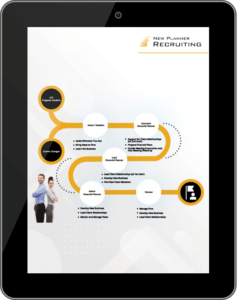 Download your free copy of the New Planner Career Roadmap! In this roadmap, you'll be guided through the details of various stages of your financial planner career, including position descriptions, licensing, skill and experience level requirements, and compensation ranges.
Get the Full Episode Transcript:

Read the Transcript Below:
Welcome to the New Planner Podcast, where it's all about helping you successfully enter the financial planning profession and accelerate your financial planning career. This podcast will help you understand the profession, become familiar with the various career paths available to you, and avoid the mistakes that limit your success. Join your host, Caleb Brown, to explore the human side of creating a successful planning career through interviews, personal experience, and insights from the trenches. Let's get started.
Caleb Brown: Welcome to 260th episode of the New Planner Podcast. This is Caleb Brown, your host. My guest today is Mark Hansen, who is a financial advisor at Second Comma. Mark rejoins the show today after two years to talk about the ups and downs he has experienced since then and how he has shifted his business. Mark shares how he was losing clients, had to change his business model, hired a coach, and has become hyper clear on his value proposition and offering.
He goes on to share more of what he is learned from his decisions, mistakes he's made, and why his churn rate was too high. Stay tuned to the end to hear deep insights on his entrepreneurial journey that can be useful for any entrepreneur. I hope you enjoy this episode with Mark Hansen.
Hey, Mark. Welcome back to The New Planner podcast.
Mark Hansen: Hey, Caleb. It's good to be here again.
Caleb Brown: Man, I am excited about this because last time we had you on, about, what was it, episode 146, I think, couple years ago, and just wanted to check in and just see how things have been going. So I'll just, I'll let you start wherever you'd like. What have you been up to the last two years?
Mark Hansen: Oh, up to and down to might be a good, might be a good phrase for it. It's funny listening back. I went back and I listened to that other episode, and just to try to put the biggest umbrella on it. In that episode, I was on a one client per month clip. I was gaining a client per month and I look back where I am now and I'm on this very opposite streak of losing a client per month and just, it's a turnover in the business.
It's a maturing thing. It's an education thing, but I'm really seeing what that guy was talking about two years ago, that guy being me, what he was talking about, he didn't know, and I'm real-time discovering was not sustainable or wasn't what I was actually wanting to build, if that makes sense. And so I'm wrestling through that right now as we record this.
Caleb Brown: Well, one, thanks for coming on here and just for revealing that. I mean, I don't, I mean, look, all entrepreneurs go through this at some point, right? So maybe just talk a little bit more so, why do you think you're, why are you losing the clients?
Mark Hansen: It is interesting. So since we've spoken last, I've gotten a business coach who has really helped me understand that what I was doing, and I talked about my fee structure last time. I said it took the most of whatever was higher, 1% AUM or 1% of household income. Well, that eventually floated back through the chains to the broker-dealer relationship.
And they called me and they said, “What are you doing?” And I explained it to them 'cause they had told me that was okay. And then they said, “No, you can't do that.” And so then I had to change my fee structure. I'd also picked up the business coach who really explained, I'm doing two things, but I was offering them as one service, right?
There's asset management and then there is the actual financial planning. And so I really learned, okay, it's two separate things. It can be two separate fee structures. You can charge, not everyone does, not saying that everyone has to do what I'm doing, but then I looked back in my book of business and it's like, okay, I have to change my fee structure because my broker together is telling me that I have to, so I'm gonna make the changes and just implement everything that the business coach was explaining to me. And I realized a lot of those other clients just weren't a fit for what I actually meant to set out to build, as in people who were readily available to cash flow the services, if that makes sense. What was happening was I was getting in there, I was educating people and unfortunately, I've started to figure out where this, I'm trying to figure out where it lands.
Somebody calls me and says, “Hey, we realize these are long-term plans that we've gotten from you, we believe in them. We can achieve them faster if we stop paying you.” And it's, yeah, I mean, one piece, like, they educated themself, or I educated them enough or whatever. That is true. That just wasn't what I was wanting. And so I'm realizing I was helping people who didn't have an ongoing intrinsic need for my services, if that makes sense.
Caleb Brown: It was kinda like you were attracting, they like do-it-yourselfers, or they thought they wanted to delegate, but then they're like, “Well, we just really wanted to,” or maybe as a validator, like, “Hey, are we doing the right thing? Okay, let's do it on our own.”
Mark Hansen: Yeah. Yeah. And I wasn't protecting myself with the proper paperwork, I didn't know that I could say, “Hey, this is a one-sum fee. I'm allowing you to pay it over the course of 12 months.” I mean, there's been so many lessons that I've learned, and the broker-dealer's been great. They've allowed me to develop the paperwork and have people say, “Oh, we understand this is a price, not a sequence of payments.”
Caleb Brown: Okay, got it. And I was gonna ask you, but you maybe just talked like, why didn't you get rid of the broker-dealer if they won't let you charge the way you want to?
Mark Hansen: So much of this, the broker-dealer that I work with allows me to, as long as I stay within compliance, I can really do whatever I want. And if they hear this within compliance, I understand I gotta stay within those parameters, but they allow me to do whatever I need to operate a business. And when you are young in the business and you don't have a lot of experience, it's easy to leave these gaping holes that seem so obvious when you look back.
But now I'm able to go back and shore them up and I've got a better machine for moving forward, but it doesn't specifically negate all the chaos that I get, that I got for myself when I look backwards.
Caleb Brown: And some chaos is good, right? I mean, that's just part of the entrepreneurial journey. I mean, let me ask, I mean, would you suggest other people that are starting their own firms hire a business coach sooner?
Mark Hansen: I think that's the best money I spend every month, but I think you can pay a lot of people to talk to you about your business. I do think there are more business coaches than there are good advice. Something like that. I think something like that is true. I just don't know the correct way to say it, but I like my business coach. I love what he's teaching me and I believe it. And that's the main thing is I genuinely believe what he's telling me. And that's what you're looking for.
Caleb Brown: And just maybe help us with the context. For the people that haven't listened, we're gonna link to it, but haven't listened to the other episode. Talk to us about how you charge then, and then talk about how you're charging now.
Mark Hansen: Yes. A lot has changed, but I think it's all better for the client and better for me, which is you just, I've been discovering my heart in this, too. When I was talking to you two years ago, I was charging on a yearly basis, 1% AUM or 1% of household income, whichever was higher, and the idea was to get somebody onto this ongoing relationship and I still like the idea. It was like, “Hey, you're 30 years out from retirement. I'd love to build a relationship for 30 years and then help you in retirement for 30 years. I think that would be awesome if we spent 60 years together.” And what I've really switched that up to now is a lot of people, they want the answers and they need a lot of time.
That's what I've developed now is the ability to give that to them. So what was a 12-month engagement, ongoing and recurrin,g is now 12 weeks start to finish. I hand you a plan and then it's, “Do you want help implementing this plan or do you want time to digest the plan and do it yourself?” And my best clients are doing that process, that 12 weeks start to finish every two to five years, depending on how much life changes.
And then the goal of financial planning is to build the AUM, as in financial planning is typically a map that tells you how to steward your money that comes into your bank account every two weeks, how to steward it into the assets, assets under management. And then eventually some people will say, “Well, you were super helpful on the financial planning side. Let's just do the asset management side.” And that is the ongoing relationship. That's where I am right now of I don't quite believe that financial planning for me and the way I want to do business is my ongoing relationship, unless somebody specifically needs or desires that, “Hey, I wanna be able to call you anytime, and I'm willing to pay a price because I know that that costs money.”
Caleb Brown: Got it. Okay. So you do the initial upfront plan and then what? What's the fee range for that?
Mark Hansen: So just to keep it super simple. I did heavily overcomplicate this. It was very a la carte and business coach said, “Brevity is a gift. Simplicity is a gift.” And so the gift of simplicity is if you just want me to tell you what to do, $4,000. If you want me to be more white glove, helping you do what you need to do, that is $7,000.
And there is some significant difference, but those price points I've sold both. And it's not just, oh, older clients with more money, buy the more expensive plan. No, I've got some people in their late twenties that bought the expensive plan because they see it as a better trajectory to where they want to go. It's very interesting having this just the two options for people.
Caleb Brown: And then you're hoping that they will then come back and say, “Okay, we paid the 4 or 7,000,” whatever it was, “and now we want to pay the ongoing 1% for you to manage the assets.”
Mark Hansen: Yes. And some people are in between there, they don't have the assets to manage, or most of their assets are in the 401k and we can't touch them.
And they say, “Well, I would really enjoy being able to talk to you about this plan.” And I want us talk, and I usually offer this as we're gonna have two strategy sessions in the year, one in the spring, one in the fall. And that is a separate thing that somebody can sign up for where they're saying, “I wanna talk to you about this plan to make sure I'm on the right path.” They wanna be talking ongoing, in between the two to five year replanning.
Caleb Brown: It's an interesting point. I mean, my financial planner just reached out to me like a couple weeks ago, and I feel like I got chaos and craziness and all sorts of stuff going on. And I mean, like, I'm just following through the–and they're like, “Hey, we just wanted to follow up. Do you want to meet about anything?” And I just kind of thought, I'm like, no. I mean, I think I met with him six months ago. I'm like, “I think I'm good.” I mean, I appreciate the reach out and the awesome service, but I didn't really have a need to talk to them. So, I mean, maybe, and I guess that's kind of what you ran into.
Mark Hansen: Yeah. It takes a long time. This is, you're steering a big ship. It's not a little boat that changes with the wind and I realized people need time and that was the hardest, I think what I was overburdening my clients with and have been, and it's part of the consequences I'm living through now is people like the Netflix style, the monthly payment, because it makes it easy on the client's cash flow. The difference is I'm not Netflix, right? I can, at any point in time, go turn on Netflix and just see thousands of little other things that I could go, at any point in time I can satiate my desire to have Netflix, but that's not how financial planners operate.
And if it was, that client would need to pay so much money because you'd basically be their family office. That's what we're describing and that's what I've learned. You hear in the industry, people talk, “Oh, just be the Netflix of financial planning,” as in this monthly ongoing thing. I just don't think people actually enjoy that experience on either side.
Caleb Brown: Yeah. Well, kudos to you for making an adjustment kind of early on and trying to create something that you enjoy and want to have versus riding this out for a couple decades. Like, oh, I mean, 'cause this happens like, oh, I mean, even with yours truly, like, “Oh, I created something I didn't like. I'm gonna have to make, it's gonna be a really painful to rip the bandaid off.”
Mark Hansen: Yes. My wife is not, you know, sit down, build the business from scratch, kind of a thing. But she's very intuitive and I would explain to her these previous business models and I could see it on her face. It's like it didn't land with her.
And then I hit this inflection point beginning of 2025. Just took everything that the business coach has taught me, implemented it, ripped all the bandaids off, and I re-explained the business model to her. And that was the first time I looked at her and she looked at me and I could tell she was thinking, “Okay, that's a business there.” And that was really helpful.
Caleb Brown: So, I mean, do you, I mean, do you have an ideal client profile or niche, or is it just kind of anybody that will pay the four or 7,000?
Mark Hansen: That's what's hard about this is you can't go to market and talk to everybody, 'cause then you're talking to nobody. So, but I can everybody kind of fits into the model, as in my financial planning process. It's called CLARITY. It covers cashflow, legacy, asset protection, retirement income, taxes, and your mindset, right? So that's an acronym. Every financial plan moves through that acronym.
Everybody can benefit from that, and I heard it said this way one time, “If you go to the doctor for your annual checkup and he or she does all the tests and they say, ‘Good job.’” Are we upset that the doctor confirmed everything was okay? Are we looking at that doctor and saying, "What a horrible doctor…”
Caleb Brown: I'm relieved. I don't know about what everybody else thinks.
Mark Hansen: But you start adopting that mindset of, okay, like it's okay even if you look at somebody's finances and you say, “You're doing a great job,” and some people are willing, you're gonna buy a used car, you take it to the mechanic, you say, “Hey, give it a once over. Make sure it's okay.” And they come back and they tell you, “This is good.” Just adopting that mindset is so different, but now, again, with what I'm doing, okay, fine, anybody can kind of fit in there, even if they just want a checkup. But I can't just go to market. There's no social media posts that says, “I talk to anybody. I help everybody,” that's gonna make anyone feel special. And so, who I've tried to talk to are business owners. I specifically get into owner operators. I want people that are in the business. I want them to be still hands-on. And when I think, well, how big of a company? I like 10 or less employees. I like small, dynamic businesses, and so I talk to those people in my marketing.
And then if somebody shows up that's business owner adjacent, if they have 11 employees, it's not like I'm saying, “No, I can't help you.” If they are in more of that CEO role, they're less hands-on. It's not, “No, I can't help you.” And it's not, “Hey, I don't own a business, I just have strong income. Can you not help me?”
It's no–I can help you. 'Cause the clarity process, that framework applies to everybody, but I am trying to get people into that top of the funnel by talking to specific niches.
Caleb Brown: Okay. So maybe just walk through, like, if I'm a client, I show up, I pay the, I mean, I would prefer to pay someone to do it for me.
So I pay the $7,000, I pay the full freight, right? I mean, are you able to get through all the, what is that? 7 to 8 things all in the 12 weeks? I mean, it seems like cramming a lot in, I mean, walk us through how you're able to do that and does the client get overwhelmed?
Mark Hansen: So it can be overwhelming and that's why I have the supplemental, “Hey Caleb, I just delivered this plan to you.” It's all these different sections, but I'm still gonna tell you, “These are the two I want you to focus on,” right? This is a lot of information. You paid for a lot of information. This is where I would focus, and then even in there, I sequence everything to say, this is the order I would knock these things out in.
So you've got, every section is sequenced by the best way, I believe, to move through there. I have a meeting where I'm presenting the information and I'm saying, “This is why I think it,” and I try to take what's in my brain and give it to the client and then give them the time to digest it. We all wanna think we're special snowflakes and we kind of are, but we also kind of aren't.
And so this framework quickly identifies where we aren't special snowflakes, but then there is a piece where I have to spend time getting to know Caleb or Sarah or whoever it is. I have to actually get to know them because, as much as we aren't special snowflakes, we actually are. And there is a uniqueness, there is a way that I have to realize your problems, your concerns.
I take it and I put it into what is really repeatable. There's a lot of things that are very repeatable. Maybe a lot of people need, a lot of people might need term life insurance, but the amount might vary and the why might vary. A lot of people might need a revocable living trust, but the style that it's implemented and how we talk about executors and why you're gonna put so and not such and such.
That's the nuance, that's the piece that is unique and that's–me, I get to focus all of my time there, getting that out of the clients, helping them bring to the surface the pieces about them that are unique. And I make sure to highlight that while I do a highly repeatable process.
Caleb Brown: Okay. So there's a series of sequence of meetings in that 12 weeks. Are you using any AI tools or anything to kind of streamline this or make you more efficient?
Mark Hansen: Yeah, I just speeded all the personal stuff into ChatGPT and I say fix this. And then it gives–no, no. I do use some tools. I use Asset-Map. I really like Asset-Map, so it's a, and I tell people that's kind of like putting your financial life on a piece of paper, right? Take everything, put it on a piece of paper, and once you get the front of the paperwork done, then I can kind of turn that paper over and I can do all the math on the backside.
And people like that visual diagram. So I use Asset-Map. I've got approval for Holistiplan, so we can do tax planning through there, and then there's a, I'm outsourcing because I'm not capable of doing it myself, but I outsource to a company that I really enjoy for estate planning.
And we talk about what might be needed. And I say, “These are the things, the phrases, the words I want you to say to the estate planning company. Just give them some key phrases.” And that process can take care of itself. And then back to Asset-Map, flip the paper over. I can do the math on how much life insurance might be needed or supplemental life insurance, and then we can talk about retirement and how much money needs to be moving from today's accounts into tomorrow's accounts. And then talk about what kind of accounts you would use and why.
Caleb Brown: Okay. And then when we finish that, I then say, “Hey Mark, I'll go ahead and manage the assets.” I mean, is there, do I have to have a certain amount in the account for you to–a minimum to take me?
Mark Hansen: No. I do have a threshold below which I don't take a fee. So under 30,000, I don't take a fee 'cause I feel like I'm just muddying the waters. But then I also am not doing that as active management, so that's gonna be much more mutual funds or something like that. That's just to build a habit of investing. Once we get over 30,000, then I can move into the active management strategies, which is where we're using third-party money managers, and that's where a fee would kick in.
And it's explaining to clients, “Okay, we had to get that original nest egg. Now we're gonna put it to work.” And I'm using model portfolios. I'm not, again, not reinventing the wheel every time, but the goal is to have model portfolios. Looking at, are these, is this a small account, a medium-sized account, or a large account, and is it conservative, moderate, or aggressive?
That's kind of a three-by-three matrix. I've got one for pre-tax money and one for post-tax money, and just trying to keep it simple and highly repeatable.
Caleb Brown: Okay. I mean, it sounds like you've got it set up pretty efficiently after some fine-tuning and some adjusting. I mean, it's like, that's part of it and that's the thing about it. Like, you're gonna tinker with this for the rest of the time, right? I mean, it's like, it's not really a set it and forget it thing.
Mark Hansen: Yeah. It's not. Sometimes it feels like, oh, no, it definitely feels like, it's like racing a race car, but you're building it as you race it down the track. And I've tried to be more comfortable with that sensation because that's what I'm doing. Because the way that I got into the industry and the setup that I have, where I have very little overhead or management and everything, but that makes me have to build the race car while I'm racing it down the track. And I've just tried to settle in with that.
Caleb Brown: And you still feel like this was the better decision versus joining a team that already had a race car?
Mark Hansen: I think so. I did over the summer, I went through a big, as I was going, I'd be in talking to people, interview on a podcast, something like that. Somebody, actually one of them, heard me on your podcast, reached out and said, “Hey, I wanna talk to you about something.”
And that happened over the course of time. At the beginning of the summer, I have five or six just standing offers of if you ever get tired of building your race car, you can come drive ours. Just these, and that's not something I had ever had before in my life and I didn't understand why they were there.
So I went into a very big, “What am I doing? Why am I doing it?” Kind of a phase. But then I went and I talked to these other companies about their race cars, and I didn't want to drive any of them. I wanted to keep building mine, but now I know, “Hey, I really wanna build my own race car.” Not because I know how to build a race car the better, the best way, or I can build the fastest or the best race car or everyone else's race car is dumb. That's not what I'm saying. I was talking to somebody about it because I kept trying to put this into an Excel spreadsheet and come up with a perfect answer, and surprise, there wasn't, right?
But I was talking to somebody and I said, “I'm not declaring that I know how to do this the right way. I just don't think I wanna give up my autonomy.” And he said, “You might not more be worried about your autonomy. It might be the spontaneity.” And I had just taken my son fishing at one o'clock in the afternoon on a Wednesday and he caught his first bass.
And I was thinking if I was in somebody else's race car, I don't think I'd have been able to do that. I would've missed out on that memory. And I look back, I could picture that picture in my head and I want that picture more than I want a faster, better race car.
Caleb Brown: Valid point. I mean, it's a generational thing. The other generations don't see it that way, and that's okay. That's part of it. I mean, every generation's different. Hey, let me just go back. And this is something, if you're part of a bigger firm and you lose an account, it's, I don;t know, it just kind of gets maybe lost in the shuffle. But when you're by yourself and a client says, “I am disengaging from you.” That's tough to handle, all right. I mean, how did you feel when you lost you? I mean, just starting out and you lost, I mean, they're, 'cause they're basically saying, “We don't want you.” Not, “We don't want the big firm with the five or six names on it.” They're saying, “We don't want Mark.” How did you handle that?
Mark Hansen: With grace. It was perfect grace, right? Nothing ever–no. To the client, I was always, I told the clients as they were leaving, I said, “I will always support you doing with your money what you think is best. It's your money. It's not mine. If you think your money should be used somewhere else, then okay.” What was hard for me was nobody was saying, “Mark, you're doing a bad job.” “Mark, I don't like this part of your process.” “Mark, you didn't listen to me and put me in investments that I believe in.” Nobody said any of that. Most of the time it was, “Hey, we're going to expand our family and so for a time we need to pause.” And I love that idea. I love that you're expanding your family. Somebody had had some emergencies, family sickness, they needed to liquidate everything and they needed to just sit still.
And I'm not gonna stand in the way of that. Does it have to go in my, “I lost a client column”? Yes. But nobody's walked, nobody, so far, has said, “I just don't like what you're doing.” Some people, it was an education thing. They came in, they said, “I don't know what I'm doing.” Through conversations back and forth, I got them oriented and they said, “This is a really long road. Like, I just need to go east for 200 miles. I'll call you in 200 miles.” And that's the ones where it's like, well, I didn't mean that four months in you would get out of a 12-month relationship. And that's where I got to develop the paperwork that protects me more. That was my biggest mistake for sure.
But the most recent client that I've lost, they wanted to take my advice and they wanted to get some term life insurance to protect themselves. Both spouses wanted to have adequate life insurance and they said, “Mark, if we do it, we can't keep paying you. This is gonna be the rest of our free cash flow. We have to stop paying you to get the life insurance policies.” And I said, “Guys, if I tell you something other than what I previously told you, if my advice changes right now simply because my income's on the line, then you need to fire me anyways.” It's like I gave you that advice. I didn't know it was gonna cost me business revenue, but I'm okay if it does, and I've just learned, I actually believe this stuff. I actually believe what I'm telling people and I have, it takes time. I'm not the most mature individual with my emotions, but with enough time, I see. I really do believe this stuff, and if the consequence of somebody taking my advice is they can't keep paying me, I'm really happy for that family. I'm genuinely happy for that family.
Caleb Brown: It's awesome. I mean, it's true fiduciary duty, right? I mean that's, everybody says they're a fiduciary. That's not, everybody says that. That's funny, you've mentioned that, 'cause I give that exact same dilemma to my UGA students and watch them wrestle with it, and it's just kind of squirm.
It's kind of fun. Well, Mark, I mean, look, again, just thanks for coming back on here and just talking about some of this. Most people want to come on podcast just like, “Yeah, I got a gazillion dollars in assets and I never made any mistakes.” I mean, like, really appreciate the transparency and sort of walking through. I mean, what are some of the other, and you've given us a lot here, but just, as we wind down, I mean any other points you wanna make or leave the audience with?
Mark Hansen: You hear a lot of advice if you go into the YouTube space or self-help or whatever. Some of that advice is not always remembering the fiduciary responsibility.
I think it's important that we take the time. I do a lot of journaling. Well, I stopped for a while and I'm getting back into it. I'm realizing it was a very helpful thing for me getting my thoughts out and just helping me understand what I really believe. I really believe if somebody can't pay me because they buy the life insurance that I recommend, I think that's okay, but that doesn't mean I'm okay with it. I just need to, I need time. I need time to process. But you have to know your core convictions. And I would say take time, 'cause you might hear, I think some good advice is, “Fail fast. Fail cheap,” right? Don't spend three years on something that could have taken three weeks and don't spend $3,000 if you could have just spent $300.
But fail fast, fail cheap has to also take into account this is somebody's real life savings. This is their real money. You can't fail fast, fail cheap with somebody else's money. You can't get rid of that fiduciary responsibility. I can't do that. I don't wanna speak for anybody else. So it's remembering my core convictions and then moving through staying, I listen to a podcast where they talk about staying water, right? Don't get locked up into ice and don't become so hot that you evaporate. Stay water, right? Water can take on any form, any shape, but you have to know your core convictions. 'Cause I can't take on Caleb's shape. I'll never be happy doing that.
And that's part of what, for me, that's why I don't think I can go to the big blue places or the big green place and just fit in. I just don't think I would enjoy that. But that's because I know my core convictions and I would say, for a dollar, a dollar three, you can get yourself a journal and I would say just fill it up and you can stop when you think you start to understand your core convictions. Give it some time and then test them again.
Caleb Brown: Thanks for sharing that. There is something to be said about taking some pretty heavy punches early on in your career and then getting back up off the mat. I mean, 'cause if you can't do that, I mean, you can't do that, you're not gonna make it, right?
Mark Hansen: Yeah, absolutely. Absolutely. That was definitely a turning point. I said that to my wife. I said, 'cause she said, did you, she asked me, “Did you make a mistake?” And I said, “I'm at the point where I understand why businesses fail.” Because I've been hit, I'm down on the mat and I'm saying, “If I stand up, this guy might hit me again.”
And the question was, do I want to stand up again? Or do I just wanna lay there? 'Cause eventually, hey, they'll call it, it'll be over, right? And I realized, no, no. I really do wanna stand up and that really means I might get hit again. And so that's why stay water, fail fast, fail cheap, know my own convictions.
Caleb Brown: Much better path. Much better pathway. And again, I appreciate you joining and just for the transparency and just being authentic with us. I mean, it's really great to see and you're gonna get there. You're gonna get there and just like Kitces talks about this all the time, it just takes time, it just takes time. Well, anything else you wanna share before we close out?
Mark Hansen: I think last time I didn't even say reach out to me on LinkedIn, but so many people have heard that podcast and reached out on LinkedIn. I'm always open to that, so feel free, find me on LinkedIn, Hansen, H-A-N-S-E-N. Shoot me a message. I'm more than happy to chat.
I've given some 15-minute, 20-minute slots of time to people that have said, “Hey, when you said this, what did you mean?” People have wanted clarification. And so I just enjoy that. I enjoy talking to people. So I'd offer that again here.
Caleb Brown: Thanks for paying it forward. And hey, one other just kind of quick funny story before we go. So we had the interview two years ago and then, I mean, we'd only met over video, had not met in person. And then earlier this year, so early 2025, we're at a Kingdom Advisor. I'm at a Kingdom Advisors conference and down in Orlando, Florida, they asked me to come speak down there. And I'm in one of the general sessions and I don't know, there's probably 3,500 people in this session or so, maybe more. Maybe 5,000. It was crazy, and I turn around, out of all these people. We're doing an activity or something. They asked us to do something, and there you are, you're sitting right behind me. And we both just could not believe it. Do you remember that?
Mark Hansen: Yes. Yeah. They said, I think, was that when we were playing paper, scissors, rock?
Caleb Brown: Yeah.
Mark Hansen: Yeah. And so we turned around, we both got our rocks on our, we're about to do 1, 2, 3, go. And it's, “Hey, I know you.”
Caleb Brown: Oh man, what a crazy coincidence. But glad to know you, Mark. Glad to see you. And again, thanks for coming on the show.
Mark Hansen: Absolutely.
Thanks for joining us for this episode of the New Planner Podcast. If you are ready to discover the top career paths for financial planners and see which track is best for you, we created a free guide to help you. Grab your copy of the Financial Planner Career Roadmap at newplannerrecruiting.com/roadmap. There, you'll also find more tools and resources all created to help you build a successful financial planning career. Tune back in next week for another episode, and until then, we are here to help you succeed.
Share the Love:
If you like the New Planner Podcast...
Never miss an episode by subscribing via Apple Podcasts, Spotify, Amazon Music, YouTube Music, or by RSS!



Leave a Reply